English
 Le français
 Türkçe




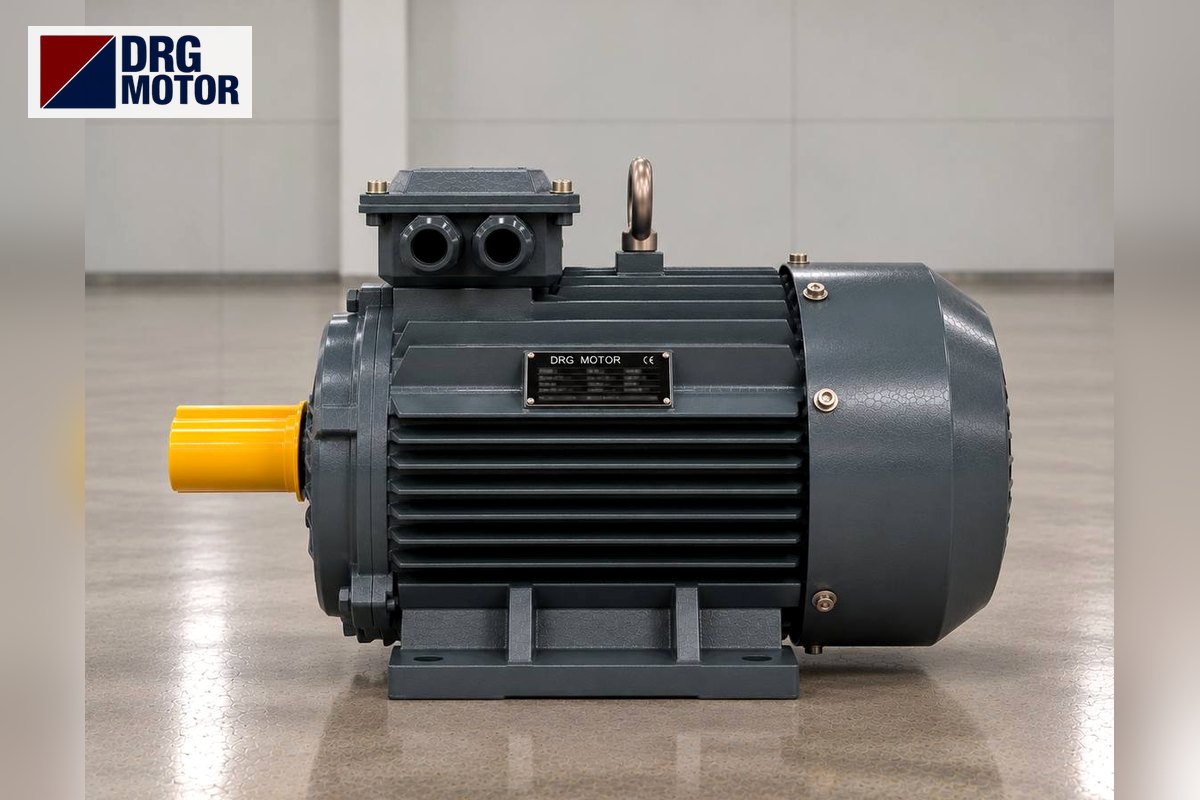

An insulation resistance (megger) test is a basic check that shows how sound the insulation is between an electric motor's windings and its frame (earth). The instrument, called a megohmmeter, applies a high DC voltage at low current to the winding and derives the insulation resistance in megohms (MΩ) from the leakage current. The higher the resistance, the better the insulation.
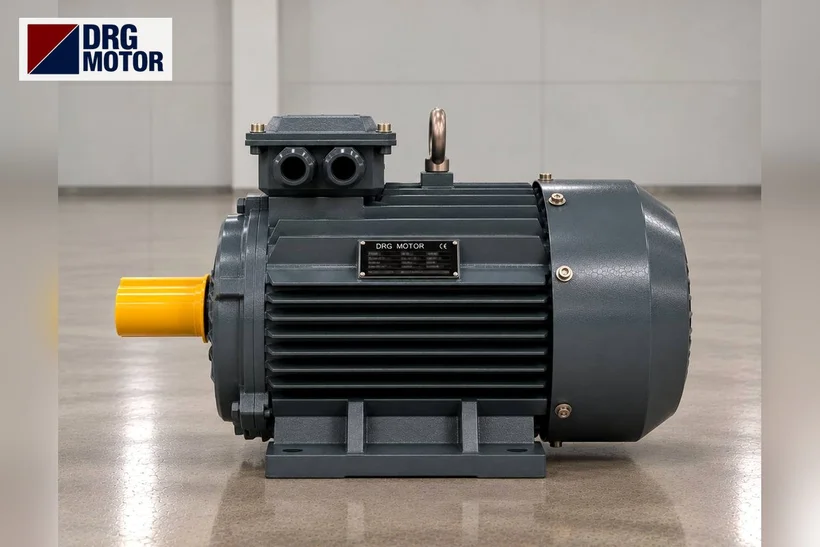
DRG Motor is a manufacturer, supplier and seller of electric motors. You can compare a suitable replacement for a motor with weakened insulation by power and speed in the online motor shop. All three-phase options are listed together in the three-phase asynchronous electric motors category.
What is insulation resistance (megger)?
In a three-phase asynchronous motor the copper windings are separated from the frame by a thin layer of insulation. While that insulation is sound, almost no current passes between winding and frame, so the resistance is very high. When the insulation begins to break down due to moisture, thermal ageing, contamination or mechanical damage, this resistance drops and a small leakage current flows from the winding to the frame. The megger test reveals exactly this leakage, and therefore the condition of the insulation.
The measurement is taken from each of the three windings separately against the motor frame (the earth terminal). The aim is not to wait for a fault, but to notice early that the insulation has weakened before it turns into a more dangerous leakage or an earth fault.
Is a megger test the same as a winding resistance test?
No, these are two different checks and should not be confused. A winding resistance test uses an ohmmeter to measure the conductivity of the winding itself (its end-to-end ohm value), looking for an open circuit or imbalance between windings. An insulation resistance (megger) test, on the other hand, stresses the insulation between winding and frame with a high voltage and gives a value in the megohm range. One looks at the soundness of the wire, the other at the soundness of the insulation. A full picture of a motor usually requires both.
What does the result tell you?
Rather than reading a single number, a megger result should be judged together with its level and how it changes over time. The table below offers a general interpretation framework:
| Observation | Possible meaning | Key note |
|---|---|---|
| Very high, stable resistance | Insulation is sound | Motor is fit for use in this respect |
| Resistance falling over time | Onset of moisture, dirt or ageing | May need monitoring and drying |
| Very low resistance | Seriously weak insulation, earth-leakage risk | Should be inspected by authorised personnel |
A single measurement is like a snapshot; what really matters is tracking how the same motor's value changes over time. A continuously declining trend is a sign to watch, even if the current value still looks acceptable.
Click to see current electric motor prices and order nowSEE PRICES →
Is it right to quote an exact minimum value?
People very often look online for a single threshold such as "below so many MΩ is bad"; however, the lowest acceptable insulation resistance depends on the motor's rated voltage, temperature, power, age and the applied test voltage. For that reason this article does not quote a fixed MΩ threshold. The correct approach is to set the limit according to the motor nameplate, the relevant standard and the measuring instrument's documentation. The corrected (temperature-normalised) value and the test voltage are also part of this assessment.
In practice what matters is whether the measured value is clearly below the reference limit, and the trend over time. Instead of energising a motor below the limit straight away, the cause (most often moisture) should first be investigated.
The effect of moisture and temperature
The factor that most affects insulation resistance is moisture. A motor that has stood idle for a long time, been stored in a cold warehouse, or operated in a damp environment draws moisture into its windings, and the measured resistance drops noticeably. In many cases the motor itself is not faulty; once the windings are properly dried, the value rises again. That is why an insulation check, and drying if necessary, is recommended before running a motor that has stood for a long time.
Temperature also affects the result: insulation resistance varies with temperature, so measurements taken at different temperatures should not be compared directly but assessed after correcting the values to a reference temperature. For a motor that has been wetted or taken in water, applying power before drying and measuring are complete is unsafe.
Caution when there is a variable frequency drive
If the motor is fed through a variable frequency drive (VFD), it must be disconnected from the drive before the insulation test. The high DC voltage applied by the megger can damage the sensitive components of the drive and other electronic boards. Likewise, electronic equipment such as phase protection or anti-condensation heaters is isolated before the test. The measurement must be carried out only on the insulation of the motor windings against the frame.
This article is informative and is not a set of field instructions. Before any measurement or connection, first switch off the power, verify the absence of voltage, and have all electrical work done only by authorised electrical personnel. Do not set the limit value or the test voltage by guesswork; determine them according to the motor nameplate and the device documentation. Safely discharging the residual charge in the winding after the test is also important for safety.
Replacing a motor with weakened insulation: DRG three-phase models
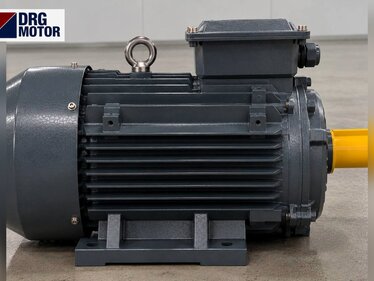
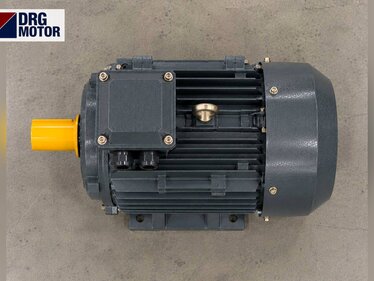
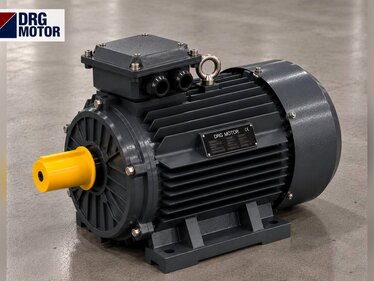
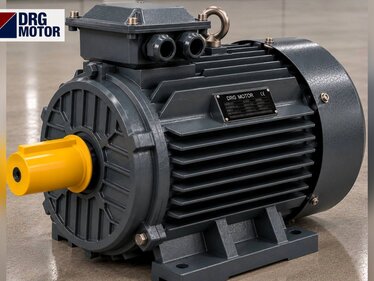
A motor whose insulation resistance keeps falling, does not recover despite drying, or leaks to the frame is in most applications replaced with a new motor. Below are DRG models from the 1500 rpm (4-pole) class that make it easy to pick the most suitable option. The model codes link straight to the product page; the voltage on all of them is 400/690 V (Δ/Y).
| Model | Power | Speed class | Rated current (400 V) |
|---|---|---|---|
| DRG-112M-4 (aluminium) | 4 kW (5.5 HP) | 4-pole / 1500 rpm | 7.95 A |
| DRG-132S-4 (aluminium) | 5.5 kW (7.5 HP) | 4-pole / 1500 rpm | 10.7 A |
| DRG-112M-4K (aluminium, compact) | 5.5 kW (7.5 HP) | 4-pole / 1500 rpm | 10.7 A |
| DRG-132M-4 (aluminium) | 7.5 kW (10 HP) | 4-pole / 1500 rpm | 14.3 A |
| DRG-160M-4 (aluminium) | 11 kW (15 HP) | 4-pole / 1500 rpm | 20.4 A |
| DRG-132M-4K (aluminium, compact) | 11 kW (15 HP) | 4-pole / 1500 rpm | 20.4 A |
When replacing, compare not only the power but also the speed (pole count) on the old nameplate, the frame size, the shaft diameter and the mounting type; for current values you can use the motor current chart tool.
Send a photo of your current motor nameplate and we will find the suitable DRG model together.Send on WhatsApp
Once you have identified the right model, you can see all power and speed options in the shop.
See suitable three-phase asynchronous motor models to replace your motor with weakened insulationSEE PRICES
Frequently asked questions
Does a megger test replace a winding resistance test?
No. A megger only stresses the winding-to-frame insulation; a separate winding resistance (ohm) test is needed for an open circuit in the wire or imbalance between windings. The two measurements complement each other; one does not replace the other.
Does low insulation resistance always mean the motor is finished?
No. The most common cause is moisture, and the value usually rises once the windings are properly dried. A value that stays low despite drying, however, can indicate permanent insulation damage.
What is the lowest acceptable MΩ value?
There is no single universal figure. The limit depends on the motor's rated voltage, temperature and the applied test voltage, and is set according to the motor nameplate, the relevant standard and the measuring instrument's documentation.
How is it measured while the motor is fed from a drive?
Before the test the motor is disconnected from the variable frequency drive; otherwise the high test voltage can damage the drive. The work must be done by authorised personnel, after the power is cut and the absence of voltage is verified.
Electric Motors Related to This Topic — Models and Current Prices
Suitability is not decided by power alone: compare the speed, voltage, mounting, shaft and fixing dimensions of your machine with the product data; if unsure, send us the nameplate of your current motor.
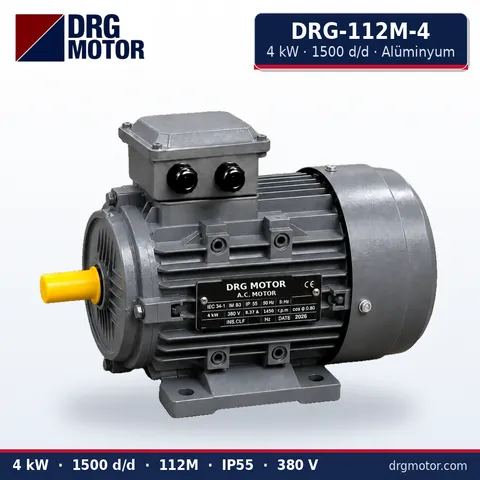
4 kW Three-Phase Motor 1500 rpm – DRG-112M-4 Aluminium
- 4 kW · 1500 rpm (4 poles)
- Aluminium frame · IEC 112M
- Shaft: 28 × 60 mm
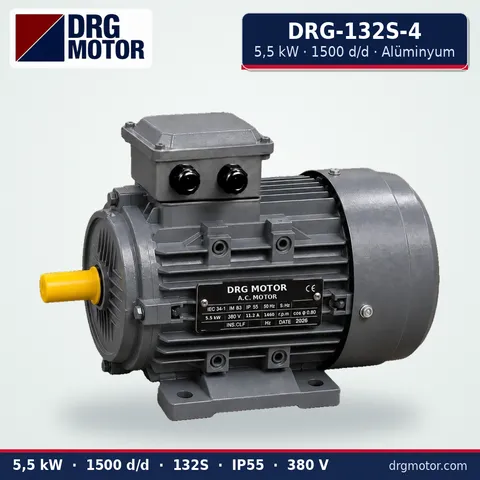
5.5 kW Three-Phase Motor 1500 rpm – DRG-132S-4 Aluminium
- 5.5 kW · 1500 rpm (4 poles)
- Aluminium frame · IEC 132S
- Shaft: 38 × 80 mm
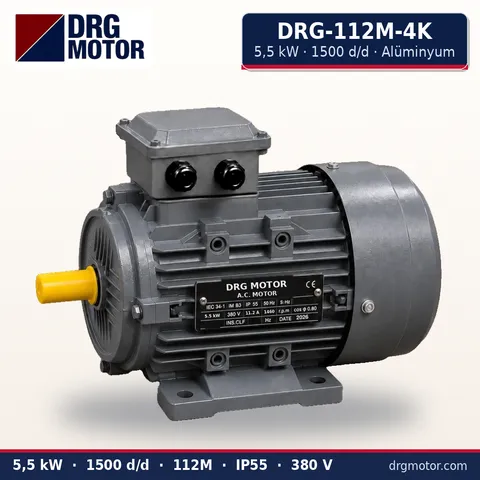
5.5 kW Compact Three-Phase Motor 1500 rpm – DRG-112M-4K Aluminium
- 5.5 kW · 1500 rpm (4 poles)
- Aluminium frame · IEC 112M
- Shaft: 28 × 60 mm
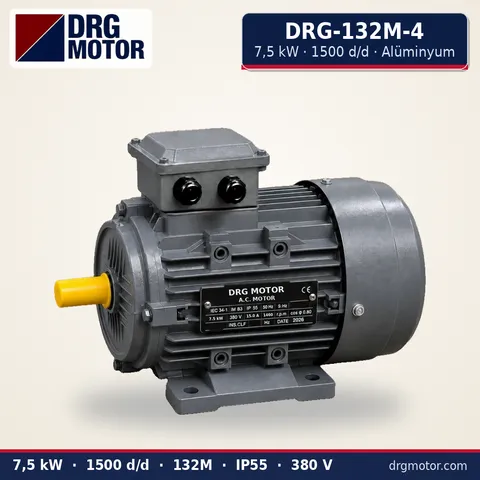
7.5 kW Three-Phase Motor 1500 rpm – DRG-132M-4 Aluminium
- 7.5 kW · 1500 rpm (4 poles)
- Aluminium frame · IEC 132M
- Shaft: 38 × 80 mm
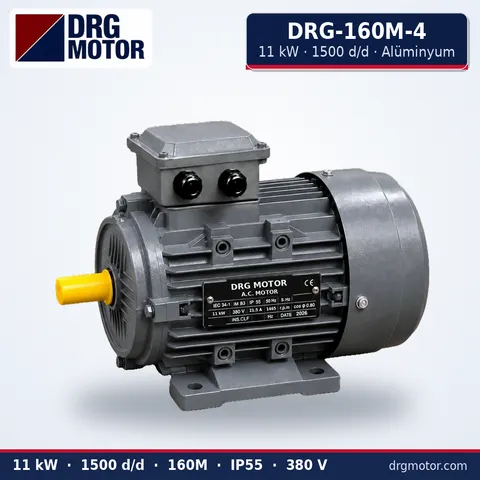
11 kW Three-Phase Motor 1500 rpm – DRG-160M-4 Aluminium
- 11 kW · 1500 rpm (4 poles)
- Aluminium frame · IEC 160M
- Shaft: 42 × 110 mm
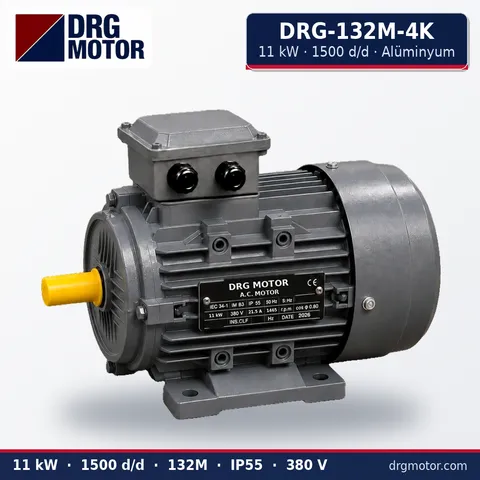
11 kW Compact Three-Phase Motor 1500 rpm – DRG-132M-4K Aluminium
- 11 kW · 1500 rpm (4 poles)
- Aluminium frame · IEC 132M
- Shaft: 38 × 80 mm