English
 Le français
 Türkçe




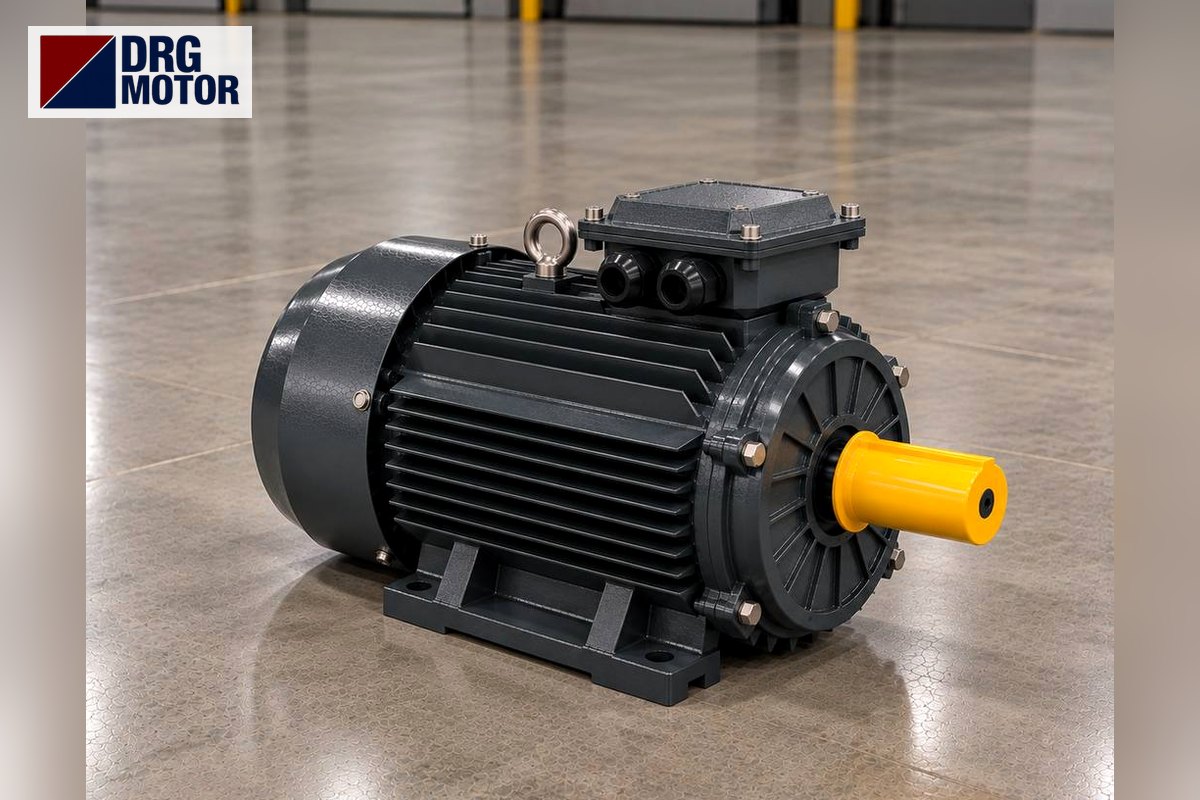

An electric motor draws a certain current from the supply even with no load on the shaft; this is called the no-load current, and in a healthy three-phase asynchronous motor it is usually around 30–50% of the rated current. If the no-load current climbs clearly above this band, the cause is most often a high supply voltage, an incorrect star/delta connection, a winding problem or mechanical friction.
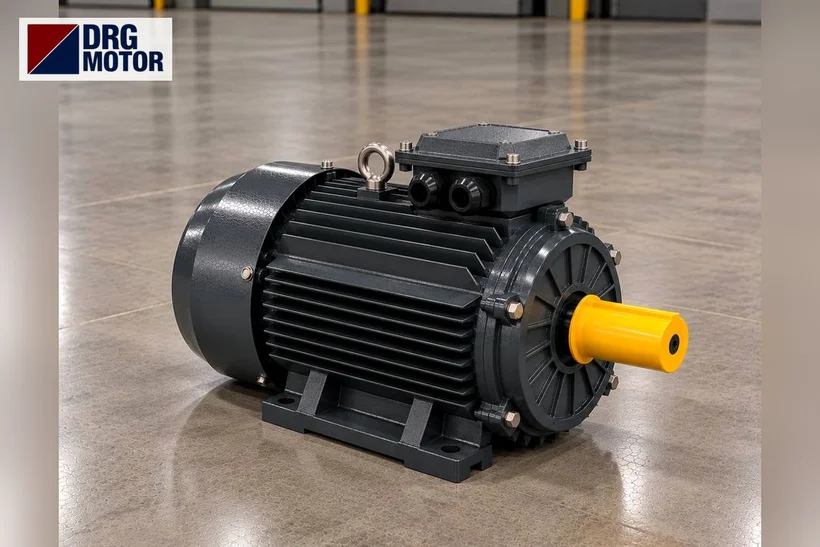
DRG Motor is a manufacturer, supplier and seller of electric motors. You can compare three-phase models at the power and speed you need in the online motor shop and see the whole range in the three-phase asynchronous electric motors category. This article explains what no-load current is, which value is considered normal and the main causes of a high no-load current.
What is no-load current and how much is normal?
An induction motor draws a magnetising current from the supply to build its magnetic field, even without load. Most of this current does no work; it merely sustains the magnetic field across the air gap between stator and rotor. That is why an ammeter on a motor running off-load does not read zero but a fraction of the full-load current.
In practice this value varies with the frame size and the number of poles, but on standard four-pole motors it roughly falls into the 30–50% band of the rated current. Smaller motors tend to sit closer to the upper limit and larger motors closer to the lower one. So having a no-load current is normal; what matters is whether it stays within the expected band.
Click to see current electric motor prices and order nowSEE PRICES →
Approximate no-load current on DRG models
The table below lists the rated current at 400 V of a few common four-pole (1500 rpm) DRG models, together with an approximate no-load current range derived from that value. These no-load figures are not nameplate values but a rough reference derived from the rated current; the real value shifts with voltage, connection type and mechanical condition.
| Model | Power | Rated current (400 V) | Approx. no-load current |
|---|---|---|---|
| DRG-112M-4-AL | 4.0 kW | 7.95 A | 2.4–4.0 A |
| DRG-132S-4-AL | 5.5 kW | 10.7 A | 3.2–5.3 A |
| DRG-132M-4-AL | 7.5 kW | 14.3 A | 4.3–7.2 A |
| DRG-160M-4-AL | 11.0 kW | 20.4 A | 6.1–10.2 A |
For example the 7.5 kW DRG-132M-4 draws about 14.3 A rated at 400 V; off-load a value of roughly 4–7 A is expected. To compare your measured no-load current against the rated value, you can also take into account the nameplate figures of other models such as the 11 kW DRG-160M-4, and do the comparison easily with the motor current chart.
Main causes of a high no-load current
If the off-load current is above expectations, the problem usually comes down to one of these:
- High supply voltage and magnetic saturation: when the voltage rises above the rated value, the magnetic flux in the iron core increases and the material approaches saturation. In the saturation region the magnetising current grows disproportionately; the motor draws extra current and heats up even off-load.
- Incorrect star/delta connection: if a motor that should be connected in star at 400 V is connected in delta, each winding is exposed to a higher voltage than designed. The result is again excessive magnetising current, strong heating and a very high no-load current. This is why the link bridges must match the motor nameplate.
- Winding problem: a partial short between turns, weakened insulation, or a changed turn count during rewinding raises the no-load current. In this case the three phase currents usually read differently from one another.
- Mechanical friction: a seized or dry bearing, a rubbing seal, a misaligned coupling or a fan touching the housing adds load to the motor even off-load; the current then rises above the pure no-load value.
Symptoms and the logic of measurement
The clearest sign of a high no-load current is the motor heating up even without a load, with the ammeter reading higher than expected. In saturation or wrong-connection cases the three phase currents are close to each other but collectively high; in a winding fault there is a clear imbalance between phases. In a mechanical cause, turning the motor by hand reveals stiffness, noise or irregularity.
Before any intervention during current measurement, switch off the supply, confirm it is de-energised and let only qualified electrical personnel carry out the wiring and measurements. Set protection values such as the thermal current from the rated current on the motor nameplate and the device documentation, never from memory; for the insulation measurement threshold too, rely on the nameplate and the relevant standard.
Send a photo of your current motor nameplate and we will find the suitable DRG model together.Send on WhatsApp
If you are replacing a motor whose no-load current stays permanently high and is not economical to repair, you can choose the new motor at the power and speed suited to your application through the shop.
Browse sound three-phase asynchronous motor models at the right power and speed, with current prices, in the shopSEE PRICES
Frequently asked questions
How much should the no-load current be?
There is no single exact value; on standard four-pole motors it is usually around 30–50% of the rated current. Values near the upper limit for small powers and near the lower limit for large powers are normal. A value clearly above this band should be investigated.
Why does a motor draw current off-load?
Even without a load the motor must build its magnetic field. This magnetising current does no work but sustains the field; so an off-load motor reads not zero but a fraction of the rated current.
Why does a wrong delta connection raise the no-load current?
If a motor that should be in star is connected in delta, the voltage on each winding rises, the core enters saturation and the magnetising current grows disproportionately. The motor then draws excess current and heats quickly even off-load.
Does a high no-load current harm the motor?
Yes; a persistently high current produces extra heat, wears the insulation over time and increases the fault risk. Running the motor under load before the cause (voltage, connection, winding or mechanical) is found and fixed is not advised.
Electric Motors Related to This Topic — Models and Current Prices
Suitability is not decided by power alone: compare the speed, voltage, mounting, shaft and fixing dimensions of your machine with the product data; if unsure, send us the nameplate of your current motor.
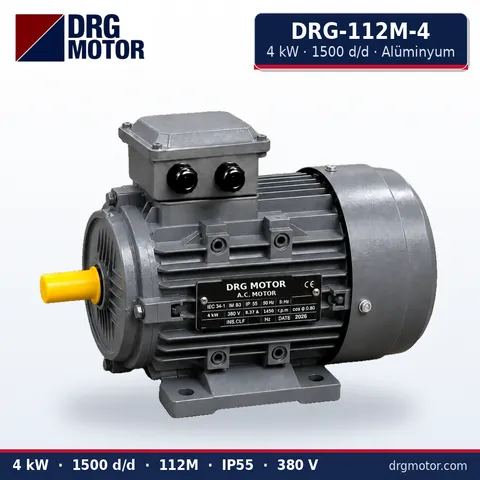
4 kW Three-Phase Motor 1500 rpm – DRG-112M-4 Aluminium
- 4 kW · 1500 rpm (4 poles)
- Aluminium frame · IEC 112M
- Shaft: 28 × 60 mm
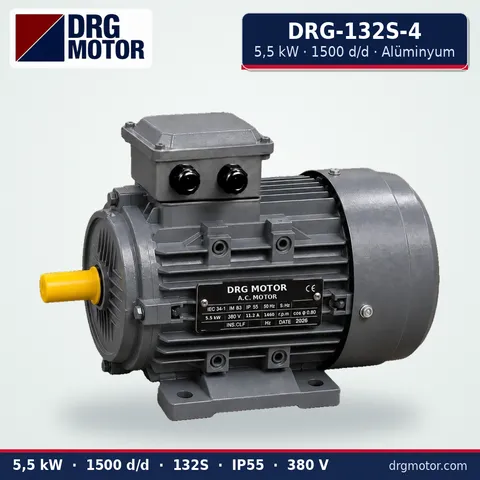
5.5 kW Three-Phase Motor 1500 rpm – DRG-132S-4 Aluminium
- 5.5 kW · 1500 rpm (4 poles)
- Aluminium frame · IEC 132S
- Shaft: 38 × 80 mm
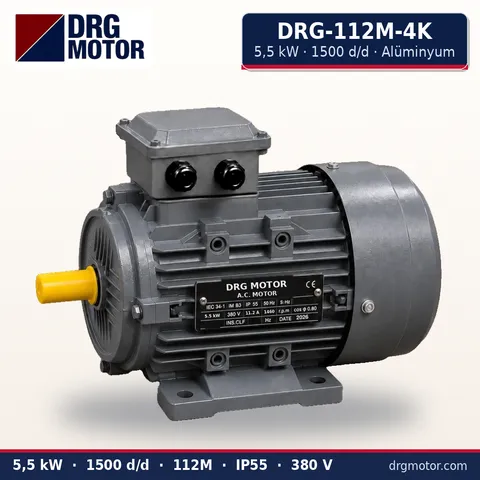
5.5 kW Compact Three-Phase Motor 1500 rpm – DRG-112M-4K Aluminium
- 5.5 kW · 1500 rpm (4 poles)
- Aluminium frame · IEC 112M
- Shaft: 28 × 60 mm
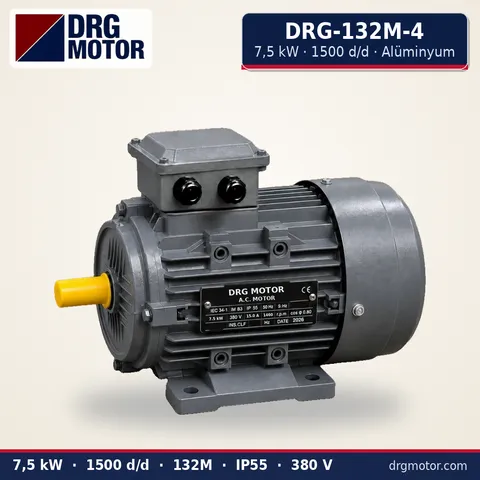
7.5 kW Three-Phase Motor 1500 rpm – DRG-132M-4 Aluminium
- 7.5 kW · 1500 rpm (4 poles)
- Aluminium frame · IEC 132M
- Shaft: 38 × 80 mm
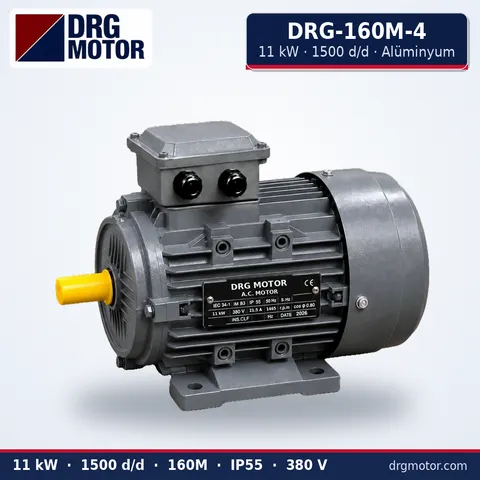
11 kW Three-Phase Motor 1500 rpm – DRG-160M-4 Aluminium
- 11 kW · 1500 rpm (4 poles)
- Aluminium frame · IEC 160M
- Shaft: 42 × 110 mm
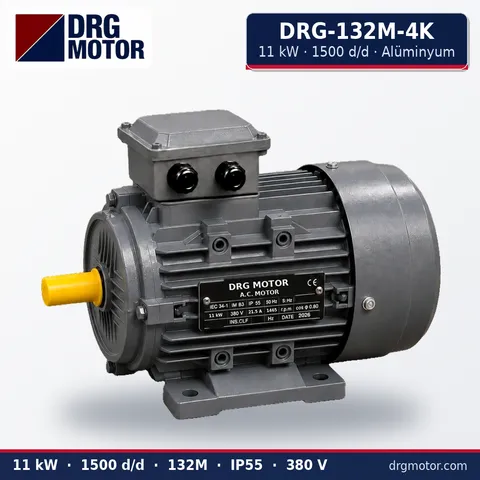
11 kW Compact Three-Phase Motor 1500 rpm – DRG-132M-4K Aluminium
- 11 kW · 1500 rpm (4 poles)
- Aluminium frame · IEC 132M
- Shaft: 38 × 80 mm