English
 Le français
 Türkçe




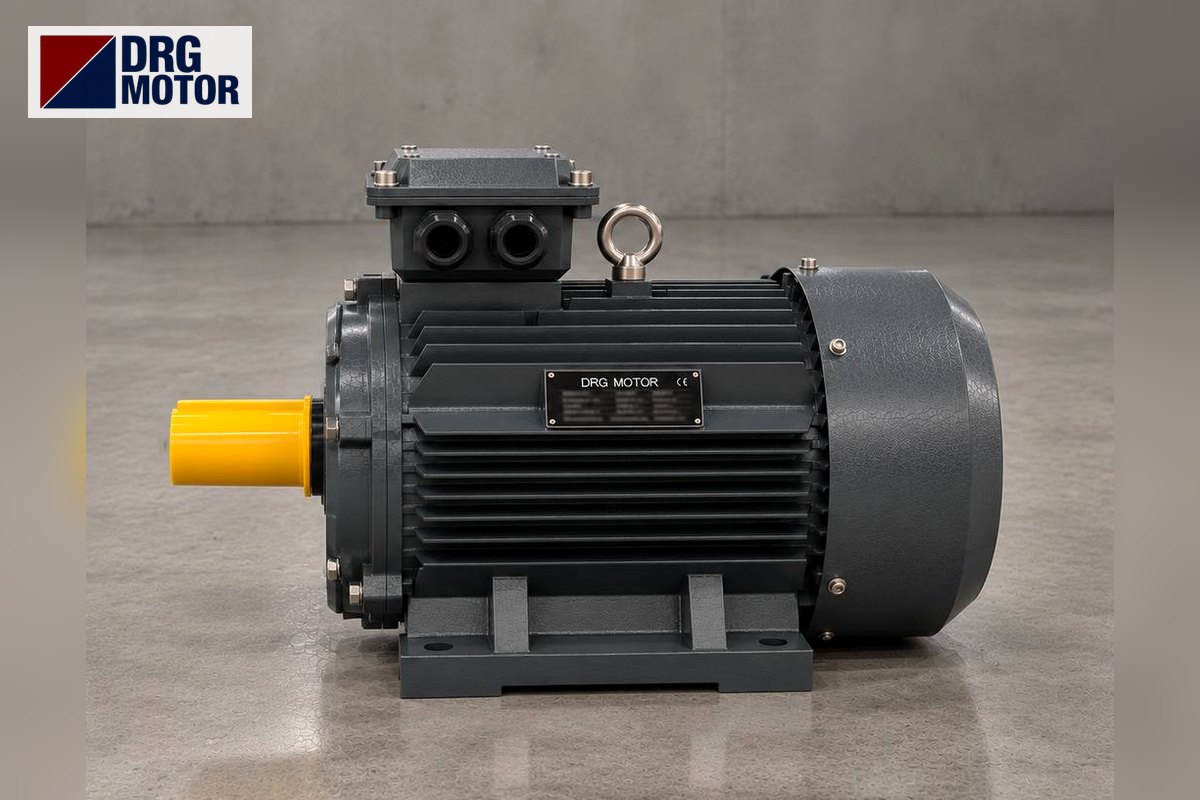

A motor "leaking to the frame" means the insulation between the windings and the metal housing has weakened, letting voltage reach the body. The quickest symptoms are a tingling sensation when you touch the motor and a residual-current device (RCD) that keeps tripping. A reliable diagnosis is made — after the power is isolated — by checking the winding-to-frame insulation resistance (an insulation / megger test).
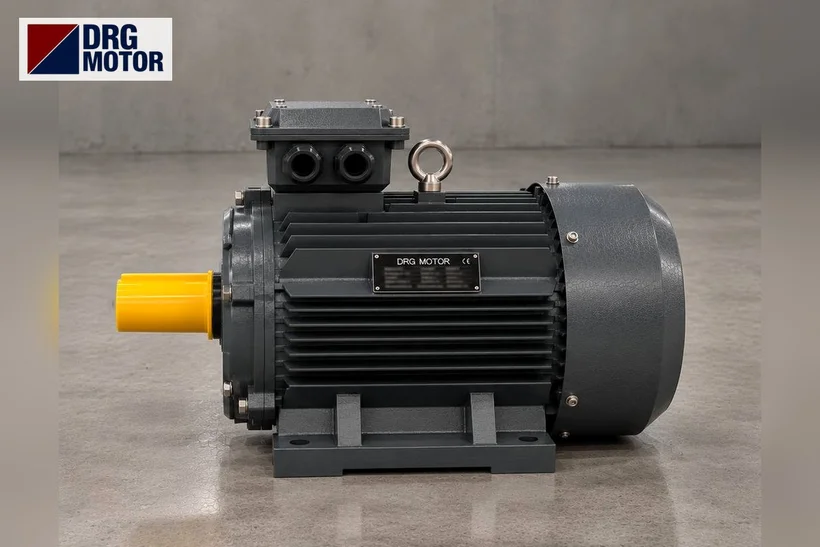
DRG Motor is a manufacturer, supplier and seller of electric motors. When replacing a motor with failed insulation you can find every three-phase model by power and speed in the online motor shop, and listed together in the three-phase asynchronous electric motors category. Below we explain the causes of earth leakage, how it is detected and why earthing is vital here. This article is informative; it is not a step-by-step field wiring or measurement instruction.
What does leakage to the frame mean?
In a three-phase asynchronous motor the windings are enamel-insulated and separated from the metal stator housing by insulating materials. In a healthy motor the resistance between windings and frame is almost infinite, so phase voltage cannot reach the body. When the insulation weakens, this resistance drops and a small current begins to flow through the frame to earth. This unwanted flow is called "earth leakage" or "leakage current". It may start too small to notice, but it grows over time and becomes a problem for both safety and the protection device.
Why does a motor leak to the frame?
The root cause is almost always degraded insulation. The main triggers are:
- Moisture and condensation: A motor left idle for a long time in a cold, damp place, or exposed to rain/water, collects moisture on the winding surface. Moisture lowers insulation resistance — at least temporarily — and causes leakage. Often the value recovers once the motor runs and dries out.
- Ageing of the insulation: Overheating, prolonged heavy loading and the gradual wear of the enamel/varnish layer weaken the insulation permanently. Unlike moisture, this does not recover with drying.
- Dirty or damp terminal box: Dust, oil, conductive deposits or moisture entering through a failed gland/seal can create a leakage path between the terminal links and the frame. Part of the leakage may come not from the motor itself but from a contaminated terminal box.
- Mechanical damage: A foreign object touching the winding, a conductor worn by vibration, or crushing at a cable entry can pierce the insulation and cause direct frame contact.
Telling which cause dominates matters before replacing the motor: a temporary moisture-driven drop and permanent insulation failure lead to different outcomes.
Symptom → likely cause
The table maps common field symptoms to a likely cause. The entries are for orientation; the firm decision comes from a measurement taken after the power is isolated.
| Symptom | Likely cause | First check |
|---|---|---|
| Tingling / mild shock on the frame | Weak insulation, missing/broken earth | Isolate power; have earth continuity and insulation checked |
| RCD trips the moment the motor starts | Clear winding-to-frame leakage | Disconnect the motor and measure insulation resistance |
| Trips in the morning/after rain, clears when warm | Moisture, condensation | See if insulation recovers after drying |
| RCD trips intermittently, under load changes | Dirty/damp terminal box, cable insulation | Have the terminal box and supply cable checked |
Click to see current electric motor prices and order nowSEE PRICES →
How to detect it with a megger (insulation test)
Earth leakage is firmly diagnosed by an insulation-resistance test. Using a megohmmeter (megger), a high DC voltage is applied between the winding terminals and the motor frame and the resistance is read. In sound insulation the resistance is very high (in the megohm/gigaohm range); a low value means the insulation has weakened. The test is done with the motor fully disconnected from the supply — otherwise the reading is wrong and both the instrument and the person are at risk.
We deliberately do not quote a fixed "below X MΩ is bad" threshold; the acceptance limit depends on the motor's voltage, its temperature and the relevant standard. The correct reference is the motor nameplate and the instrument's documentation. Also, a low value on a damp motor may recover when re-measured after drying, so comparing before/after drying is more meaningful than a single reading.
Why does the RCD trip?
A residual-current device compares the current leaving on the phase(s) with the current returning. Normally they are equal; current leaking to the motor frame breaks that balance, and the device opens the circuit once a set threshold is exceeded. So a tripping RCD is usually the sign of a genuine leak and is doing its protective job for personal safety. Disabling or bridging it "because it keeps tripping" is dangerous. The right approach is to find the source: is it the motor, the terminal box or the supply cable? Disconnecting the motor and seeing whether the device still trips helps separate these.
Why earthing matters
When earth leakage occurs, earthing is the first and most important safety barrier for people. If the frame is properly earthed, a leaking current flows through the low-resistance earth path when the insulation fails; this lets the protection device (fuse/RCD) open the circuit quickly and keeps the frame from rising to a dangerous voltage. In a motor with missing or broken earthing, the frame tries to find "earth" through anyone who touches it — that is the shock risk. For this reason a sound, continuously connected earth terminal on the motor frame is the most critical element in a leakage fault. The presence and continuity of earthing should be verified by qualified personnel.
Safety: before measuring or intervening
Earth leakage is a fault that carries a risk of electric shock. Before any check, measurement or wiring work, isolate the power, verify the dead state with a suitable device, and let only qualified electrical personnel carry out the work. Do not disable or bridge the RCD; it is the last link protecting you. Do not re-energise the motor before the insulation resistance is measured and earth continuity is verified. Determine precise settings and acceptance values from the motor nameplate and the instrument's documentation, never from memory.
Replacing a motor with failed insulation: 1500 rpm DRG models
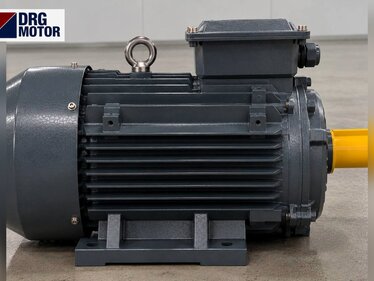
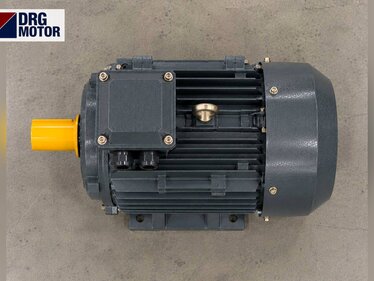
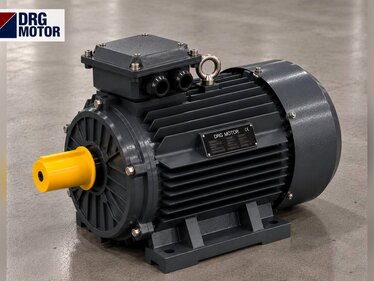
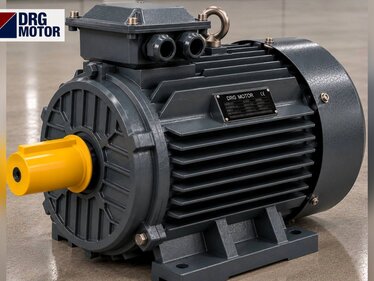
A motor whose insulation has permanently failed has usually reached the end of its economic life, and replacement is the safest route. Base the replacement on the power, speed and connection data on the old motor's nameplate. The most common 4-pole (1500 rpm) aluminium-housing DRG models and their rated currents at 400 V are below; the model codes link straight to the product page. The voltage is 400/690 V (Δ/Y) on all of them.
| Model | Power | Speed | Rated current (400 V) |
|---|---|---|---|
| DRG-112M-4-AL | 4 kW | 1500 rpm | 7.95 A |
| DRG-132S-4-AL | 5.5 kW | 1500 rpm | 10.7 A |
| DRG-112M-4K-AL (compact) | 5.5 kW | 1500 rpm | 10.7 A |
| DRG-132M-4-AL | 7.5 kW | 1500 rpm | 14.3 A |
| DRG-160M-4-AL | 11 kW | 1500 rpm | 20.4 A |
| DRG-132M-4K-AL (compact) | 11 kW | 1500 rpm | 20.4 A |
To verify power and current use the electric motor calculator and the motor current chart; for the supply cable size use the motor cable size calculator.
Send a photo of your current motor nameplate and we will find the suitable DRG model together.Send on WhatsApp
See the suitable three-phase asynchronous motor models and current prices to replace a motor with failed insulationSEE PRICES
Frequently asked questions
I feel a tingle when I touch the motor — what should I do?
This is usually earth leakage and/or an earthing problem, and it carries a shock risk. Stop using the motor, have the power isolated, and have qualified electrical personnel check the insulation resistance and earth continuity.
The RCD keeps tripping — can I disable it?
No. The device may be indicating a genuine leak and protecting you. Instead of disabling/bridging it, find the source: if tripping continues with the motor disconnected the problem is likely in the cable or panel; if it stops, it is in the motor.
Will a motor that leaks due to moisture recover?
Temporary moisture-driven drops usually recover once the motor is properly dried. If the insulation has failed permanently, drying is not enough; rewinding or replacement is then considered.
Which values should I check when buying a new motor?
Base it on the power (kW), speed (rpm), voltage/connection and mounting/shaft dimensions on the old nameplate. You can choose the DRG model in the same class by these values, and share a photo of the nameplate with us to be sure.
Electric Motors Related to This Topic — Models and Current Prices
Suitability is not decided by power alone: compare the speed, voltage, mounting, shaft and fixing dimensions of your machine with the product data; if unsure, send us the nameplate of your current motor.

4 kW Three-Phase Motor 1500 rpm – DRG-112M-4 Aluminium
- 4 kW · 1500 rpm (4 poles)
- Aluminium frame · IEC 112M
- Shaft: 28 × 60 mm
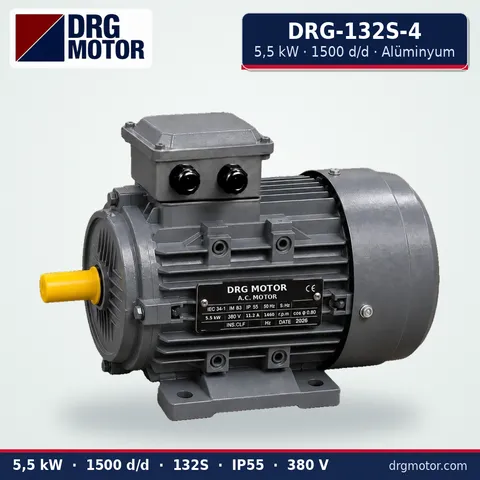
5.5 kW Three-Phase Motor 1500 rpm – DRG-132S-4 Aluminium
- 5.5 kW · 1500 rpm (4 poles)
- Aluminium frame · IEC 132S
- Shaft: 38 × 80 mm
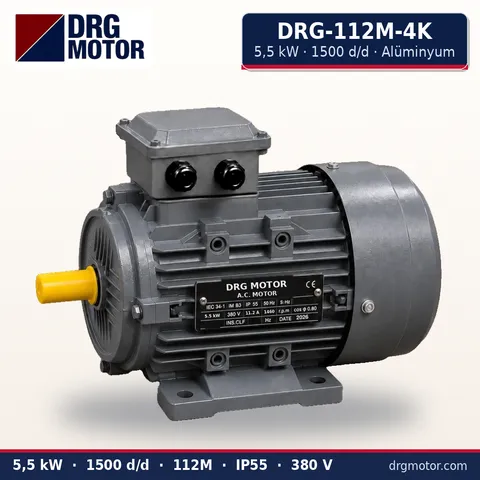
5.5 kW Compact Three-Phase Motor 1500 rpm – DRG-112M-4K Aluminium
- 5.5 kW · 1500 rpm (4 poles)
- Aluminium frame · IEC 112M
- Shaft: 28 × 60 mm
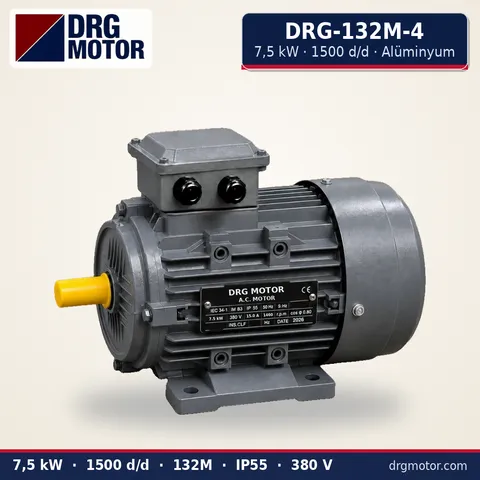
7.5 kW Three-Phase Motor 1500 rpm – DRG-132M-4 Aluminium
- 7.5 kW · 1500 rpm (4 poles)
- Aluminium frame · IEC 132M
- Shaft: 38 × 80 mm
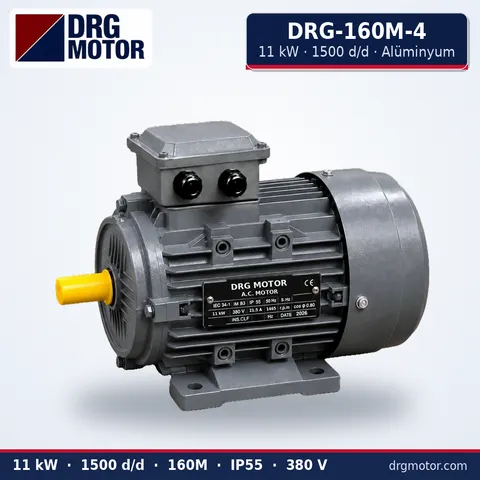
11 kW Three-Phase Motor 1500 rpm – DRG-160M-4 Aluminium
- 11 kW · 1500 rpm (4 poles)
- Aluminium frame · IEC 160M
- Shaft: 42 × 110 mm
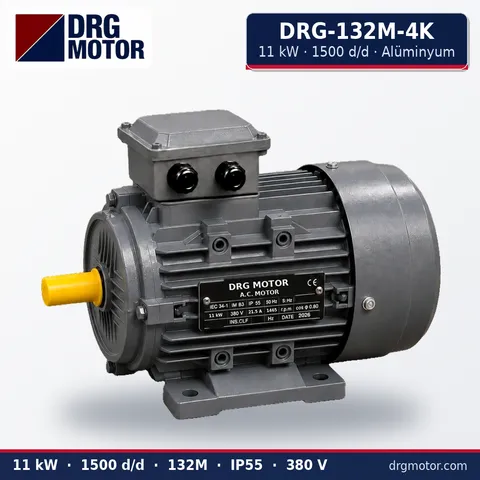
11 kW Compact Three-Phase Motor 1500 rpm – DRG-132M-4K Aluminium
- 11 kW · 1500 rpm (4 poles)
- Aluminium frame · IEC 132M
- Shaft: 38 × 80 mm