English
 Le français
 Türkçe




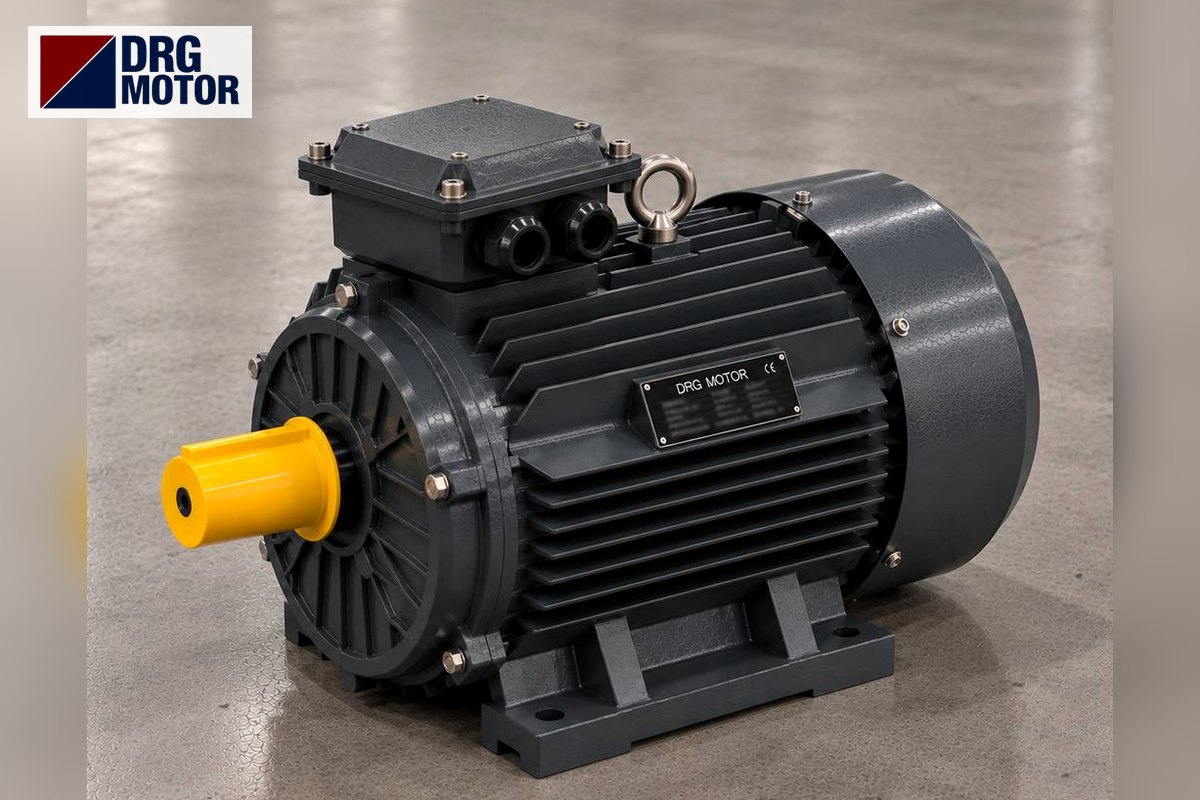

If your electric motor gives off a burning smell, the first thing to do is stop it and cut the supply. The smell is a serious warning that the winding insulation, the bearing grease or nearby material is overheating; leaving the motor running only increases the damage and the fire risk.
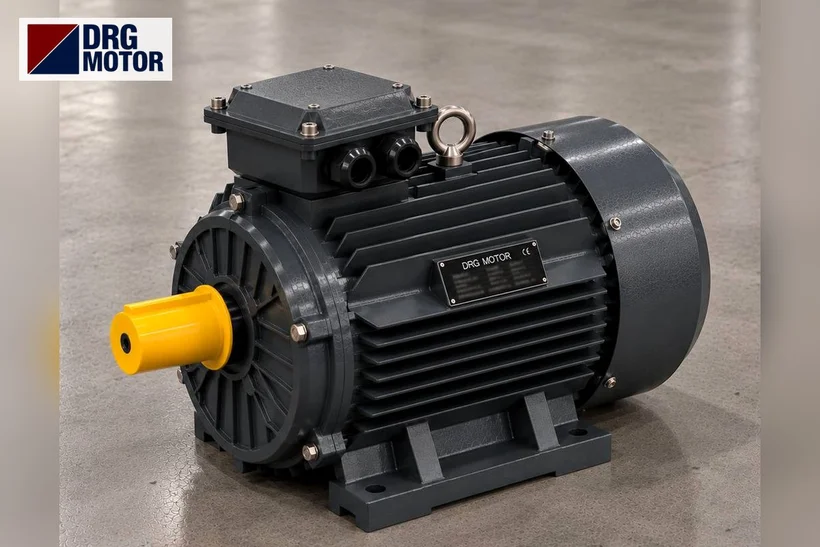
DRG Motor is a manufacturer, supplier and seller of electric motors. This article explains what a burning smell means, how to react in an emergency and how to diagnose the fault. When a replacement is needed, you can review three-phase models in the online motor shop and in the three-phase asynchronous electric motors category.
What to do first when you smell burning
The order is clear and speed matters:
- Stop the motor; shut the machine down with the emergency stop if possible.
- Cut the power at the panel and prevent any restart.
- If there is heavy smoke, ventilate the area and remove flammable material.
- Let the motor cool before touching it; the frame surface can be very hot.
After these steps, do not keep restarting the motor to "test" it. Every re-energisation before the source is found further damages insulation that is already compromised. Electrical checks and work must be carried out only by authorised electrical personnel.
What does each smell point to?
The type of smell gives the first clue about where the problem is:
- Sharp, varnish-like/ozone smell: usually means the winding insulation is overheating. This is the most critical case.
- Hot oil/grease smell: may indicate bearing overheating or a lubrication problem; it often comes with more noise and vibration.
- Melted plastic/rubber smell: can come from the terminal block, cable insulation or an external material touching the motor.
Smell alone is rarely a final diagnosis; it must be read together with the causes below.
Main causes of a burning smell
In a three-phase asynchronous motor a burning smell usually has one of these causes:
- Winding overheating: once insulation passes the temperature it can withstand, it starts to break down and gives off the characteristic smell.
- Overload: if the motor constantly drives a load above its rating, the current rises and the temperature climbs.
- Phase loss: if one of the three phases is missing, the motor is strained on two phases; the current becomes unbalanced and the winding heats quickly.
- Bearing failure: a worn or dry bearing increases friction, causing local heating and a grease smell.
- Insufficient cooling: a blocked fan cover, dirty frame fins or a high ambient temperature stop the heat from escaping.
If you suspect phase loss or unbalanced current, the motor current chart and the electric motor calculator help you check the supply side.
Click to see current electric motor prices and order nowSEE PRICES →
How is it diagnosed by measurement?
Confirming the source of a burning smell needs measurement, carried out under safety rules by authorised personnel:
- Insulation resistance: the soundness of the insulation between winding and frame is measured. Threshold values are judged against the motor and instrument documentation.
- Winding resistances: the three phase resistances are compared; a clear difference can point to a winding problem.
- Running current: the current of the three phases is compared with the rating and with each other; high or unbalanced current means overload or a phase issue. The correct values are on the motor nameplate.
- Mechanical check: turning the shaft by hand lets you judge bearing stiffness, noise and play.
Before any measurement, cut the power, confirm it is dead and leave the work to authorised electrical personnel. Do not set protections such as the thermal current from memory; always use the nameplate value.
Safety first: what to watch out for
A burning smell is not a comfort issue but a safety matter. Keeping the motor running with "let it turn a bit more, it will pass" raises the risk of fire and permanent winding damage. Do not touch a hot frame with bare hands, never use water on an electrical fire if there is smoke, and clear the area. The final diagnosis and repair decision belong to the authorised personnel who see the measurement results.
If the winding has burned: replacement and DRG models
If measurements show the winding insulation is permanently damaged, replacing the motor is usually the soundest solution. When choosing a new motor, base it on the old nameplate's power (kW), speed (rpm) and mounting type (foot/flange). The table below lists common 1500 rpm (4-pole) aluminium DRG models and their rated current at 400 V; the model names link straight to the product page.
| Model | Power | Speed | Rated current (400 V) |
|---|---|---|---|
| DRG-112M-4 (aluminium) | 4 kW | 1500 rpm | 7.95 A |
| DRG-132S-4 (aluminium) | 5.5 kW | 1500 rpm | 10.7 A |
| DRG-112M-4K (aluminium) | 5.5 kW | 1500 rpm | 10.7 A |
| DRG-132M-4 (aluminium) | 7.5 kW | 1500 rpm | 14.3 A |
| DRG-160M-4 (aluminium) | 11 kW | 1500 rpm | 20.4 A |
| DRG-132M-4K (aluminium) | 11 kW | 1500 rpm | 20.4 A |
The same ratings are also available in cast iron and in other speed classes. For a correct match, simply compare the old motor's nameplate values.
Send a photo of your current motor nameplate and we will find the suitable DRG model together.Send on WhatsApp
See three-phase models at the right power and speed for your burned motor, with current prices, in the shopSEE PRICES
Frequently asked questions
Must I stop the motor immediately when it smells of burning?
Yes. The smell shows the insulation or bearing is overheating. Stopping the motor and cutting the power is the right first step for both safety and limiting the damage.
Will a motor that smells of burning recover if it rests a while?
No. The smell may fade as it cools, but the cause does not disappear. Running it before the source is fixed makes the damage worse; a measured diagnosis comes first.
How do I know the burning smell is from phase loss?
A firm conclusion comes from measurement. Authorised personnel check the current of the three phases and the supply voltages; a missing or unbalanced phase points to phase loss.
Should a burned-winding motor be repaired or replaced?
It depends on the extent of the damage and the motor's condition. If the insulation is permanently damaged, replacement is often safer and longer-lasting; base your choice on the old nameplate values.
Electric Motors Related to This Topic — Models and Current Prices
Suitability is not decided by power alone: compare the speed, voltage, mounting, shaft and fixing dimensions of your machine with the product data; if unsure, send us the nameplate of your current motor.

4 kW Three-Phase Motor 1500 rpm – DRG-112M-4 Aluminium
- 4 kW · 1500 rpm (4 poles)
- Aluminium frame · IEC 112M
- Shaft: 28 × 60 mm
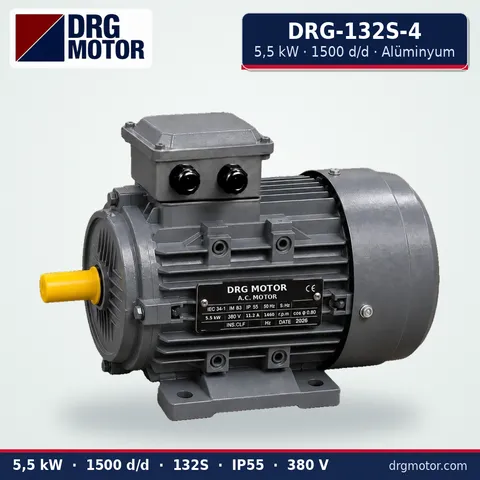
5.5 kW Three-Phase Motor 1500 rpm – DRG-132S-4 Aluminium
- 5.5 kW · 1500 rpm (4 poles)
- Aluminium frame · IEC 132S
- Shaft: 38 × 80 mm
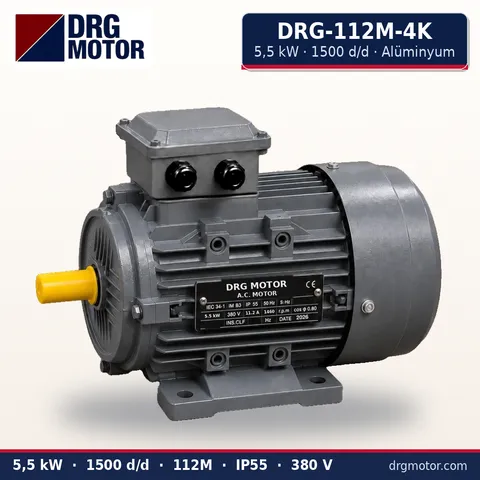
5.5 kW Compact Three-Phase Motor 1500 rpm – DRG-112M-4K Aluminium
- 5.5 kW · 1500 rpm (4 poles)
- Aluminium frame · IEC 112M
- Shaft: 28 × 60 mm
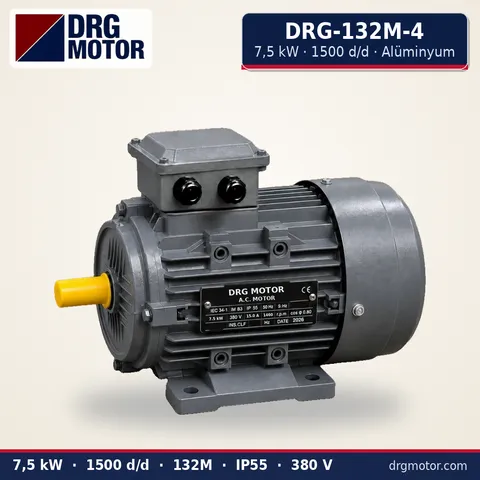
7.5 kW Three-Phase Motor 1500 rpm – DRG-132M-4 Aluminium
- 7.5 kW · 1500 rpm (4 poles)
- Aluminium frame · IEC 132M
- Shaft: 38 × 80 mm
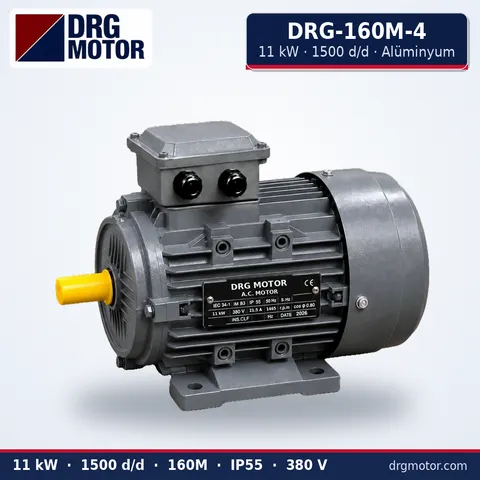
11 kW Three-Phase Motor 1500 rpm – DRG-160M-4 Aluminium
- 11 kW · 1500 rpm (4 poles)
- Aluminium frame · IEC 160M
- Shaft: 42 × 110 mm
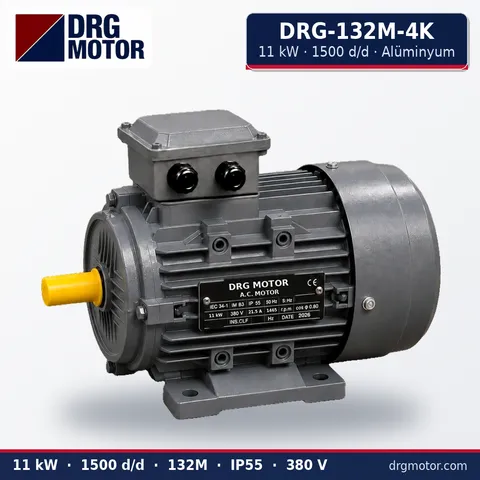
11 kW Compact Three-Phase Motor 1500 rpm – DRG-132M-4K Aluminium
- 11 kW · 1500 rpm (4 poles)
- Aluminium frame · IEC 132M
- Shaft: 38 × 80 mm