 English
 Le français
 Türkçe




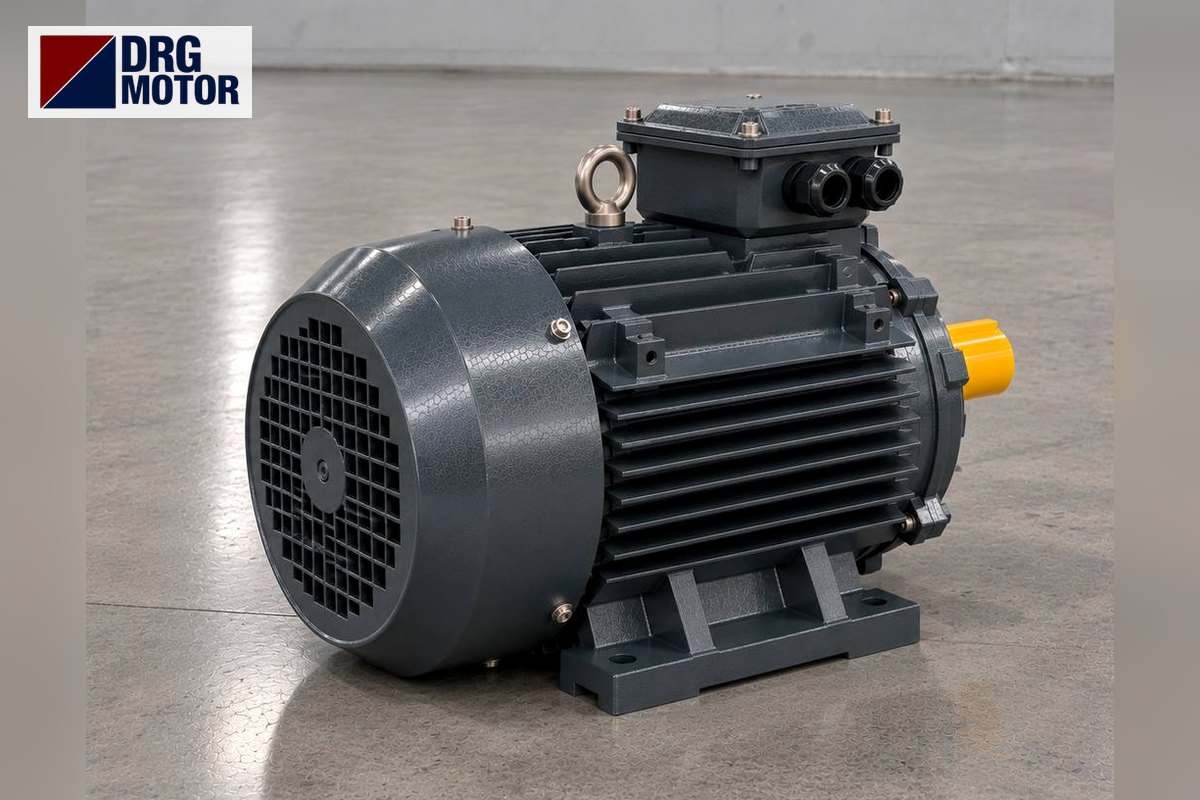

Short answer: when you compare two motors on paper you use the efficiency figure printed on the nameplate; but to see the real saving on your own machine you must base the calculation on the measured consumption (kWh). Nameplate efficiency is a reference valid at rated load; measured consumption tells you what the motor actually draws under your load. The sound method is usually to read both together.
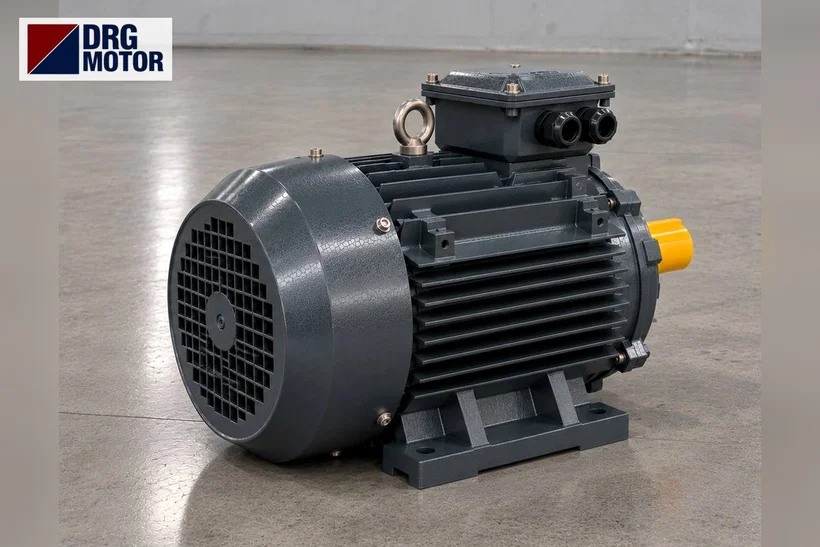
DRG Motor is a manufacturer, supplier and seller of electric motors. It is based in İzmir and ships quickly across all of Türkiye, that province included. Once you have settled the power and speed you need, pick the right three-phase model in the online electric motor shop and browse similar models together in the three-phase asynchronous electric motors category.
What does nameplate efficiency say, and what does measured consumption say?
The efficiency figure on the plate describes the ratio between the power delivered to the shaft and the power drawn from the grid, while the motor runs at rated power and rated load. It is a reference determined under laboratory conditions: full load, clean voltage, nominal frequency. Measured consumption is something else entirely; it is the energy the motor draws over a period while it turns your pump, fan or conveyor, and it accumulates on the meter as kilowatt-hours (kWh). One answers "how efficient can it be under that condition", the other answers "how much energy actually left my plant".
Which one should you use, and when?
If you are comparing two candidate motors before buying and there is no load connected yet, the only solid data you hold is the nameplate efficiency, so you compare with that. But if the motor is already running and you ask "what will I gain if I switch", measuring the real kWh of the existing motor gives a far more accurate answer. A motor of the same power that turns at only half its load will never reach the rated reference figure. The paper comparison is the start; the field measurement is the decision.
The logic of the saving calculation
The power a motor draws from the grid is roughly the shaft power divided by efficiency: input power = shaft power / efficiency. So the higher the efficiency, the less power is drawn from the grid for the same work. Energy is that power multiplied by time:
- Energy (kWh) = input power (kW) × running time (hours)
- Input power (kW) = shaft power (kW) / efficiency
The trap is this: if you feed nameplate efficiency into the calculation you get an "ideal" consumption; the real consumption may deviate from it, because the shaft power is often not the rated value either. When you make an operating decision, listening to the meter is safer than trusting the formula.
Click to see current electric motor prices and order nowSEE PRICES →
Do not skip the load factor
The most common mistake is to assume the motor always runs at rated load. In reality fans, pumps and many machines spend much of the day at partial load. At partial load the drawn power drops and the efficiency behaviour changes. That is why a rough "nameplate power × hours" estimate deviates clearly from the real bill. The only way to see the true load factor is to measure over a period. To clarify your load and speed, use the electric motor calculator page.
Measuring safely
To see the real consumption, logging kWh with a power analyser at the panel is the healthiest route. But this work is done inside an electrical panel and carries risk. Before measuring, cut the power, verify the absence of voltage with a suitable device, and let only authorised electrical personnel do the connection and the measurement. Rather than quoting a fixed threshold or setting, refer to the device documentation and the motor's nameplate values. If a line on the plate leaves you unsure, photographing it and asking us is the most practical move.
What you see on DRG three-phase motors
DRG's aluminium-body three-phase asynchronous motors are built in IEC frame sizes, with 1000/1500/3000 rpm options; protection is IP55 and insulation is class F. The table below lists a few power steps from the 1500 rpm (4-pole) family. It gives the power, speed and voltage you use when choosing — not an efficiency figure; always read the efficiency line from the product's own nameplate and documentation.
| Model | Power | Speed | Voltage |
|---|---|---|---|
| DRG-90L-4 | 1.5 kW | 1500 rpm | 230/400 V |
| DRG-112M-4 | 4 kW | 1500 rpm | 400/690 V |
| DRG-132S-4 | 5.5 kW | 1500 rpm | 400/690 V |
| DRG-132M-4 | 7.5 kW | 1500 rpm | 400/690 V |
| DRG-160M-4 | 11 kW | 1500 rpm | 400/690 V |
Common mistakes
- Treating nameplate efficiency as "my bill". It is a reference; the bill forms on the meter in kWh.
- Ignoring partial load and assuming the motor is always at full load.
- Measuring from a single instant; consumption builds over time, and instantaneous power misleads.
- Mistaking the power drawn from the grid for mechanical shaft power.
See the prices of three-phase motors at the power and speed you need on a single screenSEE PRICES
Share your current motor's nameplate or the consumption you read from the meter, and we can settle the suitable power and speed for your load together.
Send a photo of your current motor nameplate and we will find the suitable DRG model together.Send on WhatsApp
Frequently asked questions
Am I wrong to put nameplate efficiency into the calculation?
No; it is needed for comparison and a first estimate. Just do not read the result as a "final bill". The real figure is the kWh that forms on the meter while the motor runs under your load.
What should I look at when comparing two motors?
With no measurement yet, compare the nameplate efficiency values of two models at the same power and speed. Where possible, judge both against your own load profile, since partial-load behaviour changes the outcome.
Why does measured consumption differ from the nameplate?
Because the plate is for rated load and ideal conditions; your machine may run at partial load, different voltage and a varying regime. This deviation is normal, and the measurement makes the real decision.
How do I know which power to move to?
First clarify the true power need and speed of the load; then pick the right power step in the shop. If unsure, reach us with a nameplate photo.
Electric Motors Related to This Topic — Models and Current Prices
Suitability is not decided by power alone: compare the speed, voltage, mounting, shaft and fixing dimensions of your machine with the product data; if unsure, send us the nameplate of your current motor.

4 kW Three-Phase Motor 1500 rpm – DRG-112M-4 Aluminium
- 4 kW · 1500 rpm (4 poles)
- Aluminium frame · IEC 112M
- Shaft: 28 × 60 mm

5.5 kW Three-Phase Motor 1500 rpm – DRG-132S-4 Aluminium
- 5.5 kW · 1500 rpm (4 poles)
- Aluminium frame · IEC 132S
- Shaft: 38 × 80 mm

7.5 kW Three-Phase Motor 1500 rpm – DRG-132M-4 Aluminium
- 7.5 kW · 1500 rpm (4 poles)
- Aluminium frame · IEC 132M
- Shaft: 38 × 80 mm

11 kW Three-Phase Motor 1500 rpm – DRG-160M-4 Aluminium
- 11 kW · 1500 rpm (4 poles)
- Aluminium frame · IEC 160M
- Shaft: 42 × 110 mm

1.5 kW Three-Phase Motor 1500 rpm – DRG-90L-4 Aluminium
- 1.5 kW · 1500 rpm (4 poles)
- Aluminium frame · IEC 90L
- Shaft: 24 × 50 mm





