English
 Le français
 Türkçe




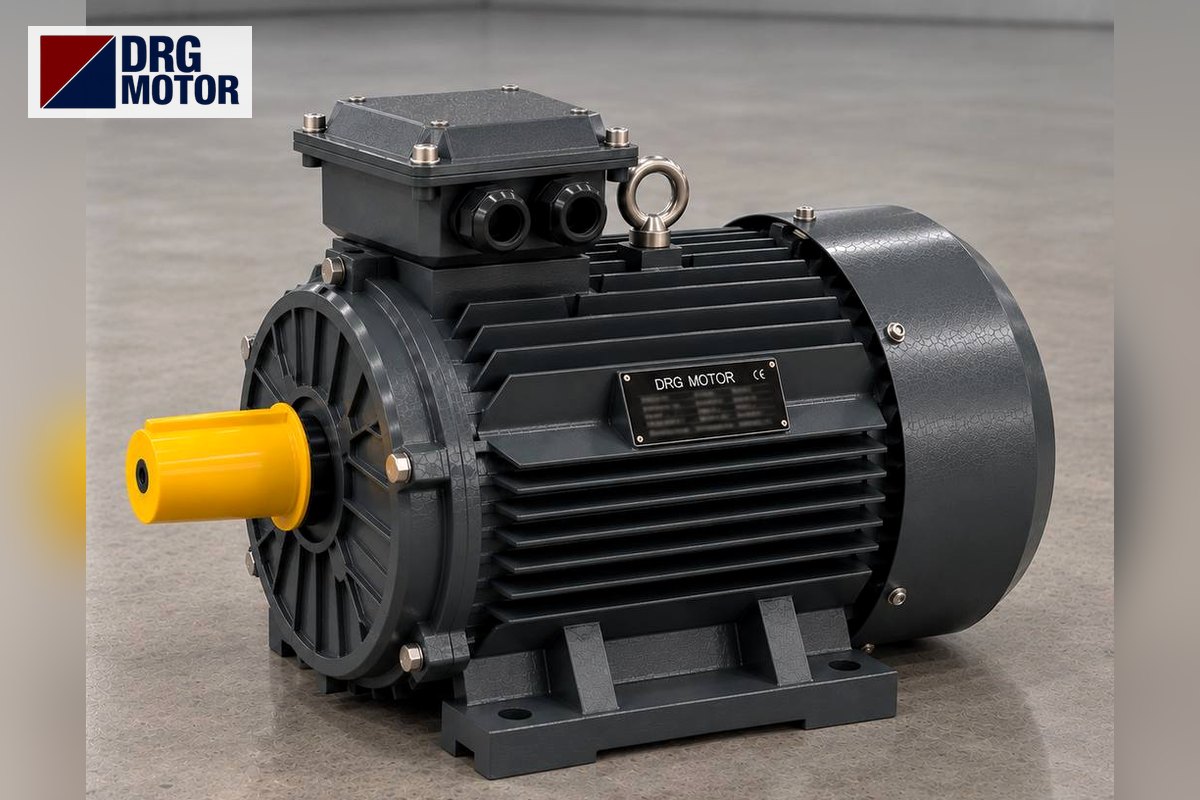

Coupling misalignment occurs when the shaft of a motor and the shaft of the machine it drives do not meet on the same axis, and it usually shows up as noticeable vibration. This vibration is more than an annoying noise: left uncorrected it shortens bearing life, wears out the coupling element and stresses the shaft. The good news is that misalignment is a mechanical problem that proper shaft alignment can largely prevent.
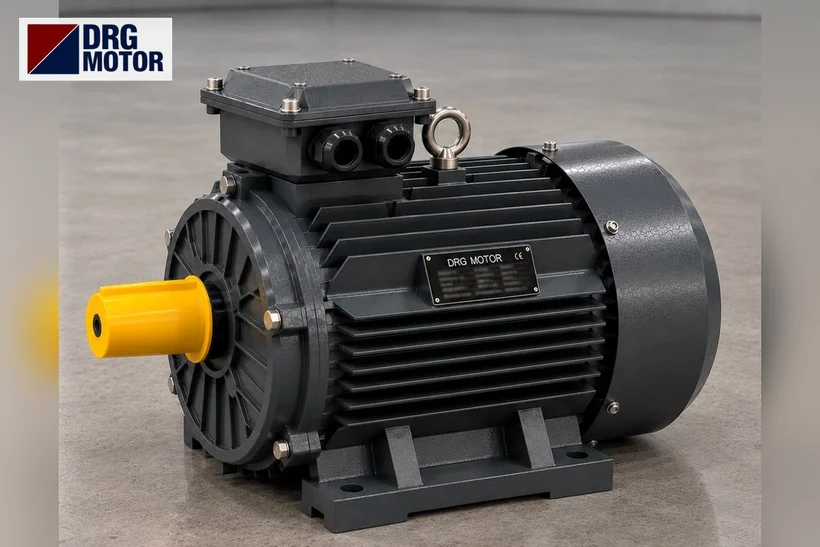
DRG Motor is a manufacturer, supplier and seller of electric motors. You can review three-phase asynchronous models suited to alignment and coupling selection by power and speed in the online motor shop, and see the same motors grouped in the three-phase asynchronous electric motors category.
What is coupling misalignment?
An electric motor usually transmits its rotation to a pump, fan or gearbox through a coupling. The ends of two shafts face each other and the coupling joins them. Ideally the rotation axes of the motor shaft and the driven shaft lie on a single straight line. In practice, assembly errors, foundation settling, thermal expansion or loose bolts shift these two axes apart. That offset is what we call coupling misalignment or shaft misalignment.
Flexible couplings tolerate a small offset to a degree, but the idea that "I use a flexible coupling, so I don't need to align" is wrong. Flexibility hides the alignment error, it does not remove it: as the offset grows, the motor forces its shaft through a small angle on every turn, and that force, repeating at running speed, turns into vibration.
Three types of offset: parallel, angular and axial
Misalignment does not appear in a single form. For diagnosis three basic types are distinguished, and in most real faults they occur together:
| Offset type | Meaning | Typical vibration signature |
|---|---|---|
| Parallel (radial) | The two shafts stay parallel but are shifted sideways | Dominant vibration at twice running frequency (2×) |
| Angular | The two shafts meet at an angle | Strong in the axial direction, often 1× and 2× content |
| Axial | The shafts push/pull each other along the axis | Axial thrust, uneven load on the bearing |
In parallel offset the two shafts point the same way but sit at different heights; in angular offset they form a "V" or inverted "V". Axial offset comes from leaving the shafts too close or too far apart and keeps the coupling under a constant thrust. Real installations usually show both parallel and angular content at once, so alignment must correct sideways and angular error together.
How does misalignment affect vibration and bearing life?
Coupling misalignment creates an extra force that repeats on every revolution. That force lands directly on the bearings of the motor and the driven machine. Bearings are selected to carry a certain radial and axial load; when misalignment pushes that load above the design value, the bearing's fatigue life drops rapidly. The result is often early bearing failure, rising temperature and a growing hum.
Vibration tires not only the bearing but also the coupling element, the shaft key and the connecting bolts. Over time the coupling element wears, clearance grows and vibration increases further — a vicious circle. We cover the general causes of vibration in a separate article: electric motor vibration causes. For bearing noise and replacement symptoms, see the bearing noise and replacement article.
Click to see current electric motor prices and order nowSEE PRICES →
Symptoms of coupling misalignment
- Vibration concentrated near the motor-machine coupling, increasing with speed.
- Abnormal heating at the coupling area or the bearing housings.
- A dominant vibration component at twice running frequency (2×) — the typical signature of parallel offset.
- Noticeable vibration in the axial direction — a sign of angular offset.
- Fast wear of the coupling element, rubber dust, loosening bolts.
- Bearing failures that recur within a short time.
These signs alone do not confirm a diagnosis; unbalance, soft foot or a loose housing can leave similar traces. Still, vibration concentrated at the coupling and a pronounced axial component point to alignment as the first place to check.
Example: shaft and coupling on 4-pole DRG models
A coupling is always selected by the diameter and length of the shaft, so when you change a motor you must compare not only power but also the shaft size. Below are a few DRG models from the 1500 rpm (4-pole) class with their shaft diameter/length and rated torque. Note that the same power may be offered in different frame sizes, hence different shaft diameters.
| Model | Power / Speed | Shaft (Ø×L) | Torque |
|---|---|---|---|
| DRG-112M-4 | 4 kW / 1500 rpm | 28×60 mm | 26.3 Nm |
| DRG-132S-4 | 5.5 kW / 1500 rpm | 38×80 mm | 36.0 Nm |
| DRG-112M-4K (compact) | 5.5 kW / 1500 rpm | 28×60 mm | 36.0 Nm |
| DRG-132M-4 | 7.5 kW / 1500 rpm | 38×80 mm | 49.1 Nm |
| DRG-160M-4 | 11 kW / 1500 rpm | 42×110 mm | 71.7 Nm |
| DRG-132M-4K (compact) | 11 kW / 1500 rpm | 38×80 mm | 71.7 Nm |
For example, 5.5 kW is available both in the standard 132S frame (38×80 mm shaft) and in the compact 112M frame (28×60 mm shaft); for 11 kW there are the 160M (42×110 mm) and the compact 132M (38×80 mm). Compact "K" models come with a smaller shaft diameter, so the coupling hub and key size change too. You can find shaft diameter, key and coupling standards in the shaft diameter, key and coupling article. The motor current chart and electric motor calculator tools also help when verifying the right size.
Why does correct alignment matter and how is it checked?
Good alignment stops vibration at its source: bearings tire less, the coupling lasts longer, energy is not wasted and neighbouring equipment is stressed less. The aim of alignment is to bring both the sideways (parallel) and the angular offset of the two shafts within acceptable limits.
Alignment is checked with dial indicators or a laser alignment tool. During the work, thin shims under the motor feet correct height and angle, soft foot is checked and the bolts are tightened in the stated sequence. Acceptance limits depend on speed and coupling type; rather than quoting a tolerance from memory, use the value in the coupling/machine documentation.
Safety: before any alignment or coupling work, switch off the power, verify the de-energised state and make sure rotating parts have stopped. Alignment and mechanical adjustment should be carried out by authorised personnel only; measurement and wiring should likewise be done by authorised electrical personnel. Always refit the coupling guard after assembly.
Alignment or a new motor?
If the source of vibration is alignment, the answer is proper alignment, not a new motor. But on a motor with a bent shaft, ovalised bearing housings or a cracked frame, alignment will not give a lasting result. Taking the motor's age, winding condition and repair history into account, replacing a unit that fails again and again is often the wiser choice. Once you have identified the most suitable power and shaft size, you can reach an equivalent DRG model from the shop.
Send a photo of your current motor nameplate and we will find the suitable DRG model together.Send on WhatsApp
See three-phase asynchronous motor models with the right shaft diameter and power for your coupling in the shopSEE PRICES
Frequently asked questions
Does coupling misalignment damage the motor itself?
It does not directly harm the winding, but the vibration it creates stresses the bearings and the shaft. Uncorrected misalignment can lead to early bearing failure and, over time, to shaft/housing damage. That is why alignment is one of the first things to check when vibration appears.
If I use a flexible coupling, do I still need to align?
A flexible coupling tolerates a small offset but does not remove the need for alignment. As the offset grows, the flexible element tires more and wears quickly, and vibration and bearing load still rise. A flexible coupling complements good alignment, it does not replace it.
How do I tell misalignment vibration from unbalance?
Unbalance is usually dominant at once the running frequency (1×), while parallel misalignment often gives a strong component at twice (2×) and a pronounced axial vibration. A reliable distinction requires a vibration measurement made by qualified people with the proper instrument.
What should I watch for regarding the coupling when I replace a motor?
Not only power and speed, but also shaft diameter, shaft length, key size and frame size must match. On compact-frame models the shaft diameter can differ, in which case the coupling hub must suit it too. If you are unsure, share the nameplate and dimension details with us.
Electric Motors Related to This Topic — Models and Current Prices
Suitability is not decided by power alone: compare the speed, voltage, mounting, shaft and fixing dimensions of your machine with the product data; if unsure, send us the nameplate of your current motor.

4 kW Three-Phase Motor 1500 rpm – DRG-112M-4 Aluminium
- 4 kW · 1500 rpm (4 poles)
- Aluminium frame · IEC 112M
- Shaft: 28 × 60 mm
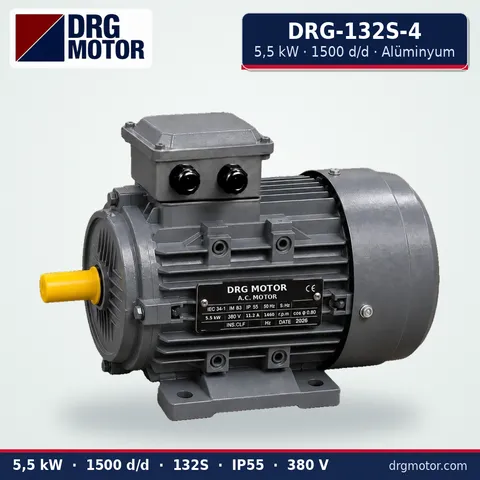
5.5 kW Three-Phase Motor 1500 rpm – DRG-132S-4 Aluminium
- 5.5 kW · 1500 rpm (4 poles)
- Aluminium frame · IEC 132S
- Shaft: 38 × 80 mm
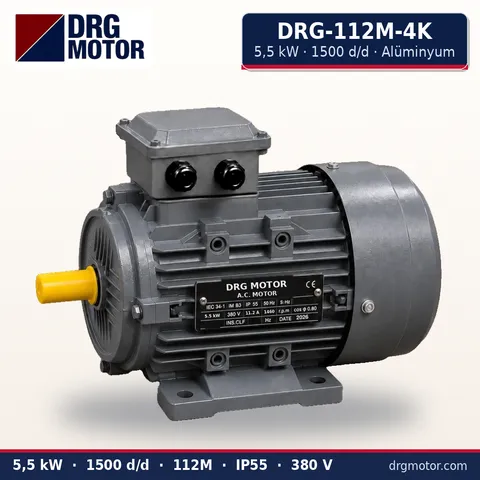
5.5 kW Compact Three-Phase Motor 1500 rpm – DRG-112M-4K Aluminium
- 5.5 kW · 1500 rpm (4 poles)
- Aluminium frame · IEC 112M
- Shaft: 28 × 60 mm
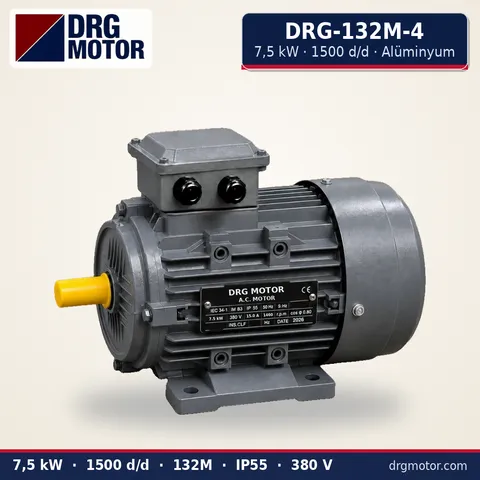
7.5 kW Three-Phase Motor 1500 rpm – DRG-132M-4 Aluminium
- 7.5 kW · 1500 rpm (4 poles)
- Aluminium frame · IEC 132M
- Shaft: 38 × 80 mm
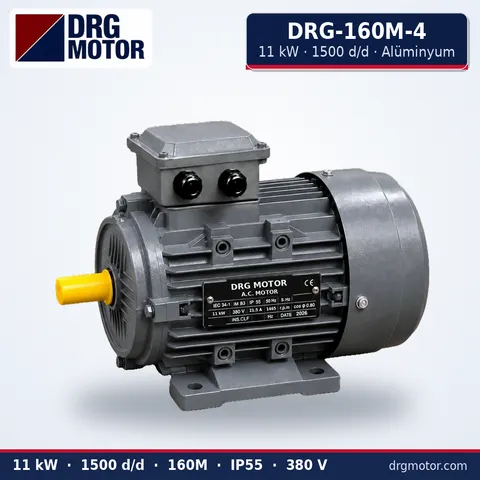
11 kW Three-Phase Motor 1500 rpm – DRG-160M-4 Aluminium
- 11 kW · 1500 rpm (4 poles)
- Aluminium frame · IEC 160M
- Shaft: 42 × 110 mm
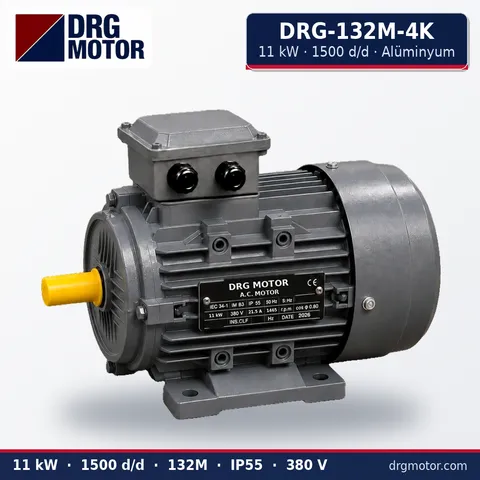
11 kW Compact Three-Phase Motor 1500 rpm – DRG-132M-4K Aluminium
- 11 kW · 1500 rpm (4 poles)
- Aluminium frame · IEC 132M
- Shaft: 38 × 80 mm