English
 Le français
 Türkçe


The most typical signs of a broken rotor bar are a motor that clearly struggles under load, a slow periodic swing (modulation) in speed and current, weak starting and a gradual loss of power. These symptoms alone are not a definite diagnosis; the common way to confirm a cracked or broken bar in the squirrel-cage rotor is motor current signature analysis (MCSA).
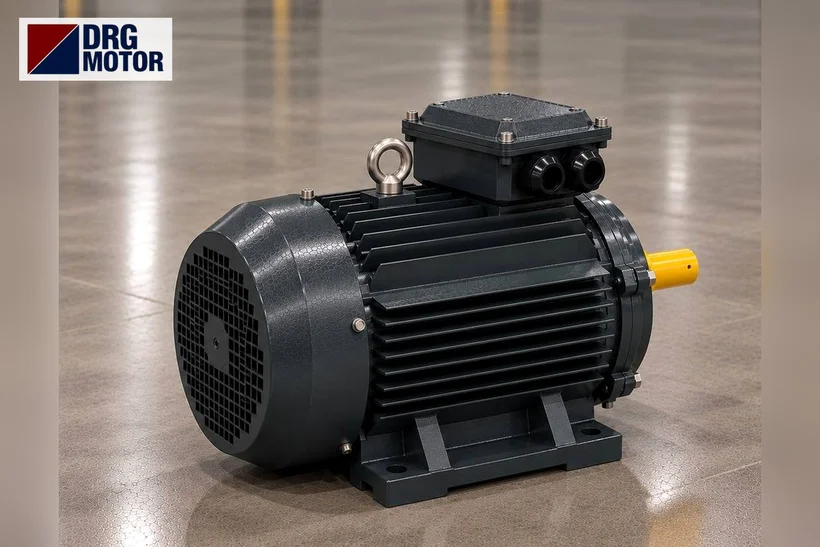
DRG Motor is a manufacturer, supplier and seller of electric motors. Below we explain the symptoms of a broken rotor bar, the physics behind them and the logic of MCSA, using 4-pole three-phase models as examples. You can review every model by power and speed in the online motor shop or in the three-phase asynchronous electric motors category.
The squirrel-cage rotor and the role of the bar
In a three-phase asynchronous motor the stator windings create a rotating magnetic field. This field induces current in the conductive bars of the rotor; the interaction between that current and the field produces torque. In a squirrel-cage rotor these bars are joined by short-circuit rings at both ends, forming a closed cage-like circuit. Because most of the torque is carried through the bars, a crack or break in one of them directly affects the motor's pulling ability.
Bar breakage usually develops from frequent heavy starts, overload, high temperature and accumulated mechanical fatigue. A broken bar loads the neighbouring bars more heavily, which can pave the way for further cracks in a chain reaction.
Symptoms of a broken rotor bar
The symptoms usually become clear while the motor is under load and may go unnoticed when running free. The most common signs are:
| Symptom | How to notice it |
|---|---|
| Struggling under load | The motor now labours on a load it used to carry easily; starting takes longer. |
| Periodic noise/vibration | A slow, rhythmic hum or a "breathing" feel that grows as load increases. |
| Current swing | On a clamp meter the rated current does not stay steady but shows a low-frequency fluctuation. |
| Power loss | It does the same job more slowly; speed drops more under load (slip increases). |
| Local heating | Unexpected heating around the rotor; smell or an over-temperature warning. |
Many of these signs can also come from voltage unbalance, bearing faults or overload. That is why you should weigh the symptoms together rather than deciding on a single one.
Why does the periodic swing occur?
A broken bar creates a small asymmetry in the rotor's magnetic circuit. Because the rotor turns a little below synchronous speed (through slip), this asymmetry produces a slow modulation of current linked to the slip frequency. In practice you hear the current and torque rise and fall gently at regular intervals and the sound change rhythmically. As the pace of the swing changes with load and slip, the symptom is clearer at higher load.
To review the slip and speed relationship, the motor current chart and the electric motor calculator tools help; interpreting the deviation from rated current is the first step of diagnosis.
Click to see current electric motor prices and order nowSEE PRICES →
What is MCSA (motor current signature analysis)?
MCSA is a method that reveals rotor-related faults by examining the frequency content of the current the motor draws from the mains. When the current waveform is recorded and its spectrum is viewed, a broken bar appears as "sideband" components on either side of the mains frequency, spaced at slip-related intervals. The presence and size of these sidebands strengthen the suspicion of a broken bar.
The attraction of MCSA is that the measurement can be made without dismantling the motor, often while it is running. Still, interpretation requires expertise: the measurement should be taken under load and the results assessed together with vibration and temperature data. As the exact threshold values vary with the motor and application, it is best to leave the assessment to the device documentation and authorised personnel.
Example DRG models when assessing symptoms
If you have decided to replace a motor, you need to know the rated values for comparison. The table below shows the rated torque and the rated current at 400 V of 4-pole (about 1500 rpm) three-phase asynchronous models; these values serve as a reference when you interpret whether the current you measure in the field is normal. The model codes link straight to the product page.
| Model | Poles / Speed | Rated torque | Rated current (400 V) |
|---|---|---|---|
| DRG-112M-4-AL (4 kW) | 4-pole / 1500 rpm | 26.3 Nm | 7.95 A |
| DRG-132S-4-AL (5.5 kW) | 4-pole / 1500 rpm | 36.0 Nm | 10.7 A |
| DRG-112M-4K-AL (5.5 kW) | 4-pole / 1500 rpm | 36.0 Nm | 10.7 A |
| DRG-132M-4-AL (7.5 kW) | 4-pole / 1500 rpm | 49.1 Nm | 14.3 A |
| DRG-160M-4-AL (11 kW) | 4-pole / 1500 rpm | 71.7 Nm | 20.4 A |
| DRG-132M-4K-AL (11 kW) | 4-pole / 1500 rpm | 71.7 Nm | 20.4 A |
The torque values can also be checked approximately with T = 9550 · P / n; as power rises, rated torque and current rise together. For instance, the 400 V rated current of DRG-112M-4-AL (4 kW) is 7.95 A, while for DRG-160M-4-AL (11 kW) it rises to 20.4 A. A current read in the field that departs steadily from these references, or that swings, is a sign worth noting.
Safety while confirming the fault
Before starting work such as current, vibration or connection checks, switch off the power, verify the absence of voltage with a suitable meter and let only authorised electrical personnel carry out every step. Do not set values such as thermal protection or insulation resistance (megger) thresholds from memory; always act according to the rated values on the motor nameplate and the device documentation. A broken rotor bar is a progressing fault; early diagnosis prevents unexpected stoppages and the growth of the extra load on neighbouring bars.
Housing type and mechanical strength also affect durability. In applications with heavy vibration and frequent heavy starts, cast iron three-phase motors can be preferred, while aluminium housing options are practical where lighter mounting is wanted.
Send a photo of your current motor nameplate and we will find the suitable DRG model together.Send on WhatsApp
Let us pick the right model together using the power, speed and connection data on the nameplate of the motor you will replace.
See the three-phase asynchronous models at the right power and speed to replace your worn-rotor motor in the shopSEE PRICES
Frequently asked questions
Does a broken rotor bar stop the motor immediately?
Usually no. The motor may keep running for a while, but power loss, heating and vibration increase and the load on neighbouring bars grows. That is why early assessment matters once symptoms appear.
Can I be sure from the symptoms that a rotor bar is broken?
The symptoms form a strong suspicion but are not conclusive on their own. The same signs can come from voltage unbalance, bearing or load problems. For confirmation, current-based analyses such as MCSA are used together with vibration measurement.
Can MCSA be done without dismantling the motor?
Yes; the advantage of MCSA is that the measurement can be taken from the mains current while the motor runs under load. Interpretation should be done under load and by authorised personnel.
Should a motor with a broken rotor be replaced or repaired?
The decision depends on the extent of the fault, the age of the motor and the application. If replacement is considered, choosing a model with the same power, speed, connection and mounting dimensions is the safest route.
Electric Motors Related to This Topic — Models and Current Prices
Suitability is not decided by power alone: compare the speed, voltage, mounting, shaft and fixing dimensions of your machine with the product data; if unsure, send us the nameplate of your current motor.
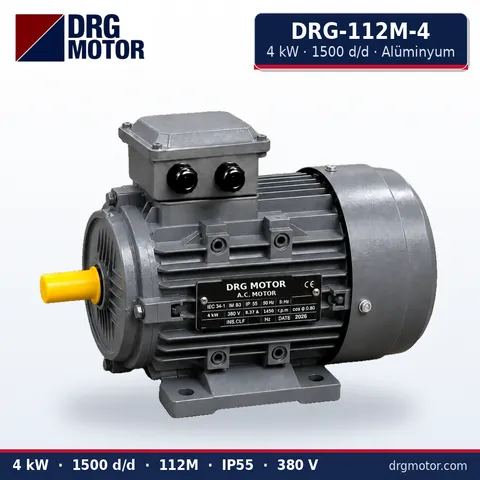
4 kW Three-Phase Motor 1500 rpm – DRG-112M-4 Aluminium
- 4 kW · 1500 rpm (4 poles)
- Aluminium frame · IEC 112M
- Shaft: 28 × 60 mm
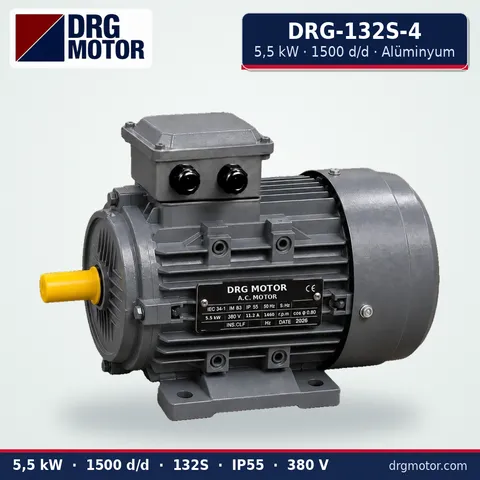
5.5 kW Three-Phase Motor 1500 rpm – DRG-132S-4 Aluminium
- 5.5 kW · 1500 rpm (4 poles)
- Aluminium frame · IEC 132S
- Shaft: 38 × 80 mm
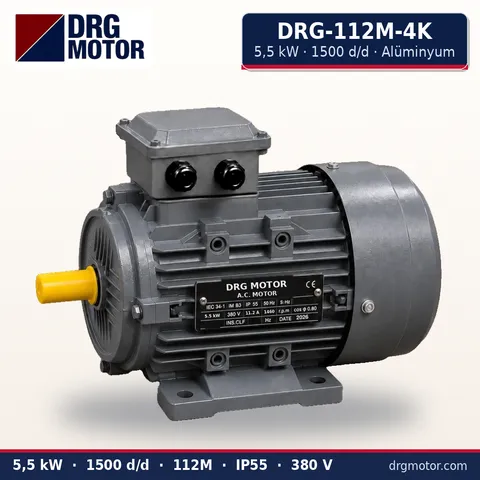
5.5 kW Compact Three-Phase Motor 1500 rpm – DRG-112M-4K Aluminium
- 5.5 kW · 1500 rpm (4 poles)
- Aluminium frame · IEC 112M
- Shaft: 28 × 60 mm
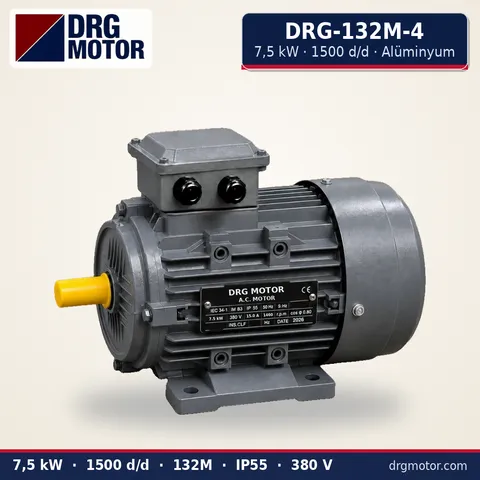
7.5 kW Three-Phase Motor 1500 rpm – DRG-132M-4 Aluminium
- 7.5 kW · 1500 rpm (4 poles)
- Aluminium frame · IEC 132M
- Shaft: 38 × 80 mm
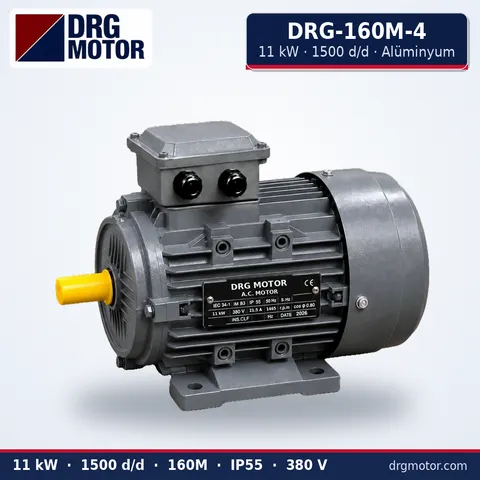
11 kW Three-Phase Motor 1500 rpm – DRG-160M-4 Aluminium
- 11 kW · 1500 rpm (4 poles)
- Aluminium frame · IEC 160M
- Shaft: 42 × 110 mm
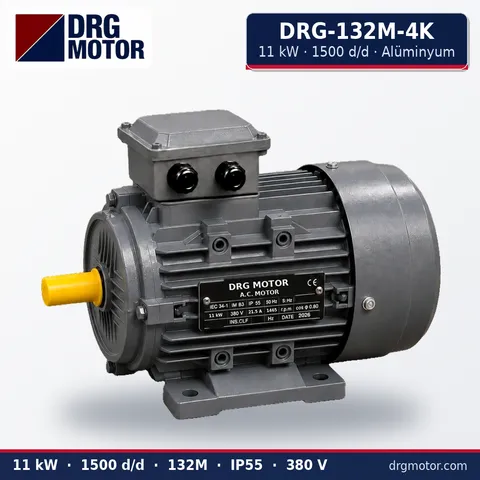
11 kW Compact Three-Phase Motor 1500 rpm – DRG-132M-4K Aluminium
- 11 kW · 1500 rpm (4 poles)
- Aluminium frame · IEC 132M
- Shaft: 38 × 80 mm