 English
 Le français
 Türkçe

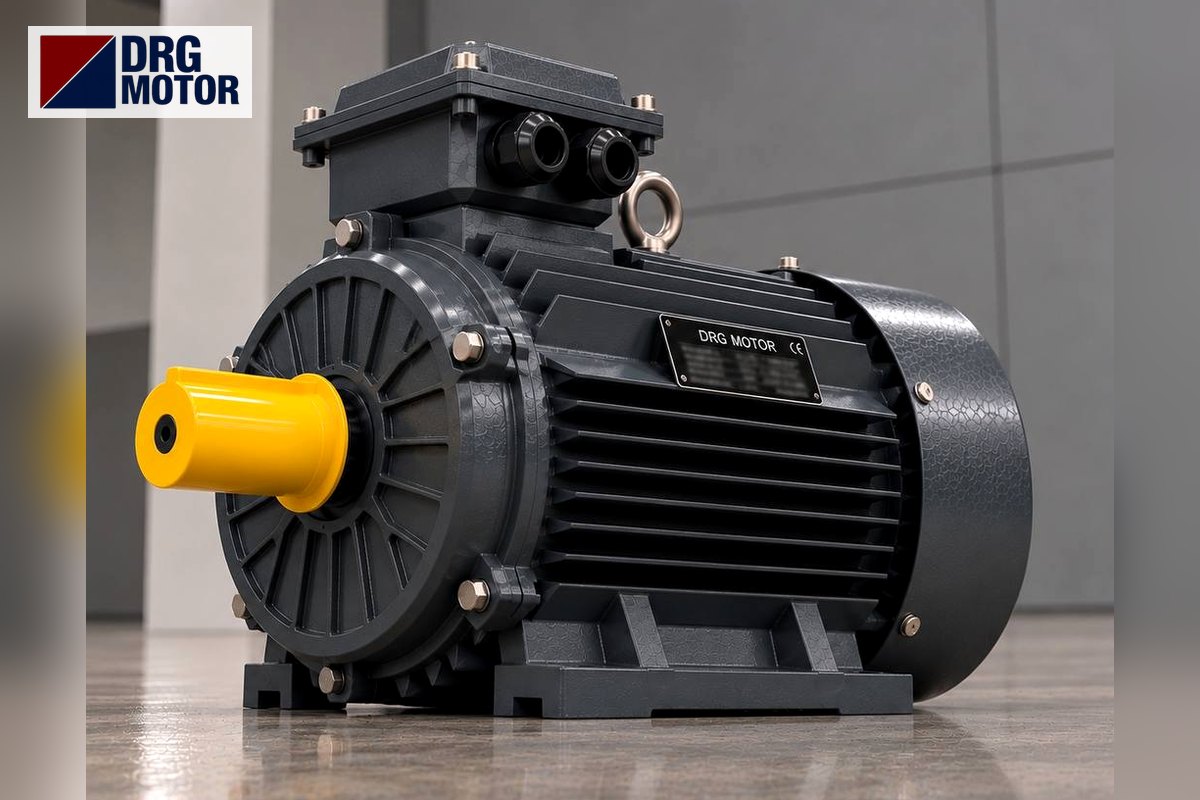

The three phase currents of a three-phase electric motor are measured one by one under load because, on a healthy motor, the three readings should sit very close to each other; the gap between them reveals an imbalance, a loose connection or a winding problem that a single-phase or total reading can never show. If you do not see all three currents separately, one phase can draw noticeably more than the others and you will miss it — letting that winding heat up quietly.
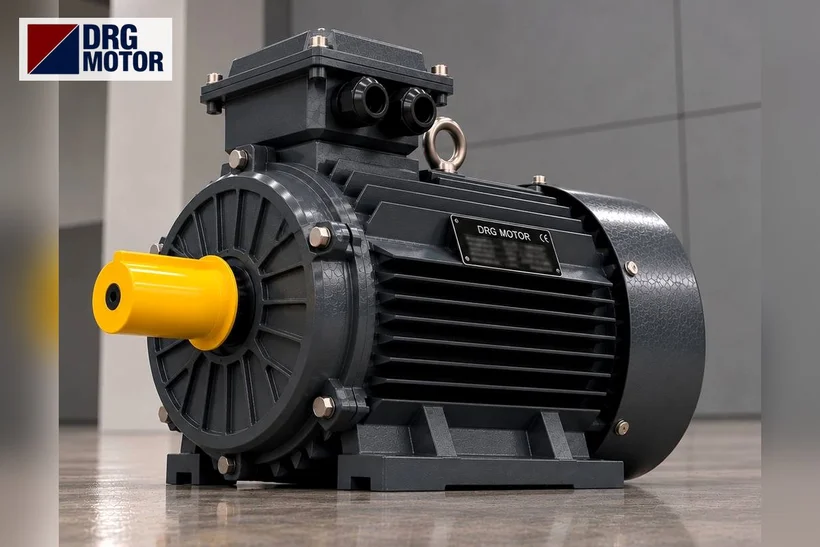
DRG Motor is a manufacturer, supplier and seller of electric motors. It is based in İzmir and ships quickly across all of Türkiye, that province included. Understanding phase current imbalance makes it easier both to judge an existing motor correctly and to choose a new one at the right power; browse models by power and speed in the online electric motor shop and see the same products together in the three-phase asynchronous electric motors category.
Three phases, three separate witnesses
A three-phase asynchronous electric motor draws three currents spaced 120 degrees apart. With a balanced supply and a sound winding, those three currents are almost equal. Reading each phase separately is the simplest diagnostic you have without opening the motor: if the three values match, the picture is clean; if one strays, the deviation tells you where to start looking. Measuring one phase and calling it "the motor current" is like hearing only one of three witnesses and closing the case.
Why an average or a total is not enough
Reading a single total value or averaging three measurements hides imbalance. If one phase runs high and another runs low, the average can still look reasonable — yet the phase drawing more heats up far beyond its share. Because heat grows with the square of the current, a small current imbalance turns into a relatively large temperature rise in that winding. Separate measurement is what makes this hidden load visible.
Root causes of imbalance
When phase currents drift apart, the cause usually sits in the supply or the connection before the motor itself. The common ones:
- Voltage imbalance: even a small voltage difference between phases turns into a large deviation on the current side.
- Loose or oxidised connection: poor contact at a terminal, fuse base or contactor tip raises that phase's resistance.
- Cable or cross-section issue: a damaged conductor or an under-tightened lug on one phase.
- Winding-related problem: weakened insulation between windings can disturb current sharing.
- Near single-phasing: if one phase is lost entirely the motor struggles; separate readings warn of this risk in advance.
Click to see current electric motor prices and order nowSEE PRICES →
What do you compare your reading against?
For the currents you measure to mean anything, you need a reference: the rated current on the motor nameplate. All three phases are expected to be close to that value and to each other. Percent imbalance is assessed roughly as "the largest deviation from the average, divided by the average, times one hundred"; for the exact acceptance limit, consult the technical documentation of the motor and the supplying equipment. Rather than quoting numerical thresholds off the cuff, always rely on the nameplate and the device document.
The table below summarises the clue that separate measurement gives:
| Observation | Possible cause | What it means |
|---|---|---|
| All three currents close to each other and to rated current | Balanced supply, sound connection | Clean picture; periodic monitoring is enough |
| One phase clearly high | Loose connection or voltage deviation on that phase | That line and its terminals should be checked by qualified personnel |
| One phase clearly low | Poor contact or conductor issue | Supply and connections should be reviewed |
| All three above the nameplate value | Overload or mechanical strain | Load and coupling should be assessed, power reselected |
Common DRG three-phase models for this topic
Assessing phase current is directly tied to the motor's power and supply voltage; the rated current on the plate is set according to these values. A few widely used DRG three-phase asynchronous models:
| Model | Power (kW) | Speed (rpm) | Voltage |
|---|---|---|---|
| DRG-90L-4 | 1.5 | 1500 | 230/400 V (Δ/Y) |
| DRG-112M-4 | 4 | 1500 | 400/690 V (Δ/Y) |
| DRG-132S-4 | 5.5 | 1500 | 400/690 V (Δ/Y) |
| DRG-132M-4 | 7.5 | 1500 | 400/690 V (Δ/Y) |
| DRG-160M-4 | 11 | 1500 | 400/690 V (Δ/Y) |
Before settling on a power rating, tools such as the motor current table help clarify what your machine needs, and you can pick the right model in the online shop.
A safe approach and who should measure
Phase current is measured under load — that is, with the motor energised and running — which by its nature means working on a live panel. Measurements like these, and any intervention that follows, must be carried out by qualified electrical personnel. Before opening, tightening or checking a winding, cut the power and verify that it is dead. Do not quote exact settings and acceptance values such as thermal relay current or insulation resistance from memory; set them according to the motor nameplate and the equipment document.
Small habits that make the reading useful
Noting values in a repeatable way under the same load condition — not just once — pays off. Reading at the motor's real working load is far more informative than a no-load value, because imbalance usually becomes clearer as load builds. Before replacing a motor, keeping the old nameplate and any measurement notes also makes choosing the right power easier.
Send a photo of your current motor nameplate and we will find the suitable DRG model together.Send on WhatsApp
To choose the right power for an application with phase current imbalance, browse the range of three-phase motors.SEE PRICES
Frequently asked questions
Isn't measuring one phase and multiplying by three enough?
No. That method assumes the three phases are equal — yet the whole point is to verify that equality. Without separate measurement, imbalance stays invisible.
How different do the phase currents have to be to count as a problem?
The exact threshold depends on the documentation of the motor and the supplying equipment. The general rule is that the three values stay close to each other and to the rated current; a clear deviation calls for inspection.
Is the motor always the source of imbalance?
Usually not. Voltage imbalance, a loose terminal or a cable issue come before the motor, so the supply and connections are assessed first.
Why does this matter when buying a new motor?
Choosing a motor at the right power and voltage lets the nameplate rated current fit the application. Share a photo of the nameplate and we can identify the suitable DRG model together.
Electric Motors Related to This Topic — Models and Current Prices
Suitability is not decided by power alone: compare the speed, voltage, mounting, shaft and fixing dimensions of your machine with the product data; if unsure, send us the nameplate of your current motor.
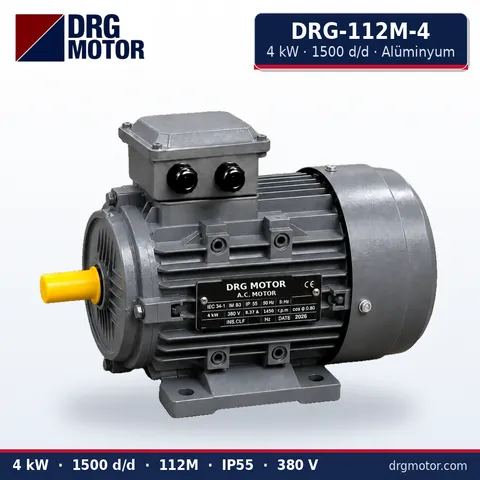
4 kW Three-Phase Motor 1500 rpm – DRG-112M-4 Aluminium
- 4 kW · 1500 rpm (4 poles)
- Aluminium frame · IEC 112M
- Shaft: 28 × 60 mm
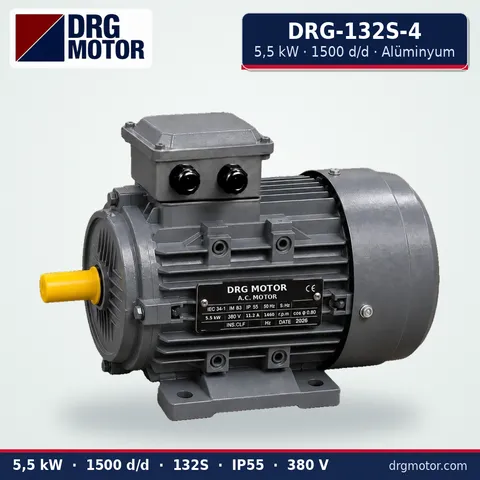
5.5 kW Three-Phase Motor 1500 rpm – DRG-132S-4 Aluminium
- 5.5 kW · 1500 rpm (4 poles)
- Aluminium frame · IEC 132S
- Shaft: 38 × 80 mm
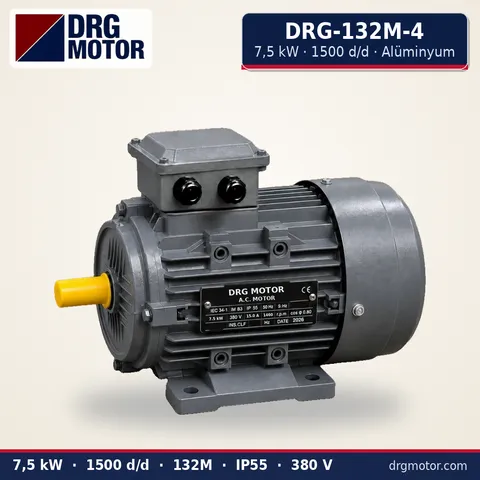
7.5 kW Three-Phase Motor 1500 rpm – DRG-132M-4 Aluminium
- 7.5 kW · 1500 rpm (4 poles)
- Aluminium frame · IEC 132M
- Shaft: 38 × 80 mm
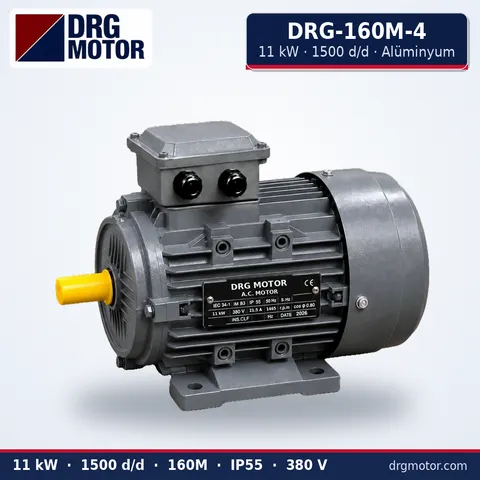
11 kW Three-Phase Motor 1500 rpm – DRG-160M-4 Aluminium
- 11 kW · 1500 rpm (4 poles)
- Aluminium frame · IEC 160M
- Shaft: 42 × 110 mm
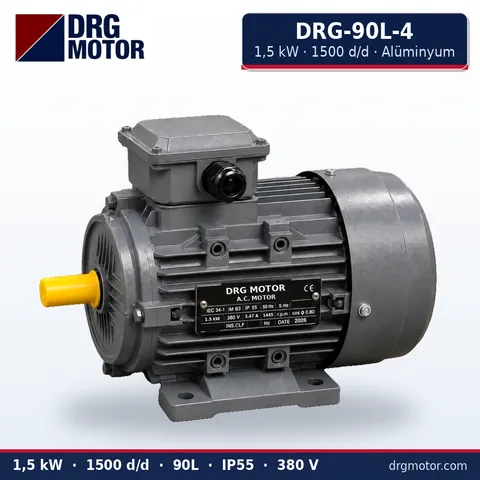
1.5 kW Three-Phase Motor 1500 rpm – DRG-90L-4 Aluminium
- 1.5 kW · 1500 rpm (4 poles)
- Aluminium frame · IEC 90L
- Shaft: 24 × 50 mm