 English
 Le français
 Türkçe


Yes, a PTC relay and a thermal overload relay can be used together on an electric motor, because they do not do the same job. The thermal relay watches the current the motor draws, while the PTC relay reads the temperature through sensors embedded in the winding. They are two complementary protections, so panel builders often keep both in the same circuit.
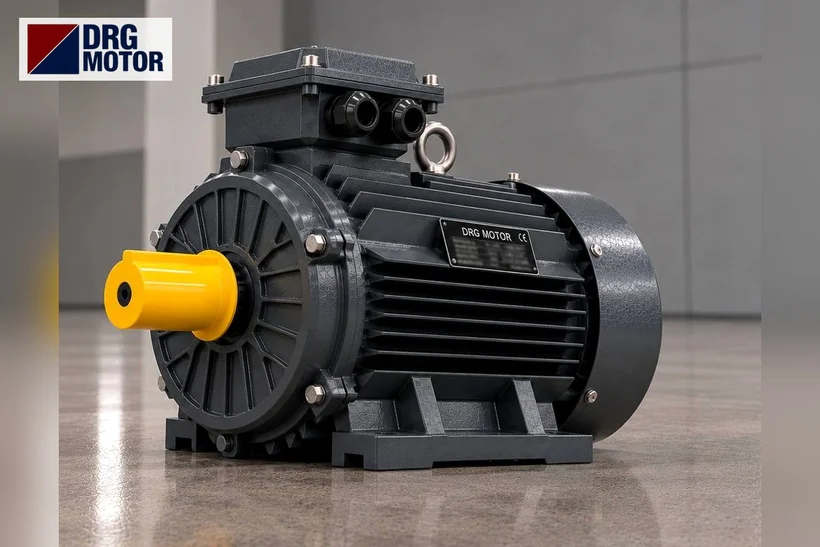
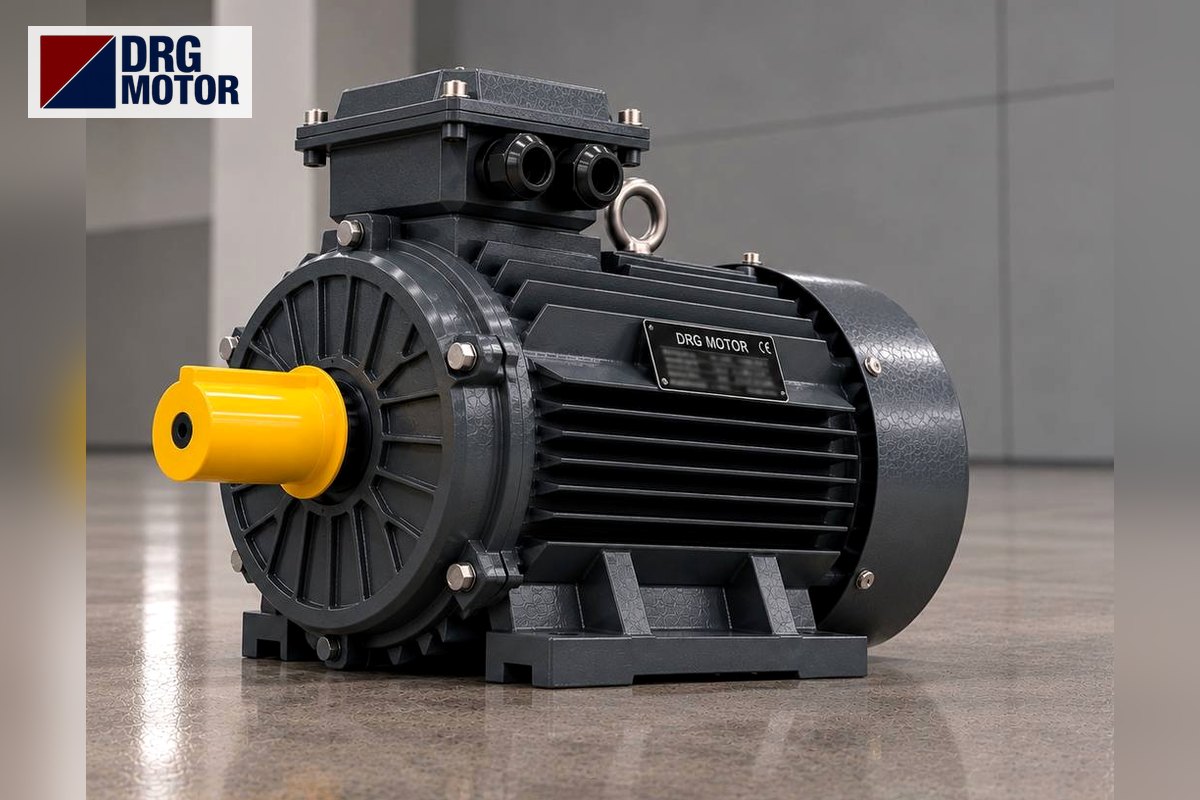
DRG Motor is a manufacturer, supplier and seller of electric motors, based in İzmir and shipping quickly across all of Türkiye from there. Whether you are wiring a new line or reviewing an existing panel, you can pick the right power in the online electric motor shop and see the same products together in the three-phase asynchronous electric motors category.
What does the thermal relay protect?
The thermal overload relay sits right below the contactor and continuously measures the current flowing through the three phases. When the current climbs above the motor's rated running value, it opens the circuit after a delay that depends on how far above it goes. The logic is simple: more current means more heat. If a conveyor jams, a pump cavitates, or the load rises unexpectedly, the motor draws more current and the thermal relay trips.
But the thermal relay never sees inside the motor. It only looks at the current in the cable. So when winding temperature does not rise in proportion to current, it can fall short on its own.
What does the PTC relay protect?
PTC devices are small thermistors whose resistance climbs sharply with temperature. In a three-phase asynchronous electric motor they are embedded in the windings during manufacture, usually one per phase. When the winding reaches a set threshold, the thermistor's resistance jumps and the associated PTC tripping relay opens its output. In other words, the PTC relay "feels" the copper temperature directly and never measures current.
This matters in scenarios where the thermal relay is blind: high ambient temperature, blocked cooling fins, frequent jog starts, or a stopped cooling airflow. In all of these the current may look normal while the winding heats up.
Why use both?
Because protection gets stronger when it looks through two different windows. The thermal relay catches sudden, measurable overloads fast. The PTC relay catches slow heat build-up that never shows in the current. Think of them not as a backup for each other, but as two separate guards against two separate dangers.
A common arrangement: the thermal relay works with the contactor in the power circuit, and the contact of the PTC tripping relay is wired into the control circuit, usually on the same stop line. Whichever protection trips first, the motor stops. Which input goes to which terminal is written in the device's own manual and on the label inside the motor terminal box, so always follow those documents for values and wiring.
Click to see current electric motor prices and order nowSEE PRICES →
Where the two protections diverge
| Model | Power | Speed | Voltage |
|---|---|---|---|
| DRG-112M-4-AL | 4 kW (5.5 HP) | 1500 rpm | 400/690 V (Δ/Y) |
| DRG-132S-4-AL | 5.5 kW (7.5 HP) | 1500 rpm | 400/690 V (Δ/Y) |
| DRG-132M-4-AL | 7.5 kW (10 HP) | 1500 rpm | 400/690 V (Δ/Y) |
| DRG-160M-4-AL | 11 kW (15 HP) | 1500 rpm | 400/690 V (Δ/Y) |
| DRG-90L-4-AL | 1.5 kW (2 HP) | 1500 rpm | 230/400 V (Δ/Y) |
The models above are common three-phase ratings used here to make the point concrete. The PTC option and thermistor embedding is a detail to specify when ordering a motor; a standard frame may not come with sensors fitted.
Wiring and setting: what to watch
The thermal relay's current setting follows the value on the motor nameplate; raising it "to be safe" leaves the protection useless. On the PTC side there is no setting; the threshold temperature is fixed at the factory by the class of the embedded sensor. The tripping relay only reads whether the threshold has been crossed.
Safety: Before any work inside the panel, switch off the power, verify the absence of voltage with a suitable meter, and let only qualified electrical personnel make the connection. Determine the exact current setting, thermistor type and terminal numbers from the motor nameplate and the device manual, never by guesswork.
Common mistakes
The most frequent error is skipping the thermal relay because a PTC is fitted, or the reverse. They watch different dangers; one does not replace the other. The second is forgetting to wire the PTC tripping relay's contact into the control circuit, leaving the sensor "fitted but not connected". The third is setting the thermal current too low, or needlessly high. The fourth is trying to embed sensors later into a motor that was not ordered with the PTC option, instead of specifying it up front.
How DRG electric motors handle it
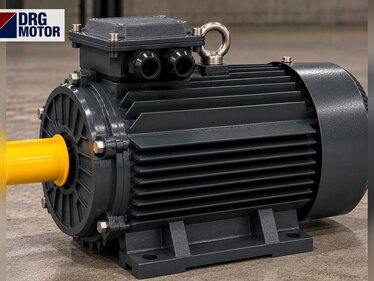
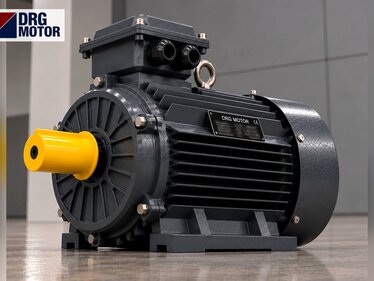
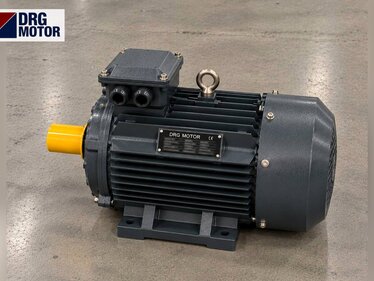
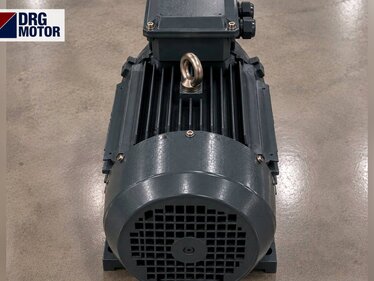
DRG's three-phase asynchronous IEC-frame electric motors are built with IP55 protection and class F insulation. Thermistor (PTC) embedding is an option on request, not standard, so you need to state that you want PTC when ordering. To choose the right power, use the electric motor shop, and to confirm power and speed you can use the electric motor calculation tool.
Pick the model that matches your electric motor's power and speed in the shop.SEE PRICES
Frequently asked questions
Does a PTC relay replace a thermal relay?
No. The PTC watches temperature, the thermal relay watches current. A heat rise that does not show in the current can be missed by the thermal relay, while the PTC does not see current swings. They have different jobs.
Does every electric motor come with a PTC sensor?
Usually not on a standard frame. Thermistor embedding is an option to specify when ordering. Check the nameplate or terminal box to confirm whether a sensor is present.
What amperage should I set the thermal relay to?
No single figure fits here; the setting follows the rated current on the motor nameplate. Read the value from the plate and leave the work to qualified electrical personnel.
Why does the motor not restart right after a PTC trip?
The PTC keeps its resistance high until the winding drops below the threshold temperature. The tripping relay will not close before the motor cools; this delay deliberately protects the winding.
Send a photo of your current motor nameplate and we will find the suitable DRG model together.Send on WhatsApp
Electric Motors Related to This Topic — Models and Current Prices
Suitability is not decided by power alone: compare the speed, voltage, mounting, shaft and fixing dimensions of your machine with the product data; if unsure, send us the nameplate of your current motor.
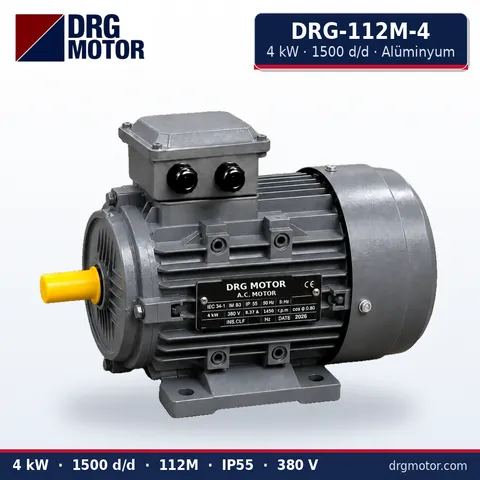
4 kW Three-Phase Motor 1500 rpm – DRG-112M-4 Aluminium
- 4 kW · 1500 rpm (4 poles)
- Aluminium frame · IEC 112M
- Shaft: 28 × 60 mm
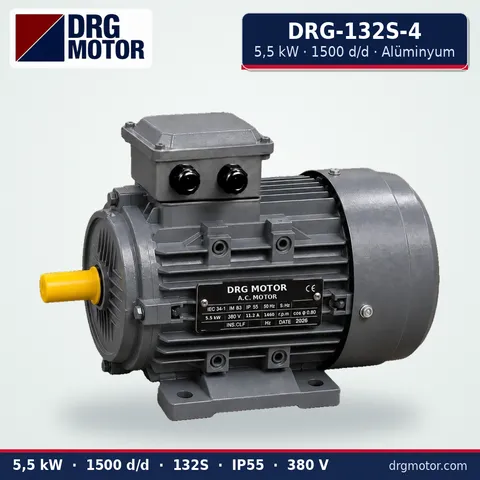
5.5 kW Three-Phase Motor 1500 rpm – DRG-132S-4 Aluminium
- 5.5 kW · 1500 rpm (4 poles)
- Aluminium frame · IEC 132S
- Shaft: 38 × 80 mm
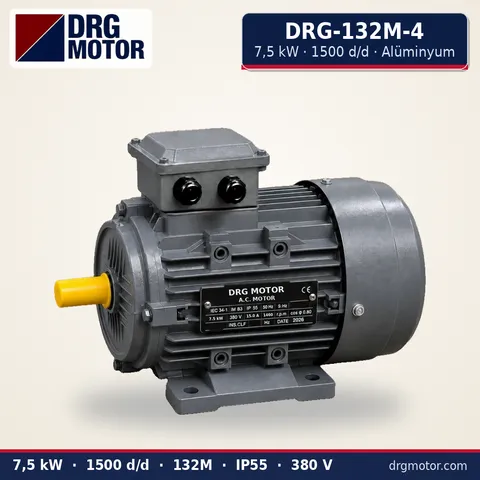
7.5 kW Three-Phase Motor 1500 rpm – DRG-132M-4 Aluminium
- 7.5 kW · 1500 rpm (4 poles)
- Aluminium frame · IEC 132M
- Shaft: 38 × 80 mm
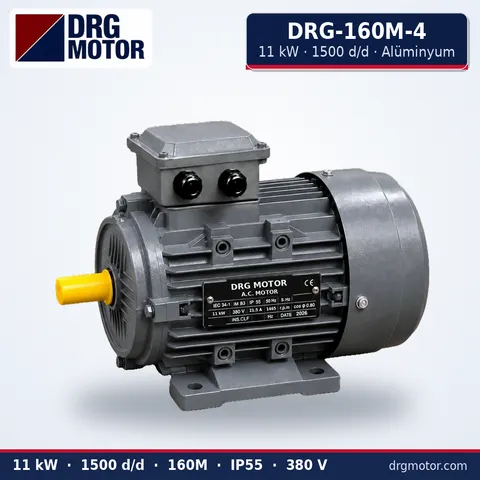
11 kW Three-Phase Motor 1500 rpm – DRG-160M-4 Aluminium
- 11 kW · 1500 rpm (4 poles)
- Aluminium frame · IEC 160M
- Shaft: 42 × 110 mm
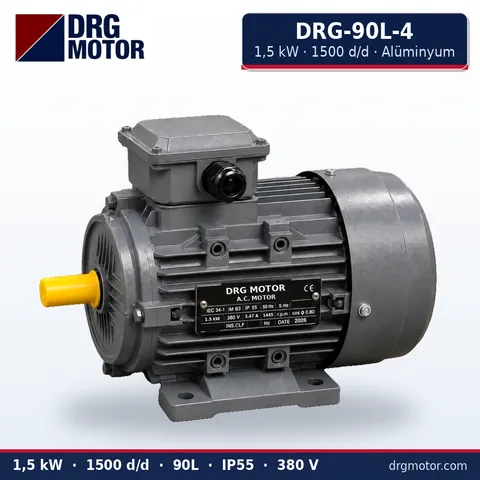
1.5 kW Three-Phase Motor 1500 rpm – DRG-90L-4 Aluminium
- 1.5 kW · 1500 rpm (4 poles)
- Aluminium frame · IEC 90L
- Shaft: 24 × 50 mm