English
 Le français
 Türkçe




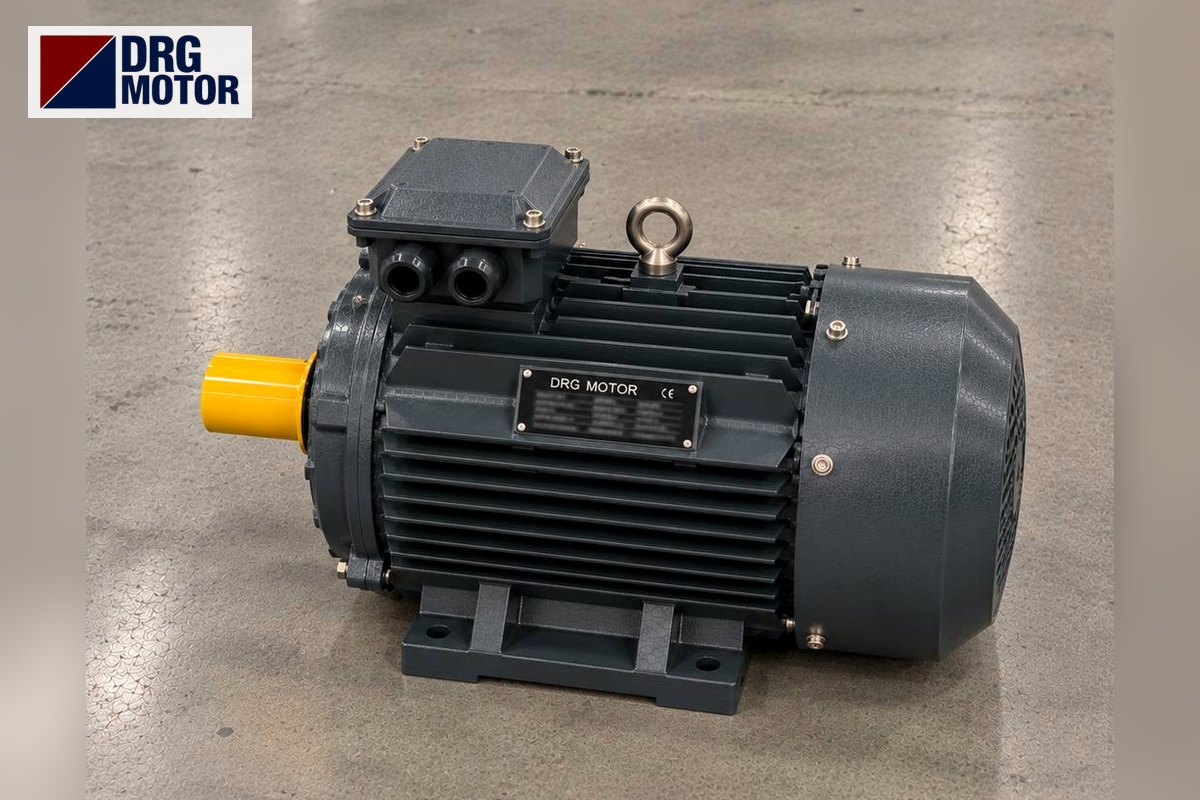

The thermal trip class for an electric motor is set by its starting time and the type of load it drives: standard applications with a short, light start use Class 10, while long, heavy starts (high-inertia fans, centrifuges, crushers) call for Class 20 or Class 30. The right class keeps the overload relay from tripping while the motor starts normally, yet still disconnects the winding in time during a genuine overload.
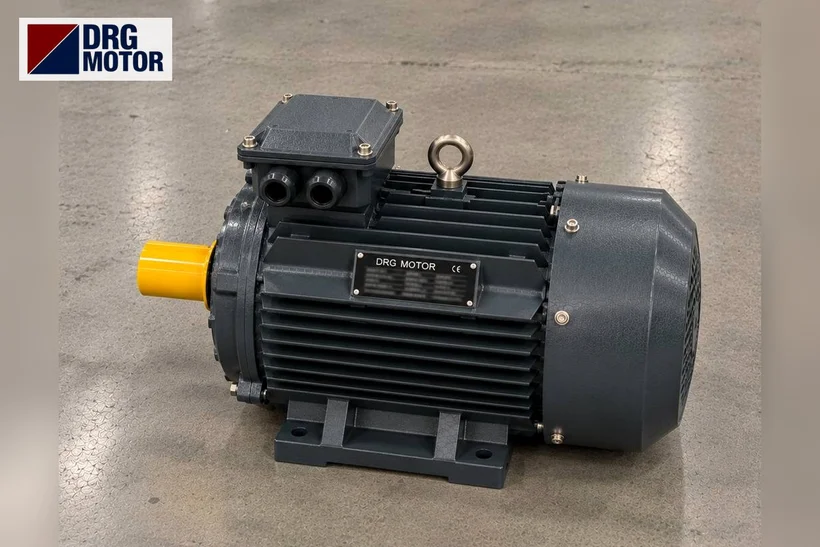
DRG Motor is a manufacturer, supplier and seller of electric motors. It is based in İzmir and ships quickly across all of Türkiye, that province included. Once the protection class is clear, pick the right power and speed in the online electric motor shop, and see the same models together in the three-phase asynchronous electric motors category.
What is a thermal trip class?
A thermal trip class is a standard rating that describes how quickly a motor protection device (an overload relay or motor protection circuit breaker) opens the circuit under an overcurrent. Per IEC 60947-4-1, the class is defined by the maximum time to trip from a cold state at about 7.2 times the relay set current. The values seen most often on site are Class 10, Class 20 and Class 30; some devices also offer Class 10A for faster protection.
The larger the number, the later the relay trips. Class 10 reacts quickly and protects the motor even under short overloads; Class 30 tolerates heavy starts because its trip time is longer. The class you pick therefore decides how patient the protection will be.
What determines the trip class?
The deciding factor is the motor's starting time. At start-up an asynchronous motor draws several times its rated current, and that high current lasts until the motor reaches speed. The protection device must not read this normal starting current as a fault, yet it must act in time during a real overload after the start is over. The practical rule: the trip time of the class you choose should comfortably exceed the motor's starting time.
| Trip class | Approx. trip time at 7.2×Ie | Typical use |
|---|---|---|
| Class 10 | up to 10 seconds | Short-start pumps, conveyors, standard drives |
| Class 20 | up to 20 seconds | Moderately heavy start; loaded fans, mixers |
| Class 30 | up to 30 seconds | Long, heavy start; high-inertia centrifuges, crushers |
The most reliable method is to measure the starting time or read it from the load manufacturer's figure. Without a measured time, you can make a rough estimate from the load type: directly started, lightly loaded applications usually run fine on Class 10.
Click to see current electric motor prices and order nowSEE PRICES →
Reading starting time and load type correctly
Low-inertia loads such as pumps and conveyors reach speed within seconds, and Class 10 is often enough. High-inertia loads such as fans, centrifuges, mills and crushers accelerate slowly, so the starting current lasts longer. These applications need Class 20 or even Class 30; otherwise the relay trips on every start and the line stops.
A star-delta or soft starter lowers the starting current but can lengthen the starting time, which directly affects the class choice. Judge the starting method and the load inertia together rather than treating them separately.
Example selection with DRG three-phase asynchronous motors
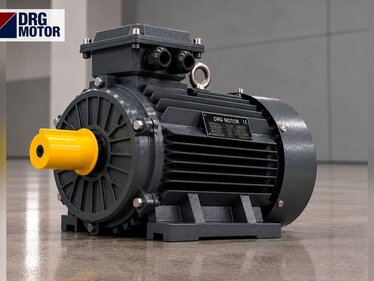
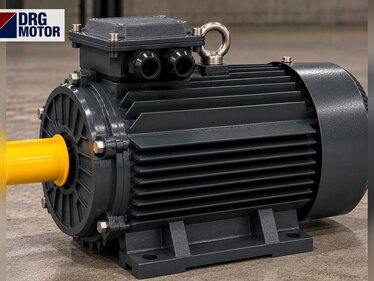
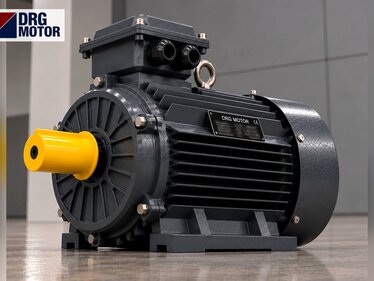
DRG three-phase asynchronous IEC motors come with 1000, 1500 and 3000 rpm speed options and an aluminium body, wired 230/400 V at smaller ratings and 400/690 V at larger ones. The models below are examples from the 1500 rpm class. On each one the overload relay is set to the nameplate current, while the trip class follows the load type it drives.
| Model | Power | Speed | Voltage |
|---|---|---|---|
| DRG-90L-4 | 1.5 kW | 1500 rpm | 230/400 V |
| DRG-112M-4 | 4 kW | 1500 rpm | 400/690 V |
| DRG-132S-4 | 5.5 kW | 1500 rpm | 400/690 V |
| DRG-132M-4 | 7.5 kW | 1500 rpm | 400/690 V |
| DRG-160M-4 | 11 kW | 1500 rpm | 400/690 V |
For instance, a 1.5 kW 1500 rpm model on a light conveyor with a short start suits Class 10; the same power turning a large fan set may need Class 20. Choose power and speed from the shop page, and if you describe your load we can settle the right frame together.
How is the overload relay current set?
Once the trip class is fixed, the relay current setting comes next. The general principle is to set the overload relay current to the rated current printed on the motor nameplate; read the exact value from the nameplate and the protection device's documentation. If the nameplate is worn or unreadable, do not set the motor by guesswork; clarify the nameplate first.
Safety: Before any setting or check, cut the power, confirm the absence of voltage with a suitable device, and have only an authorised electrician do the work. Measurement and adjustment inside a panel are not tasks to perform live.
Send a photo of your current motor nameplate and we will find the suitable DRG model together.Send on WhatsApp
Common mistakes
- Giving every motor Class 10 without accounting for starting time; on heavy starts the relay keeps tripping and work stops.
- Raising the set current above the nameplate value instead of increasing the trip class when the relay trips; this leaves protection useless in a real overload.
- Failing to review the class when the starting method changes (from star-delta to direct-on-line).
- Skipping phase-loss and unbalanced-load protection; the trip class alone does not cover every fault type.
Click to see current prices of three-phase motors in the power and speed that fit your applicationSEE PRICES
Frequently asked questions
What is the difference between Class 10 and Class 20?
Both protect at the same overcurrent, but their trip times differ. Class 10 trips earlier, Class 20 later. Class 10 suits short-start loads, Class 20 suits long-start heavy loads.
Does the motor's power set the trip class?
Not power directly; starting time and load type set it. A motor of the same power may need a different class depending on the load it drives.
What to do if the overload relay trips often?
First check the starting time and whether the set current matches the nameplate. If the problem is a heavy start, you may need to raise the trip class; masking it by pushing the set current above the nameplate value is the wrong approach.
Which protection device suits DRG motors?
DRG three-phase asynchronous motors are protected by an overload relay or motor protection circuit breaker matched to the nameplate current. To weigh the model and current together, send a photo of the nameplate, and review the right motor on the product pages too.
Electric Motors Related to This Topic — Models and Current Prices
Suitability is not decided by power alone: compare the speed, voltage, mounting, shaft and fixing dimensions of your machine with the product data; if unsure, send us the nameplate of your current motor.

4 kW Three-Phase Motor 1500 rpm – DRG-112M-4 Aluminium
- 4 kW · 1500 rpm (4 poles)
- Aluminium frame · IEC 112M
- Shaft: 28 × 60 mm

5.5 kW Three-Phase Motor 1500 rpm – DRG-132S-4 Aluminium
- 5.5 kW · 1500 rpm (4 poles)
- Aluminium frame · IEC 132S
- Shaft: 38 × 80 mm

7.5 kW Three-Phase Motor 1500 rpm – DRG-132M-4 Aluminium
- 7.5 kW · 1500 rpm (4 poles)
- Aluminium frame · IEC 132M
- Shaft: 38 × 80 mm

11 kW Three-Phase Motor 1500 rpm – DRG-160M-4 Aluminium
- 11 kW · 1500 rpm (4 poles)
- Aluminium frame · IEC 160M
- Shaft: 42 × 110 mm

1.5 kW Three-Phase Motor 1500 rpm – DRG-90L-4 Aluminium
- 1.5 kW · 1500 rpm (4 poles)
- Aluminium frame · IEC 90L
- Shaft: 24 × 50 mm