English
 Le français
 Türkçe




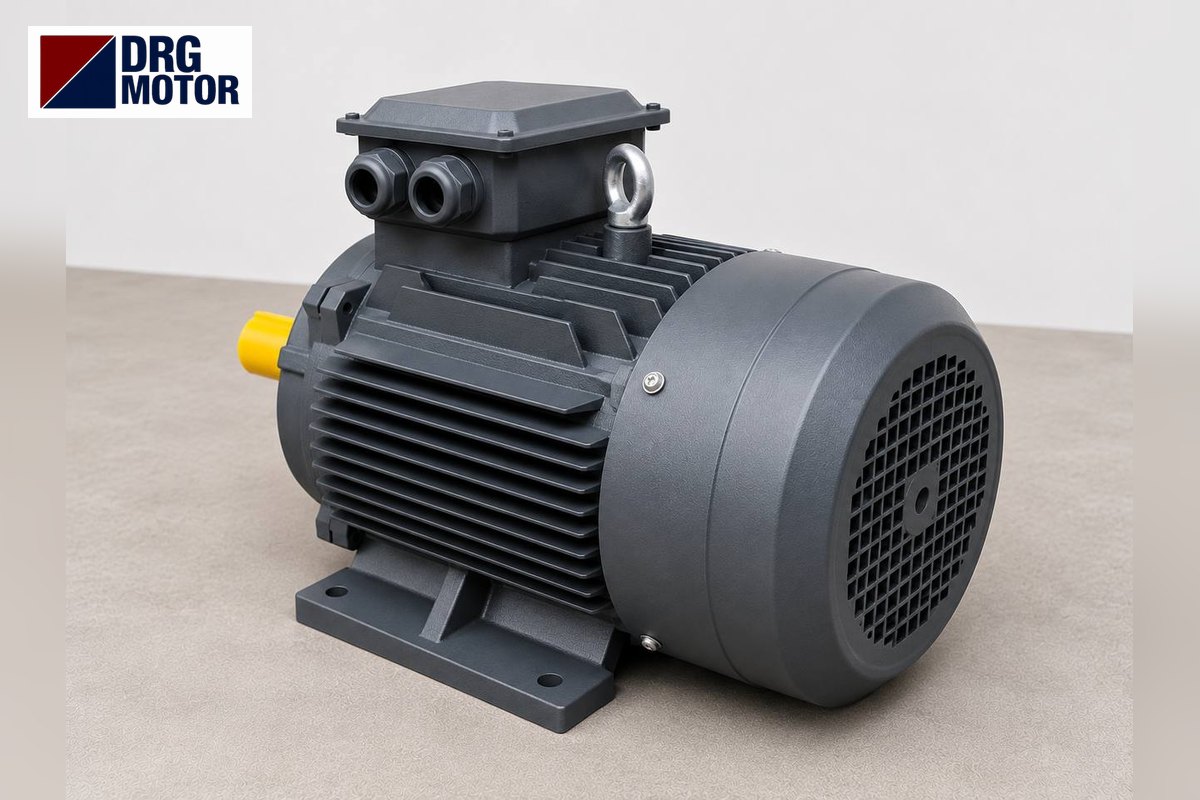

If the WEG W22 electric motor driving a pump has failed or needs renewing, the success of the replacement depends less on the motor nameplate than on how the pump actually runs. This article summarises what to check on the coupling line, how the pump's operating point affects motor selection, and what data to send to DRG MOTOR so that an option can be assessed.
First clarify the pump and motor identity
On a WEG W22 nameplate the motor code, frame, power, full-load speed, voltage and current appear in separate fields. On the pump side you need the flow, head and speed from the pump's own nameplate. Two- and four-pole motors are most common on centrifugal pumps; in the W22 European catalogue, for example, the 2-pole 11 kW and 15 kW motors are both in frame 160M with a 42k6x110 shaft, while 22 kW is in frame 180M with a 48k6x110 shaft. Two different powers in the same 160M frame show why estimating power from the frame is misleading.
What to check on the coupling line
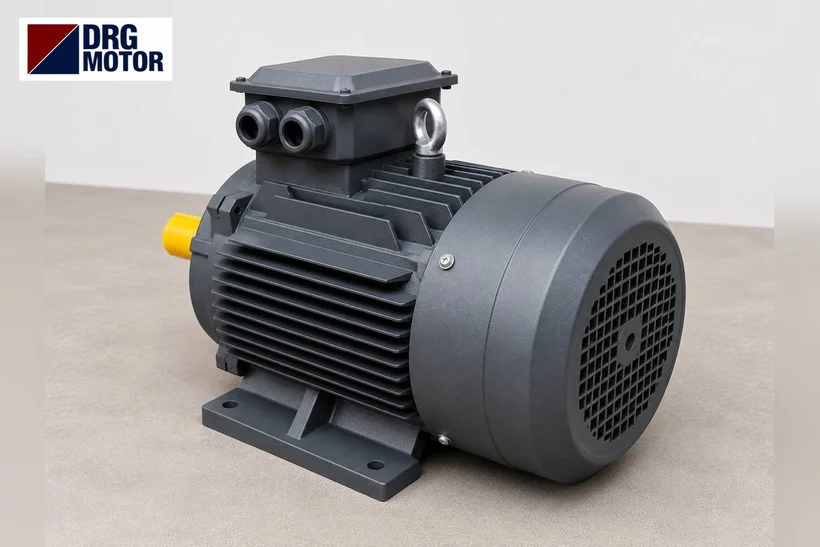
If there is a flexible coupling between a foot-mounted motor and the pump, the new motor's shaft height (H), shaft diameter and key size must match the coupling hub. If the shaft height differs, shims under the feet may be needed, which lengthens alignment. If the shaft length differs, the coupling gap changes.
- Coupling type, hub bore diameter and keyway size
- Gap between motor and pump shafts
- Foot hole spacing on the baseplate (A, B) and distance from shaft shoulder to first hole (C)
- Wear of the coupling element and the alignment record
After replacement, axial and angular alignment must be redone; coupling problems are a common cause of bearing and seal failures. Foot and shaft dimensions of DRG motors can be checked on the technical drawings page.
How the operating point affects motor power
The power drawn by a centrifugal pump depends on where it operates on its curve. When a valve is throttled or system resistance rises, the operating point moves; on some pump types power increases as flow increases. So if the old motor always ran close to nameplate current, the issue may not be the motor but the pump running off its design point. A current measurement and a record of the valve position help find the real cause of a failure.
Speed has a direct effect as well: on a centrifugal pump, flow changes with speed and power roughly with the cube of speed. A motor with the same kW and speed class but a rated speed a few tens of rpm higher can push the pump to a heavier point. In other words, the kW on the nameplate is not enough on its own for a replacement decision.
Send DRG MOTOR photos of the motor and pump nameplates, the coupling dimensions and, if you could measure it, the running current, so that an option is assessed together with the pump's operating conditions.
Options that can be assessed at DRG MOTOR
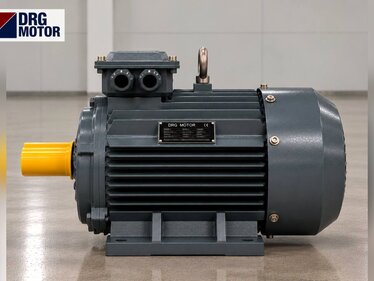
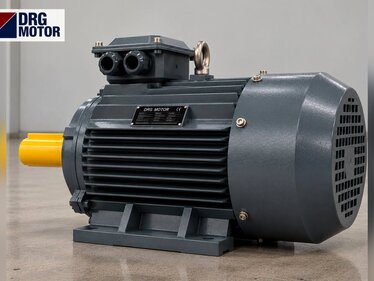
DRG Motor is a manufacturer, supplier and seller of electric motors. The Pump Motors page contains general selection information for pump applications. Examples that can be examined based on nameplate data:
- DRG-160M1-2 – 11 kW, 2-pole, 2945 rpm; shaft height H=160 mm, foot spacing A=254 / B=210 mm, shaft 42×110 mm
- DRG-160M2-2 – 15 kW, 2-pole, 2945 rpm; shaft height H=160 mm, foot spacing A=254 / B=210 mm, shaft 42×110 mm
- DRG-180M-2 – 22 kW, 2-pole, 2955 rpm; shaft height H=180 mm, foot spacing A=279 / B=241 mm, shaft 48×110 mm
- DRG-160M-4 – 11 kW, 4-pole, 1465 rpm; shaft height H=160 mm, foot spacing A=254 / B=210 mm, shaft 42×110 mm
None of these options should be treated as suitable before coupling and baseplate dimensions are compared. For electrical matters such as overload setting and starting method, the opinion of competent technical staff should be sought.
Frequently asked questions
The old motor kept tripping its overload; should I choose a larger power?
The cause should be investigated first. The pump may be running off its curve, the impeller may be rubbing, or the voltage may be low. Increasing power before finding the cause can hide the problem.
Could the pump have been selected for 60 Hz?
It could. Check the frequency line on the motor nameplate and the speed on the pump nameplate, and state your supply frequency.
Does this article apply to a close-coupled pump motor too?
On close-coupled pumps the impeller may sit directly on the motor shaft and the shaft dimensions are special. In that case no assessment is possible without the pump model and the shaft drawing.
Should I mention that the pump runs on an inverter?
Yes. The presence of a drive affects motor selection; also send the drive model and the set frequency range. If your motor has a brake, a separate fan or a drive integrated into the motor, mention this too; these features change the assessment.
What to send to DRG MOTOR
- Photos of the motor nameplate and the pump nameplate
- Power, full-load speed, voltage, frequency and rated current
- Mounting type, shaft height (H), shaft diameter and length
- Foot hole spacing (A, B, C) or flange dimensions
- Coupling type and hub dimensions
- Running current and valve position, if measured
- Pumped fluid, daily operating hours, ambient conditions
- Whether it runs direct-on-line, star-delta or on a drive
With this information, a suitable motor option is assessed by reviewing the technical data together with the pump's operating conditions.
You can send this information via WhatsApp, by phone on +90 (542) 666 11 11, by e-mail to info@drgmotor.com or through the contact page. You can also add the models you are looking at to the quote list, and browse the full range on the buy electric motors online page.
See current prices of DRG MOTOR electric motors and order online in our storeSEE PRICES →
Technical Sources
- WEG — W22 Three-Phase Technical Catalogue, European Market (Cod 50025712) — Rev 34, 09/2026 — 3.11 Nameplate (nameplate fields) — printed pages 11–12.
- WEG — W22 Three-Phase Technical Catalogue, European Market (Cod 50025712) — Rev 34, 09/2026 — W22 IE3 50 Hz electrical data, II-pole table — printed page 40.
- WEG — W22 Three-Phase Technical Catalogue, European Market (Cod 50025712) — Rev 34, 09/2026 — Section 18 Mechanical Data (shaft end dimensions) — printed page 71.