English
 Le français
 Türkçe




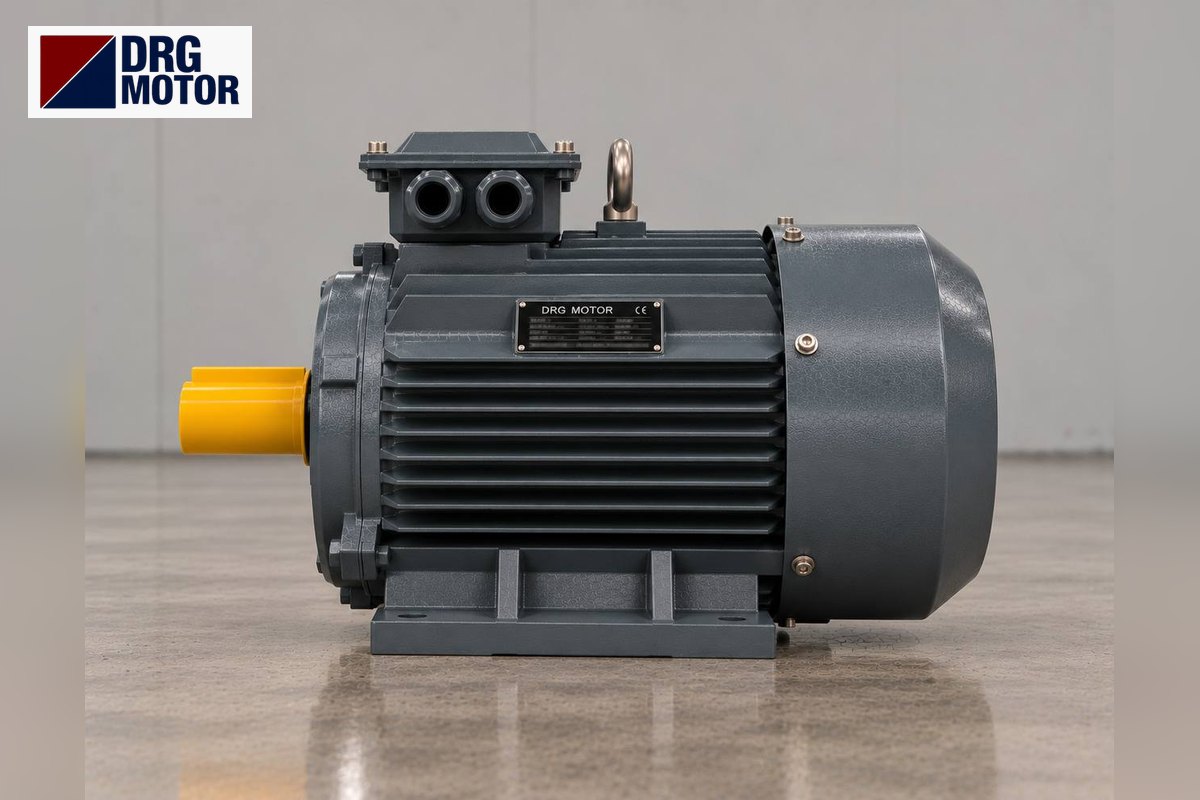

In a Turkish delight cooking kettle, the motor slowly turns the scraper agitator inside the steam-jacketed kettle through a gearbox; the scraper blades wipe the kettle wall and stop the product from sticking to the hot surface and burning. What decides the motor is the torque the thickened mass demands at the agitator shaft at the end of cooking; the thin syrup at the start is hardly a load at all. The second criterion is that the motor works above the kettle lid, under steam and heat.
DRG Motor is a manufacturer, supplier and seller of electric motors; its scope ends at the motor: no gearboxes, but the three-phase asynchronous motor that bolts onto the kettle gearbox. Four- and six-pole models suitable for kettle agitators are in the online shop. Motors for other confectionery and dessert machines are gathered on the food machine motors page.
Why Does Turkish Delight Get Heavier in the Kettle?
Turkish delight is made by adding starch milk to sugar syrup and cooking it for a long time. As they heat, the starch granules absorb water, swell and gelatinise; at this point the mixture thickens within a few minutes. As cooking continues, water evaporates, the mass becomes translucent and reaches a very sticky consistency that stretches and breaks when lifted with a spoon.
For the motor this means the same agitator, at the same speed, turns lightly at the start of a batch and heavily at the end. Current is a good indicator for tracking this change; the operator often judges consistency from the agitator's sound and the motor's effort as well.
| Cooking phase | What happens in the pan | What the motor current shows |
|---|---|---|
| Syrup and starch milk | Thin, fluid mixture | Close to no-load current |
| Gelatinisation | Starch swells, mass thickens | Clear rise in a short time |
| Long cooking | Water evaporates, colour clears | Slow, steady rise |
| End of cooking | Sticky, heavy, stringy mass | Highest value |
| Stop and restart | Mass grips the scrapers | Hardest start of the batch |
Click to see current electric motor prices and order nowSEE PRICES →
Scraper Blade Torque: Step by Step to Motor Power
The torque of a scraper agitator is the tangential force the blades overcome while wiping the mass off the wall, multiplied by the agitator radius. The figures below are only an example and assumptions; on a real machine the old motor's nameplate is the reference.
- Assume an inner kettle radius of r = 0.5 m and a total tangential resistance on the blades of F = 2000 N at the end of cooking: T = F · r = 1000 Nm.
- Assume an agitator speed of 24 rpm: P = T · n / 9550 = 2.51 kW (at the agitator shaft).
- With an assumed gearbox efficiency of 0.90, the power asked of the motor is 2.79 kW.
- The DRG-100L2-4 (3 kW, 1450 rpm) with an i = 60 gearbox turns the agitator at 24.2 rpm and gives about 1069 Nm rated torque at the shaft. That is only just above the 1000 Nm final load.
- The DRG-112M-4 (4 kW, 1450 rpm) gives about 1420 Nm with the same ratio, leaving a comfortable margin for the end of cooking and for restarts.
Although the calculation shows the power fits within 3 kW, one power step up is often the better choice on a Turkish delight kettle. Dried product getting between the scrapers, steam being opened late or the agitator being stopped for a few minutes at the end of cooking all push torque above the calculated value.
Four Poles or Six: the Flange Size Makes the Difference
The same agitator speed can be reached in two ways. A four-pole motor uses a higher-ratio gearbox (i = 60 in the example), a six-pole motor a lower-ratio one (i = 40). The DRG-132S-6 gives 24.2 rpm and about 1066 Nm with i = 40, the DRG-132M1-6 about 1422 Nm.
What matters at replacement is that the two options do not connect to the gearbox input with the same flange. In DRG catalogue B5 dimensions, frames 100L and 112M use an M 215 / N 180 / P 250 mm flange and a 28 × 60 mm shaft; frames 132S and 132M use an M 265 / N 230 / P 300 mm flange and a 38 × 80 mm shaft. The 4 kW four-pole motor is in frame 112M, the 4 kW six-pole motor in frame 132M. So stay with the pole count the existing gearbox was built for.
For motors that connect to the bevel helical gearboxes common on kettles, see the electric motors for bevel helical gearboxes page. We covered agitator type selection by product consistency in general terms in the article on the food mixing kettle motor.
Steam, Condensation and Kettle Lid Temperature
On a Turkish delight kettle, the motor and gearbox stand vertically above the agitator shaft, usually on a bridge fixed to the kettle lid. This position has three consequences:
- Heat: Hot air rising from the jacket and the open lid surrounds the motor. The DRG range is specified for an ambient of −15…+40 °C; if the area above the lid is hotter, state it in the order.
- Condensation: When cooking ends, steam condenses on the cooling motor housing. The terminal box gasket and cable gland must be sound, and the cable entry should face down.
- Vertical mounting: A flange motor with the shaft pointing down is used; write in the order that the motor will run vertically.
On kettles that tilt to discharge, the motor tilts with the kettle. On these types the cable must be flexible and long enough not to be stretched during tilting.
First Checks When the Kettle Motor Burns Out
Before fitting an identical motor in place of a burnt one, find the cause; otherwise the new motor will carry the same load.
- Are the scraper blades worn or jammed? Does the shaft catch at one point when turned by hand?
- Is there an oil leak, noise or play at the gearbox input shaft?
- Motor nameplate: power, speed, voltage and star/delta connection
- Flange dimensions (M, N, P), shaft diameter and length, key width
- Is the thermal relay set to the nameplate current? You can compare nameplate currents with the motor current chart.
- Are there traces of water or oxide inside the terminal box?
- Is the agitator stopped at the end of cooking, and for how many minutes?
DRG Motors Suited to Turkish Delight Kettle Agitators
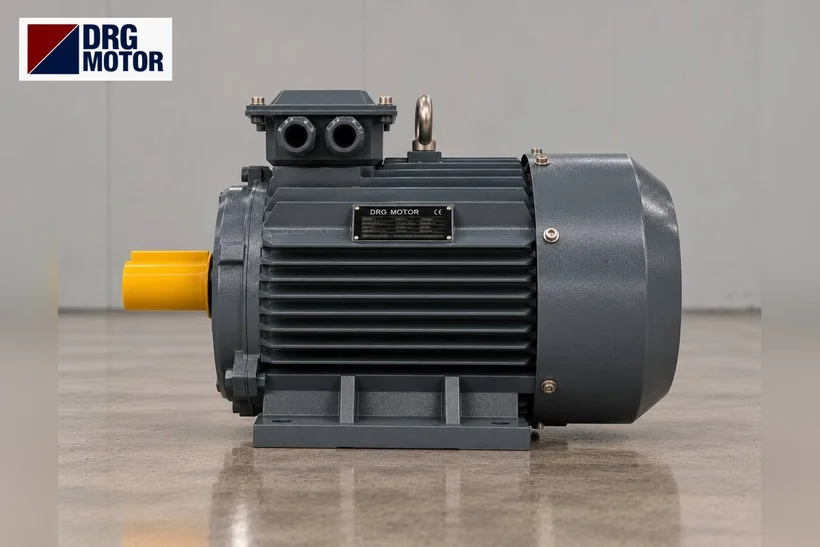
Chosen for the two routes in the worked example: four-pole 3 and 4 kW motors connect to a higher-ratio gearbox, six-pole 3 and 4 kW motors to a lower-ratio one.
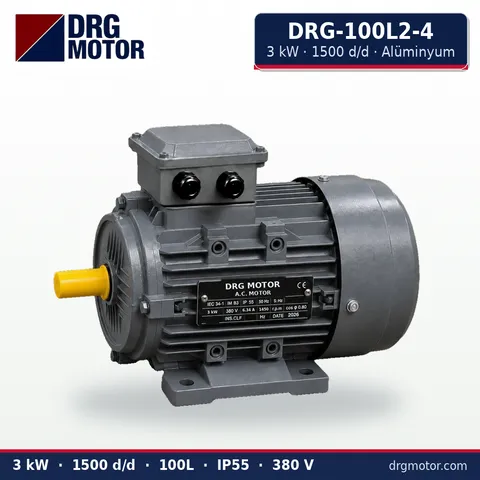
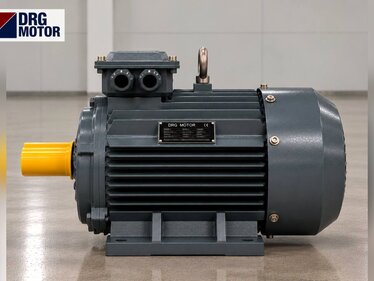
3 kW Three-Phase Motor 1500 rpm – DRG-100L2-4 Aluminium
- 3 kW · 1500 rpm (4 poles)
- Aluminium frame · IEC 100L
- Mounting: B3 · B5 · B14 · B35
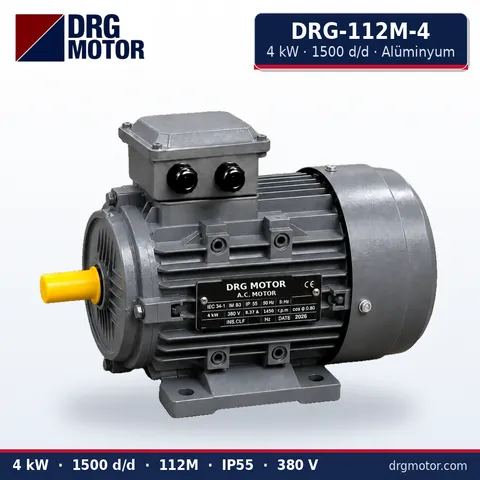
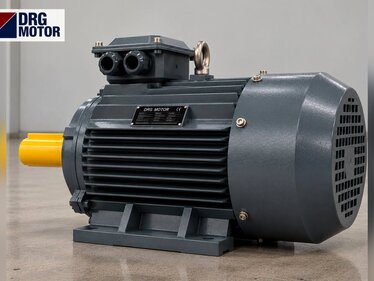
4 kW Three-Phase Motor 1500 rpm – DRG-112M-4 Aluminium
- 4 kW · 1500 rpm (4 poles)
- Aluminium frame · IEC 112M
- Mounting: B3 · B5 · B14 · B35
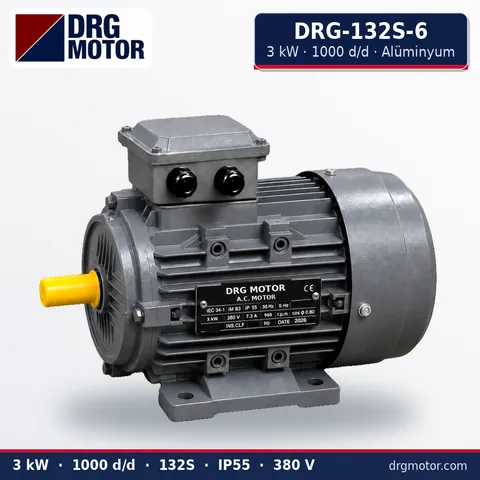
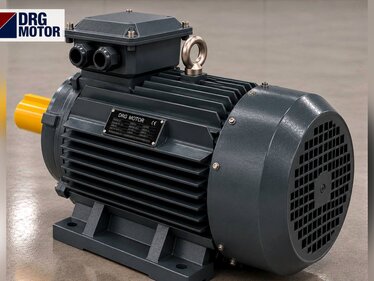
3 kW Three-Phase Motor 1000 rpm – DRG-132S-6 Aluminium
- 3 kW · 1000 rpm (6 poles)
- Aluminium frame · IEC 132S
- Mounting: B3 · B5 · B14 · B35
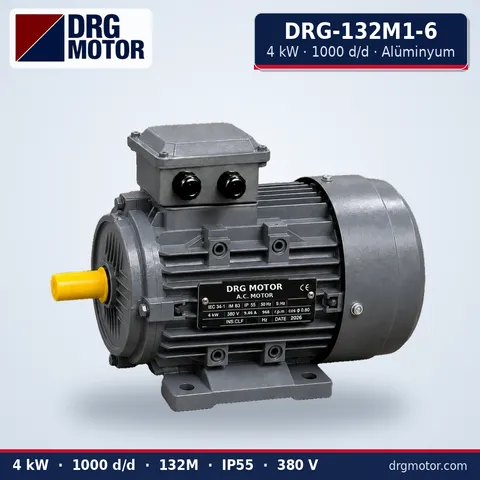
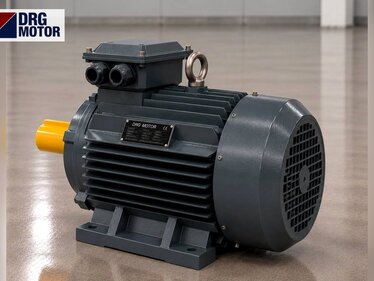
4 kW Three-Phase Motor 1000 rpm – DRG-132M1-6 Aluminium
- 4 kW · 1000 rpm (6 poles)
- Aluminium frame · IEC 132M
- Mounting: B3 · B5 · B14 · B35
Click to see current prices and order these motors nowSEE PRICES →
Turkish Delight Kettle Motor: Frequently Asked Questions
How fast should a Turkish delight kettle agitator turn?
Scraper agitators turn at low speed; the value depends on kettle diameter and the builder's design. The 24 rpm in the example is an assumption. You can find your kettle's speed by dividing motor speed by the gearbox ratio.
Why does the motor trip at the end of cooking?
As the mass thickens, torque reaches its highest value. If the motor trips at this point, either the power is insufficient or the scrapers, gearbox or bearings are adding resistance. Check the mechanical side first, then consider moving one power step up.
Can the motor be mounted vertically on a Turkish delight kettle?
Yes; flange motors can run vertically with the shaft pointing down. State vertical mounting in the order and make sure the terminal box is sealed against steam.
Is a smaller motor enough on a steam-jacketed kettle?
The heating method does not change motor power; the final consistency of the product and the agitator design decide it. But on a steam-jacketed kettle the motor's surroundings are hotter and more humid, so the motor's load margin should not be reduced.
Let us narrow down the right motor for your Turkish delight kettle: write to us on WhatsApp with photos of the burnt motor's and gearbox's plates, whether the motor stands vertically or horizontally, whether it is flange- or foot-mounted, the shaft size and the kettle's volume in litres. You can also pick models through the quote list and receive an offer. Questions: +90 (542) 666 11 11 · info@drgmotor.com · DRG contact. Other ratings and frames are listed in our online motor shop.