English
 Le français
 Türkçe

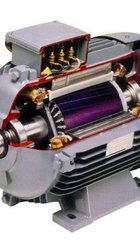
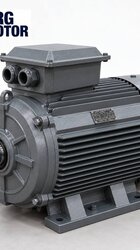
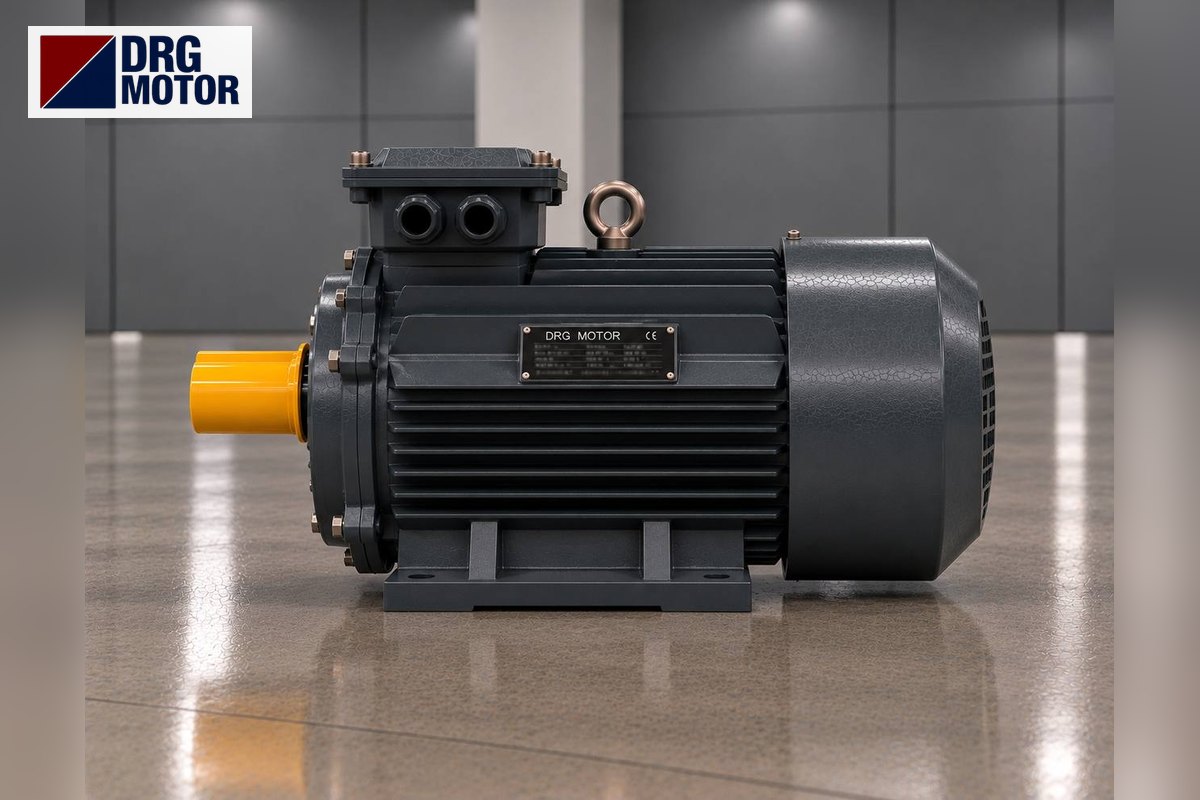

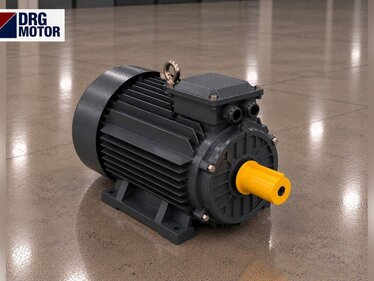
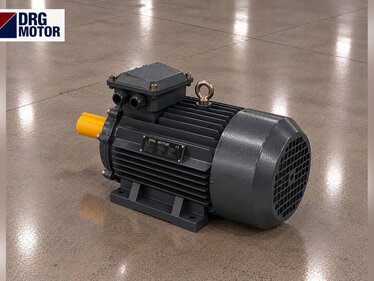
In a reverse osmosis (RO) unit the motor has one real job: turn the high-pressure pump at the speed that delivers the pressure the membrane needs. Motor power is set not by the permeate output but by the feed flow through the pump multiplied by the membrane inlet pressure. If the pump is a multistage centrifugal type the motor is 2-pole (about 2900 rpm); a plunger pump uses a 4-pole motor with a belt or coupling.
When looking for a replacement, first note the power, speed and mounting (vertical flange or foot) from the old motor's nameplate. DRG Motor is an electric motor manufacturer, supplier and seller; all three-phase IEC motors are listed by power and speed in the DRG online store.
For the other motors in a treatment line (raw water lift, dosing, backwash) see water treatment plant electric motors, and for the general design of staged pumps see multistage pump motor. This article focuses only on the motor of the RO high-pressure pump.
How Does the High-Pressure Pump Feed the Membrane?
An RO membrane separates water from salt by forcing it through a semi-permeable surface against osmotic pressure. The saltier the feed, the higher the pressure: a few bar up to 15–20 bar is enough for mains or well water, while seawater needs around 55–70 bar. The pump provides this at the pressure vessel inlet while the concentrate valve holds a set opening.
What matters for the motor is that an RO pump runs all day at one point, with steady flow and pressure. The load stays in a narrow zone of the centrifugal pump curve, so the motor is almost always loaded close to its rated power. Leaving a small power margin protects the motor from tripping on hot summer days and when pressure rises as the membranes foul.
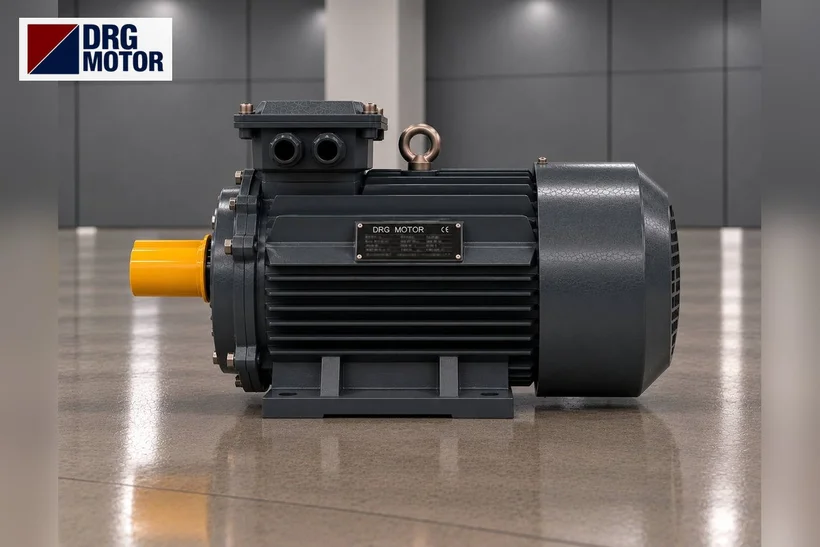
Motor by Pump Type: Multistage, Plunger and Out-of-Scope Pumps
Multistage centrifugal pump
Most industrial RO units use a vertical multistage stainless pump. The pump head is at the bottom and the motor on top; the motor sits on the pump lantern with a large flange (B5) and the shaft pointing down. This vertical position must be stated when ordering, because bearing arrangement and drain hole position are checked accordingly. On horizontal multistage pumps the motor is foot-mounted (B3) or foot-and-flange (B35).
Plunger (piston) pump
Seawater and high-pressure brackish plants prefer positive displacement plunger pumps. Their flow is proportional to speed and they push the same volume each turn regardless of back pressure, so the load is constant torque. As the crankshaft usually turns at a few hundred rpm, a 4-pole motor drives it through a belt and pulleys or through the pump's own gearbox. The opening pressure of the relief valve is the highest pressure to use in the motor power calculation.
Small RO pumps that a standard IEC motor does not cover
Diaphragm booster pumps in household and small commercial units are built as one piece with a 24 V DC motor, and brass rotary vane pumps are mostly clamped onto special single-phase motors. This duty is not covered by a standard three-phase IEC motor, and DRG does not supply these motors. For such a unit, replace the pump and motor with the maker's spare part, or choose a pump with a standard motor when moving to a larger system.
Click to see current electric motor prices and order nowSEE PRICES →
From Membrane Pressure to Motor Power: Worked Examples
Pump shaft power is P = Q·p/(600·η) (Q in l/min, p in bar, P in kW). The rows below are examples/assumptions; the exact value comes from the pump curve at the duty point and from the RO unit maker's plate.
| Example plant | Assumption | Calculated power | Suitable motor |
|---|---|---|---|
| Small well-water RO | 50 l/min · 12 bar · η 0.55 | ≈ 1.8 kW | DRG-90L-2 (2.2 kW) |
| Medium brackish RO | 133 l/min · 18 bar · η 0.65 | ≈ 6.2 kW | DRG-132S2-2 (7.5 kW) |
| Seawater RO, plunger | 167 l/min · 60 bar · η 0.80 | ≈ 20.8 kW | DRG-180L-4 (22 kW) |
Note that the calculated value is rounded up to the next standard rating. For the medium plant at 6.2 kW, 5.5 kW is not enough; the 7.5 kW 2-pole DRG-132S2-2 carries this point comfortably at 2930 rpm and 24.4 Nm rated torque. If a multistage centrifugal pump is chosen for the seawater example, the same power is covered by the 2-pole DRG-180M-2 (22 kW, 2955 rpm). You can check your own figures with the pump and fan motor power calculator.
In large plants with an energy recovery device, the high-pressure pump only delivers a flow equal to the permeate, and the recovery unit handles the rest of the concentrate pressure. Pump flow and motor power then drop markedly; size the motor for the pump flow given by the plant designer, not for the total feed flow.
Starting, Pressure Surges and Protection
Membranes dislike sudden pressure rise. A direct-on-line 2-pole motor brings the pump to full speed in under a second, and the surge reaches the pressure vessel. To avoid this, RO units use a soft starter or a frequency inverter so pressure is raised over a few seconds. DRG does not sell inverters, but our motors can be run on one; the drive is sourced separately.
There should be a low-pressure switch on the pump suction: when prefilters clog or the feed tank empties, a multistage pump running dry loses its seal within minutes. A high-pressure switch sits on the discharge, and the motor line has an overload set to nameplate current. For example, the 7.5 kW 2-pole motor draws 13.7 A at 400 V; its starting current is 7.9 times rated.
Replacement Checklist and Environment
RO rooms are humid; seawater plants have salt in the air, and chemical cleaning (CIP) releases acid and caustic vapour. IP55 protection is enough against splashing water, but do not leave the motor under a wash hose and fit the rain cowl on a vertical motor. If a stainless steel motor frame is required, it is not in the DRG range.
- Power, speed and number of poles of the old motor (2-pole ≈ 2900 rpm, 4-pole ≈ 1450 rpm).
- Mounting: vertical B5 flange (shaft down), horizontal foot, or foot and flange.
- Flange size (bolt circle, spigot diameter) and shaft diameter × length, key width.
- Supply voltage and connection: 230/400 V up to 3 kW, 400/690 V from 4 kW.
- Starting method: direct on line, soft starter or inverter.
- Pump flow and pressure; relief valve setting on a plunger pump.
- Environment: salty humidity, cleaning chemical vapour, outdoor installation.
DRG Motors Suited to Reverse Osmosis Pumps
Models that cover the powers in the worked examples above, from a small well-water unit to a seawater skid: 2-pole for multistage pumps and 4-pole for plunger pumps.
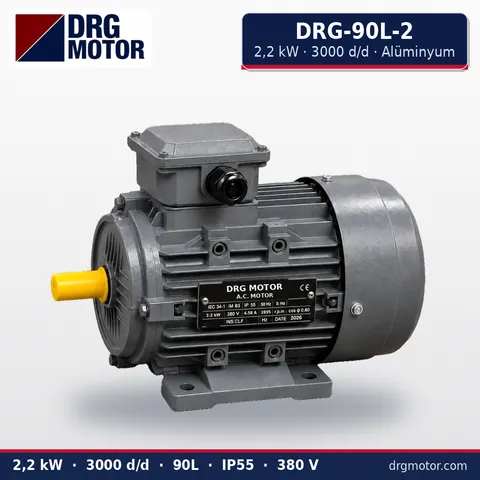
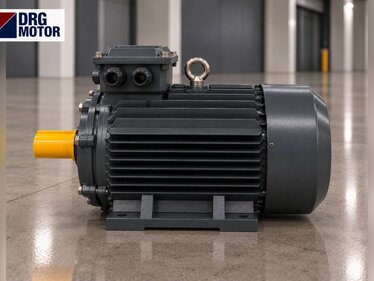
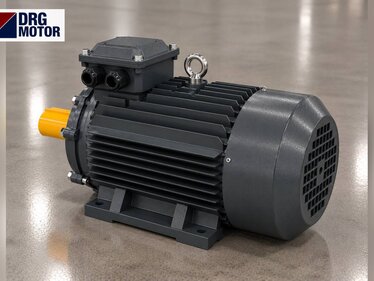
2.2 kW Three-Phase Motor 3000 rpm – DRG-90L-2 Aluminium
- 2.2 kW · 3000 rpm (2 poles)
- Aluminium frame · IEC 90L
- Mounting: B3 · B5 · B14 · B35
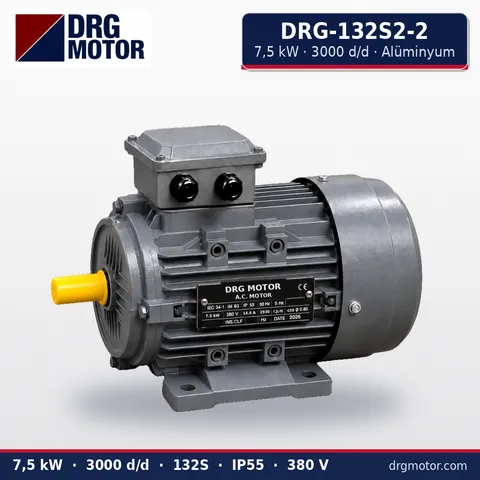
7.5 kW Three-Phase Motor 3000 rpm – DRG-132S2-2 Aluminium
- 7.5 kW · 3000 rpm (2 poles)
- Aluminium frame · IEC 132S
- Mounting: B3 · B5 · B14 · B35
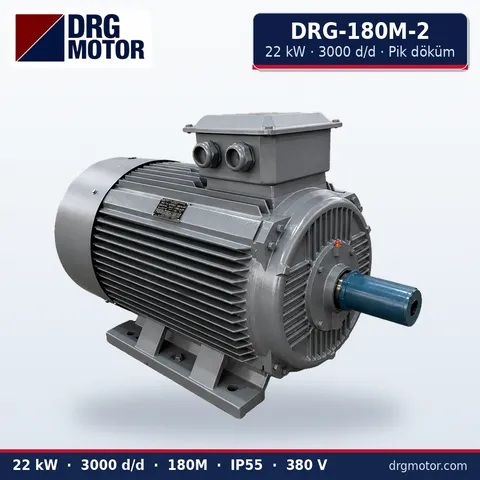
22 kW Three-Phase Motor 3000 rpm – DRG-180M-2 Cast Iron
- 22 kW · 3000 rpm (2 poles)
- Cast iron frame · IEC 180M
- Mounting: B3 · B5 · B14 · B35
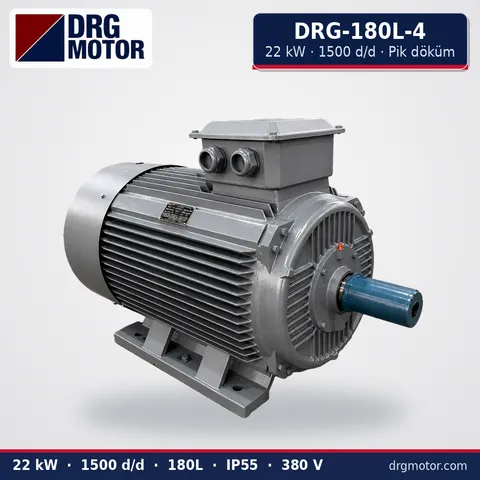
22 kW Three-Phase Motor 1500 rpm – DRG-180L-4 Cast Iron
- 22 kW · 1500 rpm (4 poles)
- Cast iron frame · IEC 180L
- Mounting: B3 · B5 · B14 · B35
Click to see current prices and order these motors nowSEE PRICES →
Reverse Osmosis Pump Motor FAQ
What speed should an RO pump motor run at?
Multistage centrifugal pumps are designed for a 2-pole motor at about 2900 rpm; with a 4-pole motor the pressure falls to a quarter and the membrane cannot be fed. Plunger pumps use a 4-pole motor with a pulley ratio.
Why does the RO pump motor trip its overload?
The most common cause is operating pressure rising as membranes foul, and a concentrate valve throttled too far. In hot weather a change in feed water temperature shifts the duty point. If the motor was sized at the limit, move to the next rating and measure the pump pressure.
Can a horizontal motor be fitted to a vertical RO pump?
If flange and shaft sizes match, the same B5 flange motor is used vertically, but vertical mounting (shaft down) must be stated on the order. A foot-mounted (B3) motor will not sit on a vertical pump lantern.
Is a stainless motor required for seawater RO?
The pump casing must be stainless; the motor stands in the pump room without touching the water. A painted IP55 motor is used in most plants. If there is washdown or direct water contact, a special stainless motor is needed, which is not in the DRG range.
To choose the right motor together, send a photo of the nameplate, the power, speed, mounting type (foot or flange), shaft size and the pump's flow and pressure via WhatsApp, or add it to the quote list. Phone: +90 (542) 666 11 11 · e-mail: info@drgmotor.com · contact. All power and speed options are in the online store.