English
 Le français
 Türkçe

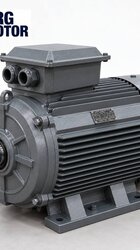
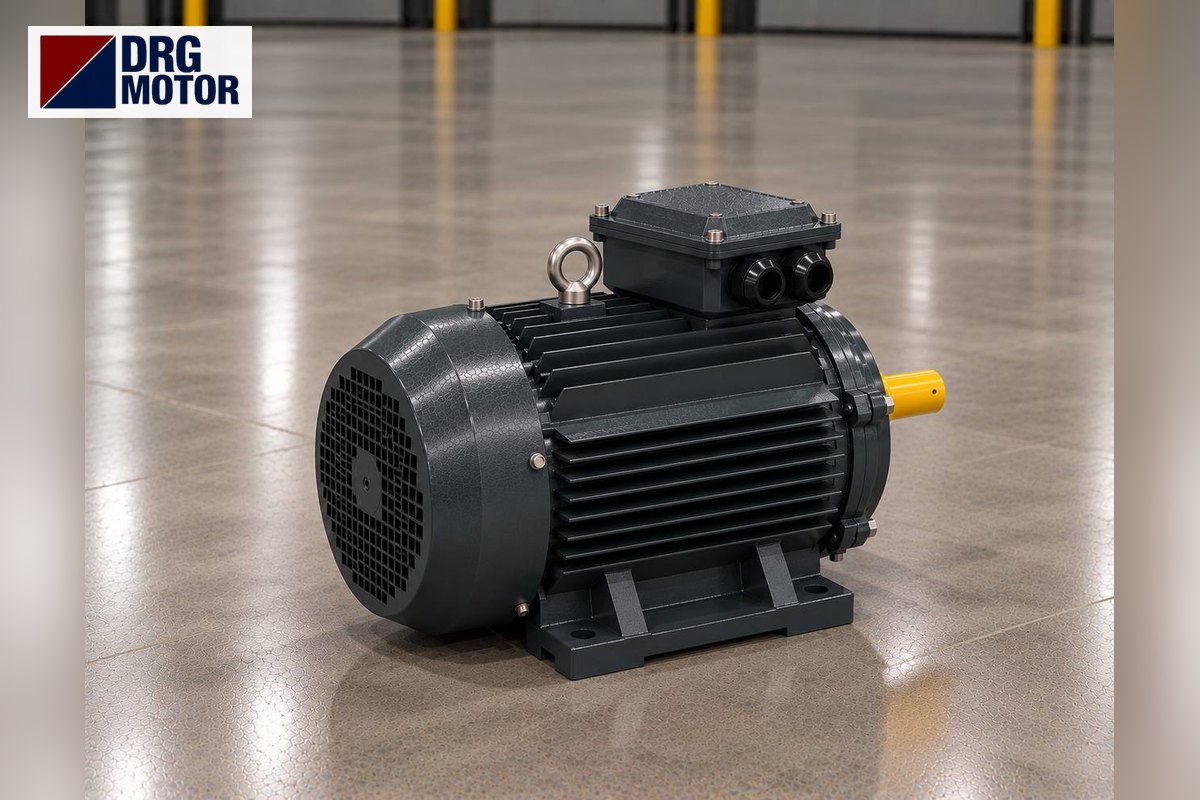

You cannot replace a pool circulation pump motor by looking only at power and speed; first find out whether the pump is monobloc or coupled. In monobloc pool pumps the impeller sits directly on the end of the motor shaft, and that shaft is not standard, so a standard IEC motor usually will not fit in its place. On coupled types, with a coupling between pump and motor, a standard foot-mounted motor is a one-to-one replacement.
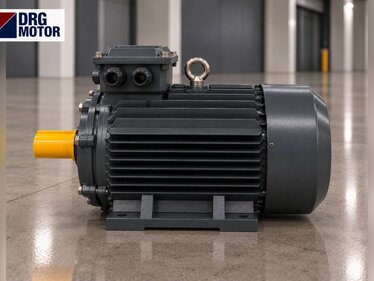
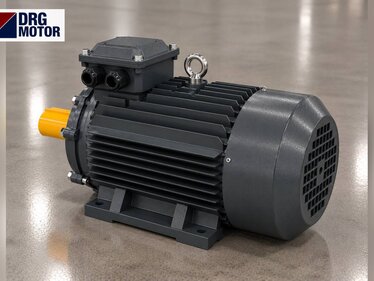
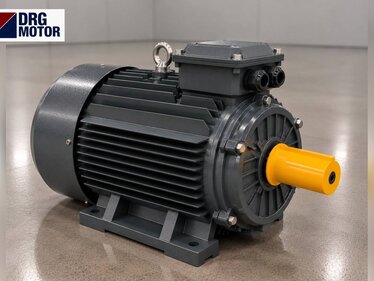
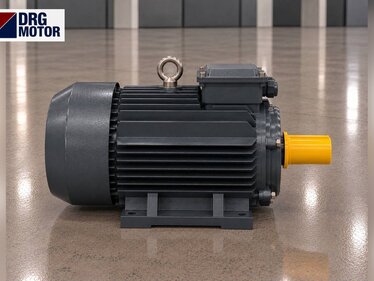
DRG Motor is an electric motor manufacturer, supplier and seller; its range is three-phase IEC induction motors, listed in the online store. Below we clearly separate the pool pumps that can use these motors from those that cannot.
Check the Pump Layout First: Monobloc or Coupled?
Stand in front of the pump in the plant room and look where the motor meets the pump casing. If there is an open coupling with a sheet guard over it, the pump is coupled. If the motor end shield is bolted straight to the volute with no gap, it is monobloc. Most small and medium pool pumps with a strainer basket (hair and lint pot) are monobloc.
| Distinguishing point | Monobloc pump | Coupled (base-mounted) pump |
|---|---|---|
| Where is the impeller? | On the motor shaft end | On the pump’s own shaft |
| Link to the motor | Common shaft, no coupling | Flexible coupling and guard |
| Support | Motor feet or pump casing | Common baseplate, foot motor |
| Mechanical seal | On the motor shaft | On the pump shaft |
| Swap for standard IEC motor | Usually not possible | Possible (if sizes match) |
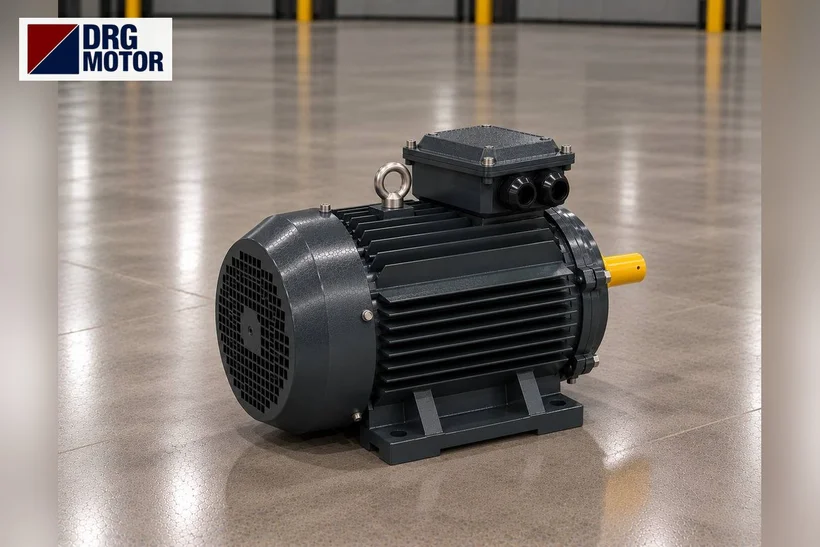
Why Can’t a Monobloc Pool Pump Motor Be Swapped Directly?
In a monobloc pump the front end of the motor shaft extends into the pump. The impeller is screwed or nutted onto that end, and the mechanical seal runs on the same shaft. Shaft diameter, length, thread and often stainless material are therefore specific to the pump maker. A standard IEC motor shaft has a set diameter and length, with a key and a plain end; the impeller will not mount on it.
The end-shield flange that bolts to the pump casing is usually not an IEC B5 or B14 size either. In short, this duty is not covered by a standard IEC motor; a special-shaft motor is needed and DRG does not supply this type. The options are: obtain the pump maker’s spare motor, replace the complete pump, or move to a coupled pump if the installation is large.
Exception: close-coupled pumps with a stub shaft
Some close-coupled pumps run on a stub shaft or sleeve fitted over the shaft of a standard B5 flange motor. If the pump plate or catalogue states that the motor is standard IEC, a standard motor can be used as long as flange and shaft sizes match. For example, on frames 100L and 112M the B5 flange bolt circle is 215 mm, spigot 180 mm and shaft 28×60 mm; on frame 132S these are 265 mm, 230 mm and 38×80 mm. Do not order if the old motor’s sizes differ.
Click to see current electric motor prices and order nowSEE PRICES →
Motor Power on a Coupled Pump: Working From Pool Volume
Circulation flow is set so that the pool water passes once through the filter within a given time (turnover period). The pump delivers this flow against the total loss in the filter, heat exchanger, valves and return inlets. Motor power is P = Q·p/(600·η) (Q in l/min, p in bar, P in kW). The figures below are examples/assumptions; the exact value comes from the pump plate and curve.
Example 1: 300 m³ pool, 4-hour turnover → 75 m³/h (1250 l/min). Assuming a total loss of 1.5 bar and pump efficiency of 0.70, shaft power is about 4.5 kW; the next standard rating, 5.5 kW, is selected. If the pump was chosen for 1450 rpm, DRG-132S-4 suits it.
Example 2: 1250 m³ public pool, 4-hour turnover, two pumps in parallel. Each pump delivers about 2604 l/min; assuming 1.5 bar and 0.75 efficiency gives 8.7 kW per pump. At this point the 11 kW 4-pole DRG-160M-4 is used. You can test your own values with the pump motor power calculator.
During filter backwash the pump runs at a different point, against a dirty filter and the waste line; if the old motor trips during backwash the power margin is too small. General selection steps for coupled horizontal pumps are covered on the end-suction centrifugal pump motor page.
Chlorine, Humidity and Flooding in the Plant Room
A pool plant room is a hard place for a motor. Chlorine dosing tanks and salt electrolysis cells release corrosive vapour, which over time attacks the frame paint, terminal box screws and fan cover. Keep chemical tanks in a separate compartment away from the motor and ventilate the room mechanically.
Plant rooms are often below pool level; when the strainer lid is opened or a gasket leaks, water collects under the motor. IP55 protects against splashing water, not immersion. Raise the motor feet on a plinth, position the cable entry facing down, and expect condensation inside the motor on outdoor pools left idle in winter.
Where different day and night flow is wanted, the pump is slowed with a frequency inverter. DRG does not sell inverters, but our standard motors can run on a separately sourced drive. At low speed the shaft-mounted fan cools less, so watch motor temperature before reducing speed a lot.
What to Measure Before Removing a Coupled Pump Motor
On a coupled pump the motor is bolted to the baseplate by its feet and the coupling joins the two shafts. If the new motor’s shaft height (H) differs from the old one, the shaft axes are misaligned and the coupling elements soon break up. After removing the motor, pull the coupling hub and measure the shaft with a caliper.
- Pump type: monobloc, stub-shaft close-coupled or coupled (confirm with a photo).
- Old motor plate: kW, rpm, voltage and connection (230/400 V or 400/690 V).
- Shaft height (H), foot hole spacing, shaft diameter × length and key width.
- Coupling type and hub bore; fit to the new shaft.
- Motor current during filter backwash (for overload setting).
- Chlorine/salt vapour and flooding risk in the plant room.
- Coupling alignment with laser or dial gauge after fitting.
DRG Motors for Coupled Pool Pumps
Foot-mounted models matching the worked examples above for medium 2-pole and large 4-pole coupled pool pumps (not for monobloc pumps):
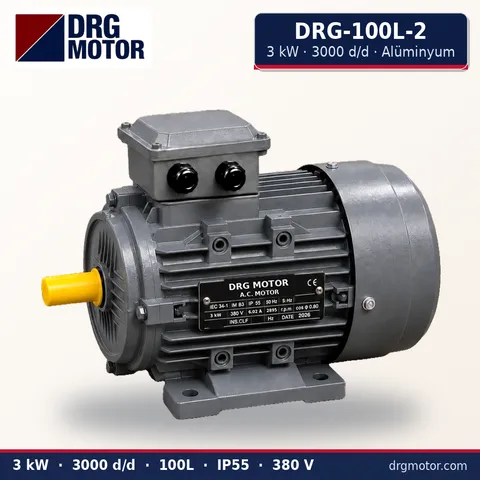
3 kW Three-Phase Motor 3000 rpm – DRG-100L-2 Aluminium
- 3 kW · 3000 rpm (2 poles)
- Aluminium frame · IEC 100L
- Mounting: B3 · B5 · B14 · B35
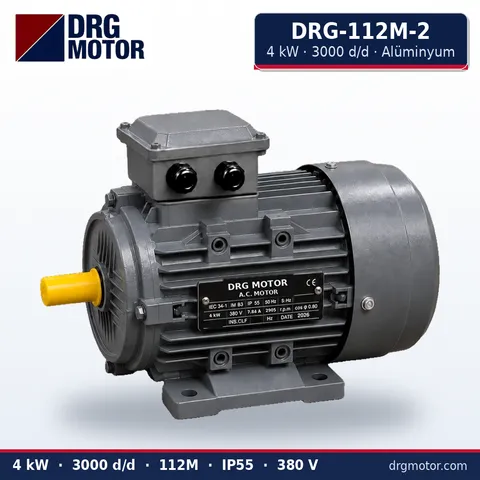
4 kW Three-Phase Motor 3000 rpm – DRG-112M-2 Aluminium
- 4 kW · 3000 rpm (2 poles)
- Aluminium frame · IEC 112M
- Mounting: B3 · B5 · B14 · B35
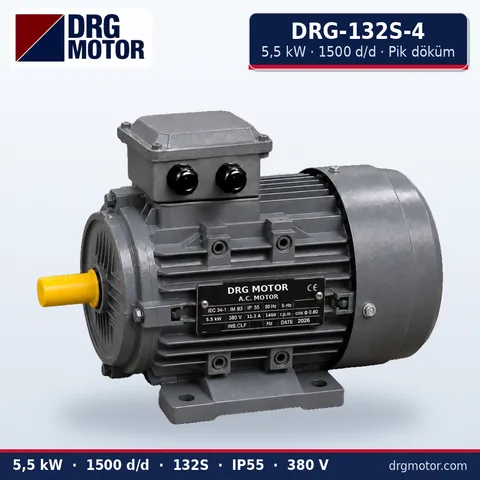
5.5 kW Three-Phase Motor 1500 rpm – DRG-132S-4 Cast Iron
- 5.5 kW · 1500 rpm (4 poles)
- Cast iron frame · IEC 132S
- Mounting: B3 · B5 · B14 · B35
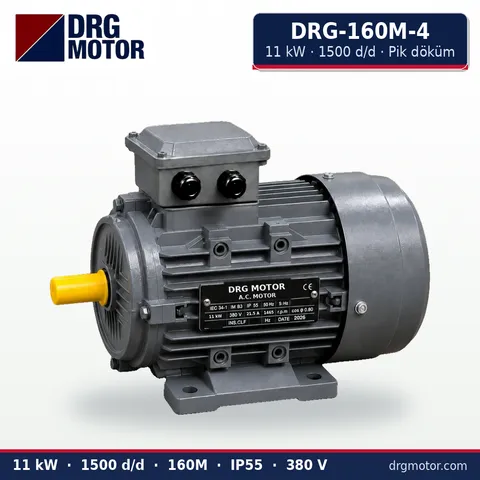
11 kW Three-Phase Motor 1500 rpm – DRG-160M-4 Cast Iron
- 11 kW · 1500 rpm (4 poles)
- Cast iron frame · IEC 160M
- Mounting: B3 · B5 · B14 · B35
Click to see current prices and order these motors nowSEE PRICES →
Pool Pump Motor FAQ
Can a pool pump motor be replaced on its own?
On a coupled pump, yes: a standard foot motor with the same power, speed, shaft height and shaft size is fitted. On a monobloc pump the motor shaft carries the impeller, so usually only the maker’s spare motor or a new pump is the answer.
Why does the pool pump motor run hot?
The usual causes are a dirty strainer basket, a filter not backwashed for a long time, and the pump running at the right end of its curve (high flow, low pressure). A hot, poorly ventilated plant room also weakens motor cooling.
What speed motor does a pool pump use?
Small and medium pumps mostly run on 2-pole motors (about 2900 rpm), large coupled pumps on 4-pole motors (about 1450 rpm). The motor must match the speed the pump was selected for; a speed difference changes flow and pressure directly.
Can a single-phase pool pump be converted to a three-phase motor?
On small monobloc pumps the motor cannot be changed, so in practice this means replacing the pump. On a coupled pump with a three-phase supply, a standard three-phase motor of the same power and speed can be used. DRG does not supply single-phase motors.
To confirm together whether your pump is coupled, send a side photo of pump and motor, the motor plate, power, speed, mounting type, shaft size and pool volume via WhatsApp, or create a quote list. Phone: +90 (542) 666 11 11 · e-mail: info@drgmotor.com · contact. Standard motor options are in the DRG online store.