English
 Le français
 Türkçe

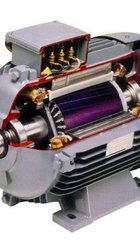
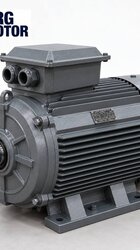
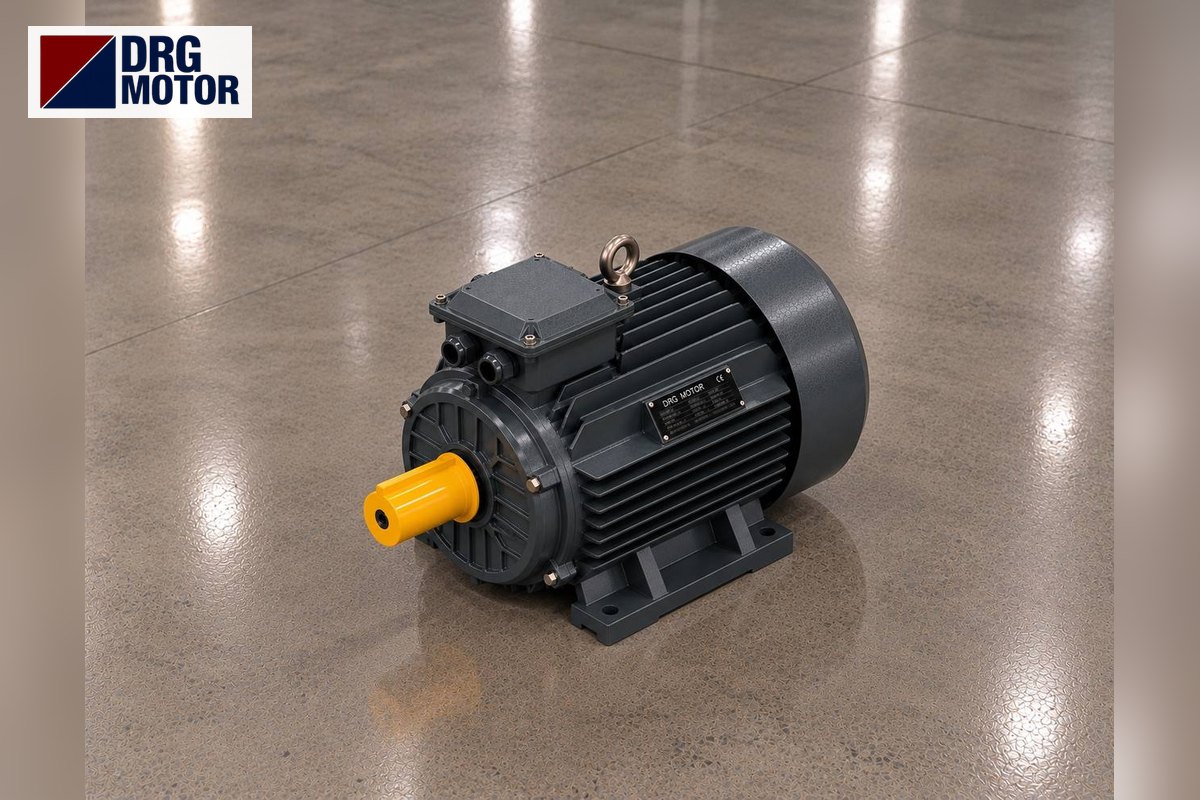

The motor of an industrial peristaltic (hose) pump has to turn the pump shaft very slowly but with high torque; the drive is therefore almost always a 4- or 6-pole three-phase motor, a high-ratio gearbox and an inverter for flow adjustment. What decides the selection is whether the gearbox output can deliver the torque the pump shaft needs, both while running and at the first start with a cold hose.
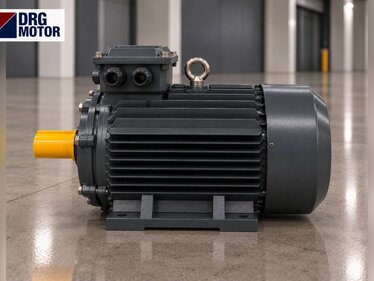
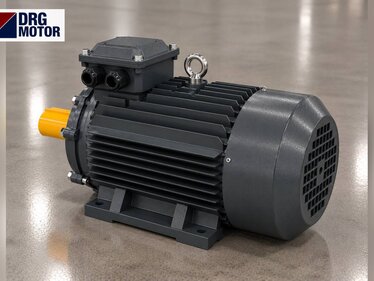
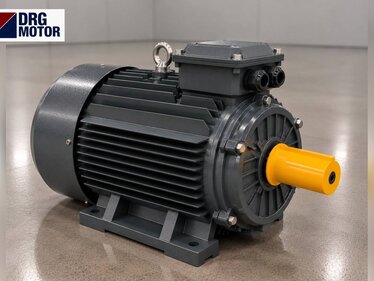
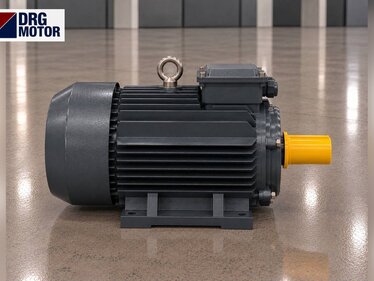
DRG Motor is an electric motor manufacturer, supplier and seller; it does not sell peristaltic pumps, gearboxes or inverters, but supplies the standard IEC motor connected to the pump gearbox input. 4- and 6-pole, foot and flange options are listed by power in the DRG online motor shop.
What Do the Hose-Squeezing Shoes Demand from the Motor?
Inside the pump housing, a thick-walled reinforced hose lies in a half circle. The central rotor turns two shoes (or rollers); each shoe squeezes the hose until it is fully closed and pushes the fluid ahead of it towards the discharge. After the shoe passes, the hose springs back to shape and creates suction that draws in new fluid. The fluid touches only the hose; there is no seal, valve or impeller.
For the motor, this means most of the torque goes into squeezing the hose rather than pumping the fluid. Even at low pressure there is substantial torque on the pump shaft, and it hardly falls with speed; the load is constant torque. As the shoes enter and leave the hose, torque fluctuates twice per revolution. The lubricant in the hose housing (usually glycerine-based) reduces friction; too little lubricant raises motor current.
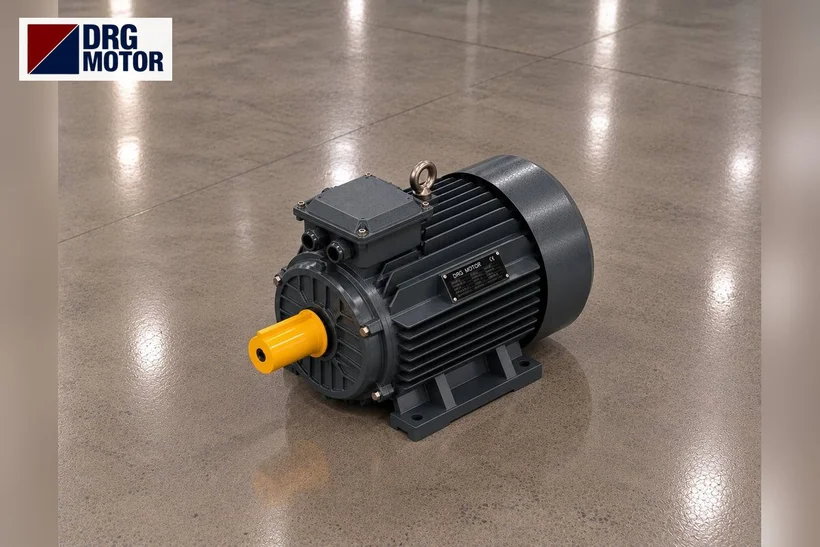
Pump Shaft Speed Is Chosen for Hose Life
In a peristaltic pump, flow is almost directly proportional to shaft speed. But as speed rises the hose is squeezed more often and heats up; with abrasive slurry or high pressure, hose life shortens quickly. Makers therefore limit the maximum operating speed by fluid and pressure; on large pumps this is usually in the range of a few tens of rpm. The exact value comes from the pump maker's hose life curve.
Reaching such a low speed needs a ratio of roughly 20–60 with a 1500 rpm class motor, or a smaller ratio with a 1000 rpm class motor. Helical or bevel helical gearboxes are most common; a worm gearbox has higher losses at high ratios and can increase the motor power needed.
Click to see current electric motor prices and order nowSEE PRICES →
Example: Two Routes to the Same Shaft Speed
The calculation below is an assumption; real torque and speed are in the pump maker's data sheet. Example: the pump shaft turns at about 50 rpm with a running torque of 200 Nm, and gearbox efficiency is taken as 0.90. Required shaft power is P = T·n/9550 = 200·50/9550 ≈ 1.05 kW. Both arrangements meet this with a 1.5 kW motor:
| Motor | Gear ratio (example) | Pump shaft speed | Output torque |
|---|---|---|---|
| DRG-90L-4 | 29 | 49.8 rpm | 258.7 Nm |
| DRG-100L-6 | 19 | 49.9 rpm | 258.2 Nm |
For the 4-pole DRG-90L-4, output torque is 9.91 Nm × 29 × 0.9 ≈ 258.7 Nm; with Ts/Tn = 2.3, about 595 Nm is available at the gearbox output on starting. The 6-pole DRG-100L-6 gives the same torque with a smaller ratio (15.1 Nm × 19 × 0.9 ≈ 258.2 Nm), but its Ts/Tn is 2.0 and its frame is one size larger. You can repeat the calculation with your own ratio in the gearbox output speed and torque calculator.
First Start with a Cold or New Hose
On a pump that has stood for a long time, the hose section under the shoe takes a set; in cold weather the rubber stiffens. A newly fitted hose is also stiffer for the first hours. In these cases starting torque can be well above running torque. A motor with more than twice the running torque available at start, as in the example, is usually enough; but for a pump standing outdoors in winter, ask the maker for the starting value and choose one size up if needed.
Flow Control by Inverter and Motor Cooling
The most practical way to adjust flow on a peristaltic pump is an inverter. With a constant torque load, the motor works near rated torque even at low frequency; but with IC411 cooling, the fan is on the shaft, so cooling air falls as speed drops. Going down to 25 Hz for half flow is fine for short periods; if the pump will run at low flow for long, there are two routes: a larger gearbox ratio that brings the motor closer to rated frequency, or a motor with a separate fan. DRG standard motors are shaft-fan cooled; separately ventilated motors are not in this range.
In the inverter settings, torque boost or vector control maintains starting torque at low speed. If the acceleration ramp is very short, the inverter may trip on overcurrent when starting with a cold hose. If the pump is run in reverse to clear the line, the motor is suitable for reversing; change direction only after the motor has stopped.
Gearbox Input and Motor Replacement
On hose pumps the motor usually sits on the gearbox IEC input flange as B5; on base-mounted coupled arrangements a B3 foot motor is used. According to the DRG catalogue, B5 flange values are:
- Frame 90: flange outside diameter 200 mm, bolt circle 165 mm, spigot 130 mm, shaft 24×50 mm
- Frame 100L / 112M: 250 / 215 / 180 mm, shaft 28×60 mm
- Frame 132M: 300 / 265 / 230 mm, shaft 38×80 mm
For small flange (B14) connections, dimensions are confirmed at order. Checklist before ordering or replacing:
- Old motor nameplate: power, speed, voltage, frequency
- Gearbox plate: type, ratio, input flange and shaft bore
- Mounting (B3, B5, B35) and motor frame size
- Pump operating speed range and lowest inverter frequency
- Whether the pump stands outdoors or indoors; ambient temperature
- Hose burst sensor and pressure switch connections
DRG's motor options for gearbox inputs are on the electric motors for gearboxes page.
Site Conditions That Load the Motor
If the pump runs against a closed discharge valve, pressure rises fast; the pressure switch must stop the motor before the hose or gearbox is damaged. When a hose bursts, fluid fills the pump housing; abrasive or chemical fluid can reach the gearbox seal and motor flange. The hose burst sensor should therefore be wired to cut the motor.
At wastewater plants, mines and concrete sites, the pump stands in humid, dusty conditions. IP55 protection suits dust and water splashes, but avoid leaving the motor under direct pressure washing or in standing water. The motor is rated for −15…+40 °C ambient and altitudes up to 1000 m.
Symptoms of the Wrong Choice
An undersized motor fails to start on cold mornings or the inverter trips on overcurrent. A drive that reaches low speed with a small gearbox ratio and low frequency runs hot and the thermal protection operates. A 2-pole motor combined with a very high-ratio gearbox pushes the gearbox input speed limit and runs noisily.
DRG Motors Suited to Peristaltic Pump Drives
4- and 6-pole options for the gearbox input, matching the constant torque hose load of small and medium industrial hose pumps.
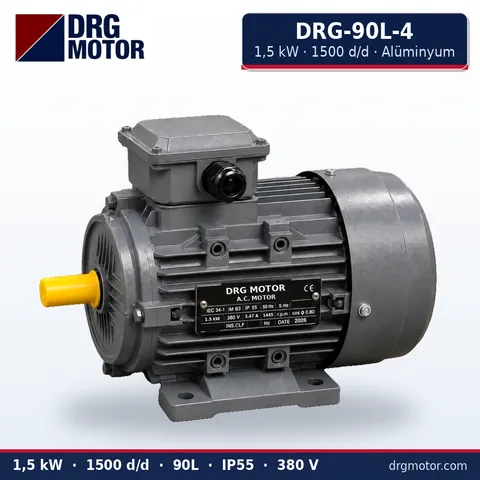
1.5 kW Three-Phase Motor 1500 rpm – DRG-90L-4 Aluminium
- 1.5 kW · 1500 rpm (4 poles)
- Aluminium frame · IEC 90L
- Mounting: B3 · B5 · B14 · B35
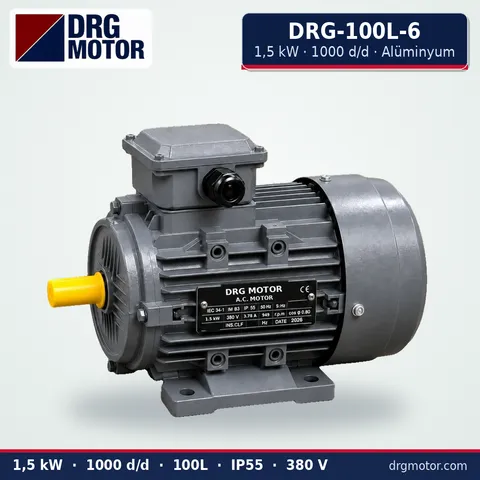
1.5 kW Three-Phase Motor 1000 rpm – DRG-100L-6 Aluminium
- 1.5 kW · 1000 rpm (6 poles)
- Aluminium frame · IEC 100L
- Mounting: B3 · B5 · B14 · B35
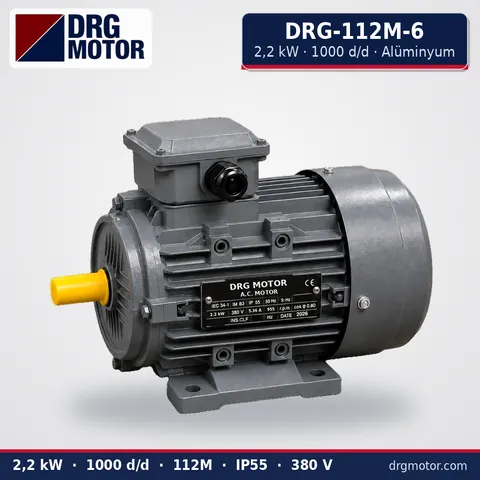
2.2 kW Three-Phase Motor 1000 rpm – DRG-112M-6 Aluminium
- 2.2 kW · 1000 rpm (6 poles)
- Aluminium frame · IEC 112M
- Mounting: B3 · B5 · B14 · B35
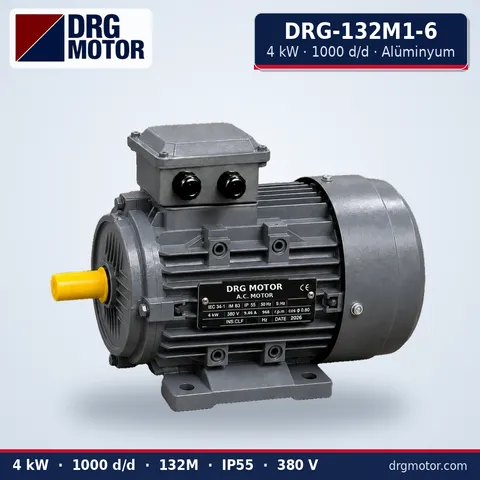
4 kW Three-Phase Motor 1000 rpm – DRG-132M1-6 Aluminium
- 4 kW · 1000 rpm (6 poles)
- Aluminium frame · IEC 132M
- Mounting: B3 · B5 · B14 · B35
Click to see current prices and order these motors nowSEE PRICES →
Peristaltic Pump Motor: Frequently Asked Questions
How many kW should a peristaltic pump motor be?
It depends on pump size, hose diameter and pressure; small industrial types use under 1 kW, while large mining and wastewater pumps use several kW or more. The exact value is calculated from shaft torque and speed in the pump maker's data sheet.
Should a hose pump use a 4-pole or 6-pole motor?
The 4-pole motor is more common and has a smaller frame for the same power. A 6-pole motor reaches the same shaft speed with a smaller gearbox ratio, giving more flexibility in gearbox choice.
Is an inverter required on a peristaltic pump?
No; for fixed flow the gearbox ratio is enough. If flow has to vary, an inverter is the most practical route; consider motor cooling for long periods at low frequency.
Can a peristaltic pump run in reverse?
The pump design is generally suitable for both directions, and motor direction is changed by phase sequence or by the inverter. Change direction only after the motor has stopped.
For a quotation, send photos of the motor and gearbox nameplates, the mounting (foot/flange), shaft size and pump operating speed via WhatsApp, or add the models to the quote list. Phone: +90 (542) 666 11 11 · E-mail: info@drgmotor.com · Contact page. All models are listed in the online shop.