English
 Le français
 Türkçe




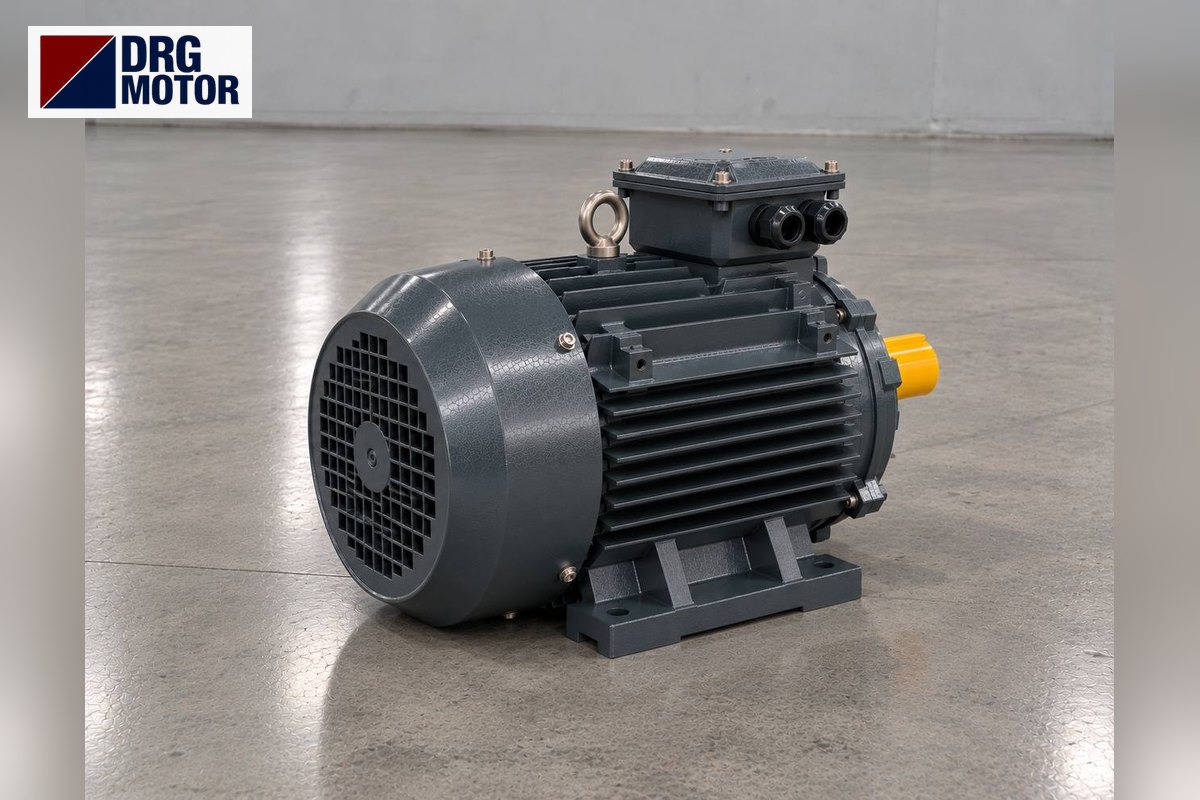

A pulse grading screen motor does one of two jobs depending on the screening mechanism: on a rotary drum (trommel) type it turns the perforated drum through a gearbox at a few tens of rpm; on a flat-deck type it drives, by belt, the eccentric shaft that shakes the screen box. Types in which vibration motors shake the box directly are a separate class and cannot be served by a standard IEC motor. So before looking for a replacement, establish which type your machine is and what the motor actually turns.
Rotary drum and eccentric-driven screens usually manage with a 4- or 6-pole aluminium three-phase motor in the 1.1–4 kW range; the machine plate gives the binding figure. Matching motors can be compared in our online electric motor store; for the wider family of screening and grading machines, see the grain screening and grader machine electric motors page.
Know Your Screen Type: What Does the Motor Turn?
A grading screen splits chickpeas, beans, lentils and similar seeds into size classes. Three different mechanisms do this job, and each asks something different of the motor.
| Screen type | Source of motion | Drive layout | Standard motor? |
|---|---|---|---|
| Rotary drum (trommel) | Drum turns on its axis | Motor + gearbox (+ chain) | Yes |
| Eccentric-driven flat screen | Box swings on eccentric shaft | Motor + belt and pulleys | Yes |
| Vibration-motor flat screen | Unbalanced mass on the box | Vibro motor bolted to box | No, special motor |
A vibration motor is a special motor carrying adjustable unbalanced weights on its shaft ends and bolted straight to the screen box. Its bearings and housing are built for constant vibration. DRG does not sell vibration motors; bolting an ordinary IEC motor to the box to create vibration quickly ruins the bearings and feet. If the feed screw, elevator or drum brush on the same machine runs on a standard motor, DRG can supply those motors.
Rotary Drum Grading Screen: Critical Speed and Drum Speed
The drum sits at a slight incline and is made of sections with different hole sizes along its length. Seed rolls from inlet to outlet; small seeds drop through the small holes first, larger ones separate in wider sections, and the largest leave from the drum end.
Drum speed directly decides screening quality. As speed rises, centrifugal effect pins the seed to the drum wall; it can no longer roll over the holes and screening stops. This limit is called the critical speed and is roughly nc = 42.3 / √D (D in metres). The values below are an example, assuming an operating speed of 30–40 percent of critical.
| Drum diameter | Critical speed | 30% speed | 40% speed |
|---|---|---|---|
| 0.6 m | 54.6 rpm | 16.4 rpm | 21.8 rpm |
| 0.8 m | 47.3 rpm | 14.2 rpm | 18.9 rpm |
| 1.0 m | 42.3 rpm | 12.7 rpm | 16.9 rpm |
A drum turning too slowly is also a problem: seed slides over the holes and capacity drops. The exact operating speed is the one set by the screen builder.
Click to see current electric motor prices and order nowSEE PRICES →
From Motor to Drum: Gearbox and Chain Ratio Example
Getting from a 1000 rpm class motor down to 15–20 rpm takes a gearbox and, on most machines, an extra chain stage. The gearbox itself is outside DRG's range; we provide the motor that goes on its input side.
Example: assume a 0.8 m drum, a DRG-100L-6 (1.5 kW, 949 rpm), a gear ratio of i = 30 and 13/25 chain sprockets. Gearbox output is 949 / 30 = 31.6 rpm, and drum speed 31.6 × 13 / 25 = 16.4 rpm, about 35 percent of critical. With the same ratios a 4-pole motor (1450 rpm) brings the drum to about 25.1 rpm, past half the critical speed. To see what another ratio would give before buying anything, use our gearbox output speed and torque calculator.
The drum load is smooth: at start-up the drum's inertia and the seed inside must be lifted, then it turns at steady torque. A high starting torque is therefore not the issue; what matters is reaching the right speed through the right ratio. For rotary screens in other industries, see also our rotary screen (trommel) motor page.
Belt Ratio on an Eccentric-Driven Flat Screen
In this type, stacked screen decks sit in a box carried on springs or hanger rods. As the eccentric shaft turns, the box swings back and forth and seeds travel across the decks, separating by size.
The stroke rate equals eccentric shaft speed and is set by the pulleys: n2 = n1 · d1 / d2. For example, with a DRG-90S-4 (1.1 kW, 1445 rpm), a 90 mm motor pulley and a 315 mm shaft pulley, the eccentric shaft turns at 412.9 rpm. Replace that motor with a 2-pole one and the stroke rate doubles; box, springs and hangers cannot take it.
With an eccentric drive the load reverses every turn, so motor and belt work under shock. Pulley hub fit on the key, belt tension and motor foot bolts need checking more often on this type. We covered the detailed calculation for eccentric screens in grain cleaning lines in our article on grain cleaning and screening machines.
Pulse Dust, Brushes and Ambient Conditions
Screening pulses releases hull fragments, soil and fine dust. Because the motor sits under the drum or beside the screen box, dust builds up on the fan cowl and cooling fins. IP55 keeps dust out of the motor, but cleaning the outside is up to the user: dirty fins make the motor run hotter at the same load.
The rotating brush that clears seeds stuck in the drum holes usually runs off the main drive by chain or on a small separate motor. If brush pressure is set too high, the main motor draws more current than expected. Where dust has put the area into an explosive-atmosphere zone, a standard IEC motor is off the table; Ex-protected special motors are used there.
Motor Replacement Checklist
Where the motor bolts onto a gearbox, the flange decides everything. As an example, catalogue values for the DRG-100L1-4:
- Power: 2.2 kW – 1450 rpm
- Frame: 100L, aluminium, shaft height H = 100 mm
- Shaft: Ø28 × 60 mm, 8 mm key
- B5 flange (M / N / P): 215 / 180 / 250 mm
- Current (400 V): 4.52 A, voltage 230/400 V (Δ/Y)
In frame 90S the B5 flange is 165 / 130 / 200 mm and the shaft Ø24 × 50 mm; if a B14 small-flange motor is needed, dimensions are confirmed at order. Before ordering, check the following:
- Machine type: rotary drum, eccentric flat screen or vibration-motor screen.
- Power, speed and pole count on the old motor's nameplate.
- Mounting: B5 or B14 flange on a gearbox, or feet on a base.
- Shaft diameter, length and key: the gearbox input or pulley hub must fit the new shaft.
- Gear ratio and chain sprocket teeth, so that drum speed stays the same.
- Supply voltage: 230/400 V motors up to 3 kW are star-connected on a 400 V supply.
- Whether the brush, feed screw or aspirator has its own motor.
DRG Motors Suited to Pulse Grading Screens
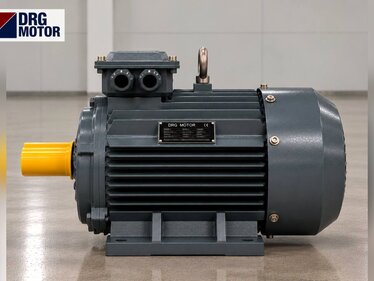
These aluminium models cover the 1.1–4 kW steps found on rotary drum and eccentric-driven screens; the 4-pole units suit belt and gearbox layouts, the 6-pole model suits slow drum drives.
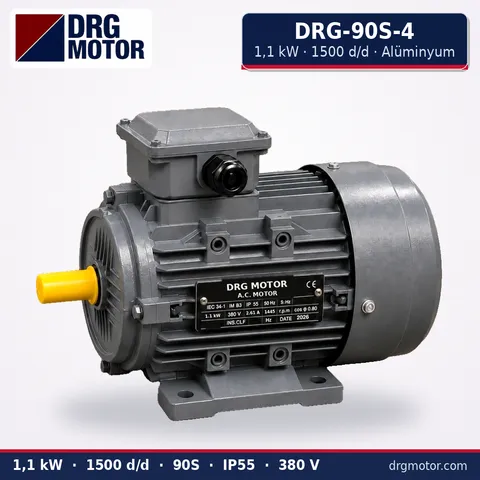
1.1 kW Three-Phase Motor 1500 rpm – DRG-90S-4 Aluminium
- 1.1 kW · 1500 rpm (4 poles)
- Aluminium frame · IEC 90S
- Mounting: B3 · B5 · B14 · B35
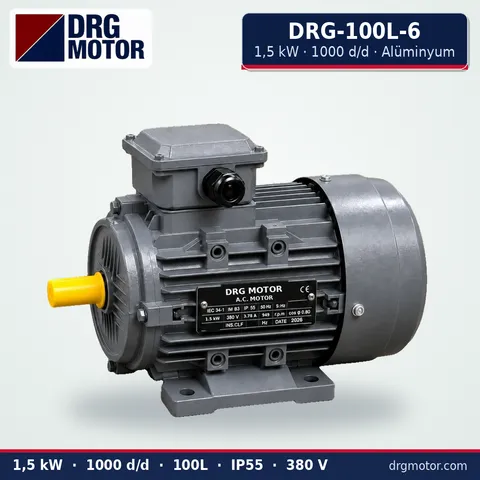
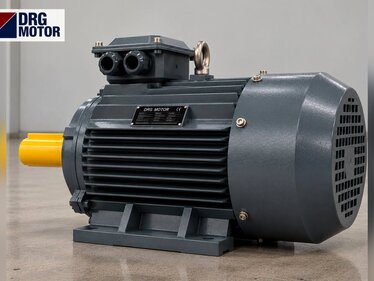
1.5 kW Three-Phase Motor 1000 rpm – DRG-100L-6 Aluminium
- 1.5 kW · 1000 rpm (6 poles)
- Aluminium frame · IEC 100L
- Mounting: B3 · B5 · B14 · B35
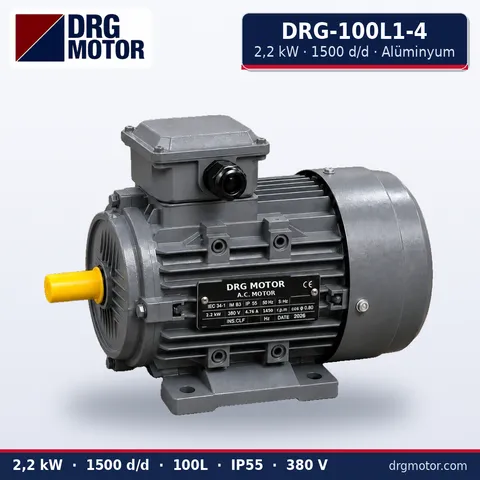
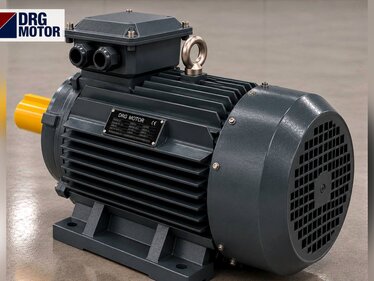
2.2 kW Three-Phase Motor 1500 rpm – DRG-100L1-4 Aluminium
- 2.2 kW · 1500 rpm (4 poles)
- Aluminium frame · IEC 100L
- Mounting: B3 · B5 · B14 · B35

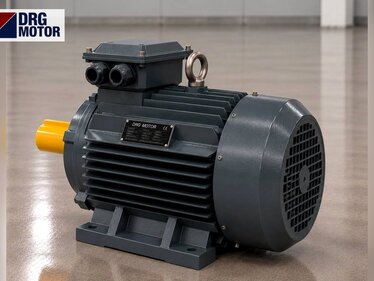
4 kW Three-Phase Motor 1500 rpm – DRG-112M-4 Aluminium
- 4 kW · 1500 rpm (4 poles)
- Aluminium frame · IEC 112M
- Mounting: B3 · B5 · B14 · B35
Click to see current prices and order these motors nowSEE PRICES →
Questions About Grading Screen Motors
Which motor fits a chickpea and bean grading screen?
Rotary drum and eccentric-driven screens use a standard three-phase induction motor; read power and poles off the plate of the motor being replaced. Vibration-motor screens need a special vibration motor bolted to the box.
Can a normal motor replace a vibrating screen motor?
A normal motor cannot replace a vibration motor; its bearings and housing are not built for the box's vibration. The motor that drives an eccentric-shaft screen by belt, however, is a normal motor and can be replaced.
Why does the rotary screen drum grade poorly?
If drum speed is close to critical, seed sticks to the wall; if too low, it slides over the holes. If pole count or gear ratio changed during a motor swap, measure drum speed first. Blocked holes and a worn brush also lower grading quality.
DRG Motor is a manufacturer, supplier and seller of electric motors. A screen motor quote needs only five items from you: a plate photo, kW and rpm, flange or feet, shaft size, and which of the three screen types you run. Write via WhatsApp or collect models in the quote list; by phone on +90 (542) 666 11 11 or by e-mail at info@drgmotor.com. All details are on the contact page, and current prices in our motor shop.