English
 Le français
 Türkçe




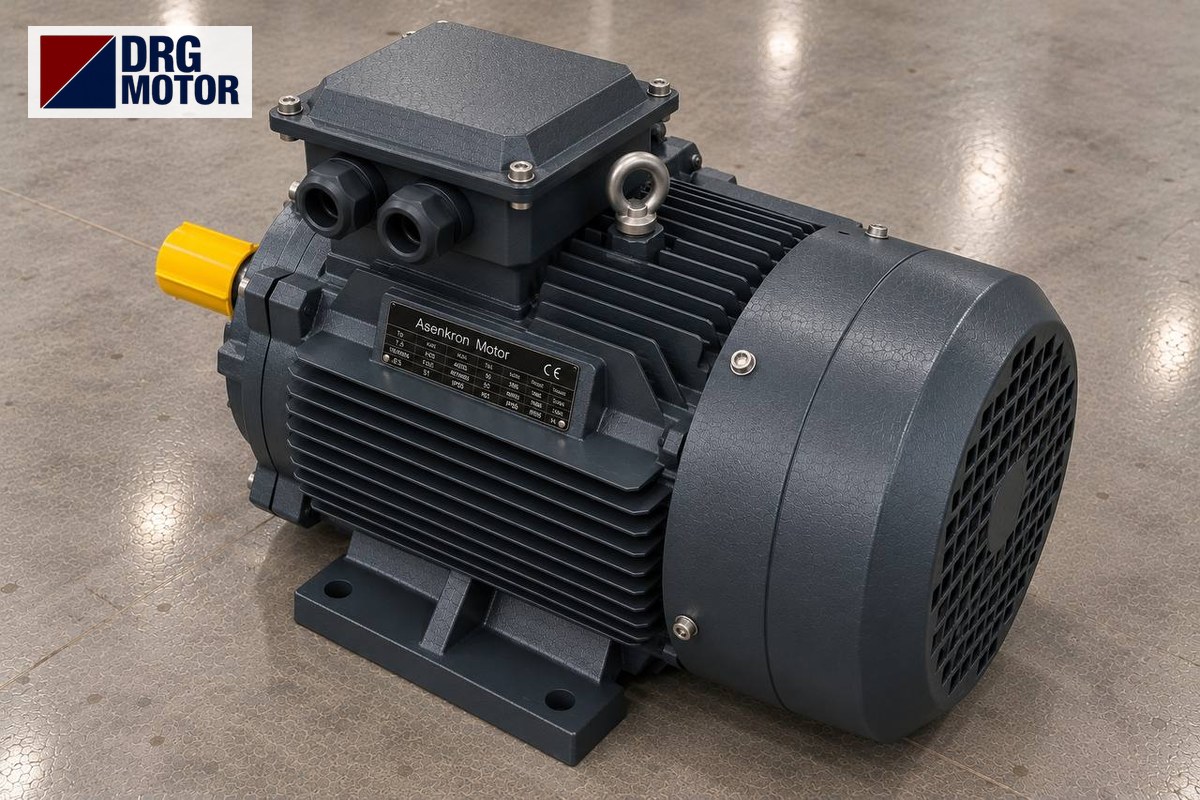

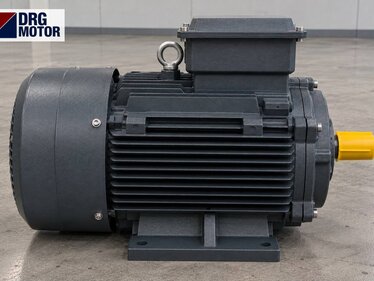
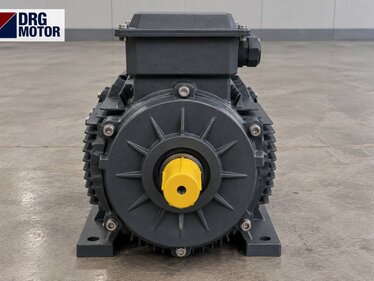
Grain screening and cleaning machines do not have one large motor but separate small motors for each job: a 4-pole motor that shakes the eccentric sieve, an aspiration fan motor that pulls out the dust, and a slow-running indented cylinder motor. In plants these motors are usually found in the 0.75–4 kW range; the exact figure is on the machine’s nameplate. Example: for an eccentric sieve, the 1.5 kW DRG-90L-4 runs at 1445 rpm and draws 3.3 A at 400 V; for a 2.2 kW aspiration fan, DRG-90L-2 runs at 2895 rpm and draws 4.35 A.
Motor power varies with machine size, while the pole number depends on the job: the sieve and the indented cylinder move slowly, the fan fast. This article explains how the motor is calculated for each job, in what order the line motors are started and what to watch for with dust. You can find all low-power models among the 120 models in our online store using the frame and speed filters. Panel wiring and the interlock circuit must be made by a qualified electrician.
Which machine on a grain screening line uses which motor?
The four typical motors of a pre-cleaning and screening line are listed below. All four may be found in the same plant; each has a different pole number and drive arrangement.
| Machine | Motion | Typical drive | Example DRG |
|---|---|---|---|
| Eccentric sieve (separator) | Oscillation, 4-pole | Belt + eccentric shaft | DRG-90L-4 |
| Vibrating screen | Vibration | Pair of vibration motors | Vibration motors |
| Aspiration fan | Rotation, 2/4-pole | Direct or belt | DRG-90L-2 |
| Indented cylinder | Slow rotation | Geared motor | DRG-802-4 |
First rule when replacing: keep the old motor’s pole number and mounting (B3 foot or flange). Replacing a sieve motor with a 2-pole motor doubles the oscillation speed as long as the pulley stays the same, and product is thrown off before it passes through the screen.
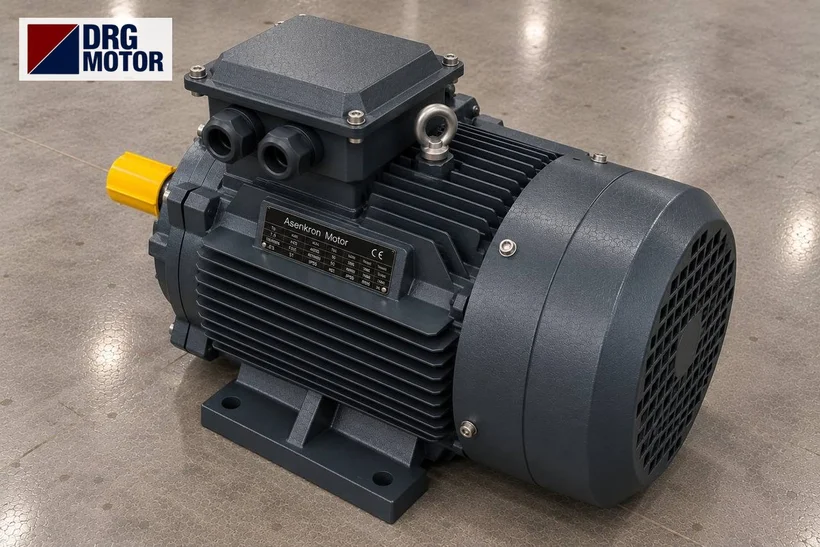
Eccentric sieve motor: oscillation speed and pulley ratio
In eccentric (oscillating) sieves, the motor drives an eccentric shaft by belt and the sieve box oscillates at that shaft’s speed. The oscillation speed is the machine manufacturer’s value; let us assume 400 rpm. Motor DRG-90L-4, rated speed 1445 rpm:
- Ratio: 1445 / 400 ≈ 3.61
- With a 90 mm motor pulley, eccentric pulley: 90 × 3.61 ≈ 325 mm
- Changing the pulley diameter changes the oscillation speed directly: sieve throughput and separation change, so the old pulley is kept when the motor is replaced.
To calculate with your own diameters, use the pulley and belt calculator. An eccentric sieve struggles in the first seconds because it sets a resting mass in motion; DRG-90L-4 has a starting torque ratio Ts/Tn = 2.3 and direct-on-line starting is sufficient at this low power. DRG motors of 3 kW and below are wound for 230/400 V and are connected in star on a 400 V network.
Vibrating screens have no pulley: two vibration motors fixed to the screen body rotate in opposite directions and produce the vibration directly. These motors are a separate product family; see our vibration motors page for selection.
Aspiration fan motor: worked example of P = Q·Δp/η
Aspiration separates husks, chaff and dust from the grain with an air stream; the fan motor may be the line’s largest consumer. Assumptions (real values come from the fan curve):
- Air flow: 3600 m³/h = 1.0 m³/s
- System pressure loss (duct + cyclone/filter): 1200 Pa
- Fan coefficient η: 0.65 (assumed)
- Shaft power: P = 1.0 × 1200 / 0.65 ≈ 1.85 kW
- 15 % margin for the rising loss as the filter clogs: 1.85 × 1.15 ≈ 2.1 kW → standard 2.2 kW
For a direct-coupled fan the 2-pole DRG-90L-2 (2895 rpm, 4.35 A) is suitable; for a belt-driven or slower fan, the 4-pole DRG-100L1-4 (1450 rpm, 4.52 A). Fan power varies with the cube of speed: running the same fan faster raises power sharply, so recalculate the motor before enlarging the fan pulley. You can use the pump and fan motor power calculator with your own values.
Fan motor current changes with damper position: current is highest with the damper fully open and the filter clean. Set the overload relay to the nameplate current, not to the current read in that condition.
Indented cylinder motor: critical speed and gearbox
An indented cylinder separates broken and round kernels by carrying them in its cells. Cylinder speed is kept below the critical speed so that kernels do not stick to the wall by centrifugal force: nc ≈ 42.3 / √D. Example cylinder diameter 0.6 m:
- Critical speed: 42.3 / √0.6 ≈ 54.6 rpm
- Operating speed (about 70 % of critical, assumed): 38 rpm
- Motor DRG-802-4, 1420 rpm → gearbox ratio 1420 / 38 ≈ 37.4
- Torque on the cylinder shaft: T = 9550 × 0.75 / 38 ≈ 188.5 Nm
- Check: catalogue rated torque 5.04 Nm × 37.4 ≈ 188.3 Nm (gearbox losses excluded), consistent.
Check gearbox output speed and torque with the gearbox output speed and torque calculator. The indented cylinder motor is usually flange-mounted to the gearbox; when replacing, compare the flange type (B5 or B14) and the shaft D×E size (19 × 40 mm on DRG-802-4) with the old motor.
Starting sequence and interlocks: fan first, feed last
On a screening line, the order of the motors matters as much as the motors themselves. If the sieve is fed before the fan runs, dust spreads into the hall and settles on the sieve motor; if feeding continues while the sieve is stopped, the sieve box fills and the next start happens under load.
- Start: aspiration fan → indented cylinder and sieve → feed (screw, slide gate).
- Stop: feed → sieve and indented cylinder (short delay to empty) → fan last.
- Interlock: the sieve contactor must not close before the fan contactor; if the fan overload relay trips, the feed must stop automatically.
- Each motor is protected by its own overload relay set to the nameplate current; see the overload relay, fuse and contactor selection page for values.
- Direction of rotation: a reversed fan or cylinder appears to run but does not do its job; check direction against the arrow on the housing at first start and swap two phases if needed.
Grain dust and the motor: cleaning, ducting and position
DRG motors come with IP55 protection and class F (155 °C) insulation. Grain dust is dry and combustible; dust settling on the motor both spoils cooling and creates a hazard. The details of protection classes are in IP55 and Above: Motor Selection That Extends Life in Dusty Areas; here are points specific to screening lines:
- The aspiration fan motor should sit outside the air stream, beside the duct; dusty air must not be drawn through the motor’s fan cover.
- Brush the fan grille and housing fins of the motor above the sieve regularly; do not blow dust into the motor with compressed air.
- Cable glands must be tight and unused gland openings plugged; cables near the vibrating sieve body should be flexible and secured.
- In areas classified as dust explosion zones, the motor is selected according to the site’s zone classification; a standard IP55 motor does not replace that classification.
DRG models for screening and cleaning machines
The models below have aluminium frames (the same powers are also available in cast iron in the store); current values are for 400 V.
| Model | Power / speed | Frame | Current 400 V |
|---|---|---|---|
| DRG-802-4 | 0.75 kW / 1420 rpm | 80 aluminium | 1.75 A |
| DRG-90S-4 | 1.1 kW / 1445 rpm | 90S aluminium | 2.48 A |
| DRG-90L-4 | 1.5 kW / 1445 rpm | 90L aluminium | 3.3 A |
| DRG-100L1-4 | 2.2 kW / 1450 rpm | 100L aluminium | 4.52 A |
| DRG-90L-2 | 2.2 kW / 2895 rpm | 90L aluminium | 4.35 A |
| DRG-100L2-4 | 3 kW / 1450 rpm | 100L aluminium | 6.02 A |
Technical data of the 1.5 kW model in the eccentric sieve example:
- Power: 1.5 kW (2 HP)
- Rated speed: 1445 rpm
- Frame: IEC 90L, aluminium
- Current 400 V / 380 V: 3.3 A / 3.47 A
- cos φ: 0.77
- Rated torque: 9.91 Nm
- Ts/Tn · Tmax/Tn: 2.3 · 2.3
- Is/In: 7
- Shaft D×E: 24 × 50 mm
- Voltage: 230/400 V (Δ/Y)
- Bearing: 6205-ZZ-C3
Motors in this power range
- DRG-802-4 – 0.75 kW – 1420 rpm – 80 aluminium
- DRG-90S-4 – 1.1 kW – 1445 rpm – 90S aluminium
- DRG-90L-4 – 1.5 kW – 1445 rpm – 90L aluminium
- DRG-100L1-4 – 2.2 kW – 1450 rpm – 100L aluminium
- DRG-90L-2 – 2.2 kW – 2895 rpm – 90L aluminium
- DRG-100L2-4 – 3 kW – 1450 rpm – 100L aluminium
Click to see current prices and order these motors nowSEE PRICES →
Frequently Asked Questions
What size motor does a grain screening machine need?
Screening and cleaning machines have a separate motor for each job, usually in the 0.75–4 kW range; the aspiration fan is often the largest. The exact figure is on the machine’s nameplate; keep the nameplate power and pole number when replacing.
What speed should a separator motor have?
Eccentric sieves usually use a 4-pole, 1500 rpm class motor; the oscillation speed is set by the pulley ratio. In the DRG catalogue, 4-pole motors from 1.1 to 3 kW have a rated speed of 1445–1450 rpm.
How many amps does a 1.5 kW motor draw?
The 4-pole DRG-90L-4 draws 3.3 A at 400 V and 3.47 A at 380 V at full load. The 2-pole DRG-90S-2 draws 3.06 A at 400 V.
Why does an aspiration fan motor draw excess current?
With the damper fully open, a freshly cleaned filter, or a fan pulley enlarged to raise speed, the fan moves more air and power rises. Size the motor for the fan’s highest flow and set the overload relay to the nameplate current.
Send us the power, speed, shaft size and mounting details from your machine’s nameplate and we will help you pick the right DRG model: phone +90 (542) 666 11 11, e-mail [email protected], contact page. For all models and ordering, see Buy Electric Motors Online.