English
 Le français
 Türkçe




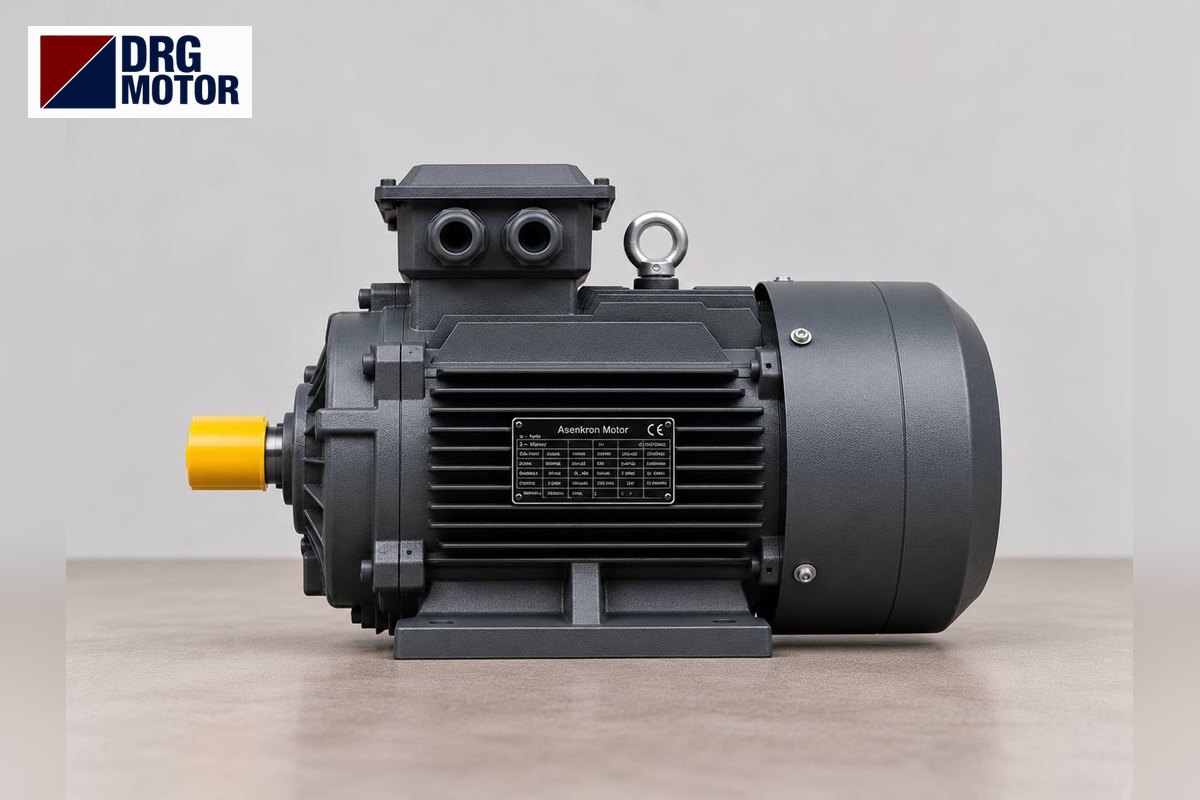

Before replacing the GAMAK 7.5 kW electric motor you have in service, two things need to be clear: exactly what its nameplate says, and which machine it drives under which conditions. This article explains how to read the nameplate, what to note on the application side and which information to collect so that a DRG MOTOR option can be assessed.
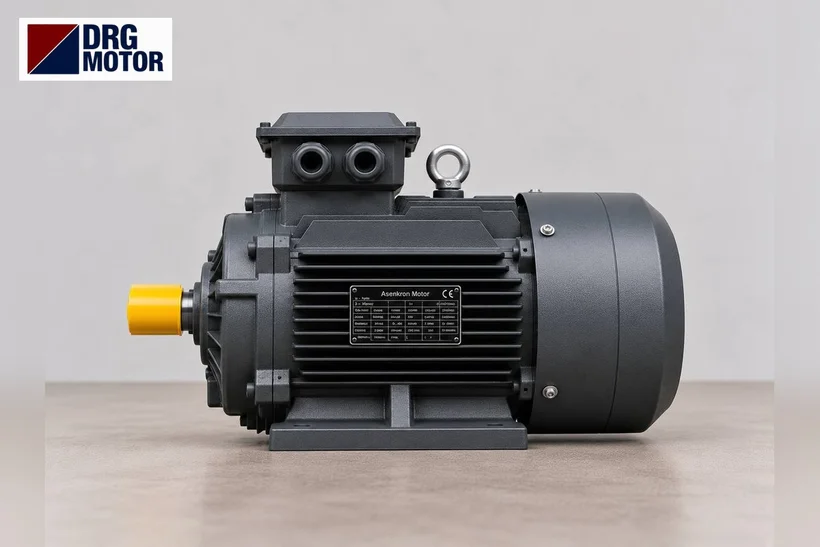
Do not decide before reading the nameplate
The starting point of any replacement is the nameplate. The GAMAK technical catalogue defines rated power as the power stated on the motor plate and asks that operating conditions be checked against the plate data during commissioning. Take a sharp, legible photo of the nameplate; if it is painted over or dirty, clean the surface gently. Power, voltage, frequency, current, rated speed, connection and the duty type information on the plate are the raw data for the decision.
According to the nameplate coding structure the catalogue explains for its Ex-proof motors, the series name is followed by the frame height, a frame length letter, the number of poles and a package length letter; type names in the standard series are written in the same order. In AGM3EL 132 M 4b, 132 is the frame height, M the length letter, 4 the number of poles and b the package letter. For 7.5 kW the catalogue tables show the four-pole AGM3EL/GM3EL 132 M 4b and the two-pole 132 M 2b; both have a 38×80 mm shaft. AGM rows are listed under aluminium frame, GM rows under cast iron frame. If the code on the plate of your GAMAK electric motor does not look like this (an older order code, for example), simply send it as it is without trying to interpret it.
Rated speed and speed class are not the same thing
The plate usually does not read 1500 or 3000 but a value such as 1460. 1500 rpm is a speed class (four poles); the plate speed is the motor's actual speed at rated load. On pumps, fans and belt-driven machines even this difference can affect flow or machine speed. When looking at DRG models, use each product's rated nameplate speed: 1460 rpm for DRG-132M-4, 2930 rpm for DRG-132S2-2 and 970 rpm for DRG-160M-6.
These three models also show that the same kW value alone does not make a replacement suitable. All three are 7.5 kW, yet the six-pole DRG-160M-6 has a 160M frame and a 42×110 mm shaft, while the two-pole DRG-132S2-2 has a 132S frame and a 38×80 mm shaft. An order placed only on the words "7.5 kW" can end with a frame that does not fit the machine or the wrong speed.
Application check: what does the motor drive?
The nameplate describes the motor; the machine tells you what is expected from it. Note the answers to these questions:
- Which machine does the motor drive: a pump, fan, conveyor, crusher, mixer or compressor?
- Is it connected by a coupling, by pulley and belt, or flange-mounted directly onto equipment?
- Does the machine start under load, how many times a day does it stop and start, and how many hours does it run?
- Is the motor fed through a drive (inverter) or directly from the mains?
- Is the environment dusty, humid, hot or outdoors?
If the motor went out of service because of a failure, investigate the cause too. Winding damage, bearing noise or frequent overload tripping can point to overload, misalignment, poor ventilation or a supply problem; a new motor fitted without removing the cause will face the same conditions. When comparing the measured running current with the nameplate current, the motor current chart page can help.
Send DRG MOTOR the nameplate photo of your existing motor, its connection dimensions and details of the machine it drives, so that a suitable option can be assessed by looking at technical data and operating conditions together.
DRG options that can be assessed
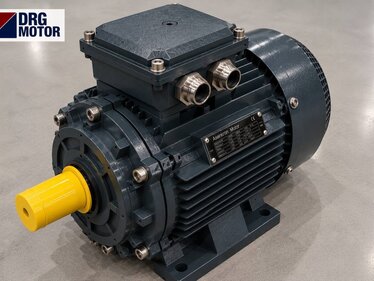
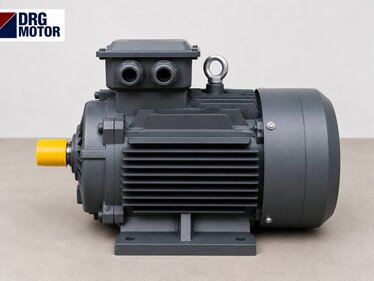
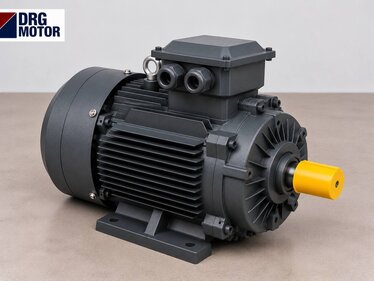
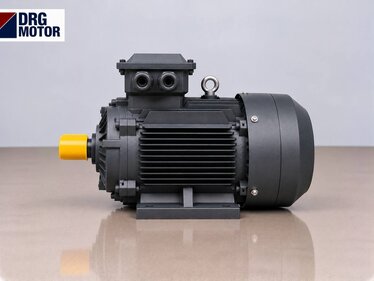
DRG Motor is a manufacturer, supplier and seller of electric motors. Among the three-phase asynchronous motors in the electric motor shop, some options that can be assessed in place of a 7.5 kW motor are listed below; suitability must be checked together with your dimensions and application data.
- DRG-132M-4: 7.5 kW, rated 1460 rpm, 132M frame, 38×80 mm shaft, 14.3 A at 400 V.
- DRG-132S2-2: 7.5 kW, rated 2930 rpm, 132S frame, 38×80 mm shaft, 13.7 A at 400 V.
- DRG-160M-6: 7.5 kW, rated 970 rpm, 160M frame, 42×110 mm shaft, 15.4 A at 400 V.
These models have an aluminium frame, a 400/690 V rating, IP55 protection, class F insulation and IC411 cooling; they are specified for −15…+40 °C ambient and altitudes up to 1000 m. Mounting can be B3, B5 or B35; B14 flange dimensions are confirmed with the order. For other options see the aluminium housing motors page. How the voltage and connection data on your plate relate to the panel and starting arrangement on site should be assessed by competent technical staff.
Frequently asked questions
My nameplate is unreadable; can a replacement still be assessed?
It can, but uncertainty increases. If the frame height, shaft diameter and length, foot hole spacing or flange dimensions are measured on site and the speed the machine needs is known, a review is possible. Without confirmed power and speed, no firm recommendation can be given.
If the plate says 132M, will a DRG motor with the same frame code fit?
The frame code indicates the IEC frame size and is a good starting point; the GAMAK catalogue also gives its dimension tables on the basis of IEC 60072-1. Foot holes, shaft, key, terminal box position and overall length must still be measured on site and compared. For example, DRG-132M-4 has A 216 mm, B 178 mm, C 89 mm and an overall length L of 476 mm.
Will a motor with a slightly different rated speed cause problems?
It depends on the machine. In a coupled application a small difference may stay within tolerance; on fans and speed-sensitive process machines, flow and load can change. Make this decision with the machine data or with competent staff.
My motor failed; is choosing a motor of the same power enough?
It depends on the cause. If there is a reason such as overload, frequent starting or ambient conditions, simply renewing the motor may not solve the problem. Measured current, operating time and failure symptoms should be part of the assessment.
Information to send to DRG MOTOR
- A sharp photo showing the whole nameplate, and the full type code
- kW, rated speed, voltage, frequency, current and connection data on the plate
- Duty type and IE class information, if stated on the plate
- Mounting (foot, flange, foot and flange) and frame material (aluminium or cast iron)
- Shaft diameter × length and key width; for flange motors, flange outer diameter, hole circle and spigot diameter
- Driven machine, connection type (coupling, pulley, flange) and starting condition
- Daily operating hours, start-stop frequency, use of a drive and ambient conditions
You can send this information via WhatsApp or to info@drgmotor.com, call +90 (542) 666 11 11 or use the contact page. If you add the models you want to review to the quote list and share them together with the nameplate photo, the option is reviewed against your machine's data.
Technical Sources
- GAMAK — Technical Catalogue (Turkish edition) — Electrical design: rated power (power stated on the motor nameplate) — printed page 36.
- GAMAK — Technical Catalogue (Turkish edition) — 3-phase standard asynchronous motors: aluminium frame IE3 tables (AGM3EL 132 M 2b, 132 M 4b) — printed pages 69–70.
- GAMAK — Technical Catalogue (Turkish edition) — 3-phase standard asynchronous motors: cast iron frame IE3 tables (GM3EL 132 M 2b, 132 M 4b) — printed pages 76–77.
- GAMAK — Technical Catalogue (Turkish edition) — Motor dimensions: foot-mounted motor (IEC 60072-1) B3 dimension tables, aluminium and cast iron frame (132 M, shaft 38×80) — printed pages 88–89.
- GAMAK — Technical Catalogue (Turkish edition) — Ex-proof motors: nameplate coding structure — printed page 105.
- GAMAK — Technical Catalogue (Turkish edition) — General information: commissioning (operating conditions checked against nameplate data) — printed page 168.