English
 Le français
 Türkçe




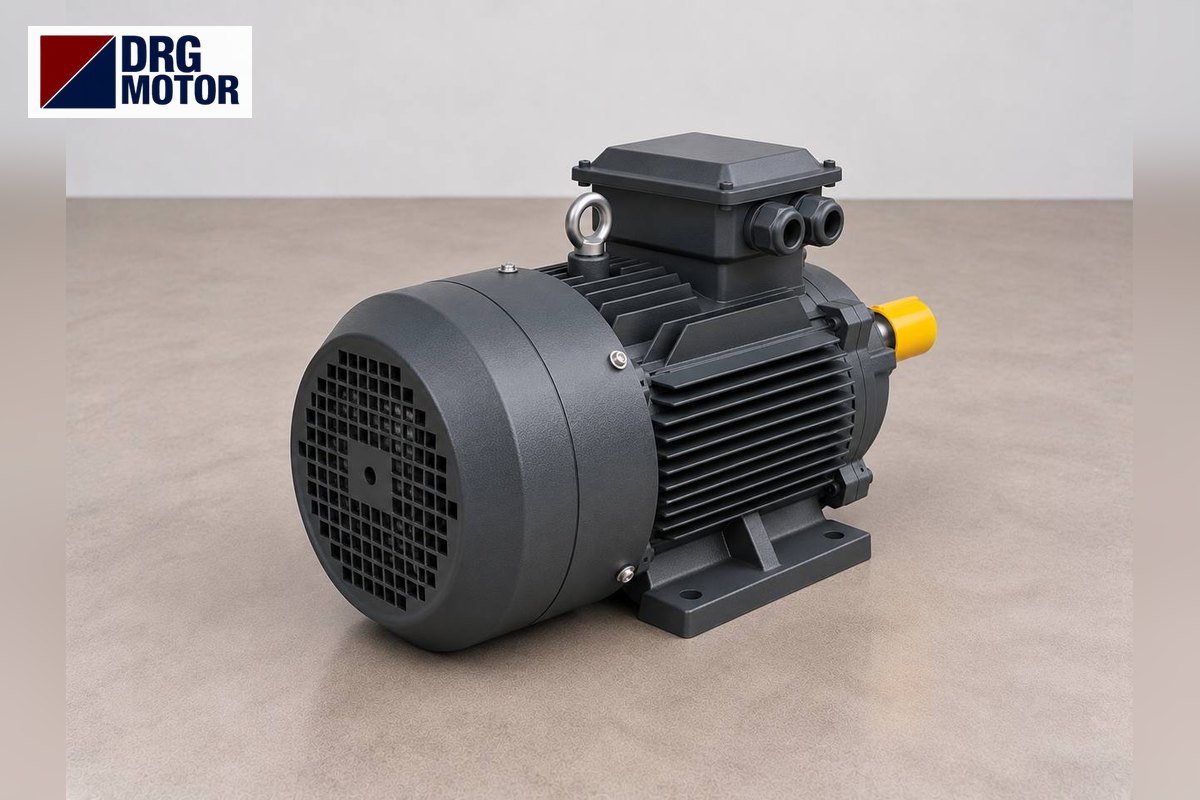

When renewing a GAMAK 15 kW electric motor, simply reordering the power printed on the nameplate looks easy; but a choice made without knowing how heavily the motor is actually loaded today and in what environment it works can carry old problems over to the new motor. This article explains how to confirm the power requirement by measurement and in which order to check conditions such as environment, ventilation, supply and operating pattern.
What does 15 kW on the nameplate mean?
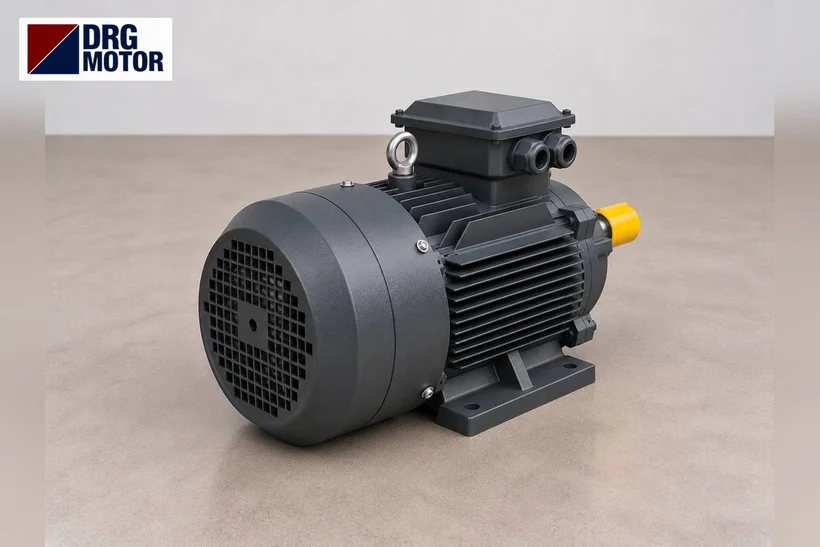
Nameplate power is the power the motor can deliver at the shaft under defined rated conditions. The GAMAK catalogue gives its ratings for 40 °C ambient temperature and 1000 m altitude and tabulates the factors by which rated power is reduced above these temperature and altitude limits; the duty type information on the plate shows which operating pattern these values belong to. For 15 kW the catalogue tables list the four-pole AGM3EL/GM3EL 160 L 4b (160L frame) and the two-pole 160 M 2b (160M frame); both have a 42×110 mm shaft. So even at the same power, frame length can change with the number of poles; that is why you should note the type code on the plate in full.
Confirm the power requirement by measuring the real load
The practical way to understand the motor's load is to measure the current in all three phases during normal operation and compare it with the nameplate current. The measurement should be made by a competent electrician. The assessment looks at the following:
- If currents are close to the nameplate current and the phases are balanced, the motor runs close to rated load.
- If the current is clearly lower, the motor may be running at partial load; this can influence future power selection.
- If the current exceeds the nameplate value or there is a large difference between phases, overload, supply imbalance or a mechanical problem should be investigated.
When interpreting the measured value, the power-current values on the motor current chart page can guide you. As a reference example, the catalogue current of DRG-160L-4 is 27.3 A at 400 V and 28.8 A at 380 V. As voltage drops, the current drawn for the same power rises; so note the actual mains voltage on site too. Whether the motor suits the existing supply must be determined by checking the nameplate voltage, frequency, manufacturer tolerances and connection arrangement together.
Check operating conditions in order
Ambient temperature and altitude. If the motor is in a place that can exceed 40 °C, such as a boiler room, next to an oven or in a closed cabinet in the sun, or if the site is above 1000 m, the rated power may not apply under those conditions. DRG models are specified for −15…+40 °C ambient and altitudes up to 1000 m; conditions outside this must be stated clearly in the request.
Ventilation. With IC411 cooling, the motor cools its frame surface with its own fan. If the fan cover inlet is blocked, the frame fins are full of dust or the motor is squeezed into a narrow compartment, heating increases. Check the air inlet clearance before installing the new motor.
Dust, humidity and water. DRG motors have IP55 protection. Environments with wash-down, heavy condensation or conductive dust should be stated separately.
Supply and drive. Voltage fluctuation, phase imbalance or running the motor through a drive at low speed for long periods affects heating. If a drive is used, state this and the operating frequency range; suitability should be assessed by competent technical staff. If your motor has a brake, a separately driven fan or a drive integrated into the motor, state this too; these features change the assessment.
Operating pattern. Note daily operating hours, starts per hour and whether starts are under load. Frequent loaded starts make the motor run hotter even if rated power stays the same.
Send DRG MOTOR your nameplate photo, the currents you measured and the ambient information, so that options are assessed by considering your power requirement and operating conditions together.
What to consider before changing the power. A measurement result may suggest a larger or smaller motor. However, a power change often changes the frame too. Even within the same 15 kW class there are differences: DRG-160L-4 has a 160L frame and a 42×110 mm shaft, while the six-pole DRG-180L-6 has a 180L frame, a 48×110 mm shaft and a rated speed of 978 rpm. For this reason the same kW or the same speed class alone does not show that a replacement is suitable; dimensions and the speed the machine requires must also be compared. Increasing power can also affect cable cross-section and protection settings; this should be examined by competent technical staff.
DRG models that can be assessed
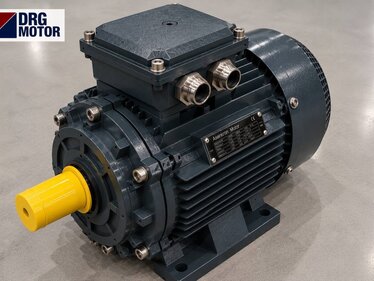
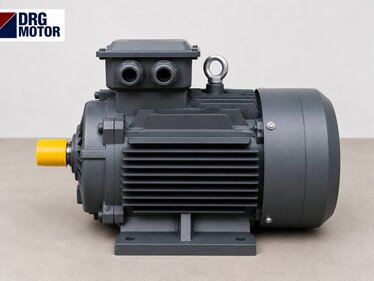
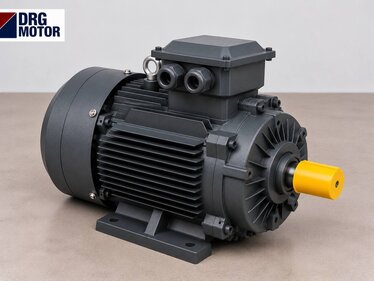
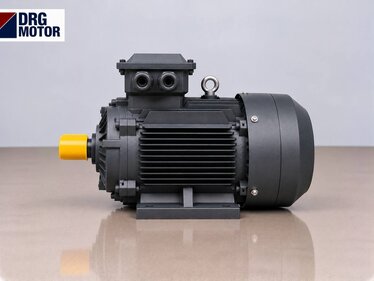
DRG Motor is a manufacturer, supplier and seller of electric motors. Some cast iron three-phase asynchronous motors from the electric motor sales page that can be assessed for 15 kW:
- DRG-160L-4: 15 kW, rated 1465 rpm, 160L, 42×110 mm shaft, cos φ 0.86, 27.3 A at 400 V.
- DRG-160M2-2: 15 kW, rated 2945 rpm, 160M, 42×110 mm shaft, 26.5 A at 400 V.
- DRG-180L-6: 15 kW, rated 978 rpm, 180L, 48×110 mm shaft, 29.3 A at 400 V.
These models are rated 400/690 V; mounting can be considered as B3, B5 or B35, and B14 flange dimensions are confirmed with the order. For other powers and speeds see the three-phase asynchronous electric motors page. Whether a listed model suits your application cannot be stated without reviewing your dimension, load and ambient data.
Questions on power and operating conditions
The current I measured is lower than the nameplate current; can I choose a smaller motor?
Perhaps, but one measurement is not enough. You need to know whether the load changes during the day, by season or by product, and how much torque is needed at start-up. A lower power may also mean a different frame and shaft size.
The motor is in a hot environment; does the nameplate power still apply?
If the ambient exceeds 40 °C, the rated power may not apply under that condition. State the ambient temperature and the motor's location in your request; the assessment is made with this information.
My nameplate shows a duty type; should I send it?
Yes. The duty type information on the plate shows which operating pattern the motor is rated for and is assessed together with your real operating pattern.
The motor runs on a drive; does this change the selection?
It can. The operating frequency range, time spent at low speed and the drive settings affect heating. Send this information; suitability should be assessed by competent technical staff.
Information to include in your renewal request
- A sharp nameplate photo and the full type code
- kW, rated speed, voltage, frequency, current and duty type information on the plate
- Three-phase current measured in normal operation and the actual mains voltage on site
- Ambient temperature, altitude, dust/humidity and the motor's location (open area, closed compartment)
- Daily operating hours, starts per hour and starting load
- Frequency range, if a drive is used
- Mounting, shaft size and driven machine
- Failure symptoms and history, if any
You can send this information via WhatsApp, info@drgmotor.com or the contact page, or call +90 (542) 666 11 11. Adding the models you selected to the quote list and sharing them with your measurement results allows the assessment to be based on your operating conditions.
Technical Sources
- GAMAK — Technical Catalogue (Turkish edition) — Electrical design: rated power; 40 °C ambient and 1000 m altitude rating conditions and derating factors — printed page 36.
- GAMAK — Technical Catalogue (Turkish edition) — 3-phase standard asynchronous motors: aluminium frame IE3 tables (AGM3EL 160 M 2b, 160 L 4b) — printed pages 69–70.
- GAMAK — Technical Catalogue (Turkish edition) — 3-phase standard asynchronous motors: cast iron frame IE3 tables (GM3EL 160 M 2b, 160 L 4b) — printed pages 76–77.
- GAMAK — Technical Catalogue (Turkish edition) — Motor dimensions: foot-mounted motor (IEC 60072-1) B3 dimension tables, aluminium and cast iron frame (160 M and 160 L, shaft 42×110) — printed pages 88–89.