English
 Le français
 Türkçe




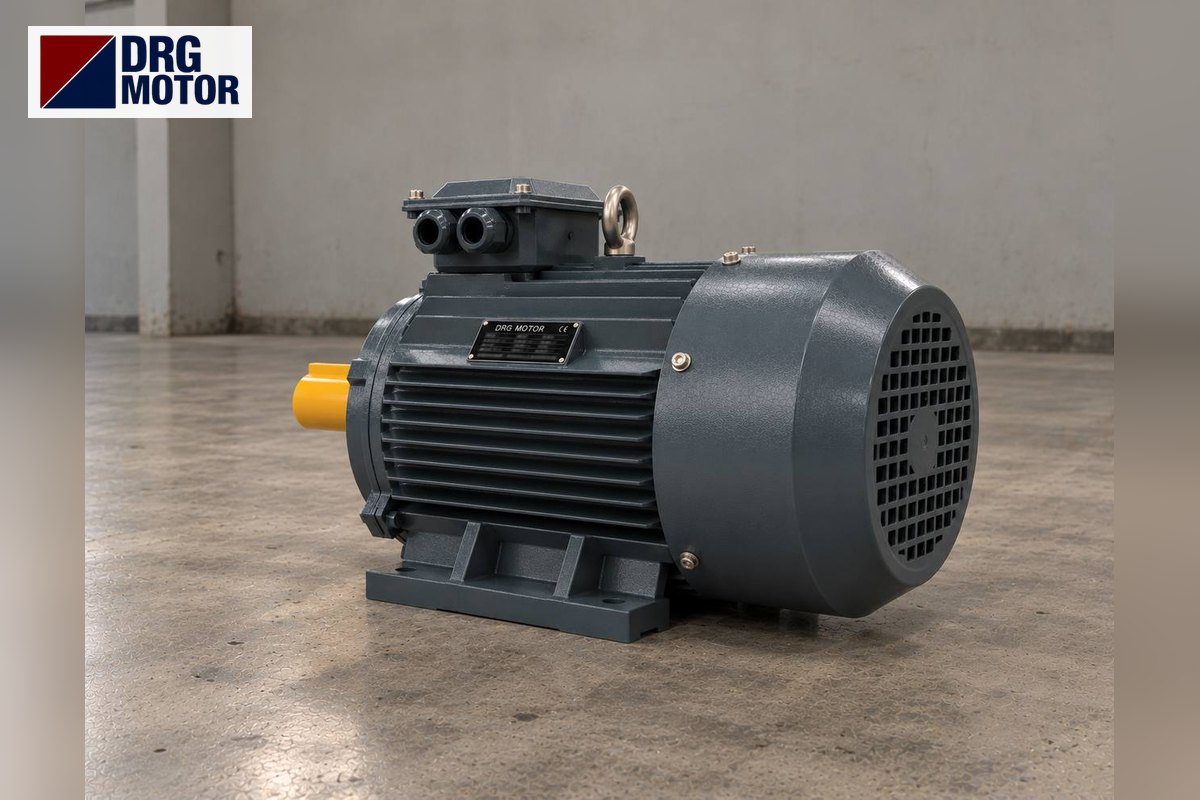

The motor of a dragée coating pan turns the inclined pan slowly and evenly so that the centres roll over each other; syrup and powder layers only spread evenly through this rolling. The motor itself runs in the 1000 or 1500 rpm class, and a worm or helical gearbox brings it down to the low speed the pan needs. Three things decide the choice: the gearbox ratio and input flange, the torque of a pan that grows heavier towards the end of coating, and the dozens of stops and restarts made every day.
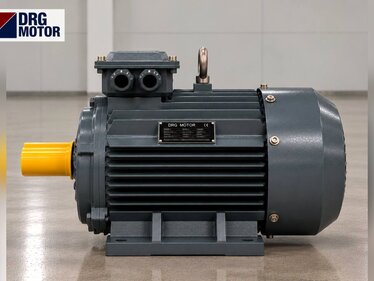
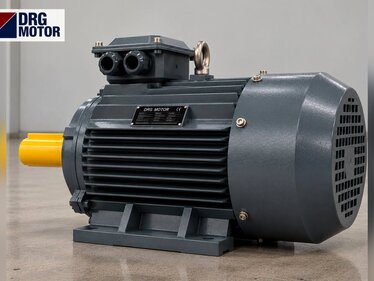
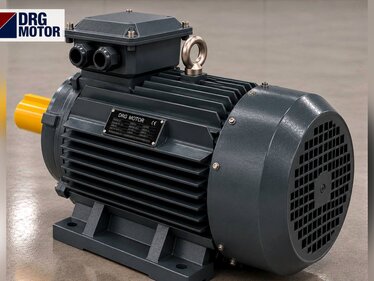
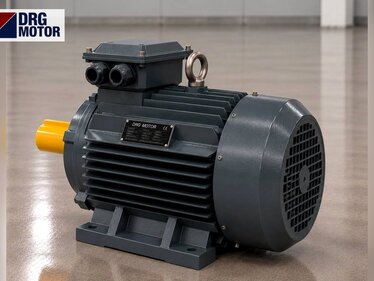
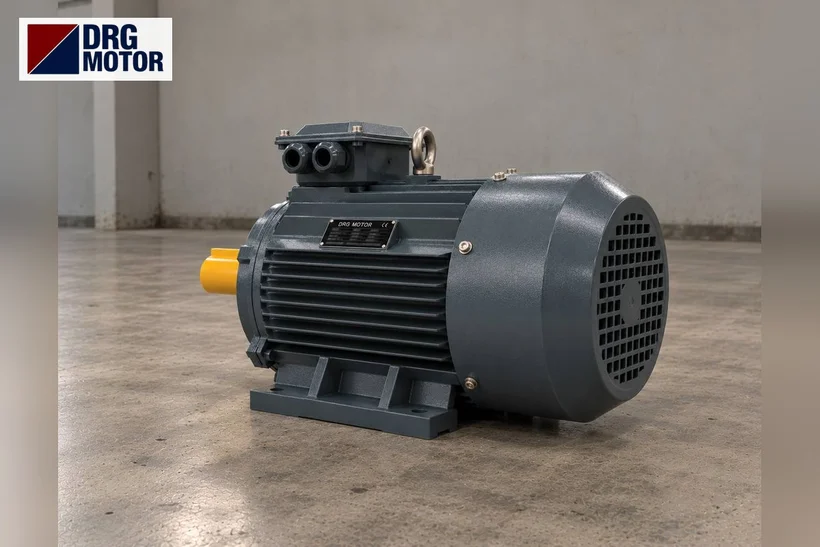
DRG Motor is a manufacturer, supplier and seller of electric motors; gearboxes are outside its range, and what it provides is the three-phase asynchronous motor mounted on the pan gearbox. Six- and four-pole models suitable for pan drives are listed by power and speed in the online shop. For other drives in confectionery, chocolate and bakery lines, see the food machine motors page.
How Do Dragées Roll in an Inclined Pan?
The pan usually sits at an angle of 30–45° to the horizontal. As it turns, the mass of centres rises with the pan wall to one side and, at a certain height, slides back down the surface. Dragée quality is formed in this sliding layer: each piece spreads syrup over its surface as it turns, the blown air removes the water and a thin layer hardens.
If the speed is too low, the mass slips at the bottom, wet pieces stick together and twins appear. If the speed is too high, pieces are pressed against the wall, wear at the edges as they knock together and centres may break. The builder sets the right speed for the pan diameter, mouth opening and product; when replacing the motor, the goal is to keep that speed.
Technically, the pan carries an “unbalanced mass” load. The centre of gravity of the lifted mass stays to one side of the pan axis, and this offset creates an almost constant counter-torque on the shaft. The load grows with every new layer; a pan that starts coating with 60 kg of centres may end up more than twice as heavy.
Pan Torque as Coating Builds Up: Worked Example
Example (assumption): take a 1.0 m pan in which the centre of gravity of the mass sits 0.12 m off the axis, a gearbox ratio of i = 40 and a worm gearbox efficiency of η = 0.65. Torque is T = m · g · e, pan speed n2 = n1 / i, and motor power P = T · n2 / (9550 · η). With this ratio the DRG-90L-6 (945 rpm) turns the pan at 23.6 rpm; at 1.0 m diameter the peripheral speed is π · D · n / 60 ≈ 1.24 m/s.
| Coating stage | Mass in the pan | Torque at pan shaft | Power asked of motor |
|---|---|---|---|
| Bare centres | 60 kg | 70.6 Nm | 0.27 kW |
| Mid-coating | 100 kg | 117.7 Nm | 0.45 kW |
| Final layers | 150 kg | 176.6 Nm | 0.67 kW |
The power figures look small, but torque, not power, is what decides. A worm gearbox runs below its efficiency, especially on a cold morning start; and during the wet syrup stage pieces cling to each other and the sliding layer breaks away late. That is why a starting margin is left above the final load.
Click to see current electric motor prices and order nowSEE PRICES →
Which Motor Frame Carries This Torque?
With the same i = 40 gearbox and η = 0.65 assumption, the rated torque that six-pole motors deliver at the pan shaft is:
| Motor | Rated torque | At pan shaft (i = 40) | Assessment |
|---|---|---|---|
| DRG-802-6 | 5.90 Nm | 153.4 Nm | Below the 176.6 Nm final load |
| DRG-90S-6 | 7.66 Nm | 199.2 Nm | Thin margin, strained by stops |
| DRG-90L-6 | 11.1 Nm | 288.6 Nm | Comfortable margin at end |
| DRG-100L-6 | 15.1 Nm | 392.6 Nm | For a larger pan |
In the example pan, the DRG-90L-6 stays below its rated torque even in the final layers; with a starting torque ratio of Ts/Tn = 2.0 it lifts a full pan from standstill. On a real machine, the power and speed on the old motor nameplate are the reference; the calculation only shows why one frame size up is chosen. To test the ratio and torque transfer with other values, use the gearbox output speed and torque calculator.
Stop-Start, Heating and Direction of Rotation
The panner stops the pan often to add syrup, inspect the pieces or scrape off build-up. On every restart the motor draws a current close to 6.0 times its rated value for a few seconds. On pans that start many times an hour, a motor one size larger reduces winding temperature.
Some pans have their speed set by an inverter. At low frequency the motor's own fan turns slowly and cooling drops; the long slow phases of coating can then heat the motor. DRG does not sell inverters; the motors can run on one, but state it in the order if long running at low speed is planned.
Direction of rotation matters too. The baffles inside the pan, the syrup spray nozzle and the air duct are placed for one direction. After connecting the new motor, run the pan empty and check the direction; if it is reversed, swapping two phases is enough.
Sugar Dust, Cocoa and the Motor Environment
The motor usually sits with the gearbox in a closed compartment in the base under the pan. Icing sugar, starch and cocoa powder settle in this space; dust on the fan cover hardens with moisture and blocks the cooling air. IP55 protection is enough against dust and splashing water, but the fan cover needs regular cleaning.
Hygienic zones washed with pressurised water and requiring stainless housings cannot be served with a standard IEC motor. If fine sugar dust has led to an area being classified as an explosive atmosphere, an Ex-protected special motor is needed; DRG does not offer these motors.
Check These Before Removing the Old Motor
Most pan motors connect to the input flange of a worm gearbox with a B5 flange. If the gearbox is healthy, replacing only the motor is possible; we explain this distinction in detail in the article on replacing only the motor when the gearbox is sound. DRG catalogue B5 dimensions:
- Frame 80 B5: M 165, N 130, P 200 mm; shaft 19 × 40 mm
- Frame 90S / 90L B5: M 165, N 130, P 200 mm; shaft 24 × 50 mm
- Frame 100L B5: M 215, N 180, P 250 mm; shaft 28 × 60 mm
Frames 80 and 90 share the same flange but have different shafts. If the old motor is frame 80, the gearbox input bore is 19 mm, and a frame 90 motor will sit on the flange but not enter the bore. B14 small-flange dimensions are confirmed at order. For worm gearbox inputs, browse the electric motors for worm gearboxes selection.
- Motor nameplate: power, speed, voltage, connection (star/delta)
- Gearbox nameplate: ratio (i) and input flange type
- Shaft diameter, key width and flange spigot diameter (N)
- Terminal box orientation: which side does the cable come from on the pan frame?
- Full pan mass and signs of strain in the last layers
- Lowest operating frequency, if there is an inverter
- Fan cover and compartment ventilation: is dust building up?
DRG Motors Suited to Dragée Coating Pans
All are six-pole, aluminium-housed and can connect to a gearbox input with a B5 flange; they are listed by power from small pans up to large coating pans.
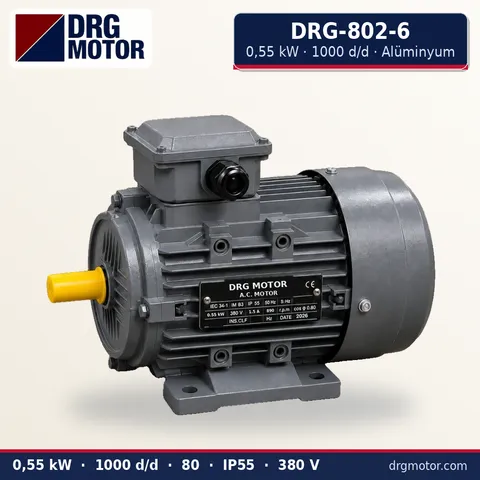
0.55 kW Three-Phase Motor 1000 rpm – DRG-802-6 Aluminium
- 0.55 kW · 1000 rpm (6 poles)
- Aluminium frame · IEC 80
- Mounting: B3 · B5 · B14 · B35
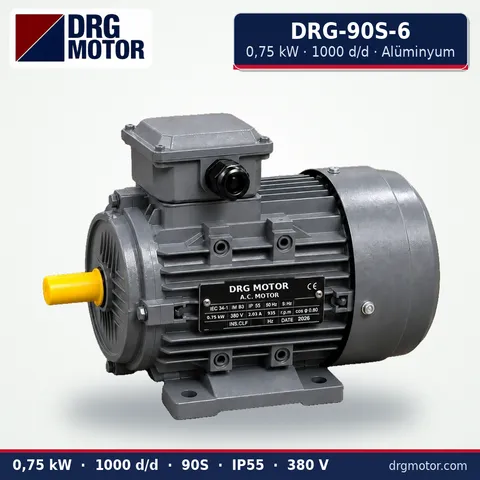
0.75 kW Three-Phase Motor 1000 rpm – DRG-90S-6 Aluminium
- 0.75 kW · 1000 rpm (6 poles)
- Aluminium frame · IEC 90S
- Mounting: B3 · B5 · B14 · B35
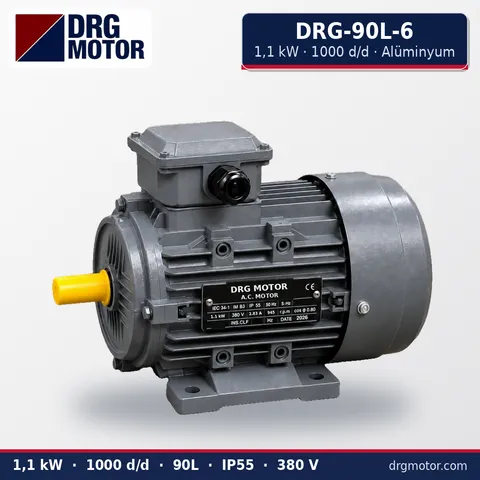
1.1 kW Three-Phase Motor 1000 rpm – DRG-90L-6 Aluminium
- 1.1 kW · 1000 rpm (6 poles)
- Aluminium frame · IEC 90L
- Mounting: B3 · B5 · B14 · B35
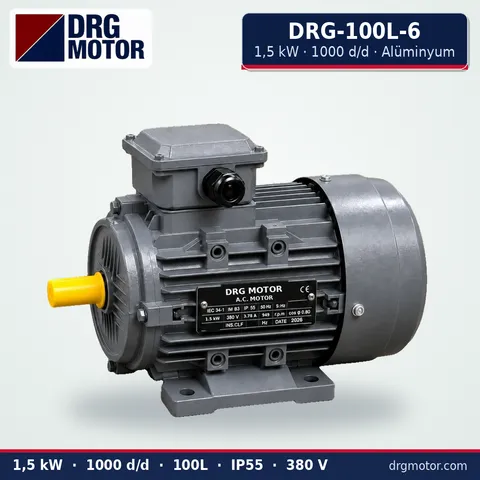
1.5 kW Three-Phase Motor 1000 rpm – DRG-100L-6 Aluminium
- 1.5 kW · 1000 rpm (6 poles)
- Aluminium frame · IEC 100L
- Mounting: B3 · B5 · B14 · B35
Click to see current prices and order these motors nowSEE PRICES →
Dragée Pan Motor: Frequently Asked Questions
How fast does a dragée coating pan turn?
The builder sets pan speed by diameter, product and coating type, and keeps it low. The 23.6 rpm in the example is only an assumption; calculate your machine's speed from the gearbox ratio (n2 = n1 / i).
What kW motor does a coating pan need?
Small workshop pans may use motors below 1 kW, large pans a few kW. Read the exact figure from the plate fixed on the pan. On a pan that struggles in the last layer, moving one power step up at the same speed is often enough.
The pan motor turns the wrong way. What should I do?
Switch off the supply and swap two phase wires in the terminal box. Do not change the star/delta links; they relate to voltage, not direction.
Will a four-pole motor make the pan faster?
Yes. With the same gearbox a four-pole motor turns the pan about one and a half times faster; the pieces wear and the coating suffers. If the old motor is six-pole, buy a six-pole motor.
To pin down the right motor for your pan together, message our WhatsApp line with a photo of the old motor's plate, the gearbox ratio, whether it is flange- or foot-mounted, the shaft diameter and the pan diameter; or put the models straight into your quote list and request an offer. You can reach us on +90 (542) 666 11 11, at info@drgmotor.com or through the contact form. Every power and speed option is in the DRG online motor shop.