English
 Le français
 Türkçe




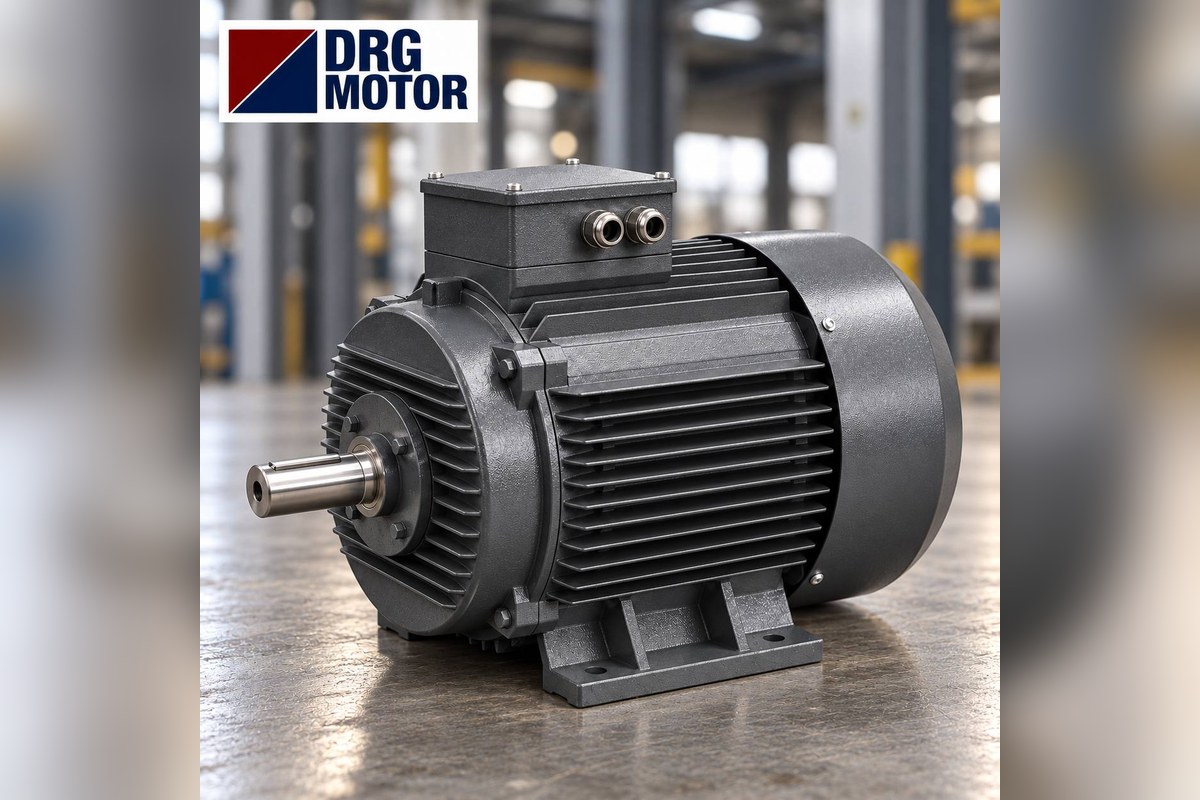

Yes, if the gearbox is sound you can replace only the electric motor; if the new motor has the same flange type and size (B5 or B14), shaft diameter and length, key width, number of poles and power as the old one, it can be fitted without even removing the gearbox. If any of these five values differs, the motor either will not physically fit, or it fits but the machine’s output speed and torque change.
Removing the motor and connecting the new one must be done by a qualified electrician after the supply has been isolated and locked off; on vertically mounted gearboxes, use lifting equipment for the motor’s weight. Once you have found the right motor, you can see the models among the 120 on our Buy Electric Motors Online page.
If you are designing a new geared drive, see our article on how to select a motor gearbox for ratio and service factor. This article covers only renewing the motor on a working gearbox.
What information should you take before removing the motor?
- Old motor nameplate: power (kW), speed (rpm), voltage, current, frame and mounting arrangement (such as IM B5, IM B14 or IM V1).
- Gearbox nameplate: ratio (i), output speed (n2), permitted input power and input flange/IEC adaptor code. If the plate is unreadable, cast markings on the housing and measurements will do.
- Flange dimensions: outer diameter P, hole circle M, spigot diameter N, hole diameter S or threaded hole size.
- Shaft: diameter D, length E, key width F. If the gearbox input is a hollow shaft, these three must match the bore exactly.
- Connection type: does the motor shaft go into the gearbox’s hollow input shaft, or is there a bell housing (lantern) with a coupling in between?
Record this information with photos; if the old motor is opened after removal, even the nameplate data may be lost.
The 3 most common mistakes
- Buying a motor with different poles in the same frame. The 2-pole and 4-pole 4 kW models come in the same 112M frame with the same flange and shaft. The motor fits the gearbox perfectly, but the output speed doubles.
- Confusing B5 and B14. The large flange (B5) extends beyond the frame and has through holes; the small flange (B14) stays within the frame and has tapped holes. One cannot replace the other. The detailed difference is in choosing a flange motor for a gearbox (B5 and B14).
- Increasing the power. “Let’s fit one size up so it runs easier” can exceed the gearbox’s permitted input power and output torque; gears and bearings were selected for the old power.
How do you check flange and shaft compatibility?
B5 large-flange dimensions depend on the IEC frame and are listed frame by frame in the DRG catalogue. If your measured P, M and N match one of the rows below exactly, the motor frame is identified.
| Frame | B5 flange P / M / N | Shaft D × E / key F | 4-pole model |
|---|---|---|---|
| 80 | 200 / 165 / 130 mm | 19 × 40 / 6 mm | DRG-802-4 |
| 90L | 200 / 165 / 130 mm | 24 × 50 / 8 mm | DRG-90L-4 |
| 100L | 250 / 215 / 180 mm | 28 × 60 / 8 mm | DRG-100L2-4 |
| 112M | 250 / 215 / 180 mm | 28 × 60 / 8 mm | DRG-112M-4 |
| 132M | 300 / 265 / 230 mm | 38 × 80 / 10 mm | DRG-132M-4 |
Flange hole diameter S is 12 mm on frames 80 and 90L and 14.5 mm on frames 100L–132M; spigot length T is 3.5–4 mm. All dimensions and drawings are on the DRG technical drawings page.
The B14 small flange is different: more than one small-flange size can be used on the same frame and these dimensions are not tabulated in the catalogue. On a gearbox with a B14 motor, measure the flange outer diameter, hole circle, spigot diameter and threaded hole size on the old motor and have them confirmed before ordering. On the store’s product pages, the mounting arrangement (B5, B14, B35) is specified in the order note.
Shaft tolerance on a hollow-shaft input
If the motor shaft goes directly into the gearbox’s hollow input shaft, D and F must be exactly the same; a 28 mm shaft cannot enter a 24 mm bore, nor an 8 mm key a 6 mm keyway. Length E matters too: if the shaft is short the key does not carry fully, if it is long the flange faces do not seat. Applying a thin film of assembly paste to the shaft and bore before fitting makes later removal easier and reduces fretting corrosion.
With a bell housing (lantern) and coupling
If there is a coupling and bell housing between motor and gearbox, the motor shaft diameter must fit the coupling hub. If the shaft differs, the hub can be re-bored or replaced; the motor-side flange of the bell housing is again chosen by the B5 dimensions. Shaft misalignment between motor and gearbox must stay within the coupling manufacturer’s limits.
Click to see current electric motor prices and order nowSEE PRICES →
How does motor speed change the gearbox output speed?
The gearbox ratio is fixed; output speed is n2 = n1 / i and output torque is roughly T2 = T1 × i × η_r (η_r is the factor for the gearbox’s gear and bearing losses; take its value from the gearbox catalogue). Fitting a motor with a different pole number does not change the ratio, but output speed and torque change. Three different 4 kW motors on an i = 25 gearbox:
| Motor (4 kW) | Rated speed | Output speed (i = 25) | Output torque × η_r |
|---|---|---|---|
| DRG-112M-2 | 2905 rpm | ≈ 116.2 rpm | ≈ 327.5 Nm |
| DRG-112M-4 | 1450 rpm | ≈ 58 rpm | ≈ 657.5 Nm |
| DRG-132M1-6 | 968 rpm | ≈ 38.7 rpm | ≈ 987.5 Nm |
DRG-112M-2 and DRG-112M-4 come in the same 112M frame with the same 28 × 60 mm shaft and the same B5 flange; both fit the gearbox. But with the 2-pole motor the output speed rises to about 116.2 rpm and torque is halved. A conveyor runs twice as fast, a mixer twice as hard, and the gearbox input speed limit may be exceeded. The 6-pole motor comes in frame 132M with a 38 × 80 mm shaft; it cannot be fitted to this gearbox without an adapter.
You can calculate output speed and torque for your own ratio with the gearbox output speed and torque calculator.
Sealing and oil: what to do on the gearbox when the motor is removed?
The gearbox oil is held by the seal on the input side; the motor flange sits outside this seal. Even so, check the following when removing the motor:
- If there are oil traces at the input seal, replace the seal before fitting the motor; otherwise the motor will have to come off again for this job.
- In vertical mounting (motor on top), oil leaking from the input seal can reach the motor interior, bearing and winding. If oil traces are found on the motor flange side, the gearbox seal must be renewed.
- Oil level is checked according to the mounting position; if the gearbox position was changed while removing the motor, check the level plug again.
- Flange faces are cleaned; there must be no burrs or rust in the spigot recess, as a crooked flange strains the input bearing.
- Bolts are tightened in a cross pattern; do not tighten them before the motor has seated in the spigot under its own weight.
Electrical checks
When a motor of the same power and speed is chosen, contactor, overload and cable usually stay the same; still compare the new motor’s nameplate current with the overload setting. The 4 kW, 1500 rpm model draws 7.95 A at 400 V. DRG models from 4 kW up are rated 400/690 V; check this on geared drives with star-delta starting. Check direction of rotation at the gearbox output; if wrong, swap two phases.
Replacement checklist
- Old motor and gearbox nameplates photographed; ratio and output speed noted.
- Mounting arrangement (B5, B14, V1, etc.) and connection type (hollow shaft or coupling with bell housing) identified.
- Flange P, M, N, S and shaft D, E, F measured; for B14, dimensions confirmed.
- New motor power and pole number are the same as the old one; output speed verified by calculation.
- Input seal and oil level checked; seal renewed if needed.
- Flange face cleaned, assembly paste applied to the shaft, bolts tightened in a cross pattern.
- Overload set to the new nameplate current; direction of rotation confirmed at the gearbox output.
On the purchasing side, a few facts are enough: DRG Motor is an electric motor manufacturer, supplier and seller; product codes follow the DRG-frame-poles pattern (e.g. DRG-112M-4). DRG MOTOR motors are guaranteed against material and manufacturing defects for 2 years from the delivery date (warranty certificate). Shipping is by contracted freight or courier companies and is paid by the buyer; details are on the sales, delivery and return terms page. Periodic instalment campaigns may be available with Halköde; message us on WhatsApp for the current option (payment options).
4-pole DRG motors used on geared drives
- DRG-802-4 – 0.75 kW – 1420 rpm – 80 cast iron
- DRG-90L-4 – 1.5 kW – 1445 rpm – 90L cast iron
- DRG-100L2-4 – 3 kW – 1450 rpm – 100L cast iron
- DRG-112M-4 – 4 kW – 1450 rpm – 112M cast iron
- DRG-132M-4 – 7.5 kW – 1460 rpm – 132M cast iron
Click to see current prices and order these motors nowSEE PRICES →
Frequently Asked Questions
Can only the motor of a geared motor be replaced?
Yes. If the gearbox is sound, the motor is removed at the flange and a new motor with the same flange, shaft, power and speed is fitted; the gearbox oil and gears stay in place.
What happens if a motor with a different speed is fitted to a gearbox?
Output speed changes in the same ratio as motor speed: a 2905 rpm motor instead of a 1450 rpm one roughly doubles output speed and halves output torque.
Can a B5 flange motor replace a B14 flange motor?
No. The two flanges differ in outer diameter, hole type and spigot diameter; the gearbox input needs the same flange type it was built for, or an adapter.
Do you need to drain the oil when changing a gearbox motor?
Usually not; the motor sits outside the gearbox input seal. If the seal leaks, or oil has reached the motor in vertical mounting, the seal is renewed and the oil level checked.
To narrow down the model together, send a photo of the old nameplate and your measurements via WhatsApp to +90 (542) 666 11 11 or to [email protected]; other channels are on our contact page. For current prices of all models, visit Buy Electric Motors Online.