English
 Le français
 Türkçe




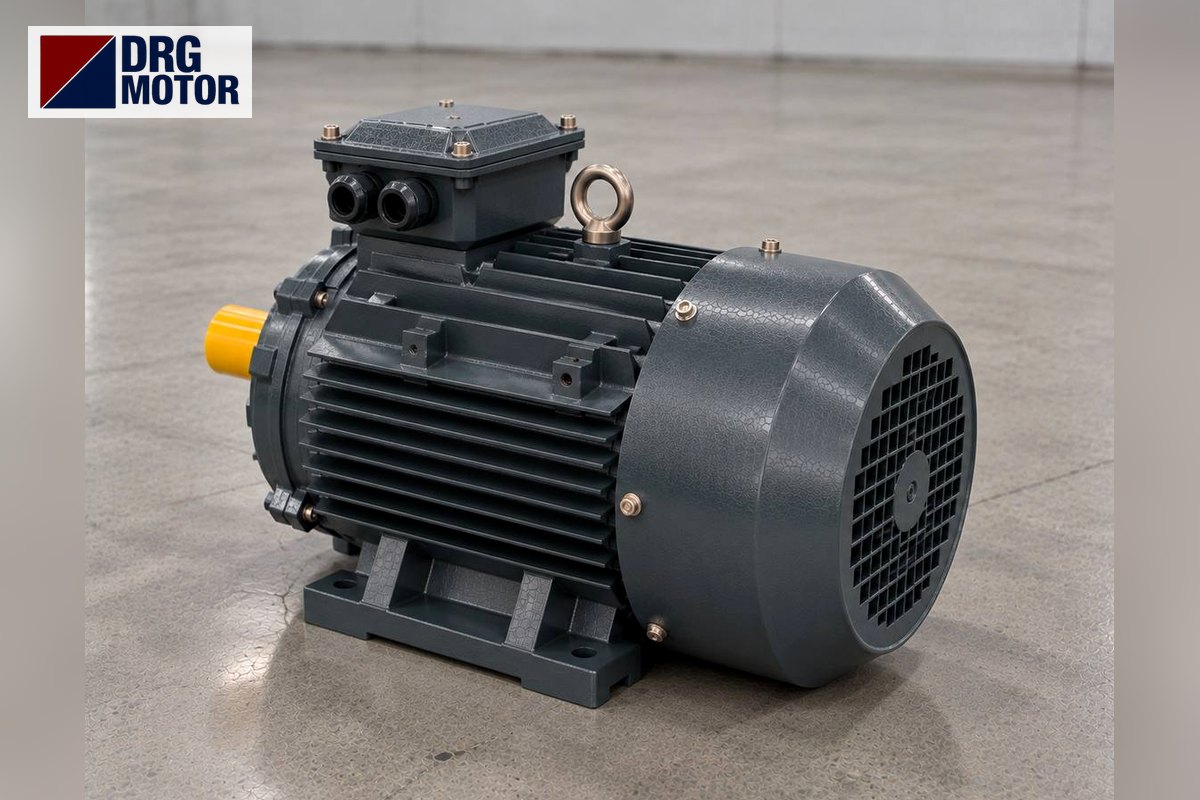

In a three-phase asynchronous motor, 380 V and 400 V describe practically the same nominal voltage; they are not two different motors. Today's standard value is 400 V, while 380 V is the old name for the same supply. Whether the nameplate reads 380 V, 400 V or 380–415 V, the motor in front of you is still the same motor.
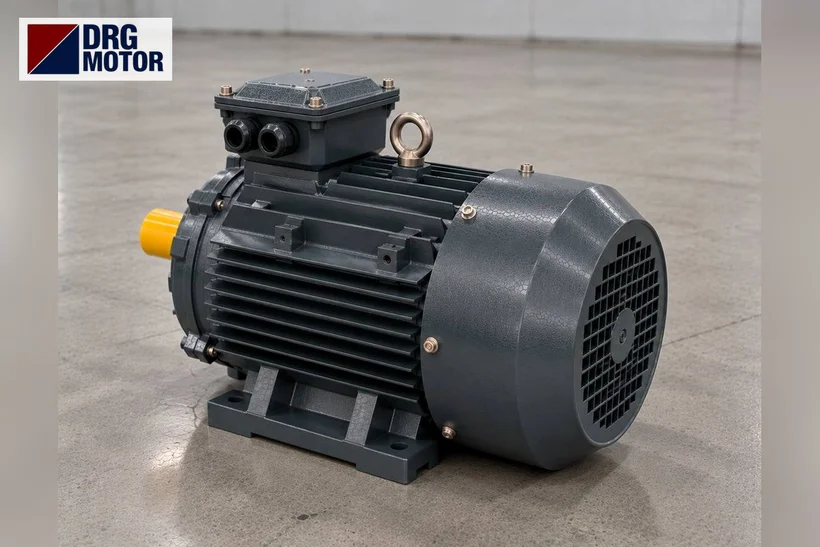
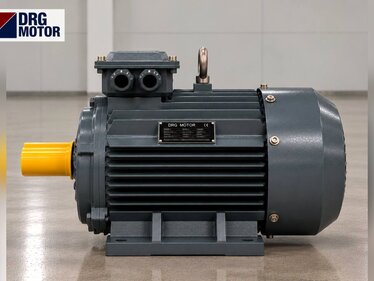
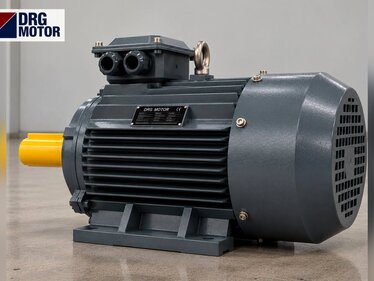
DRG Motor is a manufacturer, supplier and seller of electric motors. You can browse the 400 V three-phase asynchronous models by power and speed in the online motor shop, and see the same motors together in the three-phase asynchronous electric motors category.
Are 380 V and 400 V the same motor?
Yes. For many years the line-to-line voltage of the three-phase low-voltage grid was quoted as 380 V. International harmonisation updated this figure to 400 V; the grid did not physically change, only its nominal value was renamed. That is why "380 V motor" and "400 V motor" describe the same three-phase asynchronous motor. You do not need to worry about the numeric gap between 380 and 400 when selecting a motor.
Where do 380 V and 400 V come from?
The old nominal voltage 380 V was for a long time the value most often quoted on site; it still appears frequently on nameplates, manuals and projects. The value accepted today is 400 V, and most new nameplates carry it. On some motor and device nameplates you will also see a range such as 380–415 V that covers both. All of them point to the same low-voltage three-phase grid; the small numeric difference does not affect how the device runs.
Voltage tolerance: what does ±10% mean?
Electric motors are designed to run not at a single voltage point but around a nominal voltage with a certain tolerance. The widely accepted tolerance is about ±10% of the nominal value. For a motor with a 400 V nominal voltage, this corresponds roughly to a supply range of 360 V to 440 V. Since 380 V sits well inside this range, a motor labelled 400 V runs without trouble on a grid still referred to as 380 V. In other words, the 380 V versus 400 V distinction is a naming difference that dissolves within the tolerance.
In a real grid the voltage never stays perfectly fixed; it varies through the day and with the load. The motor's tolerance band exists precisely to cover these fluctuations. So the worry "my grid is 380 V but the motor is 400 V" is unnecessary.
What do 230/400 V and 400/690 V mean on the nameplate? Link with Y/Δ
On the nameplate the voltage is usually written as two values with a connection type (Δ/Y). Here the smaller value is the line voltage in delta (Δ) and the larger one in star (Y):
- 230/400 V (Δ/Y): common at low powers. The motor is connected in star (Y) on a 400 V three-phase grid and in delta (Δ) on a 230 V three-phase supply.
- 400/690 V (Δ/Y): seen at higher powers. The motor runs in delta (Δ) on a 400 V grid; 690 V is the star value.
The key point: the "400 V" on the nameplate is the same grid voltage once called 380 V. So the 380/400 distinction does not change the connection (star or delta); what decides your connection is which of the two nameplate values matches your grid voltage. For the general framework of the three-phase system and connection logic, see the three-phase electric motor article.
Click to see current electric motor prices and order nowSEE PRICES →
DRG 4-pole (1500 rpm) three-phase models
The table below lists example DRG models in the 1500 rpm class together with their nameplate voltage and rated current at 400 V. You can clearly see how the labelling shifts from 230/400 V at low power to 400/690 V at higher power; each model code links straight to its product page.
| Model | Power / Speed | Nameplate voltage (Δ/Y) | Rated current (400 V) |
|---|---|---|---|
| DRG-100L2-4-AL (aluminium) | 3 kW / 1450 rpm | 230/400 V (Δ/Y) | 6.02 A |
| DRG-132S-4-AL (aluminium) | 5.5 kW / 1460 rpm | 400/690 V (Δ/Y) | 10.7 A |
| DRG-112M-4K-AL (aluminium) | 5.5 kW / 1460 rpm | 400/690 V (Δ/Y) | 10.7 A |
| DRG-132M-4-AL (aluminium) | 7.5 kW / 1460 rpm | 400/690 V (Δ/Y) | 14.3 A |
| DRG-100L2-4-GG (cast iron) | 3 kW / 1450 rpm | 230/400 V (Δ/Y) | 6.02 A |
| DRG-132S-4-GG (cast iron) | 5.5 kW / 1460 rpm | 400/690 V (Δ/Y) | 10.7 A |
The currents in the table are referenced to the 400 V line voltage. On a grid still called 380 V, the same motor runs at a similar current within tolerance. For the right current and cable selection you can use the motor current chart and the electric motor calculator.
My grid is 380 V, can I fit a 400 V motor?
Yes. A 400 V nominal three-phase asynchronous motor is suitable to run on a three-phase grid referred to as 380 V, because both values describe the same low-voltage band and 380 V lies inside the motor's tolerance range. The real thing to check is that the motor expects a three-phase supply, not single-phase 230 V. Three-phase motors run on a three-phase system; make sure your supply is three-phase and choose the connection according to the nameplate.
Connection and safety
Whether the voltage is called 380 V or 400 V, always wire according to the motor nameplate and the panel documentation. Before any electrical work, switch off the supply, confirm it is de-energised, and let only qualified electrical personnel make the connection. Set protection values such as the thermal setting from the rated current on the nameplate, not from memory. Base the star or delta choice on the voltage values on the nameplate as well.
Send a photo of your current motor nameplate and we will find the suitable DRG model together.Send on WhatsApp
If you are not sure whether your motor's nameplate says 380 V or 400 V, share a photo of the nameplate and we will determine the suitable DRG model together.
Browse the 400 V three-phase asynchronous motor models and current options that fit your need in the shopSEE PRICES
Frequently asked questions
Is there a real difference between a 380 V and a 400 V motor?
In practice, no. 380 V is the old nominal value and 400 V the current one; both describe the same three-phase low-voltage grid. The same motor can be referred to by either value.
My nameplate says 380 V, can I connect it to a 400 V grid?
Yes. 400 V is the current name for 380 V, and the ±10% tolerance more than covers this gap. Still make the connection according to the value and type stated on the nameplate.
Does the 380/400 difference change the star-delta connection?
No. The star (Y) or delta (Δ) choice depends on which of the two nameplate voltages matches your grid; the naming difference between 380 and 400 does not affect it.
Does a 400 V motor deliver less power at 380 V?
No. 380 V is within the tolerance range of the 400 V nominal value, so the motor keeps delivering its rated power. If the voltage drops far enough to leave the tolerance, performance and heating are generally affected, which is a separate topic.
Electric Motors Related to This Topic — Models and Current Prices
Suitability is not decided by power alone: compare the speed, voltage, mounting, shaft and fixing dimensions of your machine with the product data; if unsure, send us the nameplate of your current motor.
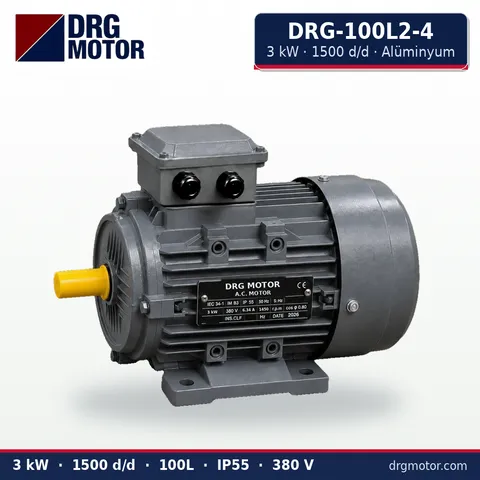
3 kW Three-Phase Motor 1500 rpm – DRG-100L2-4 Aluminium
- 3 kW · 1500 rpm (4 poles)
- Aluminium frame · IEC 100L
- Shaft: 28 × 60 mm
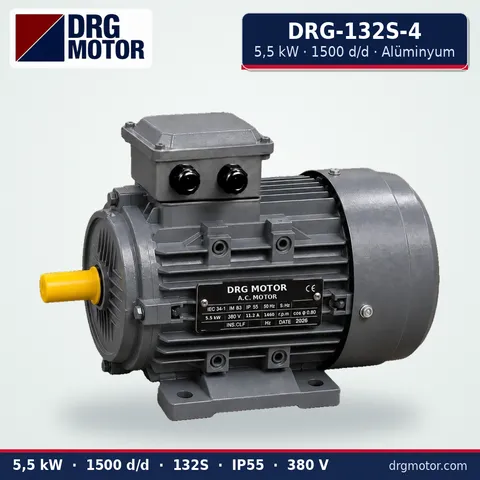
5.5 kW Three-Phase Motor 1500 rpm – DRG-132S-4 Aluminium
- 5.5 kW · 1500 rpm (4 poles)
- Aluminium frame · IEC 132S
- Shaft: 38 × 80 mm
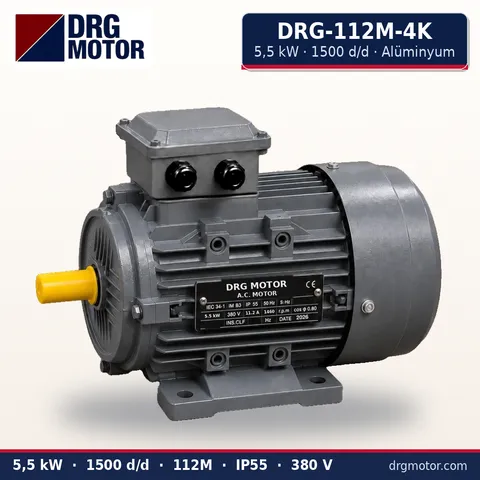
5.5 kW Compact Three-Phase Motor 1500 rpm – DRG-112M-4K Aluminium
- 5.5 kW · 1500 rpm (4 poles)
- Aluminium frame · IEC 112M
- Shaft: 28 × 60 mm
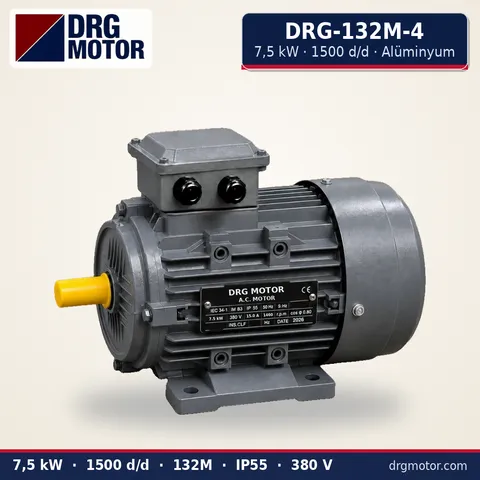
7.5 kW Three-Phase Motor 1500 rpm – DRG-132M-4 Aluminium
- 7.5 kW · 1500 rpm (4 poles)
- Aluminium frame · IEC 132M
- Shaft: 38 × 80 mm
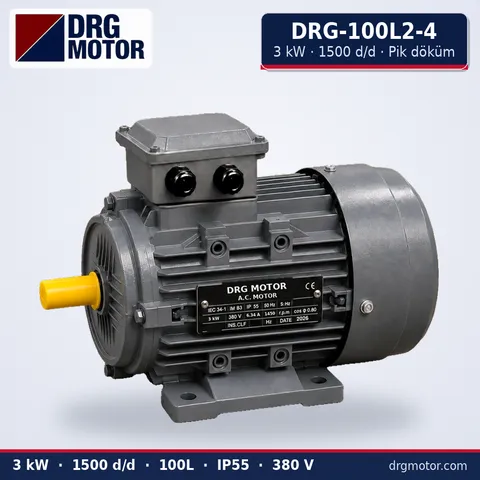
3 kW Three-Phase Motor 1500 rpm – DRG-100L2-4 Cast Iron
- 3 kW · 1500 rpm (4 poles)
- Cast iron frame · IEC 100L
- Shaft: 28 × 60 mm
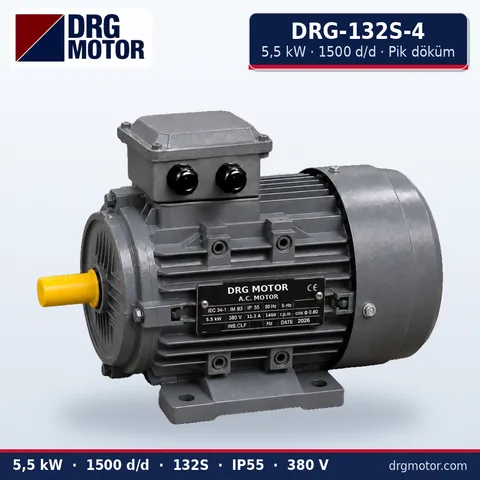
5.5 kW Three-Phase Motor 1500 rpm – DRG-132S-4 Cast Iron
- 5.5 kW · 1500 rpm (4 poles)
- Cast iron frame · IEC 132S
- Shaft: 38 × 80 mm