English
 Le français
 Türkçe




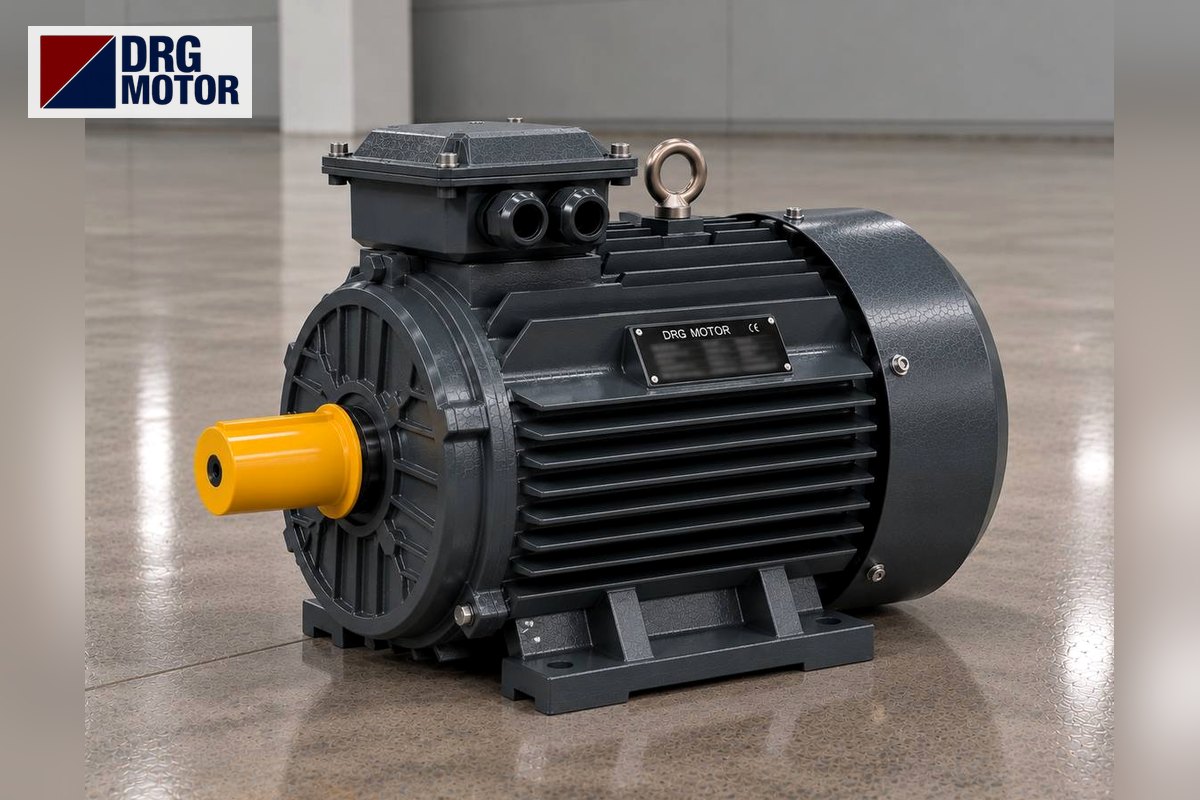

IP55 is a protection class that describes how well an electric motor's housing is sealed against external influences. The first 5 after "IP" means the motor is dust protected, while the second 5 means it is resistant to water jets coming from any direction. In short, an IP55 motor runs comfortably in dusty environments where water is occasionally splashed.
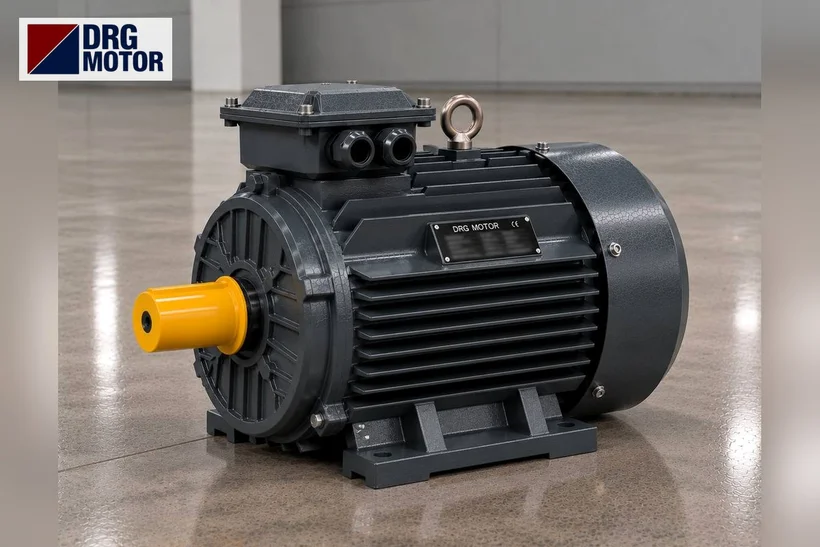
DRG Motor is a manufacturer, supplier and seller of electric motors. DRG's three-phase asynchronous motors are offered as standard in the IP55 protection class; you can browse the models by power and speed in the online motor shop, or all together in the three-phase asynchronous electric motors category.
What does IP mean?
IP stands for "Ingress Protection" and is an international protection rating system. Each of the two digits after IP describes a separate threat: the first digit covers solid objects and dust, and the second digit covers water. The higher the digit, the stronger the protection. So IP55 should be read not as a single "ruggedness" score but as two distinct assurances.
| IP55 digit | Value | Meaning |
|---|---|---|
| 1st digit (solids/dust) | 5 | Dust protected: dust is not fully excluded but cannot enter in a quantity that affects operation |
| 2nd digit (water) | 5 | Protected against water jets from any direction |
Note that the 5 in the first digit means "dust protected" rather than "dust tight" (that would be 6). The motor does not let in enough dust to disturb its operation; a limited build-up of fine dust is normal and does not affect performance.
Why does the second 5 matter?
The water digits can be pictured as a ladder: it starts with condensation and dripping, rises to rain, then splashing, and finally to pressurised water jets. The 5 in IP55 lands on the "resistant to water jets from any direction" rung. In practice this means the motor is protected against a light hose-down, rain and water splashed from nearby machines.
One rung above protects against powerful water jets, and much higher levels protect against immersion. IP55 does not cover those last two: if the motor will stay under water or face high-pressure washdown, a higher protection class should be considered. For most everyday industrial conditions IP55 is a balanced and common choice.
Click to see current electric motor prices and order nowSEE PRICES →
Where is an IP55 motor used?
The IP55 class is a perfect fit for typical industrial settings that are not fully sealed yet not fully clean either. Typical uses include:
- Dusty production areas: woodworking, flour/feed mills, cement and marble workshops where dust is in the air.
- Lines with occasional water contact: washing sections, filling plants, food processing areas and places cleaned with a hose.
- Outdoors under an eave: pump, fan and conveyor drives that face the open air but are shielded from direct rain.
- Agricultural and rural uses: irrigation pumps, air fans and similar assemblies exposed to changing weather.
The terminal box and the cable glands must keep the same protection as the housing. If the cable entries are not sealed with suitable glands, water can enter through the terminal box even when the housing itself is IP55.
IP55 as the standard on DRG three-phase motors
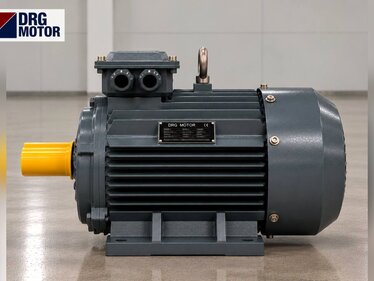
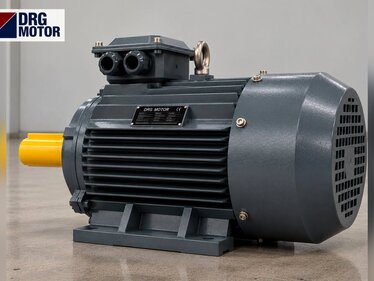
DRG's aluminium and cast iron three-phase asynchronous motors are supplied as standard in protection class IP55, insulation class F and with IC411 (frame-surface fan cooling). Both housing materials provide the same IP55 protection; the difference lies in mechanical strength and weight. To weigh up the housing material in more detail, see the types of electric motor housings article.
The table below lists a few DRG models from the 1500 rpm (4-pole) class as examples; all are IP55 and the model codes link straight to the product page.
| Model | Power | Housing | Protection class |
|---|---|---|---|
| DRG-100L1-4-AL | 2.2 kW | aluminium | IP55 |
| DRG-112M-4-AL | 4 kW | aluminium | IP55 |
| DRG-132S-4-AL | 5.5 kW | aluminium | IP55 |
| DRG-112M-4K-AL | 5.5 kW | aluminium | IP55 |
| DRG-100L1-4-GG | 2.2 kW | cast iron | IP55 |
| DRG-112M-4-GG | 4 kW | cast iron | IP55 |
The table shows only a few example powers; the same protection class applies to DRG's other power and speed options too.
How to keep the IP55 protection intact
A motor being IP55 does not mean maintenance can be ignored. The protection depends on the gaskets, seals and terminal-box cover being sound. These points extend the life of the protection:
- Each time you open and close the terminal-box cover, make sure its gasket is in place and not crushed.
- Close unused cable-entry holes with blanking plugs; an open hole lowers the protection class.
- Clean dust build-up on the housing regularly; a thick dust layer hampers cooling.
- Before any electrical work, switch off the supply, confirm it is de-energised, and let only qualified electrical personnel carry out the task.
Send a photo of your current motor nameplate and we will find the suitable DRG model together.Send on WhatsApp
If you are unsure which protection class suits your environment, share a photo of the motor nameplate or the details of your application for confirmation. Once you have chosen the right model, you can compare all power and speed options through the shop.
Browse IP55 three-phase asynchronous motor models by power and speed in the shopSEE PRICES
Frequently asked questions
What does IP55 mean, briefly?
IP55 is a protection class showing the motor is dust protected (first 5) and resistant to water jets from any direction (second 5). It suits dusty environments with occasional water splashing.
Is an IP55 motor waterproof?
An IP55 motor withstands water jets and rain, but it does not guarantee protection against immersion or high-pressure washdown. For continuous immersion or pressure washing a higher protection class is needed.
What is the difference between IP55 and IP54?
The difference is in the second digit: IP54 withstands only water splashing from any direction, while IP55 goes one rung further and withstands water jets. The first digit of both is 5, i.e. dust protected.
What is the protection class of DRG motors?
DRG's three-phase asynchronous motors are supplied as standard in protection class IP55. The exact value is always on the motor nameplate; a different need is assessed per application.
Electric Motors Related to This Topic — Models and Current Prices
Suitability is not decided by power alone: compare the speed, voltage, mounting, shaft and fixing dimensions of your machine with the product data; if unsure, send us the nameplate of your current motor.
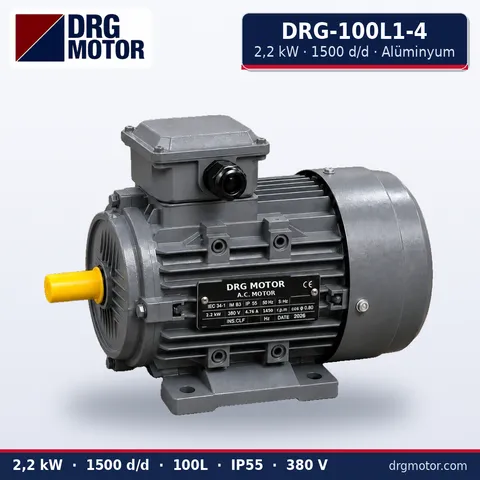
2.2 kW Three-Phase Motor 1500 rpm – DRG-100L1-4 Aluminium
- 2.2 kW · 1500 rpm (4 poles)
- Aluminium frame · IEC 100L
- Shaft: 28 × 60 mm
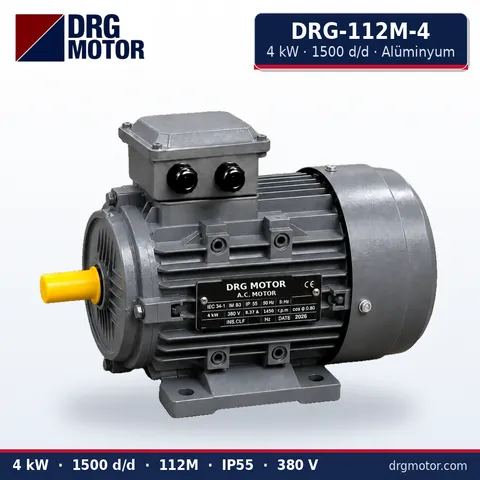
4 kW Three-Phase Motor 1500 rpm – DRG-112M-4 Aluminium
- 4 kW · 1500 rpm (4 poles)
- Aluminium frame · IEC 112M
- Shaft: 28 × 60 mm
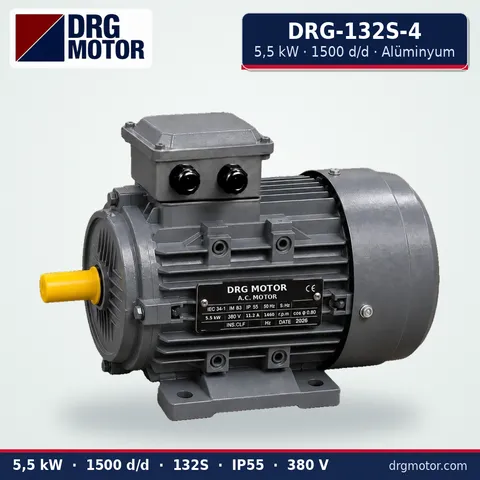
5.5 kW Three-Phase Motor 1500 rpm – DRG-132S-4 Aluminium
- 5.5 kW · 1500 rpm (4 poles)
- Aluminium frame · IEC 132S
- Shaft: 38 × 80 mm
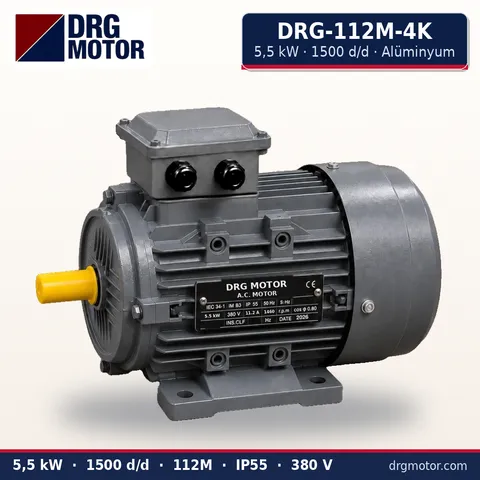
5.5 kW Compact Three-Phase Motor 1500 rpm – DRG-112M-4K Aluminium
- 5.5 kW · 1500 rpm (4 poles)
- Aluminium frame · IEC 112M
- Shaft: 28 × 60 mm
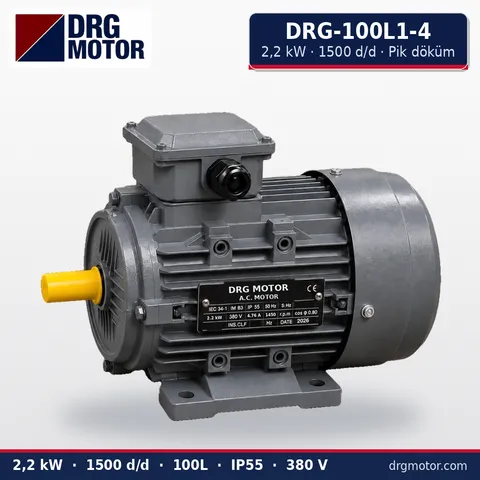
2.2 kW Three-Phase Motor 1500 rpm – DRG-100L1-4 Cast Iron
- 2.2 kW · 1500 rpm (4 poles)
- Cast iron frame · IEC 100L
- Shaft: 28 × 60 mm
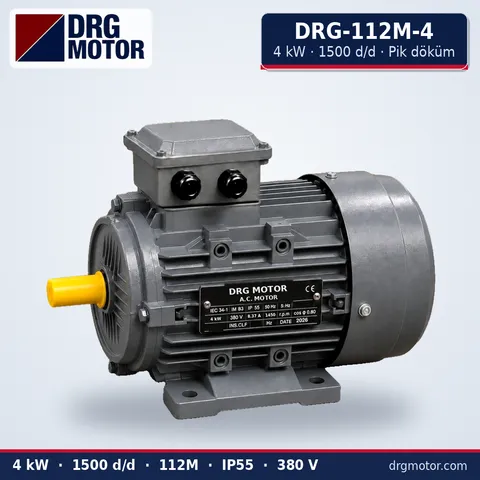
4 kW Three-Phase Motor 1500 rpm – DRG-112M-4 Cast Iron
- 4 kW · 1500 rpm (4 poles)
- Cast iron frame · IEC 112M
- Shaft: 28 × 60 mm