English
 Le français
 Türkçe




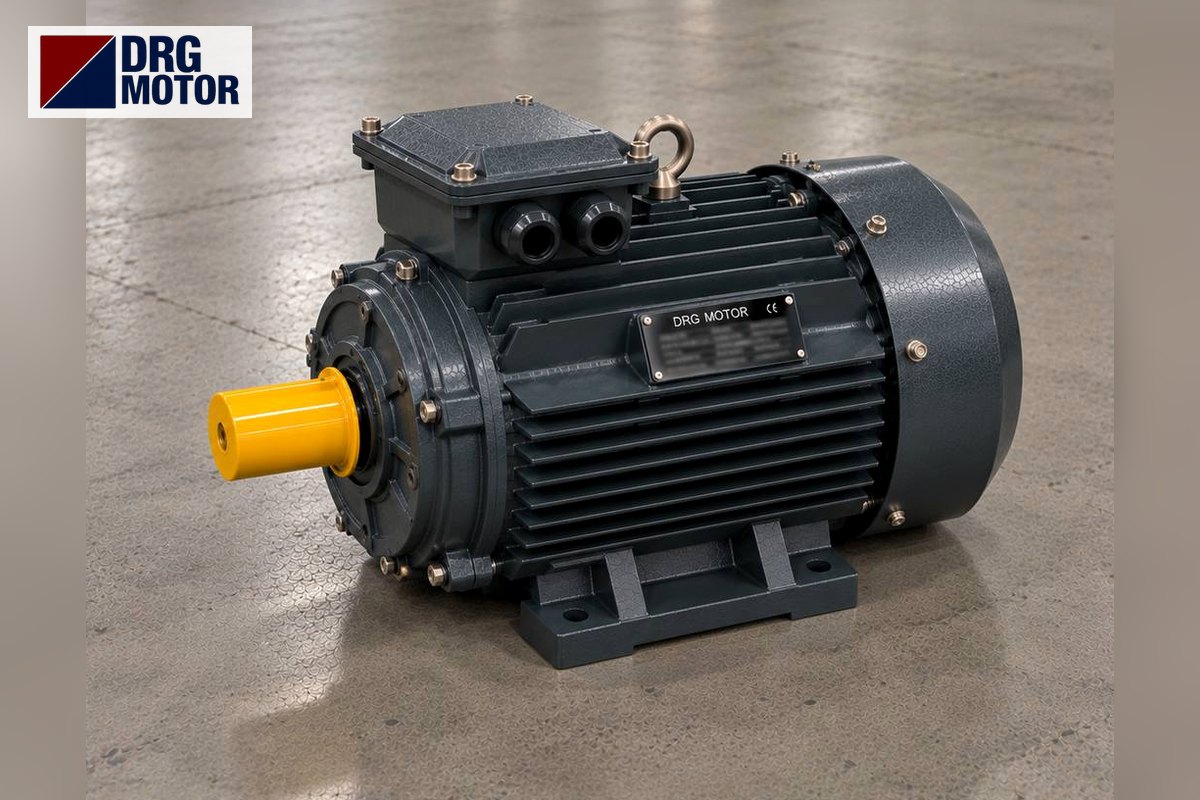

The weight of an electric motor depends not on a single cause but on several design choices acting together. The most decisive factors are the frame material (aluminium or cast iron), the frame's design and casting technology, the motor's power, and the IEC frame size that corresponds to that power. Two motors of the same power can therefore weigh differently.
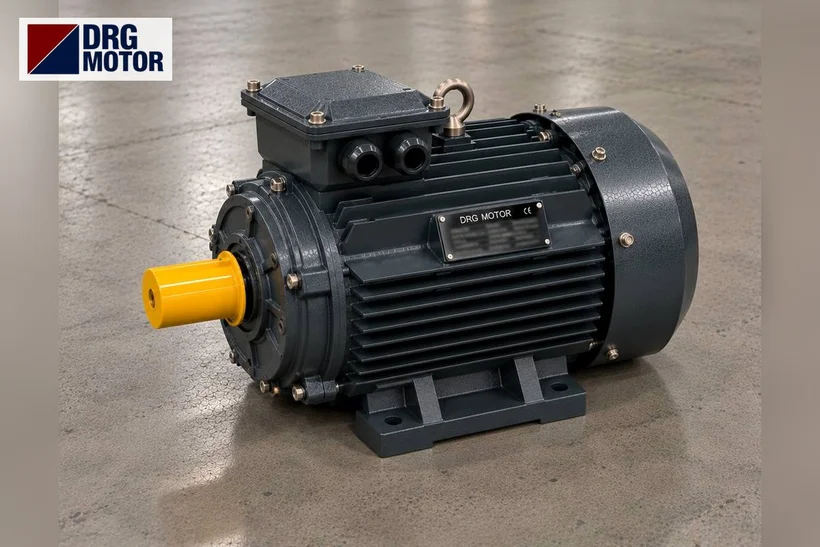
DRG Motor is a manufacturer, supplier and seller of electric motors. You can review every aluminium and cast iron three-phase model by power and speed in the online motor shop, and see the whole range together in the three-phase asynchronous electric motors category.
Main factors that determine motor weight
The weight of a three-phase asynchronous motor is the sum of the outer frame and end shields, the inner stator and rotor package, the windings, the shaft and the bearings. The material, size and design of these parts directly affect weight. The table below summarises the main factors without giving any kilogram value.
| Factor | Effect on weight |
|---|---|
| Frame material | Aluminium and cast iron have different densities; for the same frame size the material choice changes the total weight. |
| Frame design and casting technology | Wall thickness, fin layout and casting method can provide the same strength with less or more material. |
| Power (kW) | As power rises the stator-rotor package and winding amount grow, which increases weight. |
| IEC frame size | A larger shaft-centre height (e.g. 112, 160, 200) means a bulkier frame and more material. |
| Pole and cooling design | Pole count and cooling solution influence the chosen frame size and so affect weight indirectly. |
Click to see current electric motor prices and order nowSEE PRICES →
Frame material: aluminium and cast iron
The most visible factor for weight is the frame material. The DRG range offers two materials, both giving the same electrical values (power, speed, torque):
- Aluminium frame: the lower material density makes the frame lighter; it is preferred where ease of handling and mounting matters. Aluminium options can be seen together on the aluminium housing electric motors page.
- Cast iron frame: a denser material gives a more solid build at the same frame size; it is widely used where mechanical stress and vibration are high.
This is not a "good–bad" ranking. A lighter frame eases mounting, while a more solid frame may suit a different working environment. The right choice depends on where and how the motor will run, that is, on what best fits the need.
Frame design and casting technology
Even with the same material, how the frame is designed affects weight. Wall thickness, the layout of cooling fins, the internal rib structure and casting precision determine both the strength and the material amount of the frame. Technology-driven new-generation frame designs can provide the required strength with a more balanced material distribution, making the frame both solid and more optimised.
Comparing two motors by frame size alone can therefore be misleading. If the casting technology and design approach differ, two frames of similar size may have different weights. What matters is that the frame meets the mechanical strength and cooling the application requires.
Power, frame size and pole/cooling design
As the motor's power grows, the stator-rotor package and the amount of copper winding increase, requiring a larger IEC frame size. The larger the frame size (e.g. 112M, 160M, 200L), the more material is used and the higher the weight. Pole count and cooling solution can, for the same power, change the chosen frame size and so affect weight indirectly.
To see the effect of material and frame size at the same power, look at the DRG models. In the 4 kW 1500 rpm class, both the aluminium DRG-112M-4 and the cast iron DRG-112M-4 give the same electrical values; the difference is the frame material. In the 11 kW class, the aluminium DRG-160M-4, the cast iron DRG-160M-4 and the more compact DRG-132M-4K show how design affects size. How the frame grows with power can be seen in the 30 kW cast iron DRG-200L-4 model.
Exact weight for transport and lifting
When planning a crane, hoist or shipment you need the motor's exact weight. This value changes by model and is best obtained from the relevant product page or from a quotation you request from us. On large-frame motors, lifting should be done from the lifting lug on the motor with suitable equipment, and left to authorised personnel for safety.
Send a photo of your current motor nameplate and we will find the suitable DRG model together.Send on WhatsApp
Once you have identified the right model you can compare all power, speed and frame options and current prices in the shop.
See the models and current prices of aluminium and cast iron three-phase asynchronous motors in the shopSEE PRICES
Frequently asked questions
What does the weight of an electric motor depend on?
Mainly on the frame material (aluminium or cast iron), the frame's design and casting technology, the motor's power and the corresponding IEC frame size. When these factors combine, even motors of the same power can differ in weight.
Is a light motor or a heavy motor better?
There is no such general "better" ranking. A light frame eases handling and mounting, while a more solid frame may suit a different working environment. The choice is made according to the application and to what best fits the need.
Why can two motors of the same power weigh differently?
Because the frame material, casting technology and frame design may differ. The same 11 kW power offered in different frame sizes and materials results in different weights.
Where can I learn the motor's exact weight?
Because the exact weight varies by model, the most accurate figure is on the relevant product page or in a quotation from us. For a transport or lifting plan it is best to confirm this value before ordering.
Electric Motors Related to This Topic — Models and Current Prices
Suitability is not decided by power alone: compare the speed, voltage, mounting, shaft and fixing dimensions of your machine with the product data; if unsure, send us the nameplate of your current motor.

4 kW Three-Phase Motor 1500 rpm – DRG-112M-4 Aluminium
- 4 kW · 1500 rpm (4 poles)
- Aluminium frame · IEC 112M
- Shaft: 28 × 60 mm
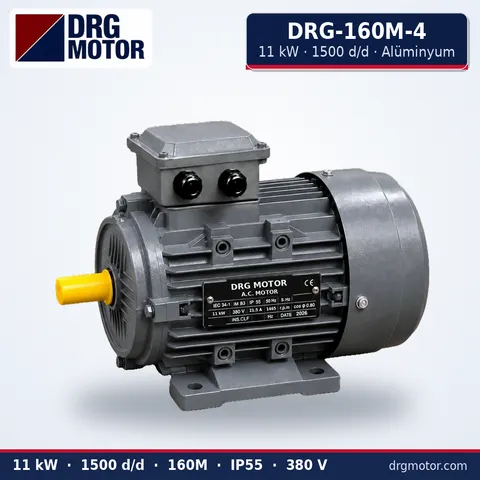
11 kW Three-Phase Motor 1500 rpm – DRG-160M-4 Aluminium
- 11 kW · 1500 rpm (4 poles)
- Aluminium frame · IEC 160M
- Shaft: 42 × 110 mm
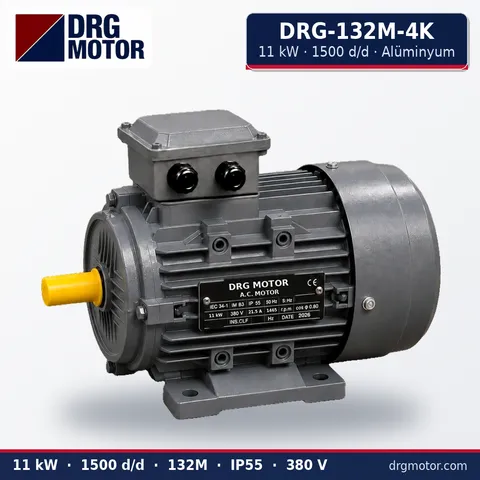
11 kW Compact Three-Phase Motor 1500 rpm – DRG-132M-4K Aluminium
- 11 kW · 1500 rpm (4 poles)
- Aluminium frame · IEC 132M
- Shaft: 38 × 80 mm
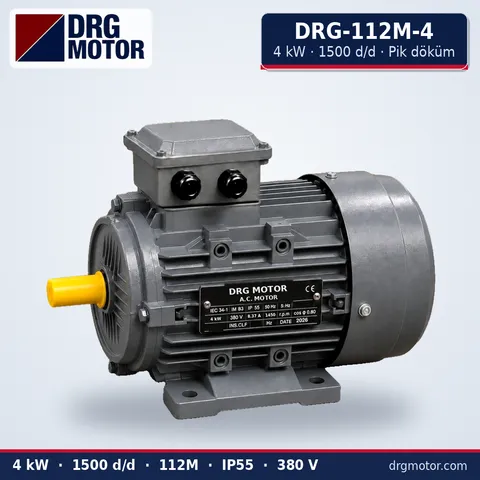
4 kW Three-Phase Motor 1500 rpm – DRG-112M-4 Cast Iron
- 4 kW · 1500 rpm (4 poles)
- Cast iron frame · IEC 112M
- Shaft: 28 × 60 mm
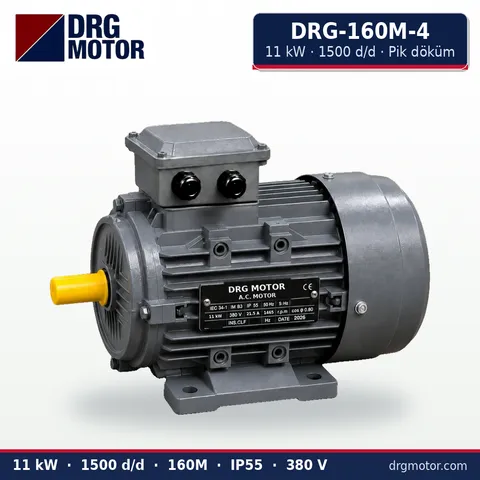
11 kW Three-Phase Motor 1500 rpm – DRG-160M-4 Cast Iron
- 11 kW · 1500 rpm (4 poles)
- Cast iron frame · IEC 160M
- Shaft: 42 × 110 mm
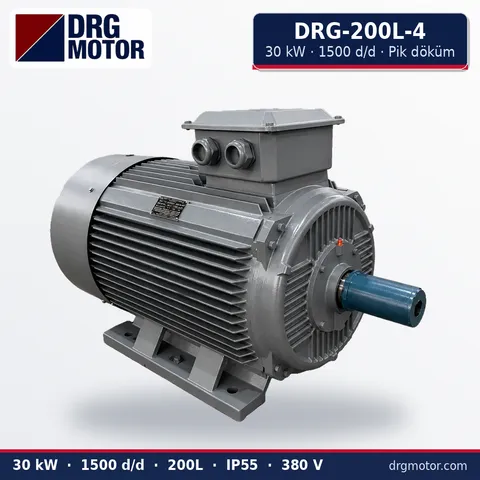
30 kW Three-Phase Motor 1500 rpm – DRG-200L-4 Cast Iron
- 30 kW · 1500 rpm (4 poles)
- Cast iron frame · IEC 200L
- Shaft: 55 × 110 mm