English
 Le français
 Türkçe




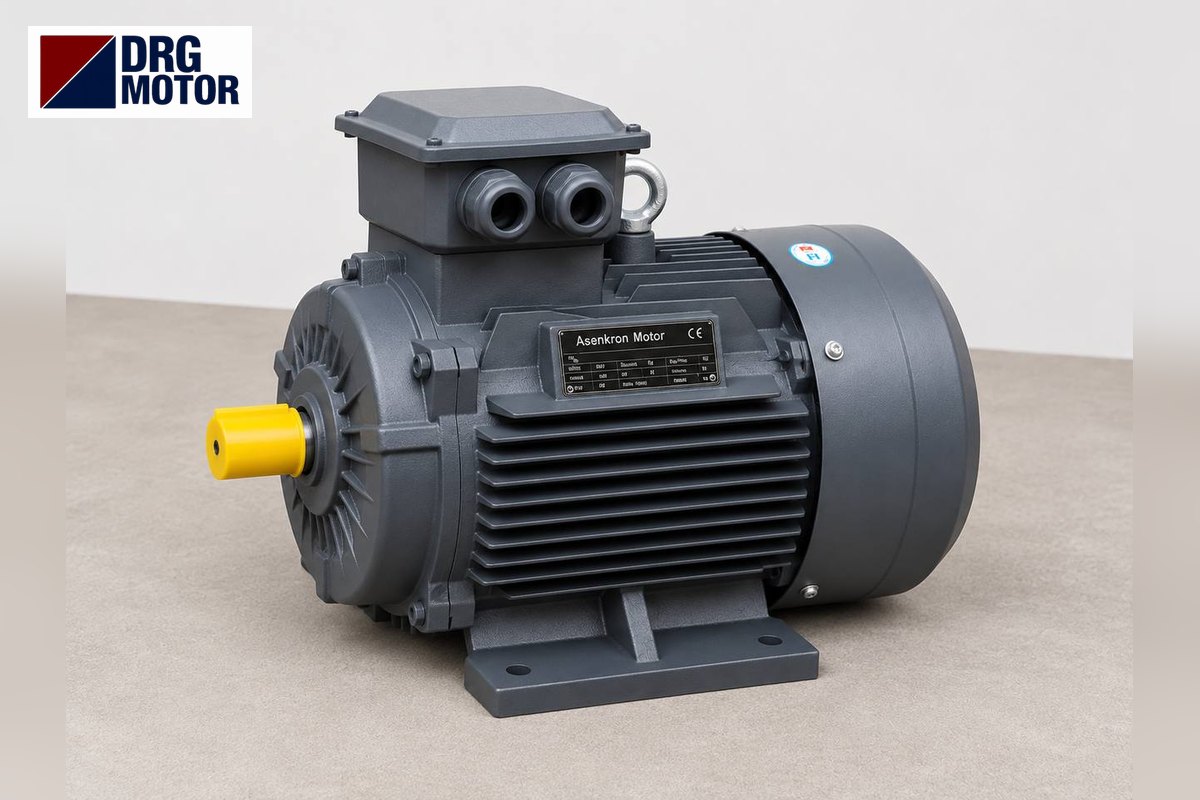

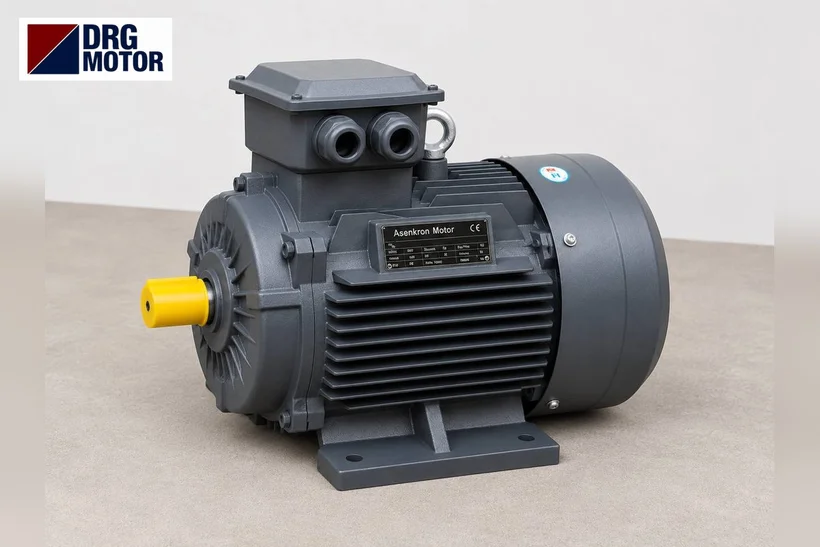
A six-pole WEG W22 electric motor is usually found on machines that turn slowly but need strong drive: mixers, large-diameter fans, slow conveyors, mills. When replacing it, the two deciding values are the torque the machine needs and the speed at which the shaft must turn. This article explains how to derive both from the nameplate and what data the DRG MOTOR option is assessed on.
Six poles means more torque at the same power
The synchronous speed of a six-pole motor at 50 Hz is 1000 rpm. At constant power, shaft torque is inversely proportional to speed: approximately torque (Nm) = 9550 × power (kW) ÷ speed (rpm). So a 7.5 kW six-pole motor delivers roughly one and a half times the torque of a four-pole motor of the same power. In WEG's African-market W22 catalogue, the full-load torque of the 6-pole 7.5 kW IE3 motor in frame 160M is given as 73.5 Nm; the European catalogue shows the full-load speed of the same motor as 975 rpm.
Torque values may be given in different units and table layouts across catalogues; compare using values in Nm or the calculation above, and do not mix units.
Why machine speed stays tied to the nameplate speed
On six-pole motors, slip can be proportionally more noticeable than on four-pole ones. On a belt-driven mixer or a directly coupled fan, the machine speed changes along with the motor's nameplate speed. The rated speed of the new motor should therefore be set alongside the speed on the old nameplate.
Sometimes the idea is to fit a four-pole motor instead and change the pulley ratio. This is not a change to make without calculating pulley diameter, number of belts, bearing load and starting conditions together; it should be assessed machine by machine by competent technical staff. The same kW is not enough here either: in the European catalogue the 6-pole 7.5 kW motor is in frame 160M with a 42k6x110 shaft, while the 4-pole 7.5 kW is in frame 132S/M with a 38k6x80 shaft. Same power, different frame and shaft.
Torque required at start
A mixer starting full, a heavy fan impeller or a loaded conveyor needs more than rated torque at start. The nameplate does not show this; the ratio of starting torque to rated torque is catalogue data. If the machine starts without trouble, check that the new motor's starting torque ratio is at least similar. If the run-up is long or the current motor struggles at start, be sure to mention it.
Example comparison:
| Value | WEG W22 (catalogue) | DRG-160M-6 (data) |
|---|---|---|
| Power | 7.5 kW | 7.5 kW |
| Frame | 160M | 160M |
| Full-load speed | 975 rpm | 970 rpm |
| Full-load torque | 73.5 Nm | 73.8 Nm |
The closeness in the table does not imply certainty; shaft, foot and flange dimensions and the machine's load characteristics must be checked separately.
Send DRG MOTOR the nameplate photo, the machine type and how it starts, so that a suitable option can be assessed by comparing torque and speed values.
Six-pole models in the DRG MOTOR range to examine
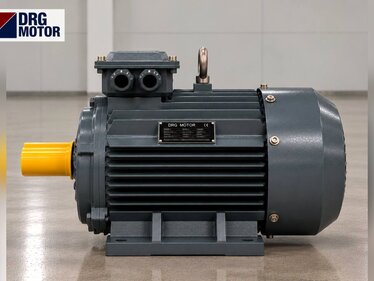
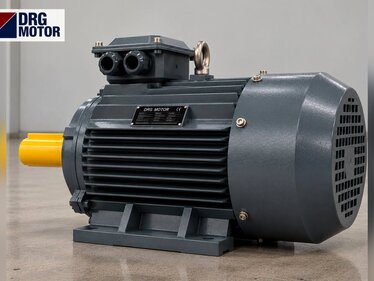
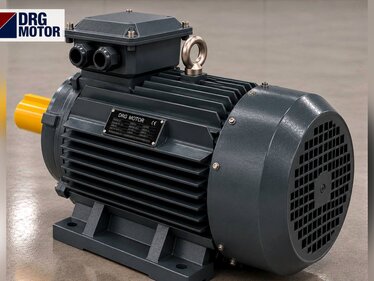
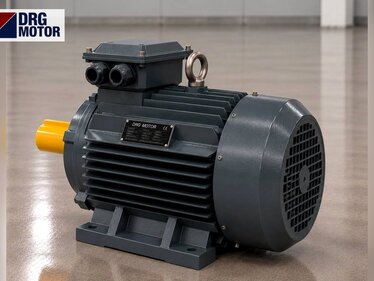
DRG Motor is a manufacturer, supplier and seller of electric motors. DRG six-pole motors are in the 1000 rpm class; rated torque and starting torque ratio are given in the product data. You can see the wider range on the Three-Phase Asynchronous Electric Motors page. Examples that can be assessed:
- DRG-132M2-6: 54.3 Nm rated torque, starting/rated torque ratio 2; 5.5 kW, 968 rpm, frame 132M, 38×80 mm shaft
- DRG-160M-6: 73.8 Nm rated torque, starting/rated torque ratio 2; 7.5 kW, 970 rpm, frame 160M, 42×110 mm shaft
- DRG-160L-6: 108.3 Nm rated torque, starting/rated torque ratio 2; 11 kW, 970 rpm, frame 160L, 42×110 mm shaft
- DRG-180L-6: 146.5 Nm rated torque, starting/rated torque ratio 2; 15 kW, 978 rpm, frame 180L, 48×110 mm shaft
This list does not state definite suitability; close torque values are no substitute for comparing shaft and foot dimensions. If anything must change on the electrical side, the decision belongs to competent technical staff.
Frequently asked questions
The nameplate does not show torque; how do I find it?
An approximate value can be calculated from the power and full-load speed on the nameplate. It is an approximation; catalogue data should be used for a firm comparison.
Can a higher-power four-pole motor be used instead of a six-pole one?
There is no general answer, because machine speed and drive arrangement change. It is not recommended without assessing pulleys, gear ratio and bearing load together.
The current motor struggled at start; will the new one too?
That cannot be said without investigating the cause. Voltage drop, mechanical binding or increased load do not disappear when the motor is changed; the machine side should be examined first.
Data needed for the torque and speed assessment
- Nameplate photo (power, full-load speed, frame, voltage and current fields)
- Machine type and whether it starts loaded or empty
- Run-up time and a description of any difficulty at start
- Drive arrangement: direct coupling, pulley diameters or gear ratio
- Mounting type, shaft diameter and length
- Daily operating hours and ambient conditions
- Supply voltage and frequency
With the information provided, a suitable option is assessed by reviewing torque and speed data together with the machine's operating conditions.
You can send this information via WhatsApp, by phone on +90 (542) 666 11 11, by e-mail to info@drgmotor.com or through the contact page. You can also add the models you are looking at to the quote list, and browse the full range on the buy electric motors online page.
See current prices of DRG MOTOR electric motors and order online in our storeSEE PRICES →
Technical Sources
- WEG — W22 Three-Phase Technical Catalogue, European Market (Cod 50025712) — Rev 34, 09/2026 — W22 IE3 50 Hz electrical data, IV- and VI-pole tables — printed pages 41–42.
- WEG — W22 Three-Phase Technical Catalogue, European Market (Cod 50025712) — Rev 34, 09/2026 — Section 18 Mechanical Data (shaft end dimensions) — printed page 71.
- WEG — W22 Three-Phase Electric Motor Technical Catalogue, African Market (Cod 50024206) — Rev 21, 11/2020 — W22 IE3 Premium Efficiency, VI-pole 50 Hz table (full load torque, Nm) — printed page 64.