English
 Le français
 Türkçe




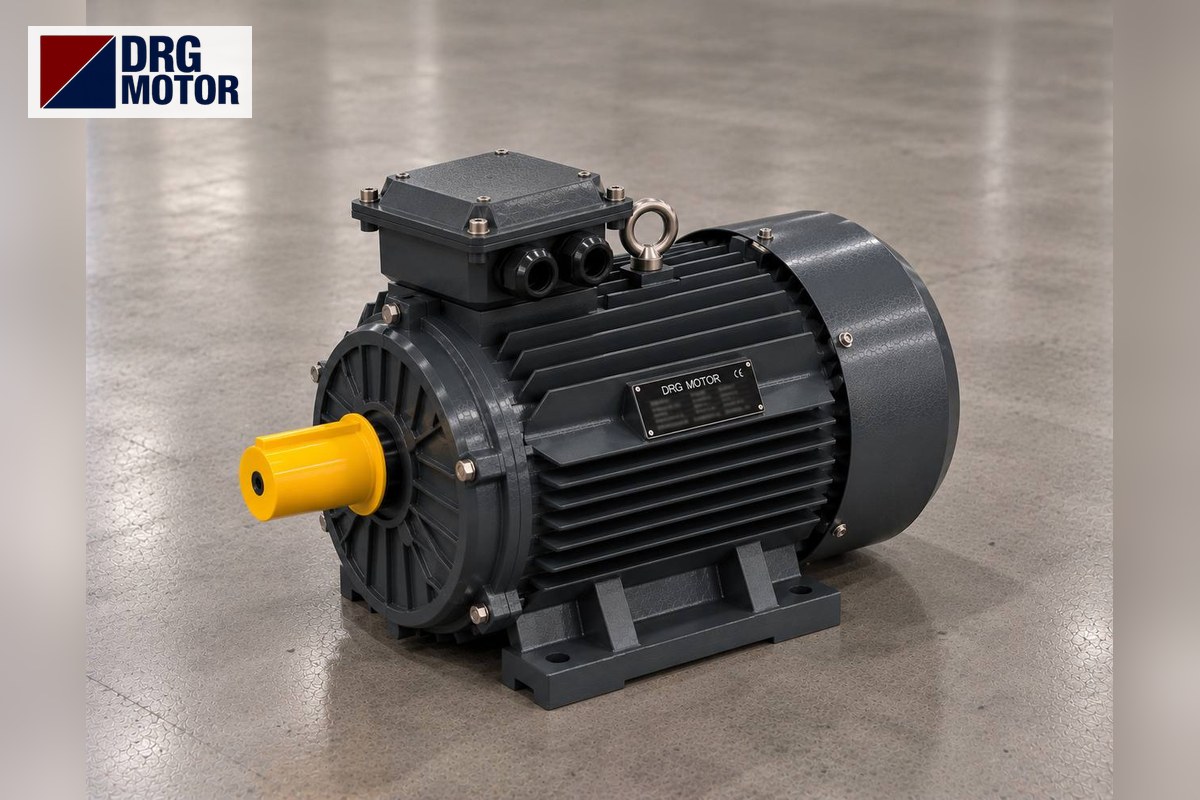

When renewing a WEG W22 electric motor that runs on a frequency drive (inverter), power and speed are not the only things to check; the motor must be assessed against the voltage pulses at the drive output, cooling at low speed and the load type. This article summarises the inverter conditions in the W22 catalogue, explains what to ask when assessing a new motor and lists the information to send to DRG MOTOR.
What the W22 catalogue says about inverter use
According to WEG's European-market W22 catalogue, these motors use an insulation system called WISE; the winding is class F (class H optional) and the motor is defined as suitable for direct-on-line or drive operation. This suitability applies, however, when the voltage pulses at the motor terminals stay within certain limits. For motors with a rated voltage below 460 V, the catalogue limits are:
| Parameter (Vn < 460 V) | Limit in the W22 catalogue |
|---|---|
| Peak voltage at motor terminals | ≤ 1600 V |
| Voltage rise rate (dV/dt) | ≤ 5200 V/µs |
| Rise time | ≥ 0.1 µs |
| Time between pulses | ≥ 6 µs |
If these limits are exceeded, the catalogue calls for an output reactor or a dV/dt filter. Because long motor cables can raise the peak voltage at the terminals, the cable length between drive and motor is part of the assessment.
Take care with 400/690 V rated motors
The catalogue states that dual-voltage motors such as 400/690 V, bought without specifying drive operation, may be run from a drive on the higher voltage only if the limits above are met. If your nameplate shows two voltages, always state which voltage and connection the motor is supplied with. If the connection or protection arrangement needs to change, this should be assessed by competent technical staff.
Low speed, load type and cooling
On a self-ventilated motor the fan is on the shaft, so cooling air drops at low speed. The W22 catalogue states that constant-torque loads (conveyors, mixers, extruders and the like) require torque derating when run at low speed on a drive, while quadratic-torque loads such as pumps and fans normally do not. A forced-ventilation version is also mentioned as an option for frames 90S and above.
If your current motor has a separately supplied fan unit at the rear, be sure to mention it; in such an application the machine's low-speed requirement must be assessed separately. If your motor has a brake, a separate fan or a drive integrated into the motor, mention this as well; these features change the assessment.
On the bearing side, the catalogue recommends insulated bearings and a shaft grounding brush for frames 315S/M and above, and states that special measures are generally not needed up to 280S/M. If your motor has such equipment, mention it too.
The same kW and the same speed class say even less in an inverter application: of two motors of the same power, one may have the cooling to deliver full torque at low speed and the other may not. No decision should be made without knowing the speed range and load type.
Send DRG MOTOR the nameplate photo, the drive model and the frequency range used, so that an option is assessed together with the inverter operating conditions.
Models that can be assessed on the DRG MOTOR side
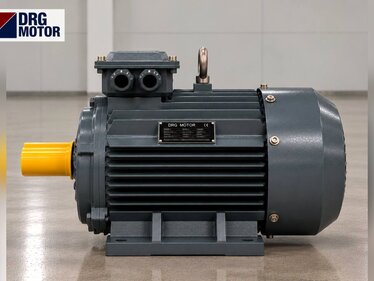
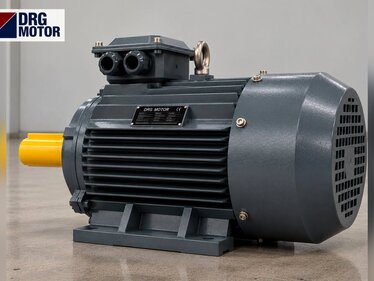
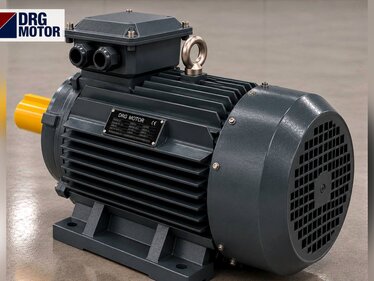
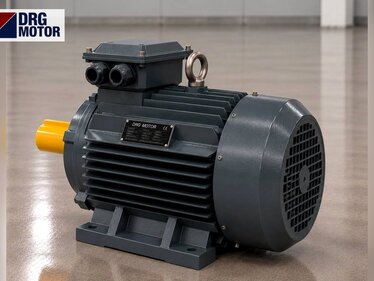
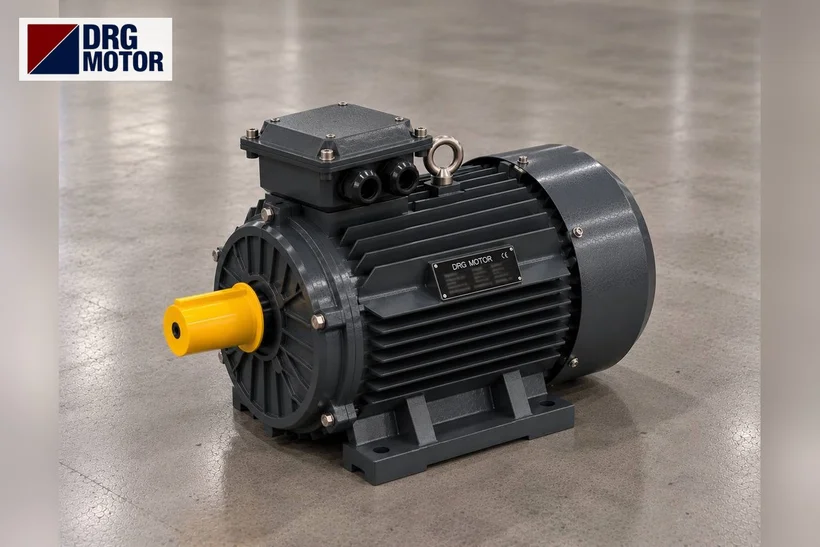
DRG Motor is a manufacturer, supplier and seller of electric motors. This assessment covers the selection of the electric motor to be connected to the existing equipment; use with your existing drive is assessed by reviewing the drive and cable information together. DRG motors are IP55, class F insulated and IC411 cooled. For general-purpose models see the General Purpose Electric Motors page. Models that can be examined as examples:
- DRG-180M-4: rated 400/690 V, 18.5 kW; rated current 33.5 A at 400 V, rated torque 120.2 Nm, frame 180M
- DRG-180L-4: rated 400/690 V, 22 kW; rated current 39.7 A at 400 V, rated torque 142.9 Nm, frame 180L
- DRG-200L-4: rated 400/690 V, 30 kW; rated current 53.8 A at 400 V, rated torque 194.2 Nm, frame 200L
Suitability of these models for inverter operation cannot be confirmed without the drive output characteristics, cable length, speed range and load type.
Frequently asked questions
Can I use my existing drive with the new motor?
The drive's power, current capacity and motor parameters must be reset for the new motor. This should be assessed by competent technical staff; drive settings should be reviewed along with the motor replacement.
My motor always runs below 50 Hz; is that a problem?
It depends on the load type. On pumps and fans it is usually not a problem; on a constant-torque load, long periods at low speed can cause heating in a self-ventilated motor.
There is a separate fan at the back of the motor; should I mention it?
Yes. On a motor with a separate fan, cooling at low speed is provided differently from a self-ventilated motor; this information changes the assessment. The machine's speed and load profile should be reviewed as well.
The nameplate says IE3; should I send that?
Yes; send the class information on the nameplate together with the other data.
Information to send to DRG MOTOR
- Motor nameplate photo (voltage, connection, current, speed and frame fields)
- A photo of the drive nameplate, its power and rated current
- Frequency/speed range used and the speed it runs at for the longest time
- Cable length between drive and motor, and whether a filter or reactor is fitted
- Load type: pump/fan or constant torque
- Whether the motor has an external fan, insulated bearings or a grounding brush
- Mounting type, shaft diameter and length
- Ambient temperature and daily operating hours
Once this information arrives, a suitable option is assessed by reviewing the motor data together with the drive operating conditions.
You can send this information via WhatsApp, by phone on +90 (542) 666 11 11, by e-mail to info@drgmotor.com or through the contact page. You can also add the models you are looking at to the quote list, and browse the full range on the buy electric motors online page.
See current prices of DRG MOTOR electric motors and order online in our storeSEE PRICES →
Technical Sources
- WEG — W22 Three-Phase Technical Catalogue, European Market (Cod 50025712) — Rev 34, 09/2026 — Section 11 Insulation (WISE insulation system) — printed page 20.
- WEG — W22 Three-Phase Technical Catalogue, European Market (Cod 50025712) — Rev 34, 09/2026 — Section 13 Variable Speed Drive Application: 13.1 insulation and voltage spikes (Table 13.1 and notes), 13.2 influence of the VSD on motor temperature — printed pages 21–22.
- WEG — W22 Three-Phase Technical Catalogue, European Market (Cod 50025712) — Rev 34, 09/2026 — Section 13: bearing currents and 13.3 Forced Ventilation — printed page 23.