English
 Le français
 Türkçe




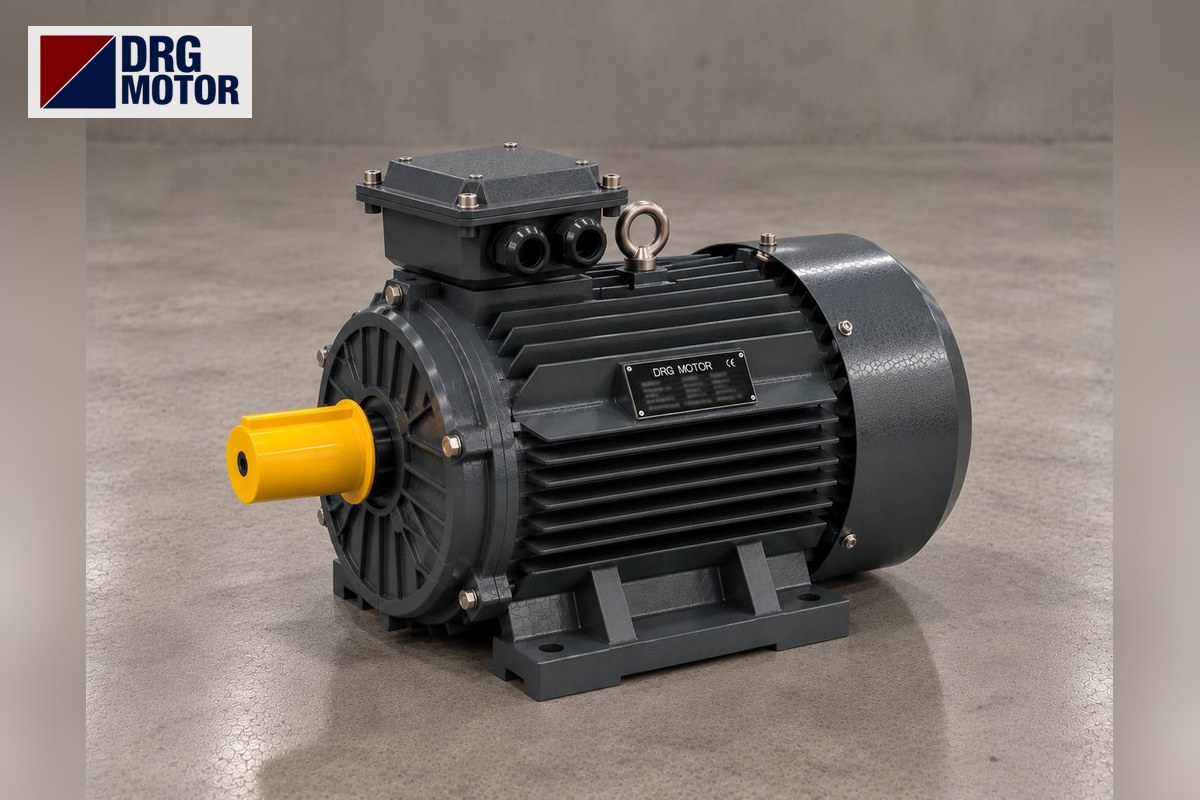

If you know your WEG W22 electric motor is a four-pole unit and you are looking for a replacement, "1500 rpm" is only the starting point. What sets the machine speed is the full-load speed on the nameplate. This article explains how to read the nameplate speed, on which machines the difference from the speed class is noticeable, and what data to send to DRG MOTOR.
Speed class and nameplate speed are not the same
The synchronous speed of a four-pole induction motor on a 50 Hz supply is 1500 rpm, which is why it is called a "1500 rpm motor". Under load the motor never quite reaches this speed; the difference is called slip. On a WEG W22 nameplate this value appears in the "full load speed (rpm)" field. In the European-market W22 catalogue, for example, the full-load speed of the 4-pole 7.5 kW IE3 motor is given as 1465 rpm.
Slip varies with power, frame and efficiency class. At low power the nameplate speed may sit well below synchronous speed, while at higher power it comes much closer to it. So two motors both being "four-pole" does not mean they turn at the same speed.
On which machines a few rpm matter
On a directly coupled centrifugal pump or fan, flow changes with speed and absorbed power changes roughly with the cube of speed. A difference of a few tens of rpm does not look large, but on a pump running close to the motor limit it can raise the current. On a belt drive, or a conveyor whose line speed must match the product, the output speed shifts in the same proportion. Where several motors run in parallel on the same line, different speeds can upset load sharing.
That is why the same kW and the same speed class do not on their own make a replacement suitable. In the W22 catalogue, for example, the 4-pole 3 kW IE3 motor is shown in the extended L100L frame; a different motor of similar power may differ in both speed and housing length.
What to read on the nameplate besides speed
- Frequency: W22 catalogues include 50 and 60 Hz data. If the nameplate shows the 60 Hz value, the speed corresponds to it; on a 50 Hz supply the motor turns slower.
- Voltage and connection: In the standard design of the European-market W22 catalogue, 220-240/380-415 V is given up to frame 100L and 380-415/660 V from 112M upwards. Whether the motor suits the existing supply must be determined by checking the nameplate voltage, frequency, manufacturer tolerances and connection arrangement together.
- Rated current and power factor: Used when the existing protection settings are reviewed.
- Frame and motor code: The number of poles is not written separately; it is derived from the speed, while the frame has its own field.
If the nameplate cannot be read, measuring the machine speed with a tachometer while running and recording the current is a useful starting point. The motor current chart gives typical current values.
Share a readable photo of the speed line on the nameplate with the DRG MOTOR team, together with information about the speed the machine runs at, so that the nameplate speed and the new motor's rated speed can be assessed side by side.
Four-pole models in the DRG MOTOR range to examine
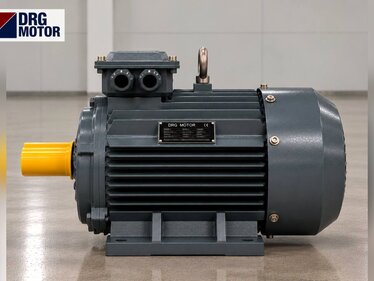
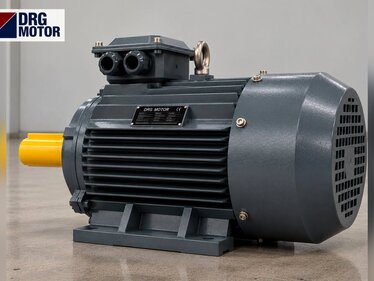
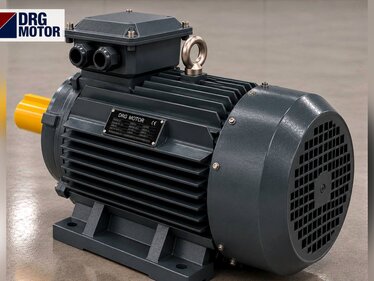
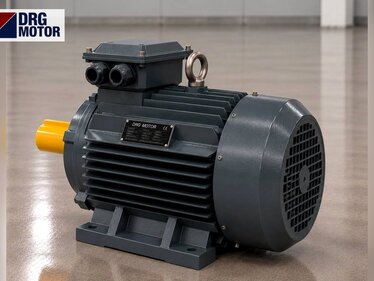
DRG Motor is a manufacturer, supplier and seller of electric motors. Four-pole motors in the DRG range are in the 1500 rpm class; the actual rated speed of each model is stated separately on its product page. The General Purpose Electric Motors page may also be useful. Examples that can be assessed:
- DRG-90L-4 – 1.5 kW motor with a rated speed of 1445 rpm; frame 90L, 3.3 A at 400 V
- DRG-132S-4 – 5.5 kW motor with a rated speed of 1460 rpm; frame 132S, 10.7 A at 400 V
- DRG-160L-4 – 15 kW motor with a rated speed of 1465 rpm; frame 160L, 27.3 A at 400 V
These values do not indicate definite suitability; nameplate speed, frame, shaft and mounting dimensions should be compared together. Matters such as adjusting motor protection to the new current are work for competent technical staff who know the site.
Frequently asked questions
My nameplate says 1465 rpm and the new motor 1460 rpm. Does this difference matter?
In most general applications a difference of this size goes unnoticed; but where line speed is critical, motors run in parallel, or a pump runs at its limit, it should be assessed on the machine side.
What if the motor is labelled for 60 Hz?
Check the 50 Hz line on the nameplate too and state your site frequency. A comparison made with 60 Hz values would be misleading.
How do I tell the number of poles if the nameplate is completely worn?
The shaft speed measured while running is the most reliable clue. Adding frame dimensions and shaft diameter allows an assessment; a definite answer still requires comparing dimensions.
Should I send the IE class on the nameplate?
Yes, if the nameplate shows something like IE2 or IE3, send it with the other data; it helps explain differences in housing length.
What to prepare before sending a request
- A glare-free photo showing the whole nameplate
- Full-load speed (rpm) and the frequency lines on the nameplate
- Power (kW), voltage and rated current
- Frame field value and mounting type (foot or flange)
- Shaft diameter and length
- Drive type: coupling, belt and pulley, or gearbox
- Machine type and speed sensitivity (pump, fan, conveyor, etc.)
- Speed and current measured while running, if known
Once this data arrives, a suitable option is assessed by considering the technical information and the operating conditions together.
You can send this information via WhatsApp, by phone on +90 (542) 666 11 11, by e-mail to info@drgmotor.com or through the contact page. You can also add the models you are looking at to the quote list, and browse the full range on the buy electric motors online page.
See current prices of DRG MOTOR electric motors and order online in our storeSEE PRICES →
Technical Sources
- WEG — W22 Three-Phase Technical Catalogue, European Market (Cod 50025712) — Rev 34, 09/2026 — 3.11 Nameplate (nameplate fields, full load speed field) — printed pages 11–12.
- WEG — W22 Three-Phase Technical Catalogue, European Market (Cod 50025712) — Rev 34, 09/2026 — Section 15 Construction Features (voltage/frequency row) — printed page 24.
- WEG — W22 Three-Phase Technical Catalogue, European Market (Cod 50025712) — Rev 34, 09/2026 — W22 IE3 50 Hz electrical data, IV-pole table — printed page 41.