English
 Le français
 Türkçe




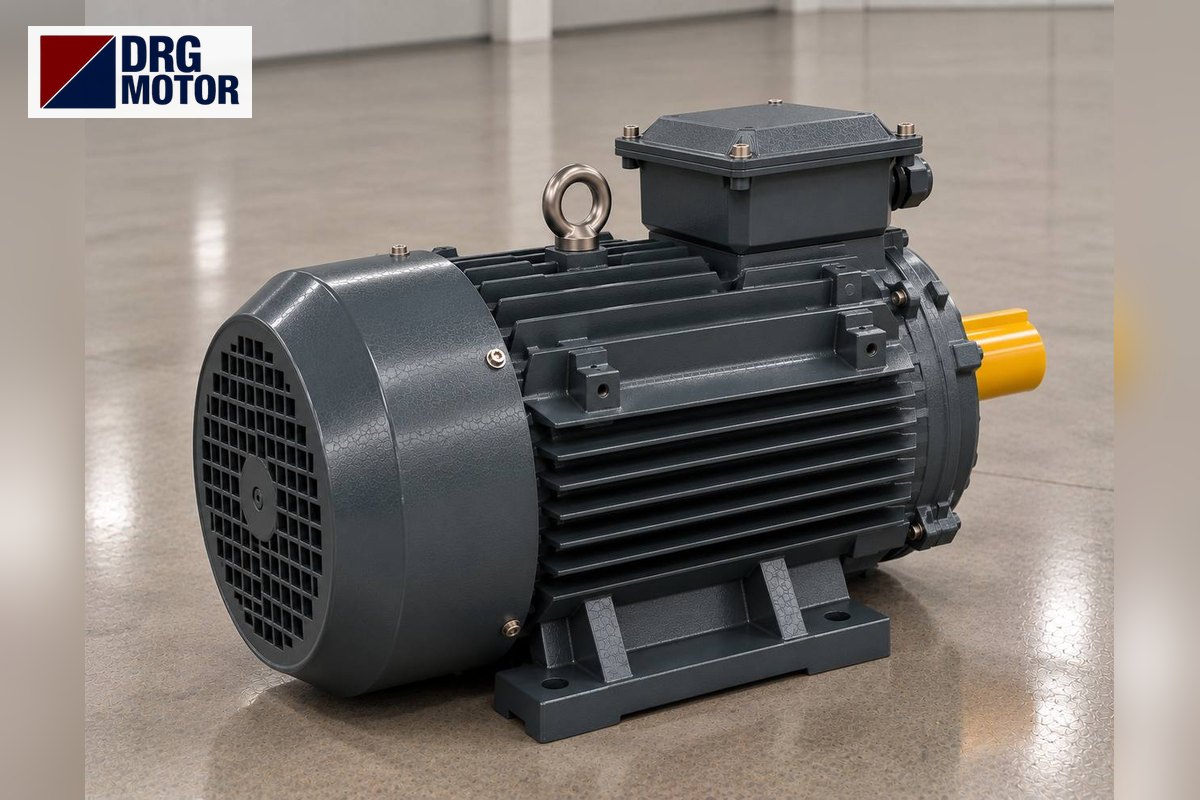

In a wafer cream mixer, the electric motor drives the beater or paddle shaft that blends solid fat, icing sugar and dry ingredients such as milk powder or cocoa, then whips air into the mass. Three things decide the motor: the mixer type (planetary, horizontal trough or vertical), the beater speed together with the gearbox or pulley ratio that delivers it, and the torque needed to start a full bowl of cold cream.
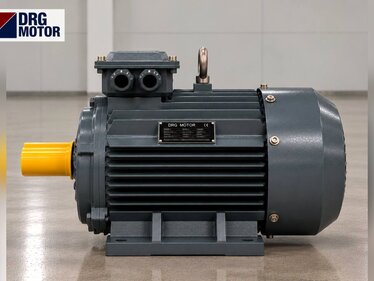
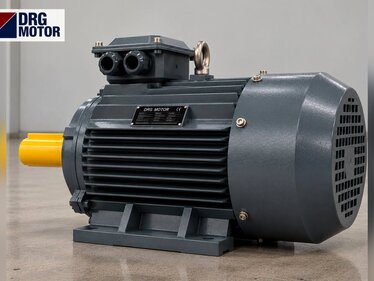
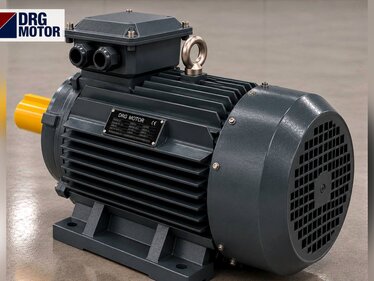
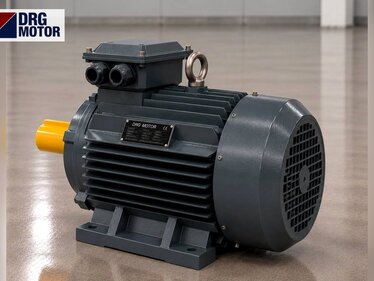
DRG Motor is a manufacturer, supplier and seller of electric motors; it does not build mixers; it supplies the three-phase asynchronous IEC motor that turns the beater and paddle on these machines. The 4-pole models from 1.5 to 5.5 kW typically found on cream mixers are listed on the buy electric motors online page.
For motor options on planetary machines used in bakery and wafer lines, see also the planetary mixer and dough mixer motors page.
What Happens in the Cream Bowl: Fat, Sugar and Air
Wafer cream is not a dough but a plastic mass: fine sugar and milk powder particles dispersed in a fat phase. At rest it holds its shape; beyond a certain stress it flows. For the mixer this means that a stationary bowl grips the beater, and on the first turn the motor has to break that grip; once the mass starts flowing the required torque drops.
The last stage is aeration. The beater folds air bubbles into the mass, the cream becomes lighter and can be spread in a thin, even layer on the wafer sheet. In this stage beater speed rises and the motor runs at the same load for a long time. The load seen by the motor changes roughly as follows:
| Stage | State of the cream | Motor load | Watch out |
|---|---|---|---|
| Melting the fat | Fluid, low consistency | Light | Jacket temperature |
| Adding sugar and powders | Consistency rises fast | High, fluctuating | Do not dump all at once |
| Aeration (whipping) | Lighter, volume grows | Medium, long periods | Speed and motor heat |
| First turn after a stop | Hardened mass | Highest at start | Starting torque |
The hardest moment is often the last row. Cream left to cool in the bowl between shifts sets hard, and at the next start the motor may be asked for several times its rated torque. The four DRG models proposed here have a starting torque of 2.0–2.3 times rated torque; if a full, cold bowl demands more than that, the problem lies in the operating sequence before it lies in motor power.
Where the Motor Sits on Planetary, Horizontal and Vertical Mixers
Planetary mixer
The bowl is fixed; the beater spins on its own axis while travelling around the bowl. A gear unit in the mixer head creates this double motion, and a single motor drives both. The motor usually sits vertically (shaft down) inside the head, connected by flange or belt. Speed steps are changed by gears or pulleys on older machines and by a motor drive (inverter) on newer ones.
Horizontal trough cream mixer
Paddles or Z-arms on a horizontal shaft turn the mass along the trough. Shaft speed is low and torque is high, so the motor is foot- or flange-mounted on the input of a gearbox. DRG does not sell gearboxes; it supplies the motor that connects to the gearbox.
Vertical bowl with a fast beater
Some lines have a high-speed beater or dispersing head in the bowl bottom or lid. Here the motor is often direct- or belt-coupled and runs fast. If a second slow arm does the heavy mixing around the bowl, it has its own motor and gearbox; the two motors are selected separately.
Click to see current electric motor prices and order nowSEE PRICES →
Speed and Gear Ratio: Turning the Paddle at the Right Speed
Motor power depends as much on cream consistency and aeration time as on bowl volume. Small bakery units may use 1–2 kW, while bowls on large wafer lines can reach 5 kW and more. What counts is the figure on the machine builder's motor nameplate or in its catalogue; do not derive kW from bowl litres.
Example (assumption): on a horizontal trough mixer the paddle shaft should turn at 40 rpm. The 4-pole DRG-132S-4 has a rated speed of 1460 rpm, so the required ratio is 1460 / 40 ≈ 36.5; with a ratio-36 gearbox the shaft turns at 40.6 rpm. The motor's rated torque of 36.0 Nm gives about 1166 Nm at the shaft, assuming a gearbox efficiency of 0.9.
Fit the 2.2 kW DRG-100L1-4 to the same gearbox and shaft speed stays almost the same (1450 / 36 ≈ 40.3 rpm), but shaft torque drops to about 470 Nm. With the gearbox unchanged, a smaller motor loses torque, not speed: as the cream thickens the paddle slows, motor current climbs and the overload trips. You can check ratio and torque with the gearbox output speed and torque calculator.
Changing the pole count also changes shaft speed on the same gearbox. Replace a 4-pole motor with a 2-pole one and the paddle runs at nearly double speed, putting excess air and friction heat into the cream; fit a 6-pole motor and aeration takes longer. Keep the pole count of the old motor when replacing it.
Variable-Speed Operation and Motor Temperature
A motor drive for speed control is common on planetary mixers. DRG does not sell drives; its motors can be used with standard drives. The point to watch is cooling: the motor is IC411, meaning the fan on its own shaft cools the frame. When frequency drops from 50 Hz to 25 Hz, a 4-pole motor slows to about 730 rpm and the fan airflow falls with it.
This is usually not a problem if the cream mixer does not take heavy load at low speed: the slow step is mostly a short phase for blending powders. On a machine that runs long at low speed with high torque, the motor heats up; separate fan cooling or a larger frame should then be evaluated with the machine builder. Running above 50 Hz for faster aeration needs the builder's approval because of mechanical limits and the drop in torque.
The Motor in a Cream Environment: Fat, Sugar Dust, Washing
When dry powders are tipped into the bowl, fine sugar and milk powder rise into the air and stick to the fan cover and cooling fins together with fat vapour. This sticky layer narrows the air path between the fins and heats the motor. IP55 protection limits dust entering the motor; the outer surface still needs cleaning with a dry cloth and low-pressure air.
Food machinery is washed often. DRG motors have painted aluminium or cast iron frames; stainless, hygienic (washdown) frames are not offered. The motor should sit outside the product zone, in the closed head above the bowl or inside the machine body, and pressure water or foaming detergent should not be aimed at it directly. Ambient temperature must stay within −15…+40 °C and altitude up to 1000 m; a motor touching the hot surface of a jacketed bowl easily exceeds that limit.
Checklist Before Replacement and Fault Symptoms
On the vertical motors in planetary mixer heads, the flange spigot diameter sets the axis of the gear unit. The B5 large flange dimensions in the DRG catalogue are 165 / 130 / 200 mm (hole circle M, spigot N and outer diameter P respectively) for frame 90L, 215 / 180 / 250 mm for frames 100L and 112M, and 265 / 230 / 300 mm for frame 132S. B14 small flange dimensions are confirmed when ordering. Before ordering, check:
- kW, rpm and voltage on the old nameplate (230/400 V up to 3 kW, 400/690 V from 4 kW)
- Mixer type: planetary, horizontal trough or vertical beater
- Mounting and position: B3, B5, B35 or B14; horizontal or vertical shaft down
- Shaft diameter and length, key width; pulley or coupling hub
- Gearbox input flange and ratio if present; pulley diameters if belt-driven
- Whether the motor runs on a drive or direct on line
- Terminal box orientation and room for the cable entry inside the head
Motor hums but will not start a cold bowl: starting torque is insufficient or the motor has lost a phase. Check supply voltage and connection first; a motor marked 230/400 V runs in star on a 400 V line, one marked 400/690 V runs in delta on the same line.
Cream releases fat, bowl gets warm: the beater may be running faster than before. If the complaint started after a motor change, compare pole count and pulley diameters.
Aeration takes longer, cream stays heavy: motor power or speed is low, the belt is slipping, or the speed setting on the drive has changed.
DRG Motors Suited to Wafer Cream Mixers
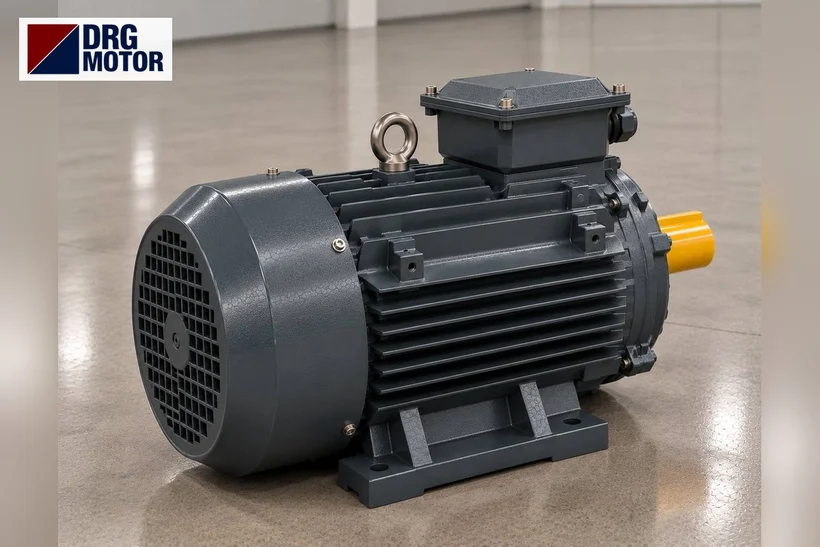
All four are 4-pole with aluminium frames; 1.5 kW suits small planetary mixers, 5.5 kW the gearbox input of large horizontal troughs. Frames 100L and 112M share the same B5 flange and 28 × 60 mm shaft.
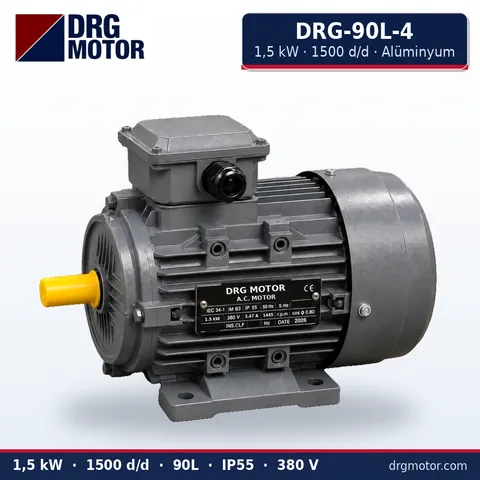
1.5 kW Three-Phase Motor 1500 rpm – DRG-90L-4 Aluminium
- 1.5 kW · 1500 rpm (4 poles)
- Aluminium frame · IEC 90L
- Mounting: B3 · B5 · B14 · B35
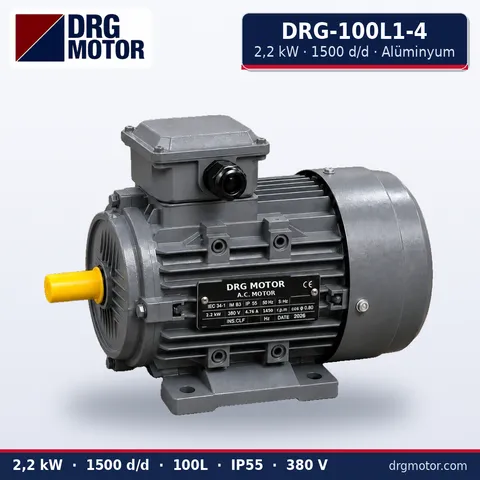
2.2 kW Three-Phase Motor 1500 rpm – DRG-100L1-4 Aluminium
- 2.2 kW · 1500 rpm (4 poles)
- Aluminium frame · IEC 100L
- Mounting: B3 · B5 · B14 · B35

4 kW Three-Phase Motor 1500 rpm – DRG-112M-4 Aluminium
- 4 kW · 1500 rpm (4 poles)
- Aluminium frame · IEC 112M
- Mounting: B3 · B5 · B14 · B35
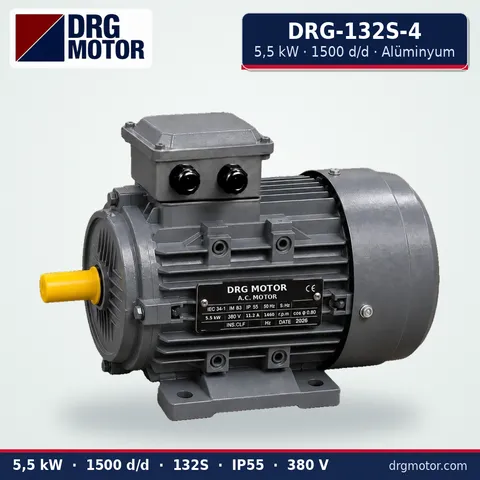
5.5 kW Three-Phase Motor 1500 rpm – DRG-132S-4 Aluminium
- 5.5 kW · 1500 rpm (4 poles)
- Aluminium frame · IEC 132S
- Mounting: B3 · B5 · B14 · B35
Click to see current prices and order these motors nowSEE PRICES →
Cream Mixer Motor: Frequently Asked Questions
What kW should a planetary mixer motor be?
The machine builder sets it according to bowl size and cream consistency; small benchtop units are around 1 kW, large production bowls several kW. When replacing, keep the power and speed on the old nameplate; if it is unreadable, current measured under load is a good guide.
Can a motor drive (inverter) be used on a cream mixer?
Yes, DRG motors run on standard drives. If the mixer will run for long periods at low frequency under heavy load, the shaft fan cools less; motor temperature should then be monitored and separate fan cooling evaluated with the builder if needed.
Can the mixer motor be mounted vertically, shaft down?
Yes, that is how it sits on most planetary mixers. State vertical mounting and flange type (B5 or B14) when ordering, and make sure fat and dust falling on the motor do not clog the fan cover.
Why does the cream mixer motor trip on the first start in the morning?
Cream left overnight cools and hardens, and at start it demands far more than rated torque. Warming the bowl, starting the beater on the slowest step or emptying the mass is a better fix than fitting a larger motor.
To get a quote for your mixer, message a photo of the old motor's nameplate, its power, speed, whether it is foot- or flange-mounted, the shaft size and whether the mixer is planetary or horizontal to our WhatsApp line, or collect suitable models on the quote list page. You can reach us on +90 (542) 666 11 11, at info@drgmotor.com or through the contact form; current model prices are shown in our online shop.