English
 Le français
 Türkçe




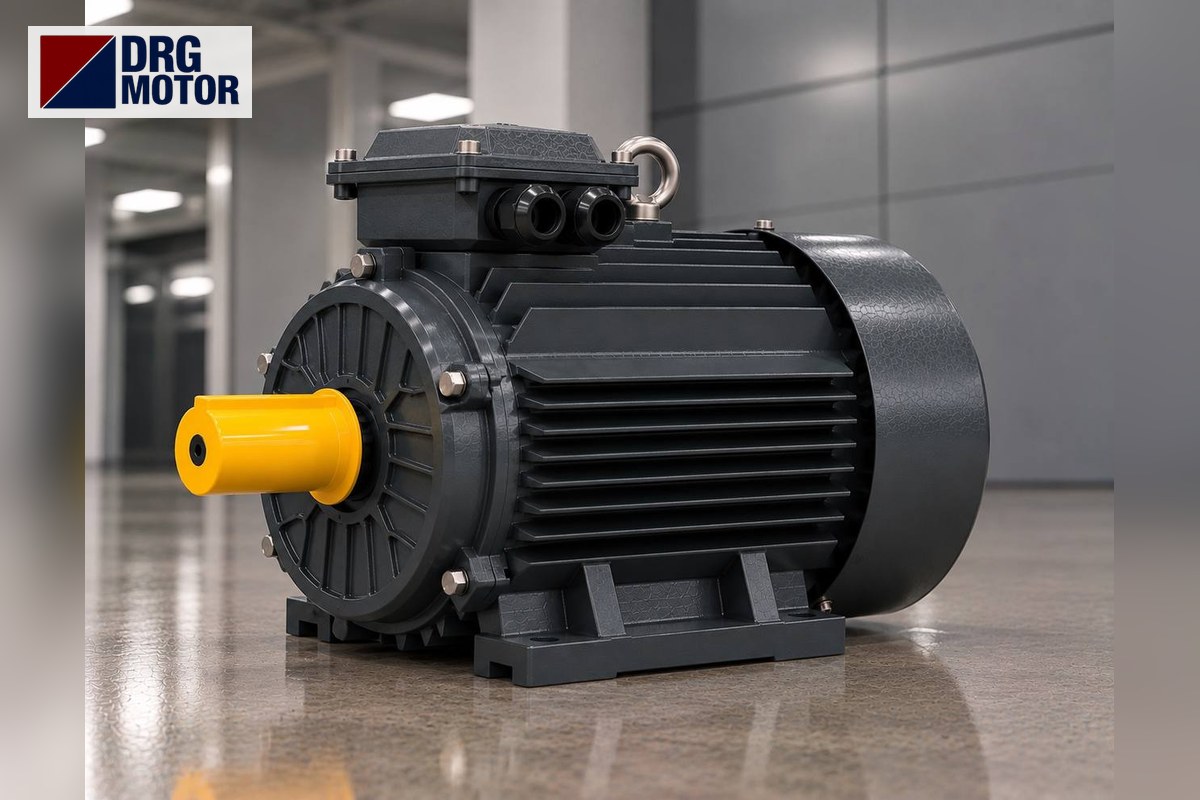

When replacing the VOLT electric motor on a belt-driven compressor, the pulley arrangement and the compressor's load at start-up shape the choice as much as motor power does. This article explains how motor speed and pulley diameters affect compressor speed, why starting conditions need separate review, and which information to send to DRG MOTOR.
Motor and pulley together set compressor speed
With a belt drive, compressor speed is roughly motor speed × motor pulley diameter ÷ compressor pulley diameter by the general mechanical relationship (ignoring belt slip). This is not manufacturer data but the general rule of belt drives; the speed range permitted by the compressor maker must be checked in the compressor's own documents.
Two practical points follow. First, even with the same speed class, the rated speeds on the old and new nameplates may differ by a few tens of rpm, and this difference is carried into compressor speed through the pulley ratio. Second, choosing a motor of a different speed class (for example 4 poles instead of 2) requires the pulley diameters to be recalculated. The same kW value alone does not show that the compressor will run at the same speed and load.
Motor pulley and shaft size
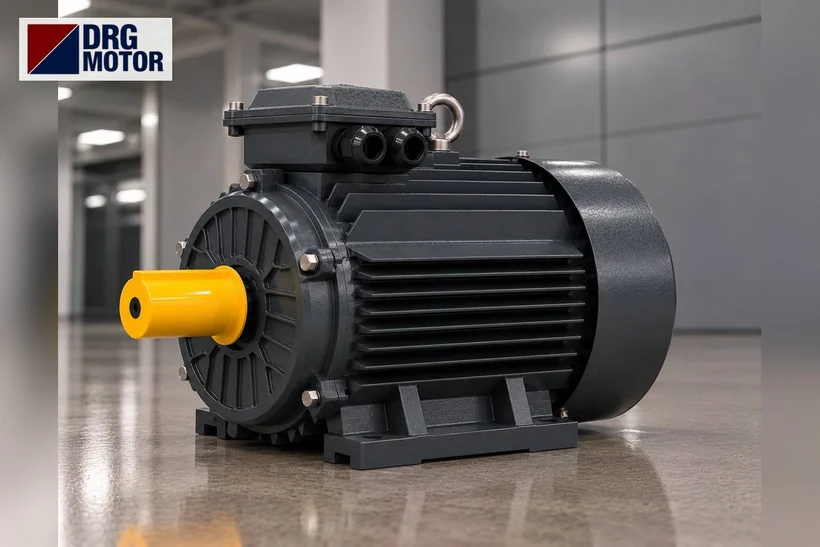
If you want to reuse the existing pulley on the new motor, the pulley bore must match the new motor's shaft diameter and key. In the VOLT V3E catalogue, for example, the shaft of the 4 kW 2-pole V3EA 112 M2A is 28×60 mm, of the 7.5 kW 2-pole V3EA 132 S2B 38×80 mm and of the 11 kW 2-pole V3EA 160 M2A 42×110 mm. Still, verify the shaft of your own VOLT electric motor with a caliper; older production may differ.
The VOLT manual stresses that pulleys and couplings must suit the motor's balancing (half-key basis) and that belt and pulley alignment must be correct. The axial position of the pulley on the shaft and belt tension also affect bearing load; the motor slide rail and belt adjustment must be rechecked with the new motor.
Why are starting conditions asked separately?
Does the compressor start against back pressure or unloaded? The answer directly affects the motor's starting torque and starting current. A compressor that starts with a faulty unloader valve or high tank pressure can strain the motor. If your motor has failed, investigating the cause before replacement (loaded starts, frequent starts, belt tension, poor ventilation, etc.) prevents the new motor from facing the same conditions.
For compressors, the starting method (direct-on-line, star-delta, soft starter) and the number of starts per hour are also part of the evaluation. If the new motor has a different voltage pair, changes on the panel side must be assessed by competent technical personnel. DRG product data gives the starting torque ratio (Ts/Tn) and starting current ratio (Is/In) separately for each model; for DRG-112M-2, for example, Ts/Tn 2.2 and Is/In 8.3.
When you send the compressor nameplate, pulley diameters and starting method together with the motor nameplate to DRG MOTOR, speed and starting data can be reviewed together to identify models that can be evaluated.
DRG options that can be evaluated
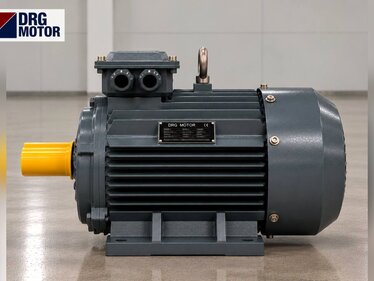
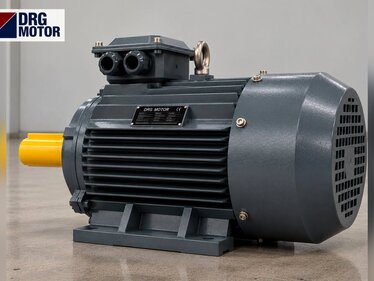
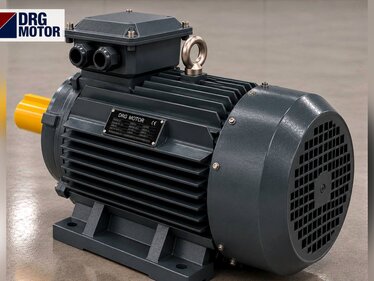
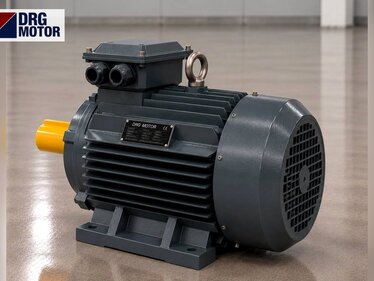
DRG Motor is a manufacturer, supplier and seller of electric motors. In the electric motor online store, 2-pole models in powers often seen on compressor drives include the following; suitability cannot be stated before your pulley and starting data is reviewed:
- DRG-112M-2: 4 kW, rated 2905 rpm, shaft 28×60 mm, 400/690 V
- DRG-132S2-2: 7.5 kW, rated 2930 rpm, shaft 38×80 mm, 400/690 V
- DRG-160M1-2: 11 kW, rated 2945 rpm, shaft 42×110 mm, 400/690 V
General selection information for piston and screw compressors is on the Compressor Electric Motors page.
Frequently Asked Questions
The new motor's rated speed is slightly higher. Do I need to change the pulley?
If the difference is small, compressor speed changes proportionally little; whether that is acceptable depends on the compressor's permitted speed range. A definite answer cannot be given without the compressor documents.
Will a more powerful motor solve a starting problem?
Not always. The cause may be the unloading arrangement, belt tension or the supply; increasing power without removing the cause can carry the problem over and also changes protection settings.
Can I lower the speed by changing the pulley diameter?
The pulley ratio changes compressor speed, but compressor output and motor load change too. Such a modification should be based on the compressor maker's values and calculations by competent personnel.
Information to send to DRG MOTOR
- Photo of the motor nameplate (type code, kW, rated speed, voltage, current)
- Photo of the compressor nameplate and compressor type (piston/screw)
- Motor pulley and compressor pulley diameters, belt type and number
- Shaft diameter×length and key size
- Whether starts are loaded or unloaded, and the starting method
- Number of starts per hour and daily operating hours
- Compressor room temperature and ventilation
Share the information via WhatsApp or the quote list, or at +90 (542) 666 11 11 and info@drgmotor.com; DRG MOTOR will review your pulley arrangement and starting conditions together with the motor data and send you options that can be evaluated.
See current prices of DRG MOTOR electric motors and order online in our storeSEE PRICES →
Technical Sources
- VOLT Elektrik Motorları — Product Technical Catalogue, Three-Phase Motors (Ürün Teknik Kataloğu, 3 Fazlı Motorlar) — REV 23.08 — IE3 aluminium frame B3 mechanical dimensions (shaft D×E, foot hole spacing) — printed page 17.
- VOLT Elektrik Motor Sanayi ve Ticaret A.Ş. — Volt Electric Motors Introduction and Operating Manual (Tanıtma ve Kullanma Kılavuzu) — 2015/001 edition — Sections 7.3–7.4, Installation; Balancing and Axial Alignment (half key, belt and pulley, coupling clearance) — printed pages 7–8.