English
 Le français
 Türkçe




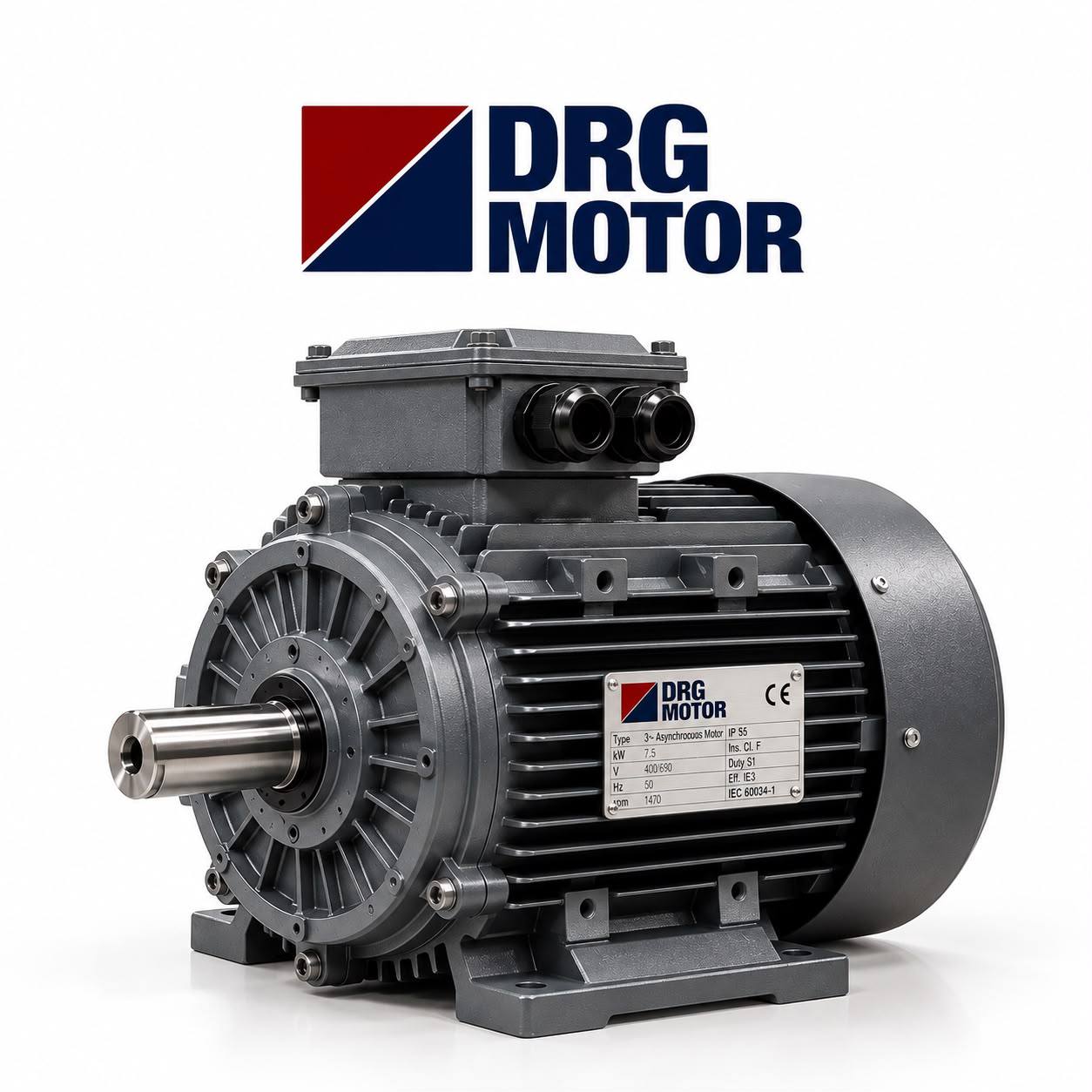

The owner of a marble workshop calls and asks: "I need a 7.5 kW three-phase motor, what does it cost?" The question looks easy to answer, but the store lists more than one motor with the same 7.5 kW rating: at different speeds, with different housing materials, at different prices. Which one is right depends on what the machine does. This guide walks through the six decisions you make in order when buying a three-phase electric motor and shows the effect of each decision on the invoice using real list prices from the DRG Motor online store.
We have explained the general components of the price in our article on three-phase motor prices and getting a quote; the aim here is to see, with concrete figures, where your money goes at each step of the purchase.
Step 1: Describe the Motor's Job in One Sentence
The first step in buying is not opening a catalogue but describing the machine. The answers to "Which machine, what does it drive, how does it start, where does it stand?" determine the next five decisions. Example description: "Drives a saw spindle by belt on a marble cutting bench, starts unloaded, in a closed and dusty workshop."
Without this sentence, any price you are given is a guess. Use the same sentence when asking for a quotation; you will have answered the seller's first questions in advance.
- Machine type and drive method (belt, coupling, gearbox, direct)
- Starting condition: unloaded or loaded
- Environment: indoor, outdoor, dusty, humid, hot
- A photo of the old motor's nameplate, if any
- Supply: 380 V three-phase and the starting method in the panel
Step 2: The Power Decision — the Main Driver of Price
Power is the first factor that sets a motor's price. Choosing one step too large goes straight into the budget: buying 11 kW "to be safe" when 7.5 kW is enough is unnecessary, and the larger motor may not fit the base and pulley.
Find the power by calculation or measurement, not by guessing. If there is an existing machine, measuring the current with a clamp meter while it runs is the most reliable method. For a new machine, use our electric motor calculation tools to work out power from torque and speed. For details on power and connection choices on a 380 V grid, see our 380V three-phase motor buying guide.
One point to watch across the power steps: at some steps the frame number changes as well. In the 1500 rpm cast iron series, the 4 kW motor uses a 112M frame and the 5.5 kW motor a 132S frame, so the motor's dimensions change at this step. If your calculation comes out just above 4 kW, measure once more whether the load really is that high.
Step 3: The Speed Decision — Different Prices at the Same Power
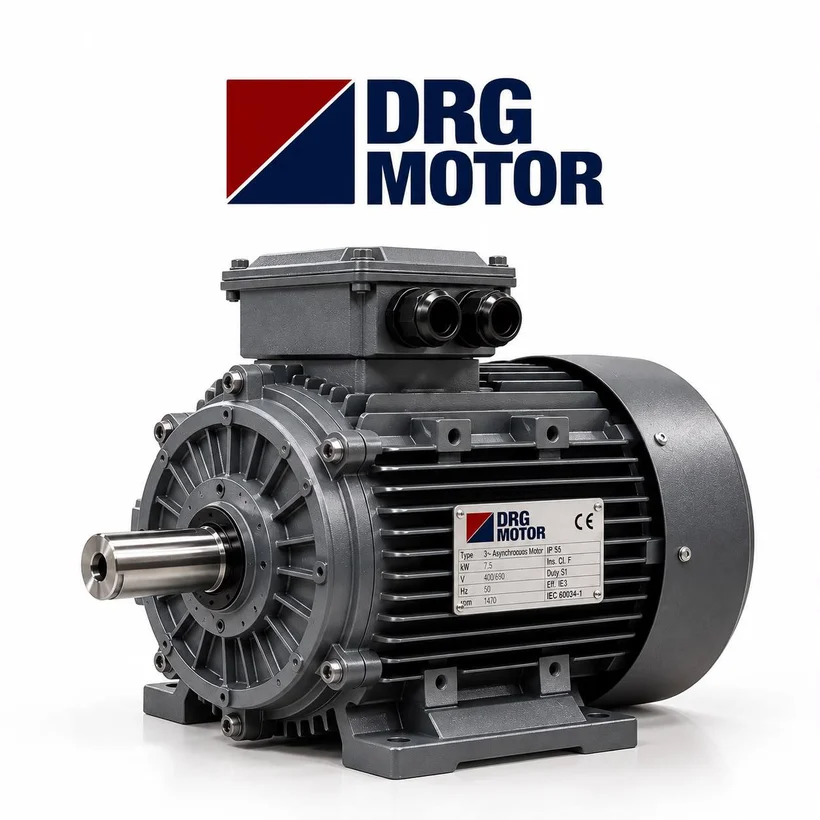
Speed is chosen according to the shaft speed the machine needs; price is a consequence of that, not the reason. When comparing models of different speeds at the same power, also check the frame size and shaft diameter; for current prices, see our Buy Electric Motors Online page.
Torque explains how speed affects the motor: at the same power, halving the speed doubles the torque, and carrying that torque requires a larger frame. This is why a low-speed motor may come in a larger frame than a high-speed motor of the same power.
If you have the option of changing speed through the pulley ratio, put the frame size, shaft diameter and current store price of the two speeds side by side before deciding.
Step 4: The Mounting Decision — Base or Flange
The mounting type determines how the motor is attached to the machine: a foot-mounted (B3) motor is bolted to a base; a flanged (B5, B14) or foot-and-flange (B35) motor is attached to a gearbox or pump housing. The product pages in the store give the B3 mounting dimensions, and the flanged option is stated in the order note. Ask us for the price of the flanged version before ordering; do not build the budget on an estimated difference.
From a purchasing point of view, the real risk is mismatch. A motor with the wrong mounting type means either a return or extra labour. Confirm the flange dimensions of the existing machine (outside diameter, bolt circle, spigot diameter) and the shaft diameter with a caliper before ordering.
Step 5: Housing Material — Aluminium versus Cast Iron
In the DRG Motor store, the same model is listed in both aluminium and cast iron housings between 0.55 and 11 kW; above 11 kW the list is cast iron. For example, you can compare both housing options of the 7.5 kW 1500 rpm motor side by side on the product pages.
The choice should be driven by the place of use, not the price:
- Aluminium: Light, easy to carry and mount; sufficient for fans, small pumps, light conveyors and workshop machines.
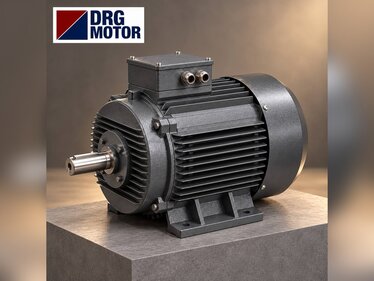
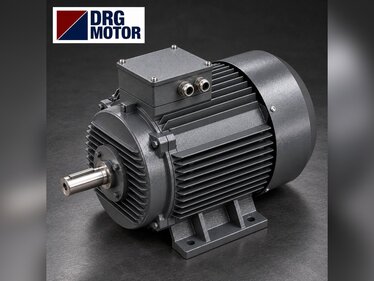
- Cast iron: Resistant to impact and vibration; preferred for crushers, mills, heavy conveyors, and dusty, shaking environments.
In the marble workshop example, the bench vibrates and the air is dusty; the cast iron housing is the sensible choice.
Summary Price Table of Selected Models
The table below shows ten models selected from different combinations of power, speed and housing. For the current list of all models, see our buy electric motors online page.
| Model | Power (kW) | Speed (rpm) | Housing | Price |
|---|---|---|---|---|
| DRG-801-4 | 0.55 | 1500 | Aluminium 80 | See Prices |
| DRG-90L-2 | 2.2 | 3000 | Aluminium 90L | See Prices |
| DRG-112M-4 | 4 | 1500 | Cast iron 112M | See Prices |
| DRG-132M-4 | 7.5 | 1500 | Aluminium 132M | See Prices |
| DRG-132M-4 | 7.5 | 1500 | Cast iron 132M | See Prices |
| DRG-160L-6 | 11 | 1000 | Cast iron 160L | See Prices |
| DRG-180L-4 | 22 | 1500 | Cast iron 180L | See Prices |
| DRG-225M-2 | 45 | 3000 | Cast iron 225M | See Prices |
| DRG-280S-4 | 75 | 1500 | Cast iron 280S | See Prices |
| DRG-315L1-4 | 160 | 1500 | Cast iron 315L | See Prices |
Click to see current prices and order these motors nowSEE PRICES →
For current prices and ordering, click a model code to open its product page or browse all models on our Buy Electric Motors Online page.
When reading the table, look at the rows not only by price but also by comparison within the same power. For example, for 7.5 kW 1500 rpm the aluminium and cast iron rows sit side by side; the difference between them is the cost of the housing material. The 11 kW 1000 rpm and 45 kW 3000 rpm rows show how speed and frame size carry the price. Once you find the row closest to your need, also check the other speed and housing options at the same power in the store.
Step 6: Quotation and Order — the Details that Set the Final Price
Once the model is decided, three details determine the amount you pay:
- Payment method: Settle the payment method before ordering; current prices and payment options are shown on our Buy Electric Motors Online page.
- Shipping: Not included in the price and paid by the buyer; goods are sent through contracted freight and cargo companies. Motor weight grows with power, so add shipping to the budget separately for large motors.
- Order note: Special requests such as mounting type, terminal box position and connection must be written in the order note; this way the motor is prepared as you need it.
Example Workflow: Selecting for the Marble Workshop from Start to Finish
Let us return to the phone call from the introduction and apply the six steps to this workshop. The owner gave the description: a saw spindle driven by belt, the bench starts unloaded, the environment is closed and dusty.
Power
The old motor's nameplate says 7.5 kW, 1450 rpm. The load measured during cutting corresponds to about 45 Nm of torque at 1450 rpm on the motor side. Power = 45 × 1450 / 9550 ≈ 6.83 kW. This is about 91 percent of a 7.5 kW motor, so the 7.5 kW step is right; there is no need to go up to 11 kW.
Speed
The existing pulleys were made for a 1500 rpm motor. Choosing a 3000 rpm motor requires halving the pulley ratio and buying new pulleys and belts. Staying with a 1500 rpm motor on the existing machine means less work and less risk.
Mounting and housing
The motor is bolted to the base by its feet, so it is B3. Frame 132M, shaft 38 mm; the new motor's dimensions were confirmed from the B3 table on the product page. Because the bench vibrates, a cast iron housing was chosen: DRG-132M-4 cast iron.
Payment and delivery
Shipping is added to the motor price and paid by the buyer. The order note reads "B3, terminal box on top, 400/690 V". In this way the question "what does it cost?" asked on the phone turns into a clear choice of a single model that fits the machine.
Common Budget Mistakes When Buying
- "Rounding up" the power: A motor larger than the real load may also change the overload relay, contactor and cable selection in the panel.
- Choosing speed by price: Buying a motor with a different speed from what the machine needs brings pulley changes and extra labour; the saving disappears.
- Forgetting shipping: Especially with large motors, shipping is a separate budget item.
- Overlooking VAT in quotations: When comparing quotations, check that VAT is stated the same way in each one.
- Not confirming mounting dimensions: A motor whose flange and shaft do not match means a return or extra labour.
Frequently Asked Questions
How are prices shown in the store?
On each model's product page in the store, the price is shown both without and with VAT; you can see the current price with the See Price button.
Why does a 1000 rpm motor need a larger frame at the same kW?
At the same power, the torque the motor must deliver increases as speed drops; that means a larger frame and more material. For example, at 11 kW the 1000 rpm model uses a 160L frame while the 3000 rpm model uses a 160M frame.
Is an aluminium housing worse than cast iron?
No, it is chosen according to the application. Aluminium is sufficient for light and medium loads; cast iron is preferred for shock loads, vibration and heavy industrial environments.
How is shipping calculated when ordering online?
Shipping is not included in the product price and is paid by the buyer. Goods are sent through contracted freight and cargo companies; the cost depends on the motor's weight and the delivery address.
Describe your machine in one sentence and we will settle the suitable model and current price together: +90 (542) 666 11 11, info@drgmotor.com or our contact page.