 English
 Le français
 Türkçe

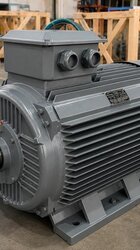
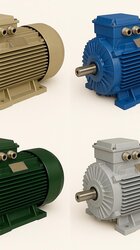
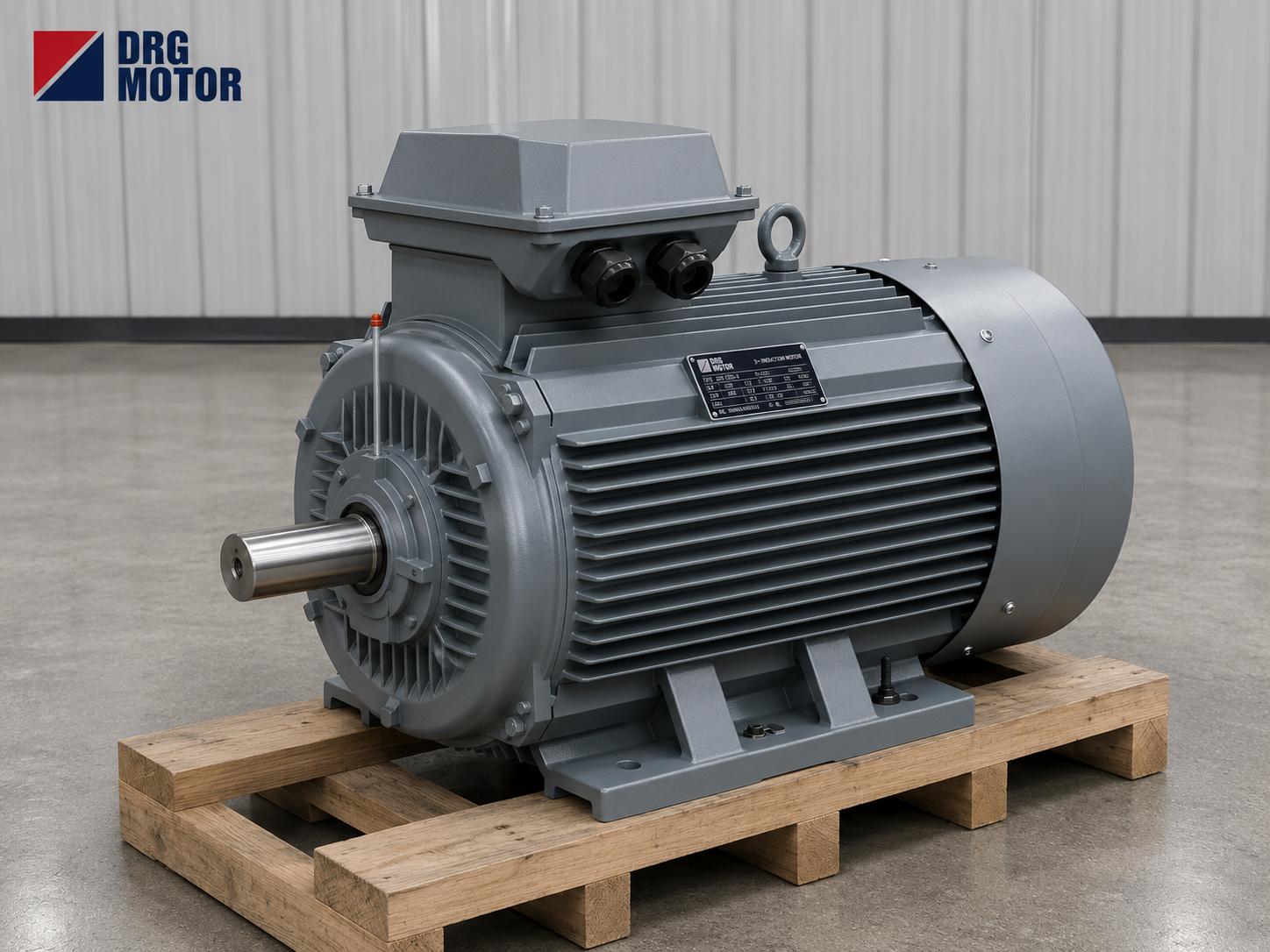

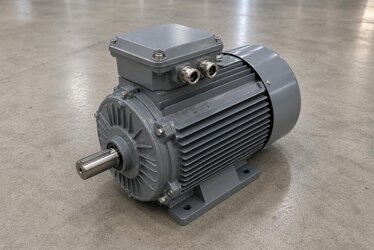
The single most confusing thing buyers face when sourcing a three-phase motor is seeing two products with the same rated power carry very different price tags. That gap is never random; it comes from concrete line items ranging from efficiency class and frame material to bearing quality and delivery time. As a supplier preparing hundreds of quotes a day, we see it constantly: comparing prices without understanding what drives them usually leads to the wrong decision. This guide explains how the price of a three-phase motor is built, which variables push the cost up or down, and how to request a quote that reflects your real needs, with examples from the field.
The Main Cost Components
A three-phase motor's listed price is never a single number; behind it sit several interacting cost drivers. The most decisive is the motor's power and speed. At the same kW rating, a low-speed motor (for example 750 rpm) contains more copper, a larger frame and a heavier rotor than its high-speed counterpart, so it is visibly more expensive. The second driver is efficiency class: the purchase-price difference between IE2, IE3 and IE4 units can reach around thirty percent, but that gap is recovered through lower energy consumption.
- Power (kW) and pole count (speed): the backbone of the cost
- Efficiency class: the copper and lamination quality difference across IE2 / IE3 / IE4
- Frame material: cast iron versus aluminium
- Protection rating (IP55, IP56, IP65) and cooling solution
- Mounting type: foot-mounted (B3), flanged (B5/B14) or combined
How Efficiency Class Shapes the Price
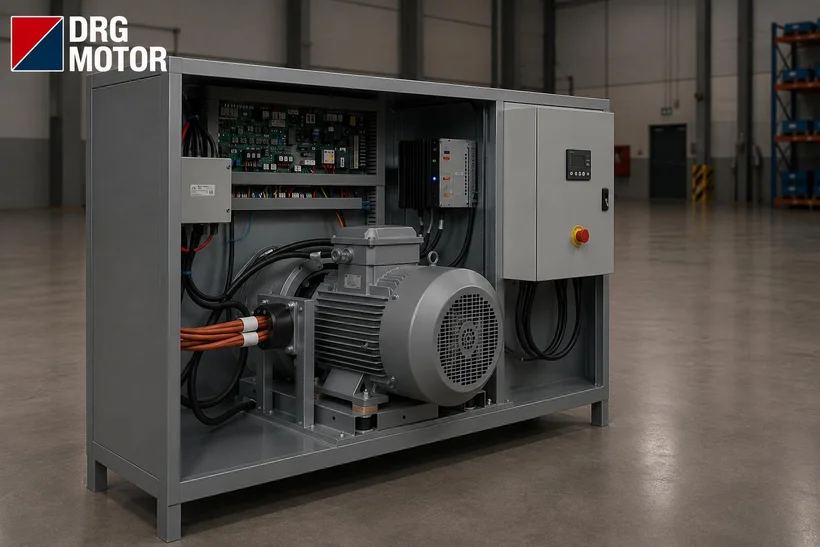
Efficiency is the most misunderstood line item in three-phase motor pricing. You might think choosing IE2 over IE3 saves money up front, but on a motor that runs continuously the electricity bill closes that gap within a few months. Higher-efficiency motors use better silicon laminations, more copper windings and superior bearings, which raises manufacturing cost and therefore the purchase price. The right call depends on daily running hours: on a line operating more than eight hours a day, IE3 or IE4 almost always wins on total cost. When you ask us for a quote, sharing your duty cycle lets us recommend the efficiency class that genuinely pays off.
Brand, Origin and Stock Availability
For motors with identical technical specifications, brand and country of origin clearly separate the price brackets. Between European premium brands and economical Far-East series there are differences in both price and lead time. As a supplier, our job is to strike the right balance based on how critical your project is; for an application that needs constant spares and service, a series with high stock availability can be more economical than a cheaper alternative with a long lead time. Models that ship from stock often reduce hidden costs because they keep your project schedule intact.
Accessories and Special Requests
The price of a standard motor is frequently topped up with extra requests that quickly change the total. Options such as a brake motor, an encoder, a special voltage/frequency winding, thermal protection (PTC/PT100), forced cooling fans or an ATEX-certified ex-proof frame create significant differences over the standard product. For motors driven by a variable frequency drive, upgrading the insulation class is also a cost item. Clarifying these details at the quotation stage prevents later surprises and delays.
Quantity, Project Scale and Tiered Pricing
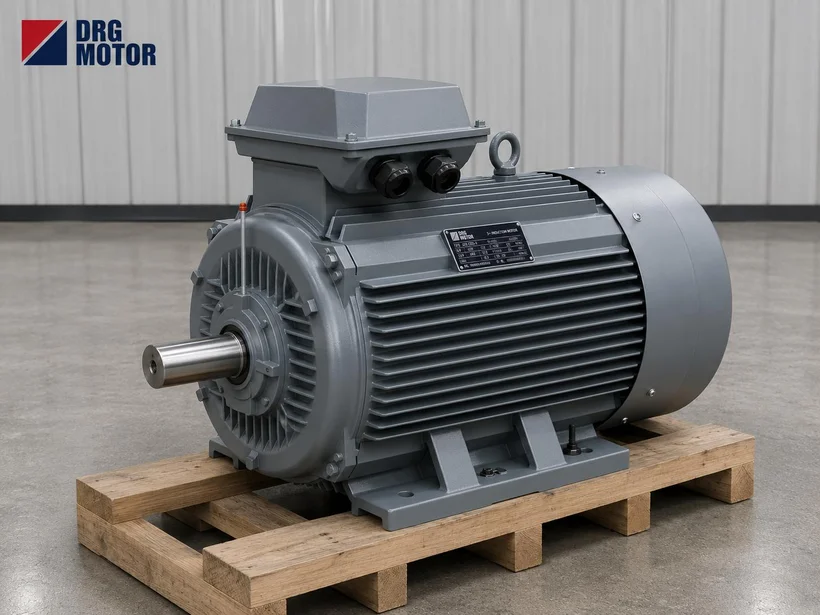
The unit price of a single motor is not the same as the unit price of a fifty-piece batch. In wholesale supply, as quantity rises the logistics, packaging and procurement costs fall per unit, so tiered discounts come into play. When you are building a production line from scratch and plan dozens of motors of different ratings as one package, you gain a clear advantage over buying piece by piece. Project-based purchases also let you schedule delivery in batches, which eases your cash flow; on our side, we can reserve stock and protect your supply against price swings. That is why sharing not only your immediate need but your twelve-month plan when requesting a quote often unlocks better terms.
Currency, Supply Chain and Timing
Electric motor prices are sensitive to raw-material costs, especially copper and steel prices, as well as exchange rates. For imported series motors, currency moves can affect a quote on even a weekly basis, which is why the validity period of any quote matters. Models available from stock are largely insulated from this risk, because the product is already in the country. For long-lead special orders, you should fix not just the price but also the delivery schedule in the contract. Correct timing, especially in periods of high currency volatility, can influence the total cost even more than the motor's technical specifications.
Warranty, Service and Spare Parts
A motor's true cost must be judged together with its warranty and after-sales support. A very cheap product with no service network can become far more expensive when a fault leaves a line down for days. When choosing a supplier, warranty length, spare-part availability and the approach to technical support are at least as decisive as price. In continuously running critical applications, keeping a spare motor on the shelf or securing a rapid-supply guarantee is the most economical way to avoid planned downtime. When we prepare our quote, we share these items transparently and assess the total cost of ownership together with you.
Do Not Forget Starting and Installation Costs
The motor's own price is only one part of the total investment. On higher-power motors, choosing yildiz ucgen yol verme or a soft starter instead of direct-on-line starting affects both the grid load and the panel cost. In the same way, cable cross-section and protective devices are sized according to the motor tam yuk akimi value; if that calculation is wrong, you either build an unnecessarily expensive panel or end up with an unsafe installation. When you evaluate a quote, look at the whole commissioning package, not just the motor price.
The Hidden Costs of a Cheap Quote
The quote with the lowest figure is often the most expensive choice in the end. A low-efficiency motor that runs continuously gives back the upfront price advantage within a few months through the electricity bill; cheap bearings and low-grade windings return as early failures, frequent maintenance and unplanned downtime. Over a motor's lifetime, the energy it consumes is, in most applications, many times its purchase price, so ranking quotes by sticker price alone is misleading. When you evaluate quotes, factoring in the per-unit energy cost, the expected failure frequency and service accessibility reveals the real gain. When we present a quote, we state these items clearly and highlight the right option rather than simply the cheapest.
Application-Specific Selection Over One-Size-Fits-All
A motor of the same power behaves differently on a pump, a fan, a conveyor and a compressor, so the right price also depends on the application. Choosing the same motor for a variable-torque fan and a constant-torque conveyor produces either an unnecessarily large investment or an inadequate solution. If speed control via a variable frequency drive is planned, selecting a motor suited to that regime protects both performance and service life. When you describe your application, we identify the model that fully meets the need without overpaying, which keeps the quote sound both technically and commercially.
A Proper Quote Instead of a Headline Price
Trusting a single list price you saw online can be misleading, because that figure usually belongs to a specific configuration, a specific quantity and a specific delivery condition. As the quantity grows the unit price drops; project-based purchases trigger tiered pricing. The only reliable way to see your real cost is to define the parameters of your need and request a quote. Within our broad range, in the three-phase asynchronous motors category we can identify the right solution together, with different efficiency classes and frame options to match your application.
What to Tell Us When You Request a Quote
The fastest route to an accurate quote is sharing the right information in one go. When you provide the items below, we can cut the turnaround to a matter of hours and offer you the best price-performance balance.
- Power (kW or HP) and speed/pole count
- Voltage and frequency (e.g. 380V/50Hz)
- Mounting type (B3, B5, B14) and shaft dimensions
- Preferred efficiency class or daily operating hours
- Protection rating, ambient conditions and special requests (brake, encoder, ex-proof)
- Required quantity and desired delivery date
Buying the Right Motor at the Right Price
The price of a three-phase motor is not a closed box; it is an equation you can turn to your advantage once you understand it. When you match the efficiency class to your duty cycle, the frame and protection rating to your environment, and the starting solution to your power level, you optimise both the initial outlay and the long-term running cost. Share your project parameters with us, and we will quickly send back a quote built around available stock, the right efficiency class and a clear delivery time. At DRG Motor, our goal is not the cheapest figure but the right total cost for your specific application.