English
 Le français
 Türkçe




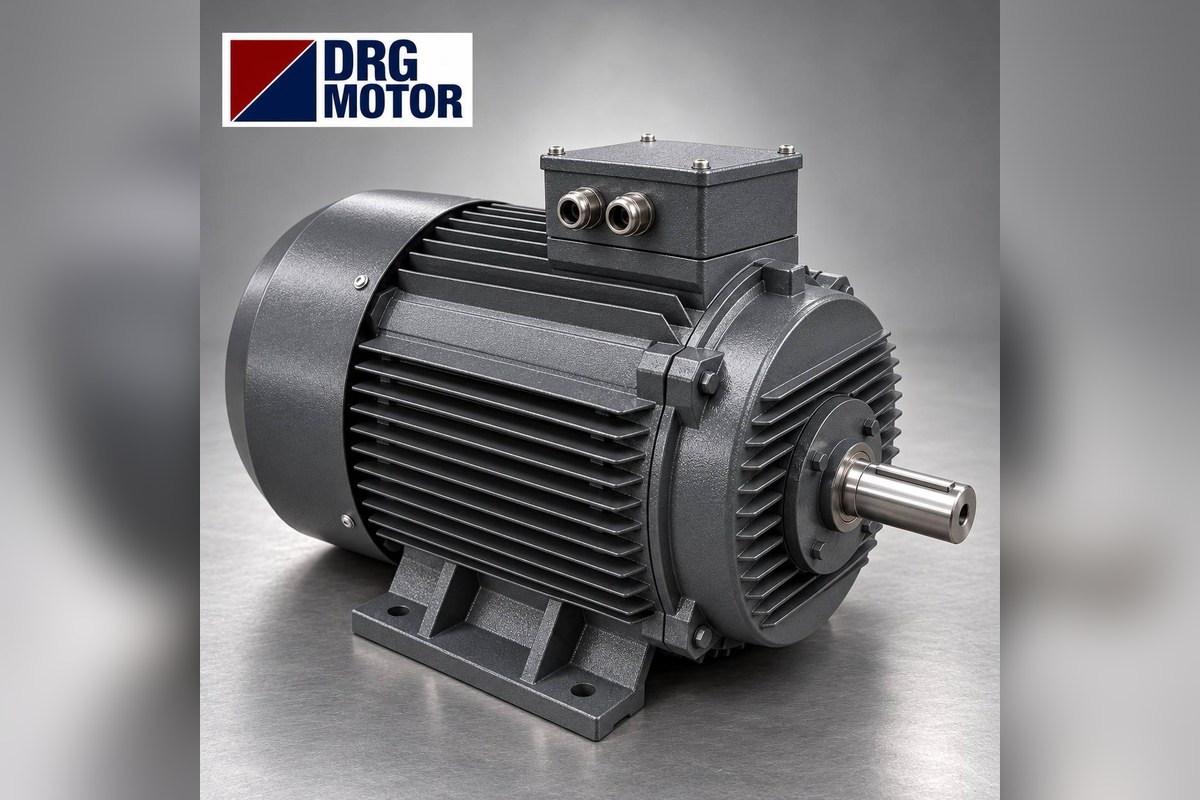

The only reliable way to compare two electric motor price quotes is to make sure first that both quotes describe the same motor: besides power and speed, the frame (IEC shaft height), mounting arrangement, voltage and connection, protection class, insulation class, bearings, cable entry and technical data sheet must be written in both quotes and must match. Comparing figures before these items are aligned means comparing two different products. Put the comparison form below next to the two quotes and decide only when no line is left blank. If you need a reference with published technical data, the models on Buy Electric Motors Online are listed code by code.
What to include when you request a quote is covered in our article How a Three-Phase Motor Price Is Set and How to Get a Quote. This article covers the next step, once two or three quotes are on your desk: what to ask when a line is missing, why two motors with the same kW may not be the same thing, how to read an efficiency value, and how to align the scope outside the figure, such as freight and warranty.
When can two quotes really be compared?
The rule is simple: if the same lines are filled in both quotes with the same values, the figures can be compared. If a line is blank in one quote, send the supplier a written question for that line; a verbal answer is not part of the quote. In practice the lines most often left blank are frame size, connection, bearings and delivery terms. A figure that looks low while these are blank often means an adapter, coupling work or freight cost that will be added later.
Compare in three steps: (1) technical alignment, meaning both motors fit your machine the same way and do the same job; (2) scope alignment, meaning freight, taxes, documents and warranty terms are written the same way in both quotes; (3) only then compare the figures.
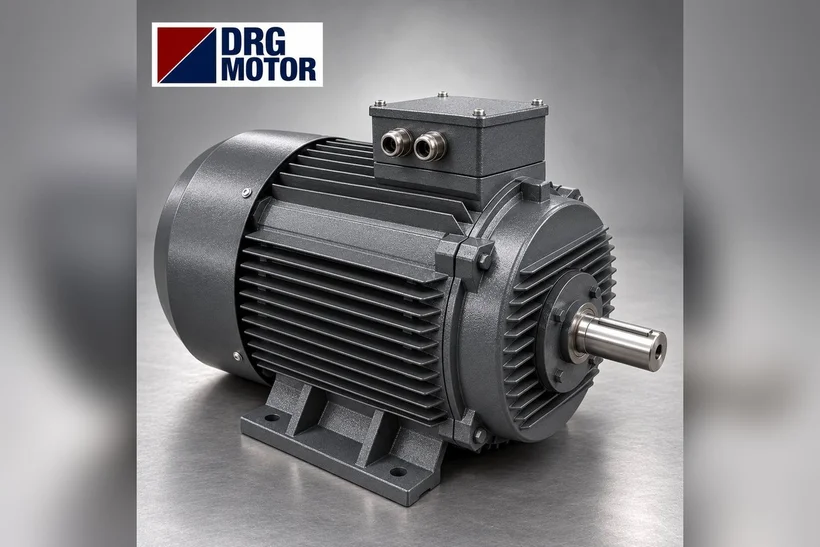
Quote comparison form: which lines must be in writing?
Fill in the form below for each quote. The third column shows what you may face if the line is left blank.
| Item | What should the quote state? | If blank? |
|---|---|---|
| Power and synchronous speed | kW and 1000/1500/3000 rpm | Load not carried or speed changes |
| Rated speed and current | Nameplate value, 400 V current | Overload and cable cannot be sized |
| Frame (IEC) | e.g. 132S, 112M | Feet and shaft height do not match |
| Mounting | B3, B5, B35, B14… | Flange or feet do not fit |
| Shaft D×E, key F | in mm | Coupling/pulley must be re-machined |
| Voltage and connection | 230/400 V or 400/690 V | Star-delta panel will not work |
| Protection class (IP) | e.g. IP55 | Early failure in dust/water |
| Insulation class | e.g. class F | Thermal margin unknown |
| Bearing type | Front/rear bearing code | Spare parts cannot be planned |
| Cable entry | Number and gland size | Gland/cable does not fit |
| Housing material, paint | Cast iron / aluminium | Vibration and corrosion differ |
| Technical data sheet | Attached? | Values cannot be verified |
The first six lines are for technical alignment; if even one differs, the two quotes are not for the same product. The last six lines affect service life and maintenance; if they differ, note in writing which quote offers less of what.
Click to see current electric motor prices and order nowSEE PRICES →
Why are two quotes with the same kW not the same motor?
A concrete example: both quotes say "5.5 kW, 1500 rpm, three-phase". Quote A may be the standard-frame DRG-132S-4 and quote B the compact-frame DRG-112M-4K. The electrical values are the same: both run at 1460 rpm, draw 10.7 A at 400 V and have cos φ 0.83. But the dimensions that connect to the machine are different:
| Feature | Quote A (standard) | Quote B (compact) |
|---|---|---|
| IEC frame | 132S | 112M |
| Shaft height H | 132 mm | 112 mm |
| Shaft D×E | 38 × 80 mm | 28 × 60 mm |
| Feet A×B | 216 × 140 mm | 190 × 140 mm |
| Bearing | 6208-ZZ-C3 | 6206-ZZ-C3 |
If your machine carries a frame 132S motor, the motor in quote B will not fit the foot holes or the coupling hub; the base must be drilled or a new coupling machined. Conversely, if you build machines and space is tight, the compact frame can be an advantage. So even when two quotes say "same power", the outcome of the comparison depends on your machine. For a figure-based comparison of compact and standard frames at a higher power, see 15 HP 1500 rpm motor: DRG-160M-4 vs compact DRG-132M-4K.
How should the efficiency value in a quote be read?
Efficiency is the line most easily misread between two quotes. For a value to be comparable, three things must be stated together: the standard used for measurement, the load point (full load, three-quarter load, half load) and the voltage and frequency it applies to. If one quote states the full-load value and the other a part-load value, the two numbers cannot be compared. Treat a quote that only names a class without giving the method and load point as incomplete until the data sheet arrives.
A practical check is to ask for the full-load current and cos φ of the offered motor. If current and cos φ are not in a sensible range for that power and speed, the other values should be questioned too. For example, the published values for DRG-132M-4 in the 7.5 kW, 1500 rpm class are 14.3 A at 400 V and cos φ 0.84. You can compare currents for other ratings in our motor current chart. To see how annual energy use affects running cost, use the energy consumption calculator.
Freight, delivery and warranty: the scope outside the figure
Once technical alignment is done, align the scope of both quotes. If any of the questions below has no answer, treat the quote as incomplete:
- Does the quote state the tax and freight scope? Who pays freight, and by which carrier?
- Is the delivery time given in days and in writing, or is it vague, such as "subject to availability"?
- Are the validity period and currency of the quote stated?
- Is there a warranty certificate, with its scope and duration written on it?
- Do the invoice, technical data sheet and dimension drawing come with the delivery?
- Are the payment terms (cash, instalments, credit) clearly stated?
- Is the product code written in the quote, and will it match the code on the invoice?
DRG Motor is a manufacturer, supplier and seller of electric motors; we keep these items in writing on our side. DRG MOTOR motors are guaranteed against material and manufacturing defects for 2 years from the delivery date (warranty certificate). Delivery, freight and return terms are set out on the sales, delivery and return terms page; freight is handled by contracted freight and cargo companies and is paid by the buyer. Frame dimensions are published frame by frame on the technical drawings page.
The 3 most common mistakes when comparing quotes
- Matching only kW and speed: As the example above shows, the same power can come in two different frames. If frame, shaft and mounting are not written, no real comparison has been made.
- Skipping the connection: A panel with a star-delta starter needs a motor that runs in delta at 400 V. If the offered motor is 230/400 V, star-delta cannot be used and the cost of changing the panel does not show in the quote. Compare starting options on our star-delta starting page.
- Assuming the scope is inside the figure: One quote may include freight and taxes while the other excludes them. Bring both quotes to the same scope before putting the figures side by side.
How do you check your quote against DRG models?
Find the power and speed of your quote in the table below and check whether the frame and 400 V current match the values in the quote. Dimensions of these models are on the technical drawings page, current prices on the product pages.
| Model | Power / speed | Frame | Current 400 V |
|---|---|---|---|
| DRG-112M-4 | 4 kW / 1450 rpm | 112M · cast iron | 7.95 A |
| DRG-132S-4 | 5.5 kW / 1460 rpm | 132S · cast iron | 10.7 A |
| DRG-112M-4K | 5.5 kW / 1460 rpm | 112M · aluminium (compact) | 10.7 A |
| DRG-132M-4 | 7.5 kW / 1460 rpm | 132M · cast iron | 14.3 A |
| DRG-160M-4 | 11 kW / 1465 rpm | 160M · cast iron | 20.4 A |
For other powers, speeds or housing materials, the 120 models in our online store are listed in the same way.
Motors in this power range
- DRG-112M-4 – 4 kW – 1450 rpm – 112M · cast iron
- DRG-132S-4 – 5.5 kW – 1460 rpm – 132S · cast iron
- DRG-112M-4K – 5.5 kW – 1460 rpm – 112M · aluminium (compact)
- DRG-132M-4 – 7.5 kW – 1460 rpm – 132M · cast iron
- DRG-160M-4 – 11 kW – 1465 rpm – 160M · cast iron
Click to see current prices and order these motors nowSEE PRICES →
Frequently Asked Questions
What should an electric motor price quote include?
Power, synchronous and rated speed, IEC frame, mounting, shaft D×E, voltage and connection, IP and insulation class, bearings, cable entry, current at 400 V, product code, freight and tax scope, delivery and payment terms, and the warranty certificate.
Why do two motors with the same kW differ?
Frame size (standard or compact), housing material, bearings, shaft size and scope (freight, documents) can differ. Compare the lines of the form, not the figure.
How many amps does a 5.5 kW 1500 rpm motor draw?
According to the DRG-132S-4 data, it draws 10.7 A at 400 V and 11.2 A at 380 V. If the current in the quote differs clearly from this, ask why.
What if the quote does not state a delivery time?
Ask for the delivery time and freight method in writing before ordering. If your machine is down, this line matters as much as the figure.
To compare your quotes with this form or to find the right model from a nameplate, call +90 (542) 666 11 11, write to [email protected] or use our contact page. All models and current prices are listed on Buy Electric Motors Online.