English
 Le français
 Türkçe




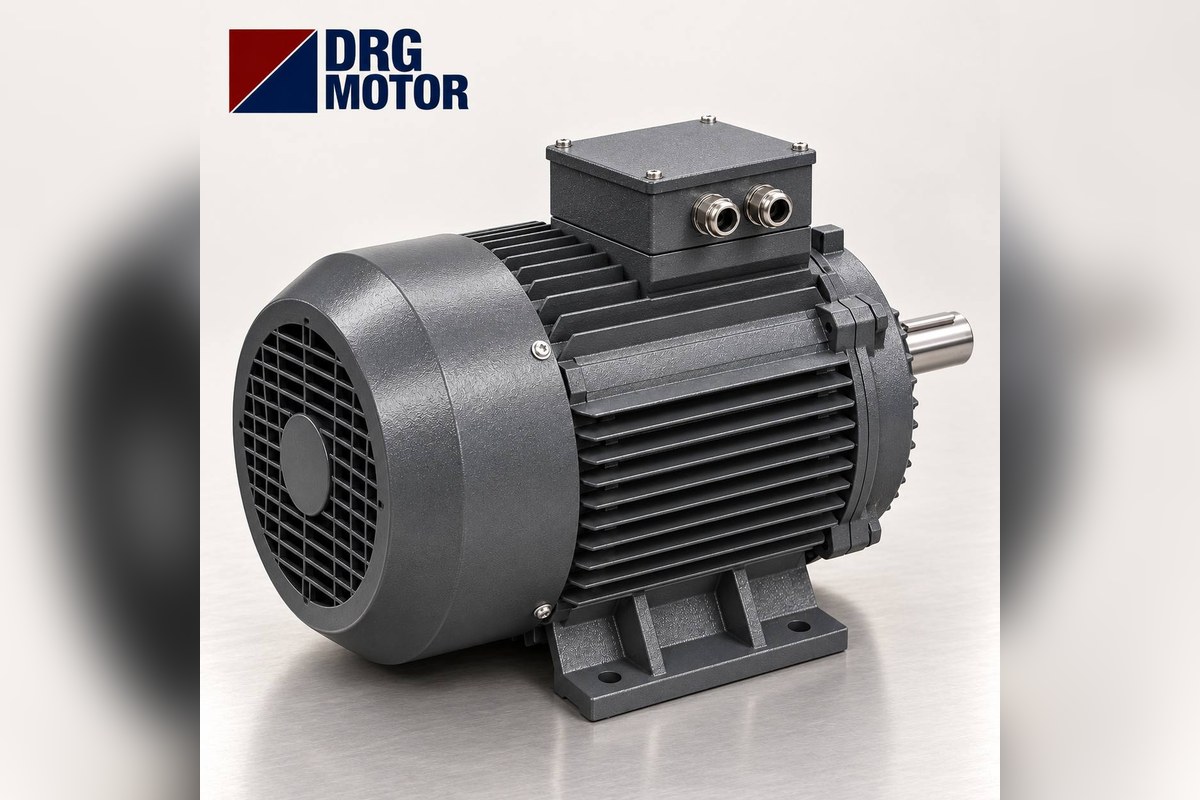

A used electric motor makes sense only when three conditions are met together: the machine it will drive is not critical, the insulation resistance, no-load current and bearing noise can be measured before you buy, and the nameplate is still readable. If any one of these is missing, a new motor usually ends up costing less in total once the removal, refitting and downtime of the first failure are counted. Compare offers with the total cost formula below rather than the purchase figure alone; current prices of new motors are listed model by model on our Buy Electric Motors Online page.
The checks in this article (megger, current, trial run) involve live or energised work; they must be carried out by a qualified electrician, and the motor must be isolated from the supply and earthed before measuring. Below you will find the hidden risks of a used motor, a buyer's checklist, a cost formula without figures and a decision table. If you want to know what a warranty actually covers, see What Does an Electric Motor Warranty Cover?; here we focus only on the used-or-new buying decision.
What are the 5 hidden risks of a used motor?
A repainted motor and a worn-out motor look the same from the outside. The real risk lies inside the frame and in its history:
- Age of the winding insulation: Insulation hardens and cracks with heat and moisture over the years. A motor sitting on a shelf also absorbs moisture. This shows up as a phase-to-frame leak on the first heavy start or the first humid morning.
- Bearings and bearing housing: A bearing can be replaced, but if the housing in the end shield has gone oval, a new bearing will soon become noisy too. Housing wear is hard to see from outside.
- Shaft wear and bending: On motors run with high belt tension, the shaft end and keyway wear; a dropped motor may have a slightly bent shaft. That means coupling vibration and early bearing failure.
- Unknown operating history: How many hours it ran, how often the overload tripped, what environment it worked in (dust, moisture, chemicals) — the seller rarely knows. Overheated windings darken, but not always visibly.
- Rewound motor: A rewound motor may have a different number of turns and wire size from the original. Its nameplate current, speed and torque then no longer describe the motor, and it may run hotter at the same load.
How to interpret bearing noise is covered in detail in How to Tell Motor Bearing Failure; the list below gathers only the quick checks you can do at the moment of purchase.
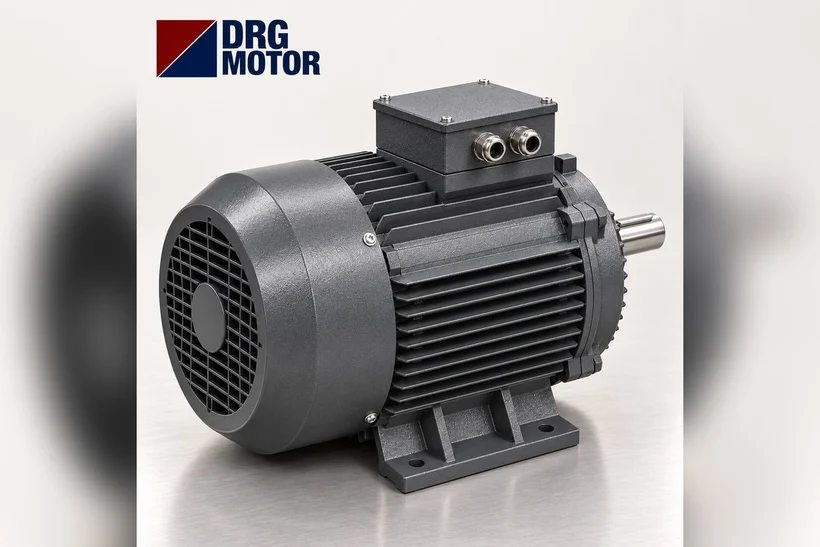
Which 10 checks should you make before buying?
Send this list to the seller in advance. A motor bought from a seller who refuses measurements is, in practice, an untested motor.
- Is the nameplate readable? Are power, speed, voltage, current and connection (Δ/Y) shown?
- Any cracks, welds or broken feet on the frame, end shields or feet?
- Does the shaft turn freely by hand? Any sticking, rustling or axial play?
- Any dents on the shaft end, widened keyway, or marks from pulling couplings or pulleys?
- Was insulation resistance measured with a megger, winding-to-frame and between phases? Do the three phases give similar values?
- Are the three winding resistances (ohms) equal? A clear difference indicates a winding fault or partial short circuit.
- Any burning, melting, replaced lugs or spliced leads in the terminal box?
- Different-coloured varnish, hand lacing or new paper insulation on the end windings (signs of rewinding)?
- Are the three phase currents balanced at no load? How to judge no-load current is explained in How Many Amps Does a Motor Draw at No Load?
- After a few minutes at no load, is there heating on the bearing side, metallic noise or vibration?
What do you compare the measured current with?
With the nameplate current if it is readable; otherwise with the data of a new motor of the same power and speed. For example, in the 7.5 kW, 1500 rpm class, DRG-132M-4 draws 14.3 A at 400 V and 15 A at 380 V at full load. If the used motor draws clearly more than this on the machine at normal load, either its winding has been changed or there is a mechanical overload. For other ratings, use our motor current chart.
Click to see current electric motor prices and order nowSEE PRICES →
How do you calculate total cost? (A formula without figures)
The purchase figure is only part of what a motor costs you. Write both options with the same formula:
- Used: TC₂ = A₂ + M + R + p₂ × (S + T × d)
- New: TC₀ = A₀ + M + p₀ × T × d
A₂ and A₀ are the purchase figures, M the removal, fitting and commissioning labour, R the maintenance a used motor needs up front (bearings, cleaning, drying), p₂ and p₀ your own estimate of the probability of a failure in the first year, S the cost of refitting plus a replacement motor, T the loss per hour of downtime and d the expected downtime of a failure. On a new motor, material and manufacturing defects are covered by the warranty, so the S term largely drops for such failures.
The decision rule fits on one line: a used motor pays off only if A₀ − A₂ > R + (p₂ − p₀) × (S + T × d). As T × d grows (that is, as the machine becomes more critical), the right-hand side grows fast; that is why, on lines where output depends on a single motor, the advantage of a used motor usually stays on paper. For a standby motor that rarely runs, T × d is small and a used motor may be reasonable.
When used, when new? A decision table
| Situation | Used motor | New motor |
|---|---|---|
| Critical machine, downtime stops output | Not advised | Preferred |
| Kept as a standby, rarely run | Acceptable after tests | Suitable |
| Plate unreadable, history unknown | Risky | Preferred |
| Rewinding traces visible | Measurements + test required | Preferred |
| Short-term or trial use | Acceptable | Suitable |
| Invoice and warranty document needed | Usually missing | Supplied with document |
"Measurements + test required" means this: a rewound motor is not necessarily bad, but its nameplate is no longer reliable data. It should not be connected to the machine before winding resistance and load current are measured.
What comes with a new motor?
The real difference of a new motor is its documentation. DRG Motor is an electric motor manufacturer, supplier and seller; each of the 120 models in the online store is sold under a DRG-<frame>-<poles> code with published technical data. For example, the published values for the 7.5 kW, 1500 rpm cast iron DRG-132M-4:
- Power: 7.5 kW
- Speed: 1460 rpm
- Frame: 132M (cast iron)
- Voltage: 400/690 V Δ/Y
- 400 V connection: delta (Δ)
- Current 400 V: 14.3 A
- cos φ: 0.84
- Shaft D×E: 38 × 80 mm
- Feet A×B: 216 × 178 mm
- Bearing: 6208-ZZ-C3
- Cable entry: 2 × M32×1.5
With these values you can set the overload relay, size the cable and choose the coupling before the motor arrives; our overload, fuse and contactor selection tool helps with protection. Mounting dimensions are given frame by frame on the technical drawings page. On the warranty side: DRG MOTOR motors are warranted against material and manufacturing defects for 2 years from the delivery date (warranty certificate). Delivery, shipping and return terms are set out on the sales, delivery and return terms page; shipping is done through contracted freight and cargo companies and is paid by the buyer. For payment, periodic Halköde instalment campaigns may apply; ask on WhatsApp for the current option (payment options).
The 3 most common mistakes when buying used
- Matching power only: Not every motor marked 7.5 kW fits your machine. If the frame (shaft height H), shaft diameter D and foot holes A×B differ, you get coupling and base-frame work, which inflates the M term.
- Running it at no load and calling it sound: A motor that is quiet at no load can reveal weak windings under load. If possible, watch the current for a few minutes on the machine at real load.
- Connecting a stored motor without drying it: A motor that spent months in a damp store can leak on the first start if it is energised without an insulation test.
If you buy new, which DRG model should you look at?
The table below shows cast iron models in the 1500 rpm class, the most searched class on the used market. Match them with the power and speed on the used motor's nameplate and compare the current; if the frame is the same, the mounting dimensions are the same.
| Model | Power / speed | Frame | Current 400 V |
|---|---|---|---|
| DRG-90L-4 | 1.5 kW / 1445 rpm | 90L · cast iron | 3.3 A |
| DRG-100L2-4 | 3 kW / 1450 rpm | 100L · cast iron | 6.02 A |
| DRG-112M-4 | 4 kW / 1450 rpm | 112M · cast iron | 7.95 A |
| DRG-132S-4 | 5.5 kW / 1460 rpm | 132S · cast iron | 10.7 A |
| DRG-132M-4 | 7.5 kW / 1460 rpm | 132M · cast iron | 14.3 A |
| DRG-160M-4 | 11 kW / 1465 rpm | 160M · cast iron | 20.4 A |
Lower or higher power, 1000 or 3000 rpm and aluminium frame options are listed among the 120 models in our online store.
Motors in this power range
- DRG-90L-4 – 1.5 kW – 1445 rpm – 90L cast iron
- DRG-100L2-4 – 3 kW – 1450 rpm – 100L cast iron
- DRG-112M-4 – 4 kW – 1450 rpm – 112M cast iron
- DRG-132S-4 – 5.5 kW – 1460 rpm – 132S cast iron
- DRG-132M-4 – 7.5 kW – 1460 rpm – 132M cast iron
- DRG-160M-4 – 11 kW – 1465 rpm – 160M cast iron
Click to see current prices and order these motors nowSEE PRICES →
Frequently Asked Questions
Is it worth buying a used electric motor?
For a non-critical machine, a standby unit or short-term use, it can be bought after measuring insulation resistance, winding resistance, no-load current and bearing noise. On a machine whose failure stops production, the total cost formula usually points to a new motor.
Is there a difference between a rewound motor and a new one?
It depends on the rewinding workmanship and the wire size used. The problem is that a rewound motor's nameplate values can no longer be verified; do not decide without measuring current and temperature at the same load.
How can you tell whether a used motor is sound?
Check insulation resistance with a megger, equality of the three winding resistances, no-load current balance, bearing noise and shaft run-out. The measurements must be made by a qualified electrician.
How many amps does a 7.5 kW 1500 rpm motor draw?
According to DRG-132M-4 data, 14.3 A at 400 V and 15 A at 380 V. You can compare the current measured on the used motor in the machine with this value.
To find the right new equivalent from a nameplate or from measurements, contact us on +90 (542) 666 11 11, at [email protected] or via our contact page. All models and current prices are on the Buy Electric Motors Online page.