English
 Le français
 Türkçe




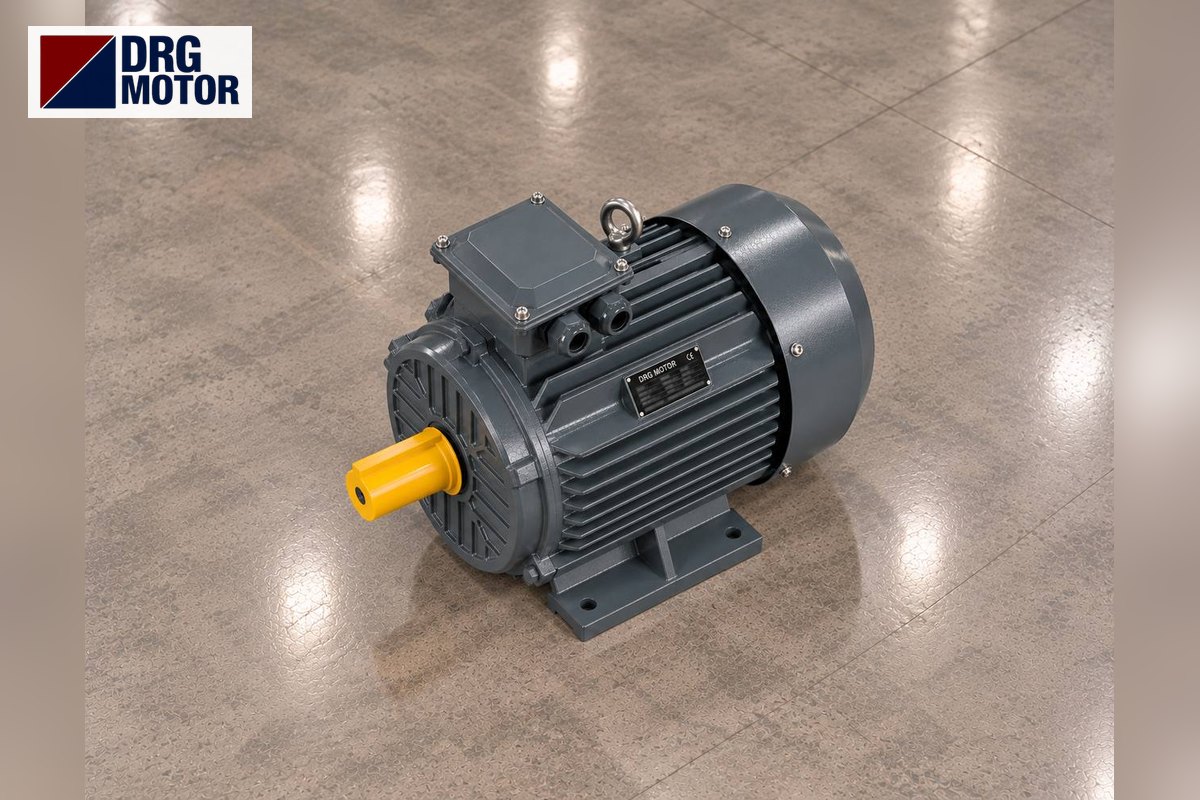

In a silicone and sealant mixing machine, the main motor has to knead a paste-like mass slowly but with very high torque through a gearbox. That is why the first value to check is not kW but the torque needed at the gearbox output and the starting torque of the motor. The arms of a planetary mixer turn at a few tens of revolutions per minute; a 1000 or 1500 rpm motor is brought down to that speed by a high-ratio gearbox. The fast dissolver shaft runs on a separate motor, usually without a gearbox.
DRG Motor is a manufacturer, supplier and seller of electric motors. Gearboxes are not part of its range: the mixer keeps its planetary head, and DRG supplies the three-phase asynchronous IEC motor that sits on it. You can compare the 120 models in the shop with kW and speed filters on the buy electric motors online page.
Planetary Arms, Dissolver and Vacuum: How Many Drives Does the Machine Have?
On a typical silicone/sealant machine the vessel is fixed, and the lid is lowered hydraulically to close it under vacuum. The gear head in the lid does two things at once: the arms spin on their own axes while the carrier travels around the centre of the vessel. The blades therefore pass every point of the vessel, and a scraper close to the wall pushes stuck product back to the middle.
As filler (calcite, silica) is added, the product turns into a paste that no longer flows. The blades are no longer turning in a liquid; they split and fold a dough. A second shaft, the saw-tooth dissolver disc, runs at high speed to break up lumps of pigment and filler. The vacuum pump removes air drawn into the mix; trapped air causes voids in the cartridge and bubbles during curing.
| Drive | Task | Connection | Load type |
|---|---|---|---|
| Planetary arms | Kneading and folding paste | Motor + high-ratio gearbox | Highest at start, constant torque |
| Dissolver shaft | Breaking lumps and filler | Direct or via pulleys | High speed, rises with filler |
| Vacuum pump | Removing air | Coupling or close-coupled | Light, long running |
| Hydraulic unit | Lid and discharge press | Coupled to pump | Short, intermittent |
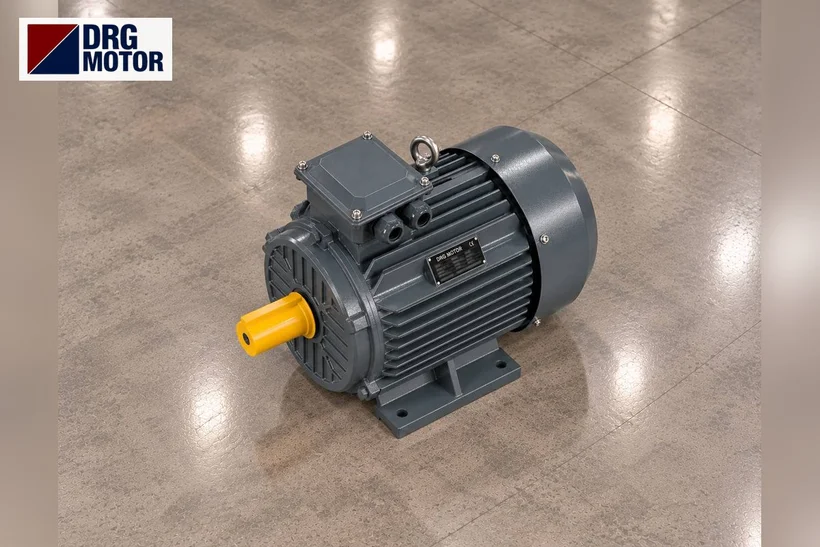
Click to see current electric motor prices and order nowSEE PRICES →
Starting in Paste: Gearbox Torque and Motor Torque
At the end of a batch the vessel is emptied, but if the machine stops mid-batch the blades remain in product that cools and stiffens thixotropically. On restart the motor must break this resting mass loose. The deciding factors are the motor's starting torque ratio (Ts/Tn) and how much the gearbox multiplies that torque.
Worked example: 11 kW 6-pole motor, i = 40
Assumption: DRG-160L-6 (11 kW, rated 970 rpm, rated torque 108.3 Nm, Ts/Tn 2.0), ratio 40, gearbox loss factor 0.95. Carrier output speed is 970 / 40 ≈ 24.3 rpm. Rated output torque is 9550 · 11 / 24.25 · 0.95 ≈ 4,115 Nm. Since Ts/Tn is 2.0, about 217 Nm is available at breakaway (2.0 × 108.3), which at the output is roughly double the rated torque.
With the 5.5 kW DRG-132M2-6 on the same ratio, output torque drops to about 2,062 Nm. In other words, fitting a smaller motor can stall the arms just when the product is at its stiffest. These figures are an example only; the actual power and ratio of the machine are on the manufacturer's nameplate. You can test your own ratio with the gearbox output speed and torque calculator.
Signs of the wrong motor on site
- Overload trips while filler is added: motor power or gearbox ratio was not sized for the heaviest recipe.
- Motor hums on restart but the arms do not turn: starting torque is too low or product has set in the vessel.
- Product hotter than expected at batch end: speed too high; a 6-pole motor may have been replaced with a 4-pole one.
- Noise at the gearbox input, oil traces at the flange: spigot diameter or shaft length does not match.
Peripheral Speed of the Dissolver Disc and Motor Speed
The dispersing effect of a dissolver comes from the peripheral speed at the disc edge: v = π · D · n / 60. For example, a 300 mm disc driven directly at 1465 rpm reaches an edge speed of about 23.0 m/s. The same disc on a 1000 rpm motor stays around 15 m/s and opens up the filler more slowly.
Switching to a 2-pole motor to gain speed may seem tempting, but disc speed doubles while absorbed power rises much faster than speed. The product heats up and silicone risks curing early. When replacing a dissolver motor keep the original number of poles; if speed adjustment is needed use the pulley ratio or a drive. DRG does not sell drives; simply state in the order that the motor will run on one. For an 11 kW class dissolver, the 4-pole DRG-160M-4 is a sound starting point.
Vacuum, Heat and Solvent: How the Environment Affects the Motor
The motors sit above the lid and do not touch the product. Still, the heat generated by kneading rises through the vessel jacket and lid, so air circulation around the motor must not be blocked. DRG motors have IP55 protection, class F insulation and shaft-mounted fan cooling (IC411), suitable for −15…+40 °C ambient. When a motor runs for long periods at low speed on a drive, fan cooling drops; this should be assessed with the machine builder.
On most machines the vacuum pump runs on its own small motor; a standard flanged or foot-mounted pump can be covered by the options on the vacuum pump electric motors page. The 1.5 kW 4-pole DRG-90L-4 is in a class often seen on such auxiliary drives. If a close-coupled pump shaft is required, a standard IEC motor will not fit.
With solvent-containing polyurethane or acrylic sealants the atmosphere may be explosive. In that case an Ex-protected special motor is required; DRG does not offer such motors. Water-based and neutral-cure silicones use a standard motor.
Gearbox Flange and Shaft Dimensions When Replacing
The motor sitting on the planetary gear head in the lid is mostly a B5 (large flange) design standing vertically with the shaft pointing down. Before removing the old motor, measure its flange and compare it with the DRG catalogue: the 5.5 kW 132M frame has a Ø300 mm flange, bolts on a Ø265 mm circle, a Ø230 mm pilot and a 38×80 mm shaft end. On the 11 kW 160L frame these three become Ø350 / Ø300 / Ø250 mm, with a 42×110 mm shaft end. B14 small-flange dimensions are confirmed at order. Other power and frame options for gearbox mounting are collected on the electric motors for gearboxes page.
Check the following before ordering:
- Data read from the old motor: kW, rpm, voltage, Y/Δ connection
- Planetary gear head ratio; P, M, N measured on its flange
- Shaft: Ø, length, key
- Vertical shaft-down mounting and terminal box orientation
- For the dissolver motor: disc diameter and pulley ratio
- Current measured on the heaviest recipe and whether solvents are used
DRG Motors Suitable for Silicone and Sealant Mixers
The models are chosen for different tasks such as the planetary drive, dissolver and vacuum pump; 6-pole motors suit high-ratio gearbox inputs, 4-pole motors suit high-speed shafts.
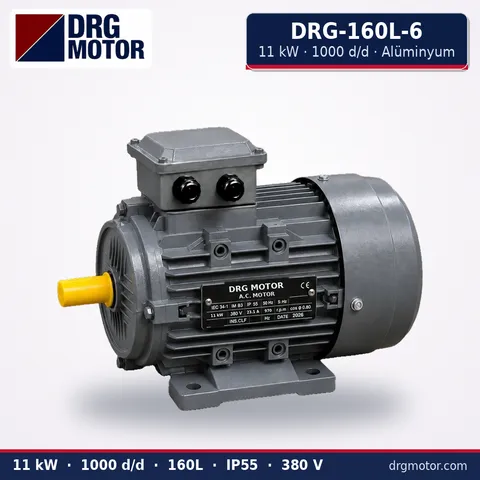
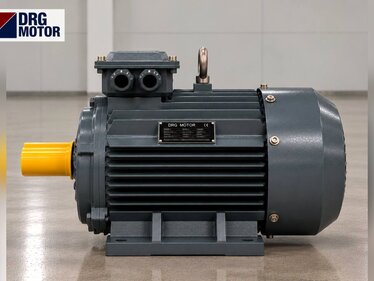
11 kW Three-Phase Motor 1000 rpm – DRG-160L-6 Aluminium
- 11 kW · 1000 rpm (6 poles)
- Aluminium frame · IEC 160L
- Mounting: B3 · B5 · B14 · B35
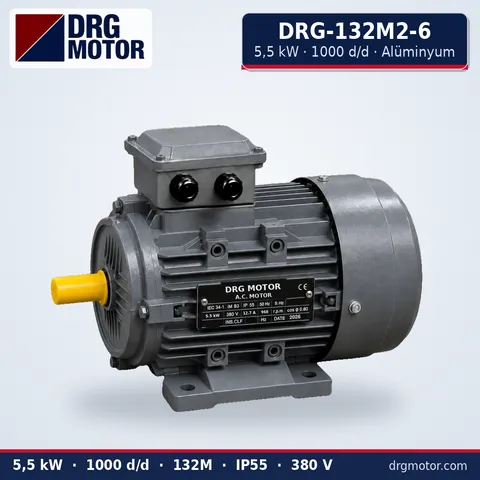
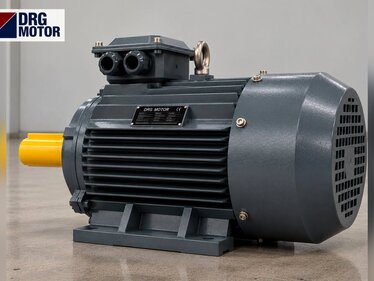
5.5 kW Three-Phase Motor 1000 rpm – DRG-132M2-6 Aluminium
- 5.5 kW · 1000 rpm (6 poles)
- Aluminium frame · IEC 132M
- Mounting: B3 · B5 · B14 · B35
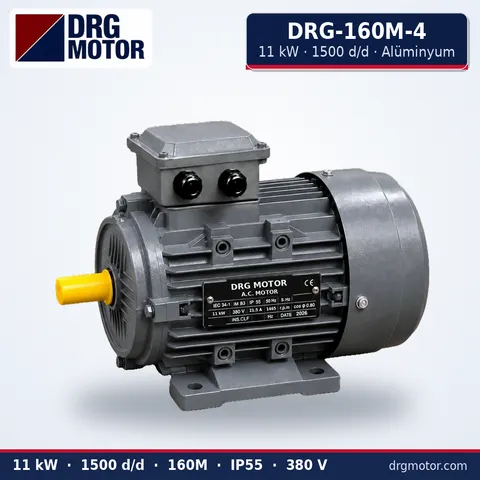
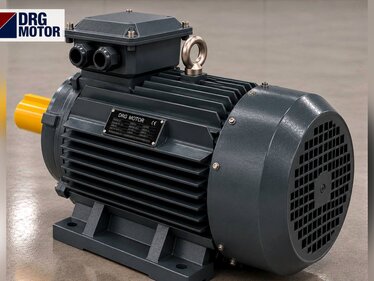
11 kW Three-Phase Motor 1500 rpm – DRG-160M-4 Aluminium
- 11 kW · 1500 rpm (4 poles)
- Aluminium frame · IEC 160M
- Mounting: B3 · B5 · B14 · B35
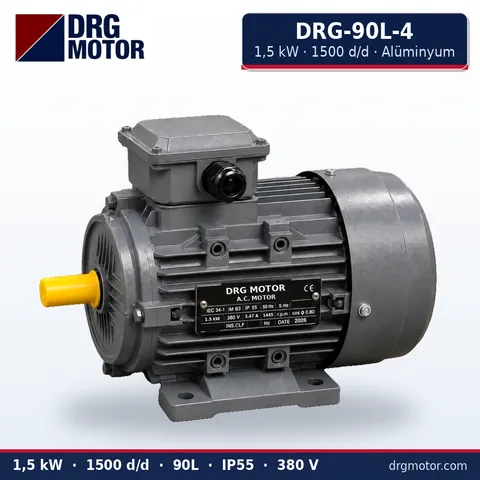
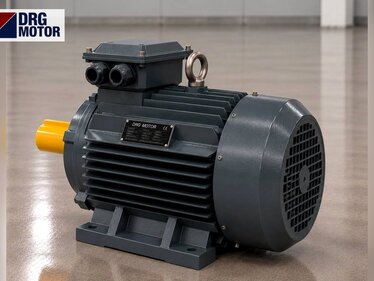
1.5 kW Three-Phase Motor 1500 rpm – DRG-90L-4 Aluminium
- 1.5 kW · 1500 rpm (4 poles)
- Aluminium frame · IEC 90L
- Mounting: B3 · B5 · B14 · B35
Click to see current prices and order these motors nowSEE PRICES →
Silicone Mixer Motor: Frequently Asked Questions
How many kW does a silicone sealant mixer need?
It depends on vessel size and recipe. Small pilot machines may use a few kW, while production machines can need ten kW or more for the planetary drive. The exact value is on the machine builder's nameplate or catalogue.
Why does the planetary mixer motor trip on start-up?
If the machine stopped with a full vessel, product stiffens around the arms and starting torque rises. If the motor's starting torque or the gearbox ratio is insufficient, current stays high for too long and the overload opens.
Can I replace the dissolver motor with a 2-pole motor?
Not recommended. Disc speed doubles, power demand rises much more and the product heats up. Keep the original pole count and use the pulley ratio or a drive for speed adjustment.
Can the vacuum pump motor be replaced with a standard motor?
Yes, if the pump is connected via a standard flange or a foot-mounted coupling. If a close-coupled pump has a special shaft, a standard IEC motor cannot be fitted.
The quickest route to a quotation: a photo of the mixer motor's nameplate on WhatsApp, with power, speed, fixing type, shaft and gearbox ratio; otherwise, build a quote list. Phone: +90 (542) 666 11 11 · email: info@drgmotor.com · contact. Auxiliary motors besides the planetary drive are also listed in the online shop.