English
 Le français
 Türkçe




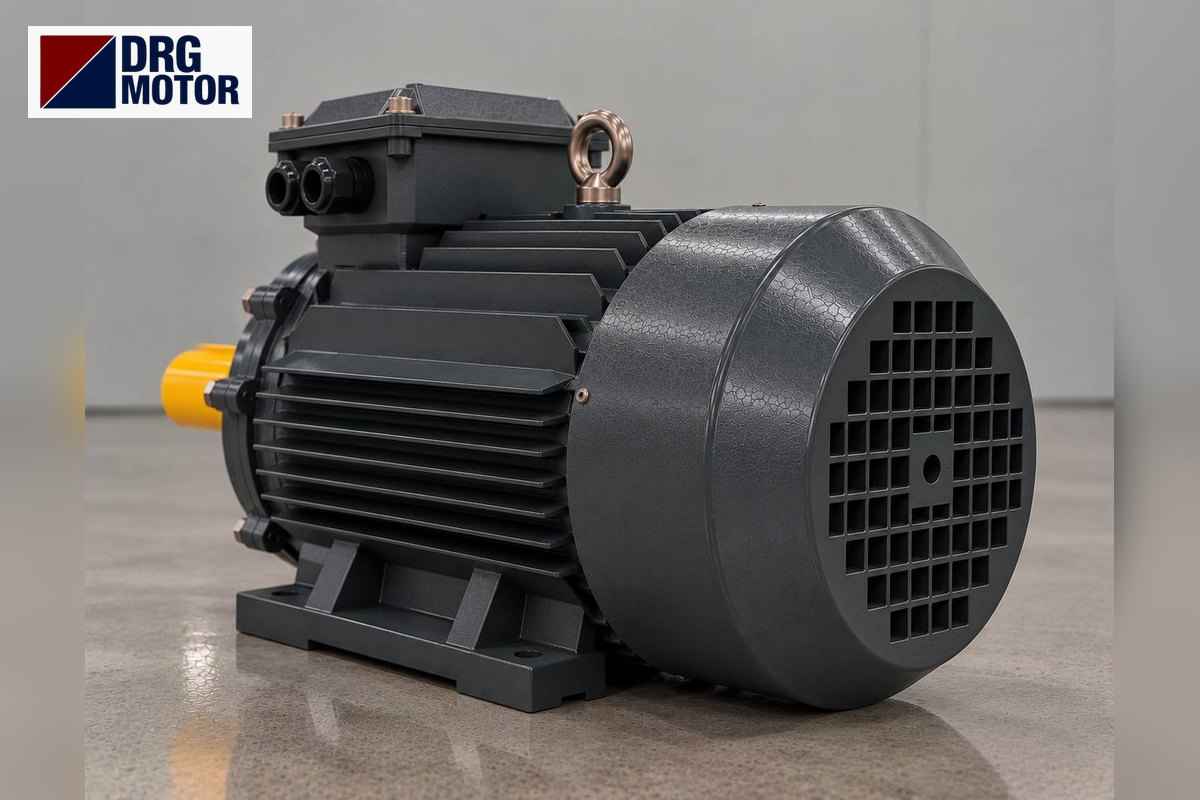

On a shaking table used in mineral concentration, the electric motor does not shake the deck directly; it turns the head mechanism at the end of the table through a belt, and that mechanism converts rotation into an asymmetric back-and-forth stroke. The real measure for the motor is not power but the stroke rate it produces together with the pulley ratio. Power demand is small; a wrong pole count, however, spoils the separation straight away.
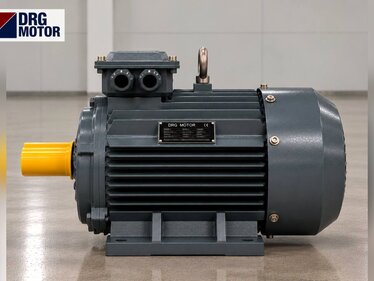
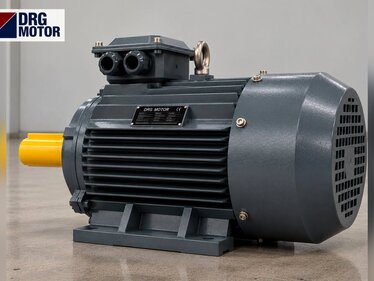
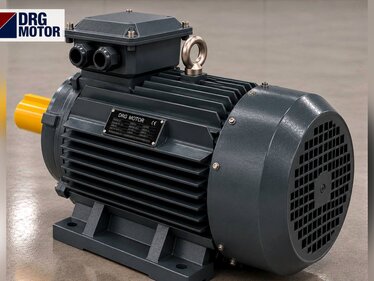
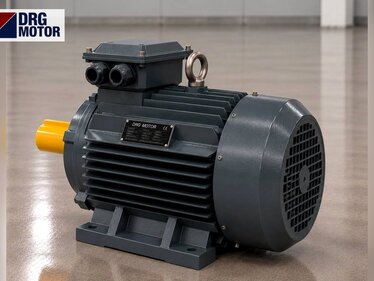
DRG Motor is a manufacturer, supplier and seller of electric motors. For small belt drives such as a shaking table head, its range of three-phase asynchronous IEC motors can be filtered by kW and poles in the buy electric motors online section.
The Head Mechanism: Slow Forward, Fast Back
The deck is slightly inclined and carries thin riffles. Wash water flows across the deck while the head mechanism moves it lengthways. The eccentric and toggle arrangement in the head pushes the deck forward slowly and then snaps it back with a sudden acceleration.
Because of this asymmetry, heavy particles (for example concentrate carrying chromite, tin or gold) stay against the deck surface and creep forward a little on every stroke, while light gangue is carried sideways by the water into the tailings launder. Separation quality depends on stroke length, stroke rate, deck slope and water flow being set together.
The motor works here like a clock: it supplies a steady speed and the head turns it into a steady stroke rhythm. Motor speed should therefore not vary much with load. An induction motor stays only a few percent below synchronous speed even at full load, which does not upset the table setting.
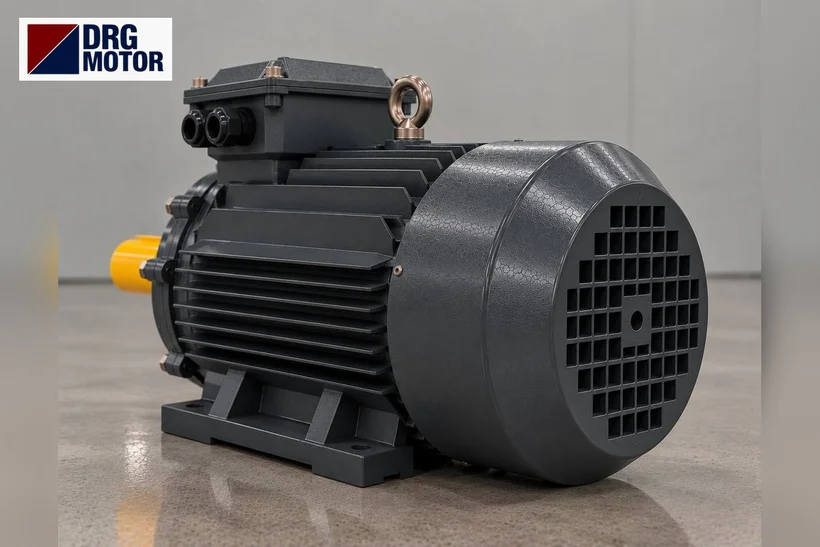
Pole Count and Pulley Together Set the Stroke Rate
Each turn of the head shaft is one stroke. Stroke rate is n2 = n1 · d1 / d2. Coarse feed usually takes a longer stroke at a lower rate, fine feed a shorter stroke at a higher rate; the exact range is given in the table maker’s operating instructions.
The table below shows the stroke rate given by different motor and motor-pulley options with the same 400 mm head pulley. The values are worked examples; check your own pulley size in the pulley and belt calculator.
| Motor | Motor / head pulley | Strokes/min (example) | Torque at head shaft |
|---|---|---|---|
| DRG-90L-4 4-pole | 80 / 400 mm | 289 | ≈ 49.6 Nm |
| DRG-90S-4 4-pole | 75 / 400 mm | 271 | ≈ 38.8 Nm |
| DRG-90S-6 6-pole | 125 / 400 mm | 292 | ≈ 24.5 Nm |
| DRG-100L-6 6-pole | 100 / 400 mm | 237 | ≈ 60.4 Nm |
Head shaft torque was found with T = 9550 · P / n, ignoring belt losses; it is the upper limit obtained by dividing the motor’s rated power by the head speed, not the table’s actual demand.
A 6-pole motor (about 1000 rpm) reaches the same stroke rate with a larger motor pulley. On a larger pulley the belt bends less and slips less, which helps on tables with a small head pulley.
Click to see current electric motor prices and order nowSEE PRICES →
Motor Power: Small, but a Pulsating Load
A shaking table motor is usually below a few kW; motors of around 1–2 kW are common on many tables. Read the exact figure from the table builder’s plate or documentation and never fit less.
The load is not steady. At the sudden return at the end of each stroke, the deck and its load are stopped and accelerated the other way, and the motor sees short torque pulses. Springs and buffers in the head soften this. When springs fatigue or a buffer is crushed, motor current starts to swing.
Starting load is light: the deck is empty and the mechanism’s inertia is small, so direct-on-line starting is sufficient. For example, the DRG-90L-4 draws 3.3 A at 400 V with an Is/In ratio of 7.0, giving a starting current of about 23 A. Up to 3 kW the DRG winding is 230/400 V, so a 400 V supply means a star connection.
Motor Position and Fixing Beside a Wet Deck
The motor is fixed to the stationary frame or a base beside the head housing, not to the deck, so it does not add to the moving mass. Belt tension is set with a motor slide rail or adjusting bolt, which is why foot mounting (B3) is common.
The area is wet: wash water, slurry splash and deck cleaning can soak the motor. The IP55 rating of DRG motors withstands splashing water; still keep the motor away from the aim of the wash hose and place the terminal box with its cable entry facing down. The aluminium frame is light and easy to mount on and remove from the frame.
Vibration can loosen frame bolts. Put the motor foot bolts and the pulley key on the maintenance plan; a loose motor shifts belt alignment and the belt wears on its sides.
Problems Seen on the Table After a Wrong Choice
- 2-pole motor instead of 4-pole: stroke rate doubles, the concentrate band scatters and heavy particles escape to tailings.
- 4-pole instead of 6-pole with the same pulley: stroke rate rises by about half and separation of fine feed suffers.
- Undersized motor: when springs stiffen or the deck is loaded, the motor overheats and the overload trips.
- Confusion with a vibrator motor: a shaking table runs on a head mechanism, not on an unbalanced-mass vibrator motor; a vibrator motor is not the right part here.
Motor duties in the flotation, grinding and pumping sections of a plant are different; they are covered in the article on motors in mineral processing and flotation plants.
What to Look at on the Table Before Replacing the Motor
- Power, speed (e.g. 935 or 1445 rpm) and voltage on the nameplate
- Motor and head pulley diameters, belt profile
- Frame size, shaft diameter and shaft length
- Distance between foot holes and adjustment travel on the motor slide
- The stroke rate and stroke length the table runs at
- Whether water or slurry splashes onto the motor
Sample dimensions: the DRG-90L-4 is a 90L frame with a 24 × 50 mm shaft, 8 mm key width, 90 mm shaft height and foot spacing A 140 / B 125 mm. The DRG-100L-6 has a 100L frame with a 28 × 60 mm shaft; at the same power, the 6-pole motor’s frame is one step larger.
DRG Motors Suited to Shaking Tables
Light aluminium-frame 4- and 6-pole models common on tables whose head mechanism is belt driven; the choice follows the table’s stroke rate and nameplate power.
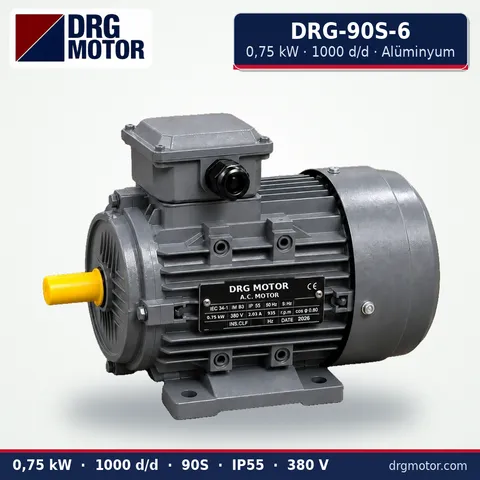
0.75 kW Three-Phase Motor 1000 rpm – DRG-90S-6 Aluminium
- 0.75 kW · 1000 rpm (6 poles)
- Aluminium frame · IEC 90S
- Mounting: B3 · B5 · B14 · B35
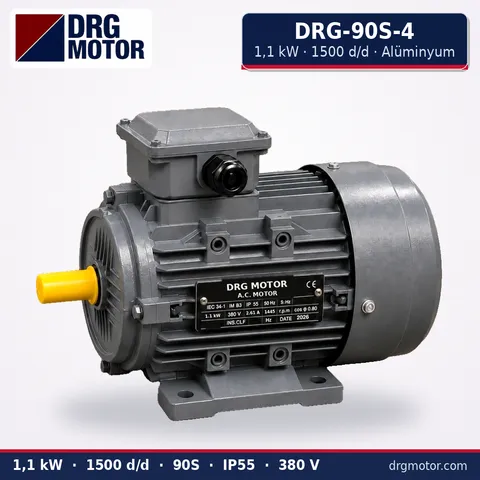
1.1 kW Three-Phase Motor 1500 rpm – DRG-90S-4 Aluminium
- 1.1 kW · 1500 rpm (4 poles)
- Aluminium frame · IEC 90S
- Mounting: B3 · B5 · B14 · B35
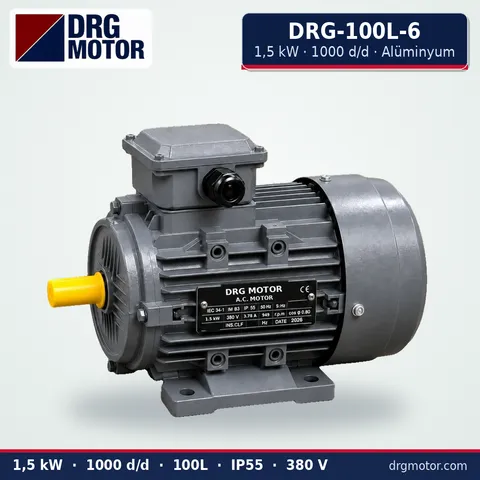
1.5 kW Three-Phase Motor 1000 rpm – DRG-100L-6 Aluminium
- 1.5 kW · 1000 rpm (6 poles)
- Aluminium frame · IEC 100L
- Mounting: B3 · B5 · B14 · B35
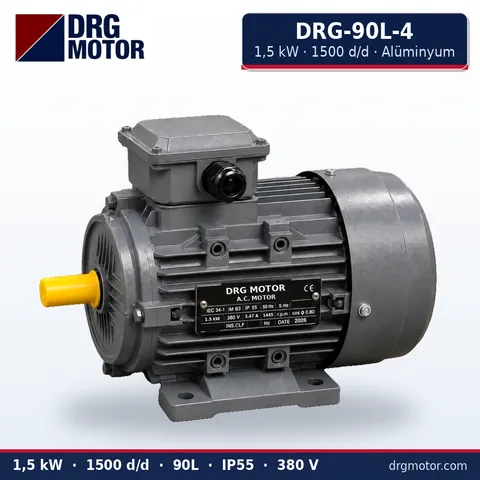
1.5 kW Three-Phase Motor 1500 rpm – DRG-90L-4 Aluminium
- 1.5 kW · 1500 rpm (4 poles)
- Aluminium frame · IEC 90L
- Mounting: B3 · B5 · B14 · B35
Click to see current prices and order these motors nowSEE PRICES →
Shaking Table Motor: Common Questions
What speed should a shaking table motor be?
Motor speed alone is not decisive; together with the pulley ratio it must give the head shaft’s stroke rate. Keep the old motor’s pole count or recalculate the pulley for the new speed.
Can an inverter be fitted to a shaking table motor?
Yes, and it makes adjusting stroke rate easier without changing pulleys. At very low frequency the motor fan slows down too; watch the motor temperature if it will run at low speed for long periods. The inverter itself is not supplied by DRG; only the driven motor is.
Why does the table motor keep tripping?
Most often because of a fatigued spring, a dry bearing in the head or an over-tightened belt. Before fitting a bigger motor, turn the head by hand and feel for binding.
Can a single-phase motor be used?
DRG’s range is three-phase. A site with a one-phase supply only therefore needs a different solution than a DRG motor.
To choose the right motor together, share a nameplate photo, the table’s stroke rate, the pulley diameters, whether it is foot or flange mounted and shaft diameter over WhatsApp, or pass the models on through the quote list. Phone +90 (542) 666 11 11, e-mail info@drgmotor.com, contact form. Other light-frame options are on the aluminium frame electric motors page, and the full catalogue is in the online store.