English
 Le français
 Türkçe




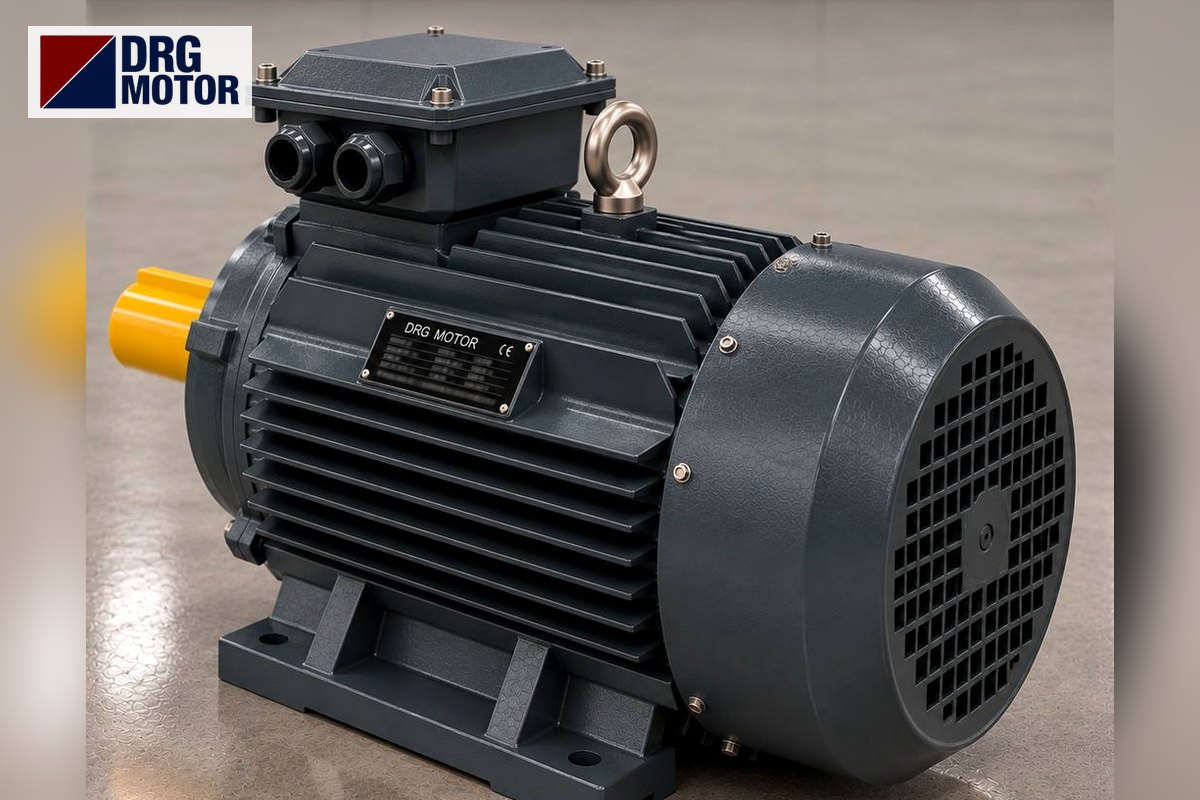

Short answer: replacing an old or worn electric motor with a sound one that truly matches your job can help the bill, but it is no miracle on its own. What really decides it is whether the new electric motor's power fits your job correctly and whether it runs in good health. Rather than promise a fixed figure, let us explain the logic in plain language.
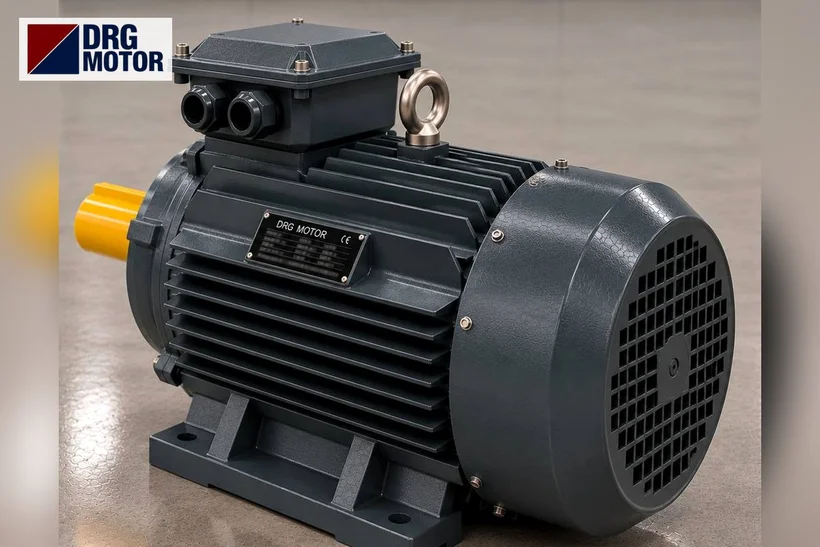
DRG Motor is a manufacturer, supplier and seller of electric motors. After reading the points below you will clearly see when a renewal makes sense. You can choose the electric motor that best fits your need by power and speed in the online electric motor shop, and see the same models together in the three-phase asynchronous electric motors category.
How is an electric motor linked to the bill?
An electric motor draws current from the supply to turn the work it does. An electric motor that does the same job while straining draws more current; a sound one that runs comfortably gets the job done without needless effort. So what shows up on the bill is not the "brand" but how well that electric motor is matched to your job and what condition it is in. That is why the answer to "will changing the motor lower the bill?" depends on which electric motor you replace with what.
Why can an old, worn electric motor draw more?
Over the years, bearings can stiffen, seatings can develop play, and the fan and cooling can weaken in a worn electric motor. All of this makes the electric motor do the same job with more effort. A straining electric motor heats up, draws more current and, in time, both disrupts the work and wastes energy. An electric motor whose thermal protection keeps tripping, that is too hot to touch, or whose sound has changed is trying to tell you something.
Replacing such an electric motor with a healthy one suited to the job usually gives a tidier operation, because it removes the needless strain. There is no single number for how much difference it makes, since the load, running hours and application differ everywhere.
An oversized electric motor also draws needlessly
A common belief is "play it safe, get a big one". Yet an electric motor far larger than the job draws current just to turn its own body even under light load, and much of that capacity often goes to waste. So an electric motor chosen simply because it is powerful can give the opposite of what you expect on the bill side. The right approach is to keep the electric motor in a power class close to your real load.
Click to see current electric motor prices and order nowSEE PRICES →
The heart of it: the right power and a sound electric motor
What helps the bill most is not sales talk but the right choice. Once the power your machine really needs is worked out, an electric motor close to it is chosen and kept healthy, the job turns without needless strain. If you are unsure, describe your application; with the size, speed and load we will choose the right power class together. For load work, our electric motor calculator and motor current chart also help.
The table below lists a few 4-pole (about 1500 rpm) DRG electric motors with their power and rated current at 400 V. Looking at how the current rises with power, it becomes clearer why an oversized electric motor can draw needlessly.
| Model | Power | Speed class | Current (400 V) |
|---|---|---|---|
| DRG-112M-4 | 4 kW | 1500 rpm | 7.95 A |
| DRG-132S-4 | 5.5 kW | 1500 rpm | 10.7 A |
| DRG-132M-4 | 7.5 kW | 1500 rpm | 14.3 A |
| DRG-160M-4 | 11 kW | 1500 rpm | 20.4 A |
Buying an 11 kW electric motor when you really need 5.5 kW will not, as the current chart shows, speed the job up; it only makes you carry needless capacity.
When does renewing the electric motor make sense?
You do not have to buy a new electric motor in every case, but some signs make renewal sensible. If you have an electric motor that fails often, goes back for repair again and again, runs constantly hot, is visibly worn, or no longer meets your job, moving to a healthy electric motor of the right power both eases the work and can cut needless energy loss. If the current electric motor's power never suited your job anyway, a renewal is also a chance to move to the right power class.
When deciding, trust your own observation rather than bold claims: if the electric motor does its job without strain and causes no trouble, do not rush. But if the signs above have built up, consider moving to an electric motor that best fits your need.
To move to a sound electric motor of the right power, see current prices and place your orderSEE PRICES
Frequently asked questions
Will my bill definitely drop when I change the electric motor?
We cannot promise a fixed figure or rate, because the result depends on your load, your running hours and the condition of the old electric motor. Replacing a worn or oversized electric motor with a sound one suited to your job usually gives a tidier consumption, as it reduces needless strain.
Will my bill rise if I buy a larger electric motor?
An oversized electric motor draws current to carry its own capacity even under light load, and much of that is often wasted. So the "bigger is safer" logic can give the opposite of what you expect on the bill side. The right way is to choose a power class close to your real load.
What should I buy to replace my old electric motor?
The soundest route is to read the old electric motor's nameplate. Send us the power, speed, voltage and connection values written there, and state the mounting type and shaft diameter. Then we confirm the electric motor that best fits your need together. On renewal, always have the connection made by qualified electrical personnel; switch off the power and confirm it is dead.
Send a photo of your current motor nameplate and we will find the suitable DRG model together.Send on WhatsApp
Electric Motors Related to This Topic — Models and Current Prices
Suitability is not decided by power alone: compare the speed, voltage, mounting, shaft and fixing dimensions of your machine with the product data; if unsure, send us the nameplate of your current motor.

4 kW Three-Phase Motor 1500 rpm – DRG-112M-4 Aluminium
- 4 kW · 1500 rpm (4 poles)
- Aluminium frame · IEC 112M
- Shaft: 28 × 60 mm
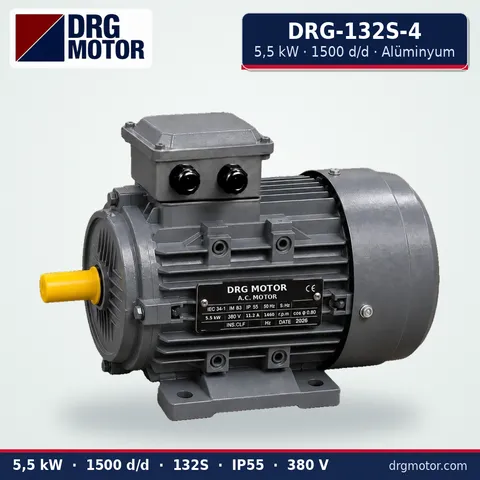
5.5 kW Three-Phase Motor 1500 rpm – DRG-132S-4 Aluminium
- 5.5 kW · 1500 rpm (4 poles)
- Aluminium frame · IEC 132S
- Shaft: 38 × 80 mm
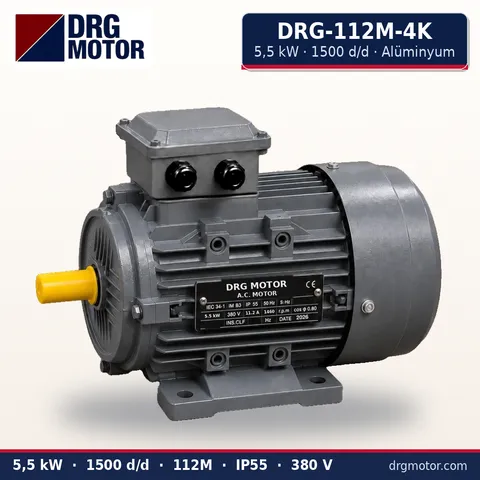
5.5 kW Compact Three-Phase Motor 1500 rpm – DRG-112M-4K Aluminium
- 5.5 kW · 1500 rpm (4 poles)
- Aluminium frame · IEC 112M
- Shaft: 28 × 60 mm
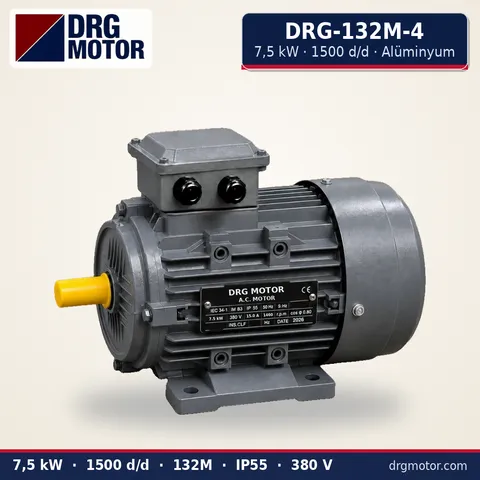
7.5 kW Three-Phase Motor 1500 rpm – DRG-132M-4 Aluminium
- 7.5 kW · 1500 rpm (4 poles)
- Aluminium frame · IEC 132M
- Shaft: 38 × 80 mm
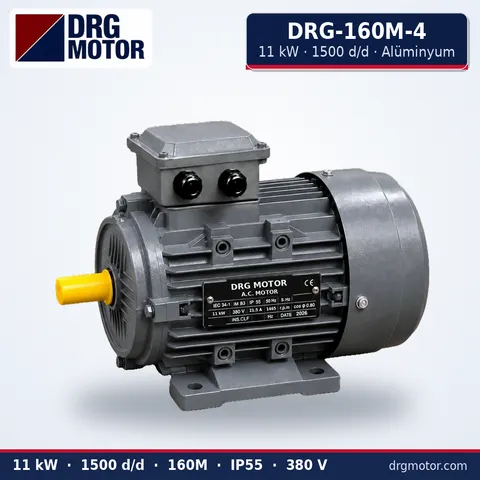
11 kW Three-Phase Motor 1500 rpm – DRG-160M-4 Aluminium
- 11 kW · 1500 rpm (4 poles)
- Aluminium frame · IEC 160M
- Shaft: 42 × 110 mm
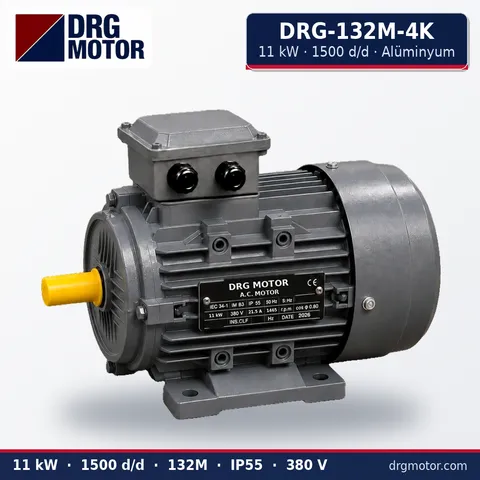
11 kW Compact Three-Phase Motor 1500 rpm – DRG-132M-4K Aluminium
- 11 kW · 1500 rpm (4 poles)
- Aluminium frame · IEC 132M
- Shaft: 38 × 80 mm