English
 Le français
 Türkçe




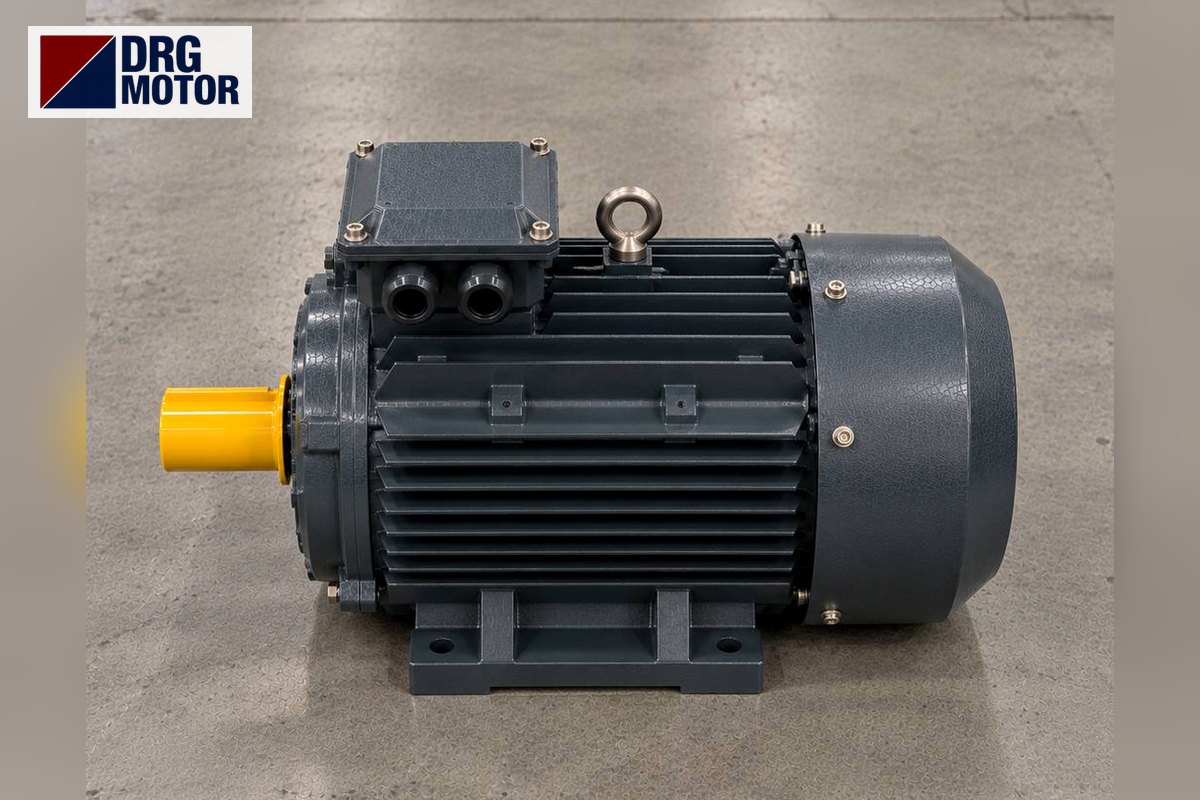

The vibration level of an electric motor is expressed through the effective value of vibration velocity, i.e. in mm/s rms. On small and medium three-phase asynchronous motors this value usually stays at a few mm/s rms in healthy operation; yet the exact limit that counts as "normal" is set by the motor's vibration class and by catalogue/standard data. There is no single universal number.
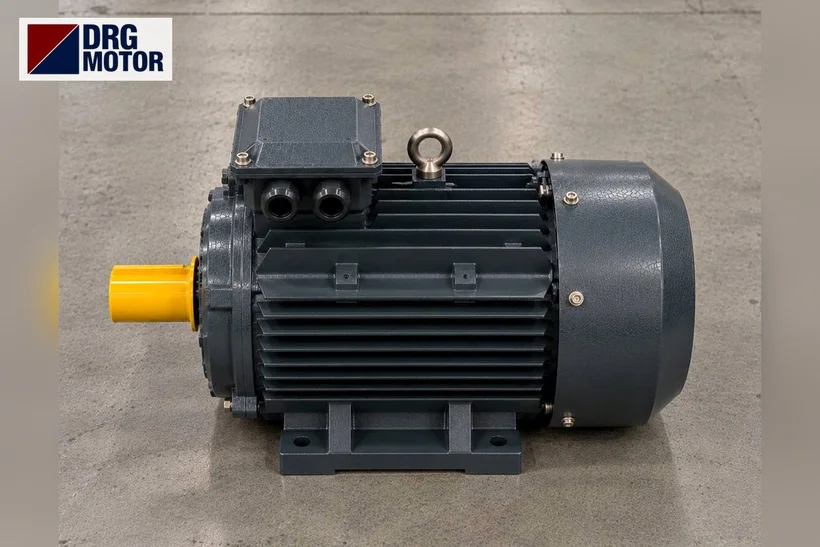
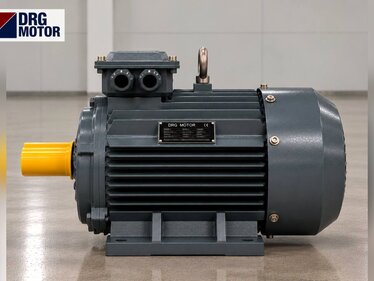
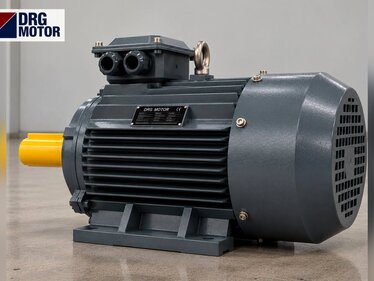
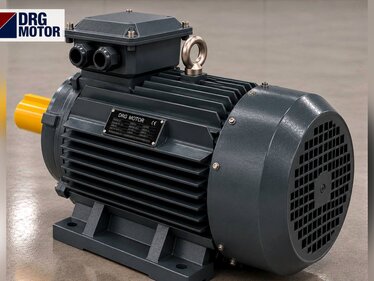
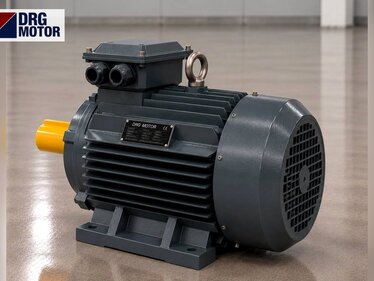
DRG Motor is a manufacturer, supplier and seller of electric motors. You can review three-phase models in different powers, speeds and housings in the online motor shop, and see the same motors grouped in the three-phase asynchronous electric motors category.
Why is vibration measured in mm/s rms?
Vibration can be described by three quantities: displacement (µm), velocity (mm/s) and acceleration (m/s²). To judge the overall vibration severity of a rotating electric motor, velocity is the most common quantity, because across a wide speed range it correlates well with the risk of fatigue and damage. Measurement is usually taken in the 10–1000 Hz band as the effective (rms) value of velocity and reported in mm/s rms.
The rms value represents the average energy of the vibration over time and differs from the peak value. That is why two motors with the same peak can show different rms values. When reading a measurement you need to know whether it is rms or peak, and in which band and direction it was taken.
What do vibration classes A and B mean?
Electric motors are classified by the vibration severity measured when running free (unloaded) at the factory. The two most common grades are class A (standard) and class B (reduced vibration). Class B meets tighter vibration limits than A and is preferred for vibration-sensitive applications. The limits depend on frame (axis) height, speed and mounting (free suspension or rigid).
| Vibration class | Intended use | Example mm/s rms range |
|---|---|---|
| A (standard) | General-purpose industrial drives | about 1.6 – 2.8 |
| B (reduced vibration) | Vibration-sensitive, precise applications | about 0.7 – 1.8 |
The mm/s rms ranges in the table are only there to give a sense of magnitude. Which class a motor belongs to, and the exact numerical limit of that class, are defined by the motor nameplate and the vibration-class data in the product catalogue; the ranges shown here should not be used as a hard threshold.
Click to see current electric motor prices and order nowSEE PRICES →
Normal or high? Evaluation zones
A measured vibration is usually interpreted with four evaluation zones. Roughly: newly commissioned machines in good condition sit in the low zone; then a zone accepted for long-term operation, a zone where operation is limited or monitored, and finally a high zone carrying a risk of damage. Whether a value counts as "high" depends on machine size and mounting rigidity, so it must always be compared with the relevant standard and catalogue value.
What matters is the trend rather than a single reading. In measurements taken regularly from the same point, a clear rise over time is a change worth investigating even if the absolute number is still below the limit.
Balance quality and the source of vibration
On a rotating motor the most frequent source of vibration is rotor unbalance, which shows up at the rotating frequency (1× speed). Rotors are balanced to a balance quality grade (G grades such as G2.5, G6.3); a smaller number means tighter balance. Because balancing follows a key convention (for example half-key), the key condition of the coupling or pulley fitted to the shaft also affects field vibration.
Mounting plays a big role too: shaft misalignment, a loose foot, a weak base or the wrong coupling raise vibration even on a perfectly balanced motor. For shaft, key and coupling fit see the article on motor shaft diameter, key and coupling standards, and for the effect of mounting style see the B3, B5, B14 and B35 mounting types comparison.
Measurement points and how to measure
Vibration is measured while the motor runs at its normal speed. Measurement points are usually the front and rear bearing housings; at each point readings are taken in three directions (horizontal, vertical and axial). The sensor (accelerometer or velocity sensor) is placed on a solid surface as close as possible to the bearing centre. A reading taken from a loose surface or the fan cowl is misleading.
Measurement and evaluation should be done by authorised personnel. As work takes place near rotating parts, safety precautions are required; if a connection, coupling or foot must be checked, first switch off the power and confirm it is de-energised. Exact accept/reject limits are applied according to the motor's vibration class and the measuring-device documentation.
Example DRG models by power
The table below lists a few 4-pole (1500 rpm) aluminium-housing DRG models with power, speed class and shaft size; the model codes link to the product page. Shaft diameter directly affects vibration behaviour through coupling/pulley balance and the connection.
| Model | Power (kW) | Speed class | Shaft D×E (mm) |
|---|---|---|---|
| DRG-112M-4 | 4 | 4-pole / 1500 rpm | 28×60 |
| DRG-132S-4 | 5.5 | 4-pole / 1500 rpm | 38×80 |
| DRG-132M-4 | 7.5 | 4-pole / 1500 rpm | 38×80 |
| DRG-160M-4 | 11 | 4-pole / 1500 rpm | 42×110 |
If power and speed are not yet clear in your project, we can determine the suitable model together.
Send a photo of your current motor nameplate and we will find the suitable DRG model together.Send on WhatsApp
Click to choose a three-phase motor matching your vibration class and shaft size and to see the current statusSEE PRICES →
Frequently asked questions
What is the vibration unit of an electric motor?
For overall vibration severity the most common unit is mm/s rms (the effective value of vibration velocity). µm is used for displacement and m/s² (acceleration) for high-frequency effects.
How many mm/s is considered normal?
There is no single universal figure. The normal limit is read from standard and catalogue data according to the motor's vibration class (A/B), frame size and mounting. A value below that limit that does not rise clearly over time is considered favourable.
What is the difference between vibration class A and B?
Class B meets tighter (lower) vibration limits than class A and is the grade preferred for vibration-sensitive applications. The exact values change with frame height and speed.
Who should measure vibration?
Measurement and interpretation should be done by authorised personnel with suitable equipment. If an electrical check is needed, switch off the power and confirm de-energisation.
Electric Motors Related to This Topic — Models and Current Prices
Suitability is not decided by power alone: compare the speed, voltage, mounting, shaft and fixing dimensions of your machine with the product data; if unsure, send us the nameplate of your current motor.
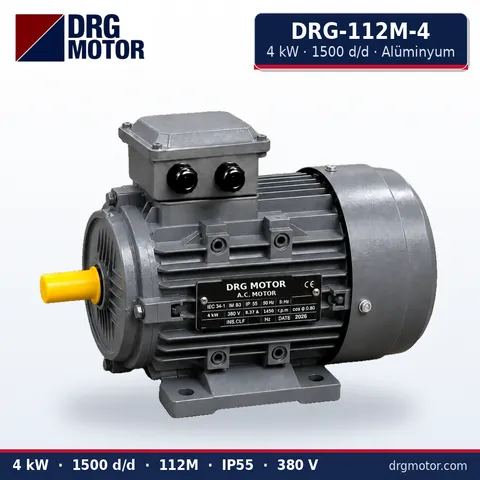
4 kW Three-Phase Motor 1500 rpm – DRG-112M-4 Aluminium
- 4 kW · 1500 rpm (4 poles)
- Aluminium frame · IEC 112M
- Shaft: 28 × 60 mm
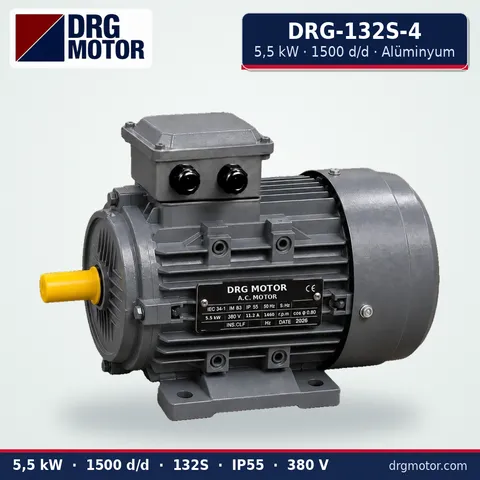
5.5 kW Three-Phase Motor 1500 rpm – DRG-132S-4 Aluminium
- 5.5 kW · 1500 rpm (4 poles)
- Aluminium frame · IEC 132S
- Shaft: 38 × 80 mm
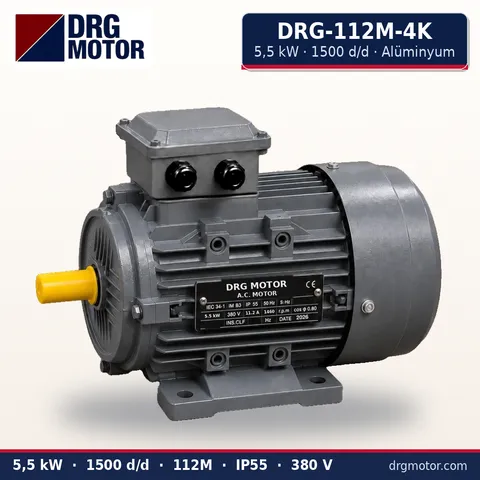
5.5 kW Compact Three-Phase Motor 1500 rpm – DRG-112M-4K Aluminium
- 5.5 kW · 1500 rpm (4 poles)
- Aluminium frame · IEC 112M
- Shaft: 28 × 60 mm
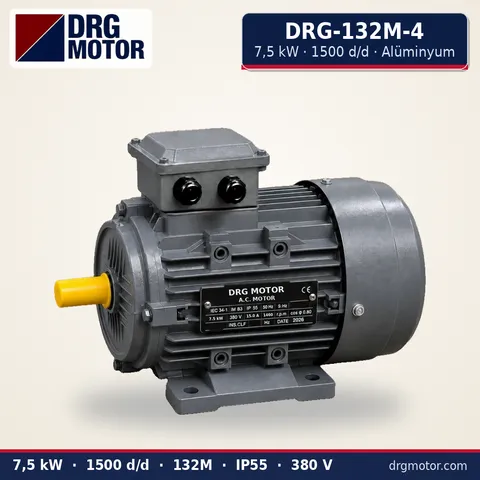
7.5 kW Three-Phase Motor 1500 rpm – DRG-132M-4 Aluminium
- 7.5 kW · 1500 rpm (4 poles)
- Aluminium frame · IEC 132M
- Shaft: 38 × 80 mm
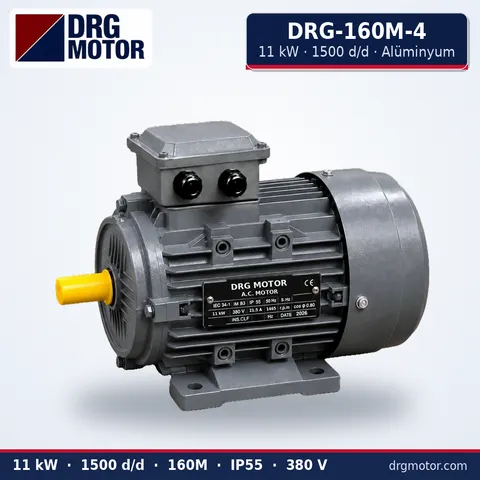
11 kW Three-Phase Motor 1500 rpm – DRG-160M-4 Aluminium
- 11 kW · 1500 rpm (4 poles)
- Aluminium frame · IEC 160M
- Shaft: 42 × 110 mm
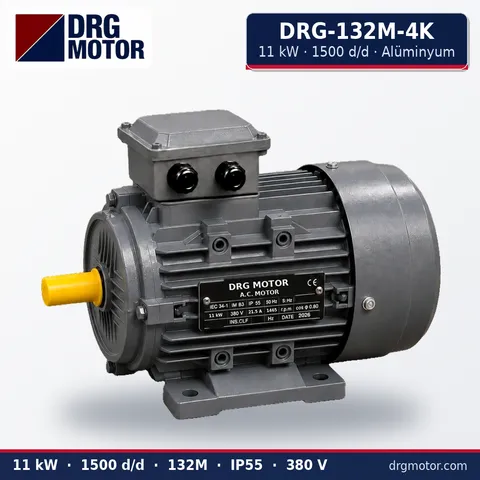
11 kW Compact Three-Phase Motor 1500 rpm – DRG-132M-4K Aluminium
- 11 kW · 1500 rpm (4 poles)
- Aluminium frame · IEC 132M
- Shaft: 38 × 80 mm