English
 Le français
 Türkçe




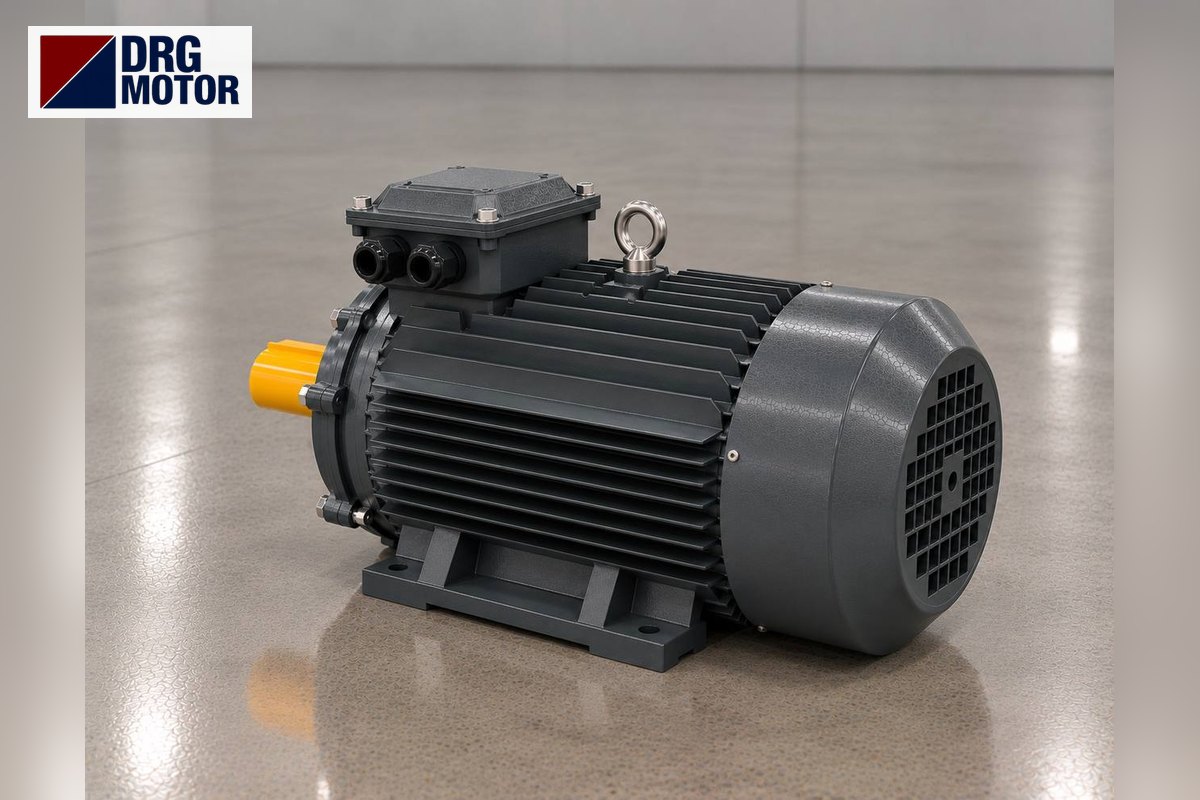

In a magnetic separator the electric motor does not drive the magnet; it drives the belt or drum that carries material past or around the magnet. On the overband type, a cross belt under a magnet hung above the conveyor throws the captured iron to the side; on the drum type the magnet stays still and the shell around it rotates. Both run through a gearbox, and what decides the choice is pairing the gearbox ratio and the motor's pole number so that the belt or drum reaches the surface speed the builder specifies.
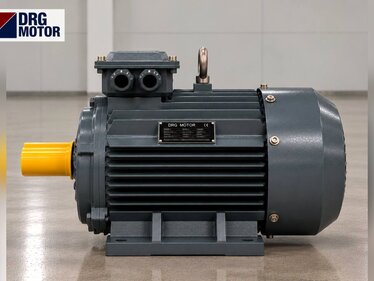
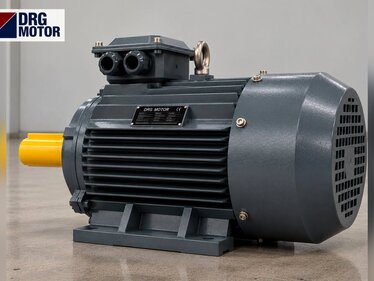
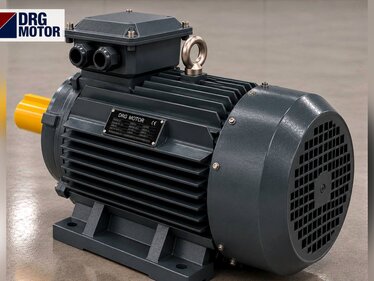
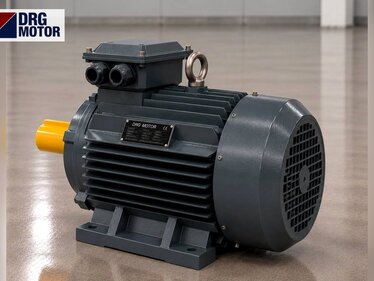
DRG Motor is a manufacturer, supplier and seller of electric motors. We do not sell separators, magnets or gearboxes; we supply the standard three-phase IEC motor that connects to the gearbox. Models are listed by power and speed in the online motor store; for general motor selection on sorting and screening machines see the recycling screening and sorting motors page.
Overband, Drum and Wet Drum: What Does the Motor Carry?
An overband separator hangs above a conveyor, either across it or in line with it. The permanent magnet or electromagnet block is fixed; beneath it a short cleated belt runs between two drums. Iron pulled up by the magnet sticks to this belt, which carries it out of the magnetic field, where it drops off. The motor turns one of the drums through a gearbox.
A magnetic drum (magnetic pulley) replaces the head pulley of a conveyor or sits at the end of a separate feeder. Inside is a fixed half-circle magnet; a stainless shell rotates around it. Ferrous pieces cling to the shell until they leave the field, while non-ferrous material falls straight off the front. Wet drum separators used in mining recover minerals such as magnetite from slurry; the drum turns inside a tank, and the motor stays outside it.
Why Speed Decides Separation Quality
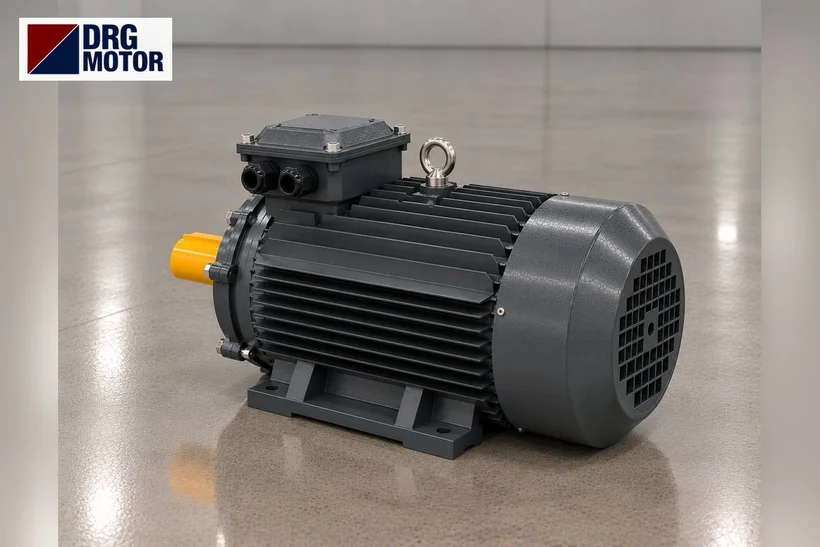
If the overband belt runs too slowly, captured iron builds up under the magnet and its ability to catch further pieces drops. If it runs too fast, the cleats drag iron before it is released from the field and some pieces fall back onto the conveyor. On drum separators, shell surface speed sets the trajectory of non-ferrous material and the position of the splitter.
So the speed must stay the same as the old arrangement when the motor is replaced. Fitting a 6-pole motor in place of a 4-pole one slows the belt by about a third with the same gearbox; the reverse speeds it up. If the pole number has to change, the gearbox ratio must be recalculated.
| Separator type | What the motor turns | Load character | Watch |
|---|---|---|---|
| Overband | Cross-belt drum | Steady, rises as iron builds up | Belt tension |
| Magnetic drum | Stainless shell | Together with conveyor load | Shell speed |
| Wet drum | Drum inside the tank | Slurry friction | Water splash |
Click to see current electric motor prices and order nowSEE PRICES →
Example: Gearbox Ratio and Motor Power
Belt or shell speed is v = π · D · n / 60, and gearbox output speed is n2 = n1 / i. Example assumption: a 320 mm drive drum and a target belt speed of about 2 m/s. The drum must turn at about 119.4 rpm. With a 4-pole 1450 rpm motor the ratio comes to about 12.15; choosing 12.5 as the nearest standard ratio, the drum turns at 116 rpm and the belt runs at about 1.94 m/s.
Assume a total belt pull of 900 N. Power at the drum is about 1.75 kW; with a gearbox efficiency of 0.90 the motor shaft needs about 1.94 kW, so a 2.2 kW motor covers this example. Torque required at the drum shaft from 9550 · P / n is about 144 Nm. The catalogue gives the DRG-100L1-4 a rated torque of 14.5 Nm; with a 12.5 ratio and 0.90 efficiency, about 163 Nm is available at the output. The figures illustrate the method; real force and speed are in the separator builder's data sheet. You can check your own ratio with the gearbox output speed and torque calculator.
Gearbox Input: Flange and Shaft
The most common layout on separators is a motor mounted by its B5 flange directly onto the input of a worm or helical gearbox; large overbands also use a foot-mounted motor with a coupled gearbox. The gearbox input flange and shaft bore must match the motor frame. The B5 dimensions in the DRG catalogue give frames 100L and 112M the same flange (M 215, N 180, P 250 mm) and the same shaft (28 × 60 mm); moving to frame 132, both flange and shaft grow. For small-flange (B14) inputs we confirm the size with the order.
- Model: DRG-100L2-4, 3 kW, 1450 rpm, cast iron
- Rated torque: 19.8 Nm, Ts/Tn 2.3
- Current (400 V): 6.02 A
- Voltage: 230/400 V (Δ/Y)
- Shaft (D × E): 28 × 60 mm
For gearbox selection and input flange matching, see the electric motors for gearboxes page.
Motor Near the Magnet, Dust and Impact
A motor working beside a strong magnet is itself made of steel parts; a motor or gearbox placed too close to the overband field collects metal dust and small iron pieces. Builders therefore keep the drive group at the end of the magnet block, outside the field; do not move the motor when replacing it.
Recycling and scrap plants are full of dust, broken glass and metal chips; IP55 protection keeps the inside of the motor safe but does not keep the ribs clean. A cast iron frame withstands impact and vibration better. On wet separators, shield the motor from splashing and never aim a hose at it when washing the tank. The rectifier and cooling system of electromagnetic overbands are not in the DRG range; they come from the separator builder.
Checklist for Replacing a Magnetic Separator Motor
- Separator type: overband, magnetic drum or wet drum.
- Motor nameplate: kW, rpm, voltage and connection.
- Gearbox type and ratio; input flange (B5 / B14) and shaft bore.
- Drive drum diameter and the belt or shell speed specified by the builder.
- Distance from motor to magnet and mounting position (horizontal, vertical).
- Environment: dry and dusty, wet, or outdoors.
- Does the separator run on an inverter or directly on the mains?
DRG Motors Suited to Magnetic Separator Drives
Cast iron 4-pole and 6-pole motors for dusty, impact-prone sites, mounted by B5 flange on the gearbox input or on feet. Choose the pole number together with the gearbox ratio.
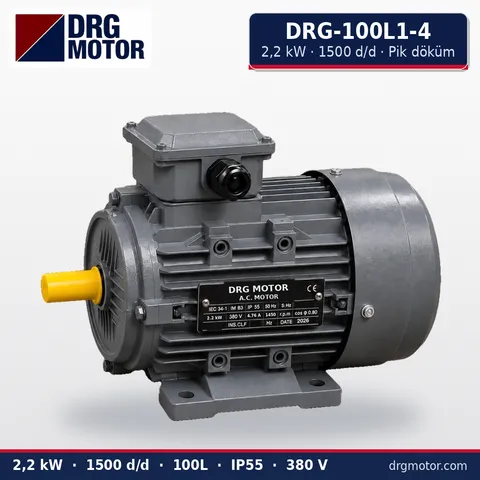
2.2 kW Three-Phase Motor 1500 rpm – DRG-100L1-4 Cast Iron
- 2.2 kW · 1500 rpm (4 poles)
- Cast iron frame · IEC 100L
- Mounting: B3 · B5 · B14 · B35
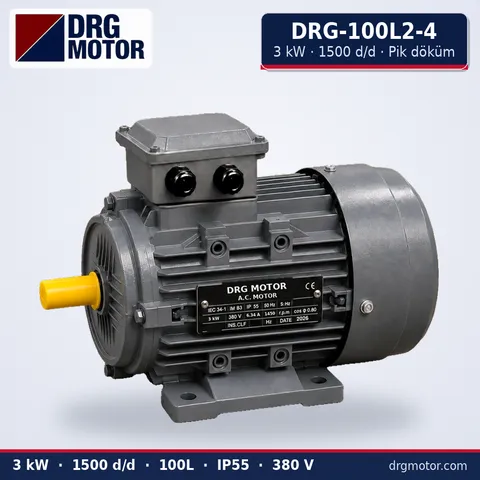
3 kW Three-Phase Motor 1500 rpm – DRG-100L2-4 Cast Iron
- 3 kW · 1500 rpm (4 poles)
- Cast iron frame · IEC 100L
- Mounting: B3 · B5 · B14 · B35
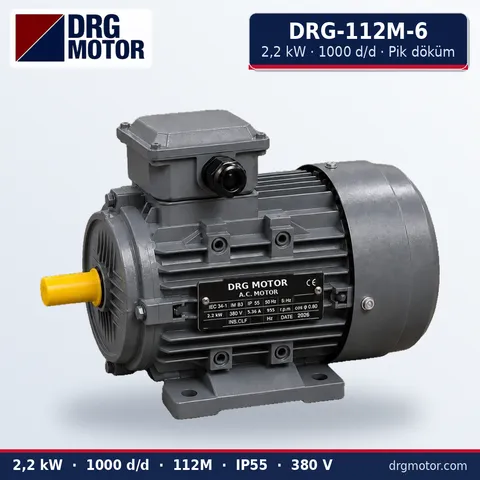
2.2 kW Three-Phase Motor 1000 rpm – DRG-112M-6 Cast Iron
- 2.2 kW · 1000 rpm (6 poles)
- Cast iron frame · IEC 112M
- Mounting: B3 · B5 · B14 · B35
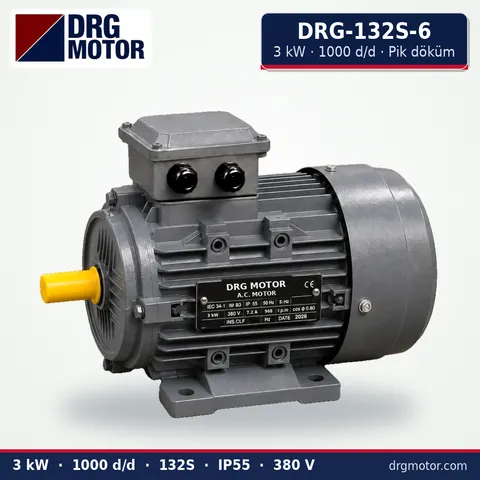
3 kW Three-Phase Motor 1000 rpm – DRG-132S-6 Cast Iron
- 3 kW · 1000 rpm (6 poles)
- Cast iron frame · IEC 132S
- Mounting: B3 · B5 · B14 · B35
Click to see current prices and order these motors nowSEE PRICES →
Magnetic Separator Motor FAQ
How many kW is an overband separator motor?
Overbands above small conveyors usually need a few kW; wide-belt mining and scrap plants need more. The exact value is on the separator builder's nameplate and in its catalogue; the calculation above is only an example.
The separator belt turns slowly. What could be the cause?
The usual causes are a spare motor with the wrong number of poles, a slipping belt or slack tension, iron piling up under the belt, and a worn gearbox. First compare the nameplate speed and gearbox ratio with the old arrangement.
Can a magnetic separator run on an inverter?
Yes. Plants that want to set belt speed to suit the material use an inverter; DRG three-phase motors can be inverter-driven, and the inverter is sourced separately. For long running at low speed, check motor temperature.
Does the magnet harm the electric motor?
Not in the position the separator builder intended. If the motor is moved into the field it collects iron dust and the fan cover and ribs clog; do not relocate it.
To identify your separator motor, a nameplate photo, motor power and speed, mounting (foot or flange), shaft size and gearbox ratio are enough. Share them on WhatsApp or send the models through the quote list. Phone +90 (542) 666 11 11 · info@drgmotor.com · contact. All cast iron and aluminium frame models are in the DRG online store.