English
 Le français
 Türkçe

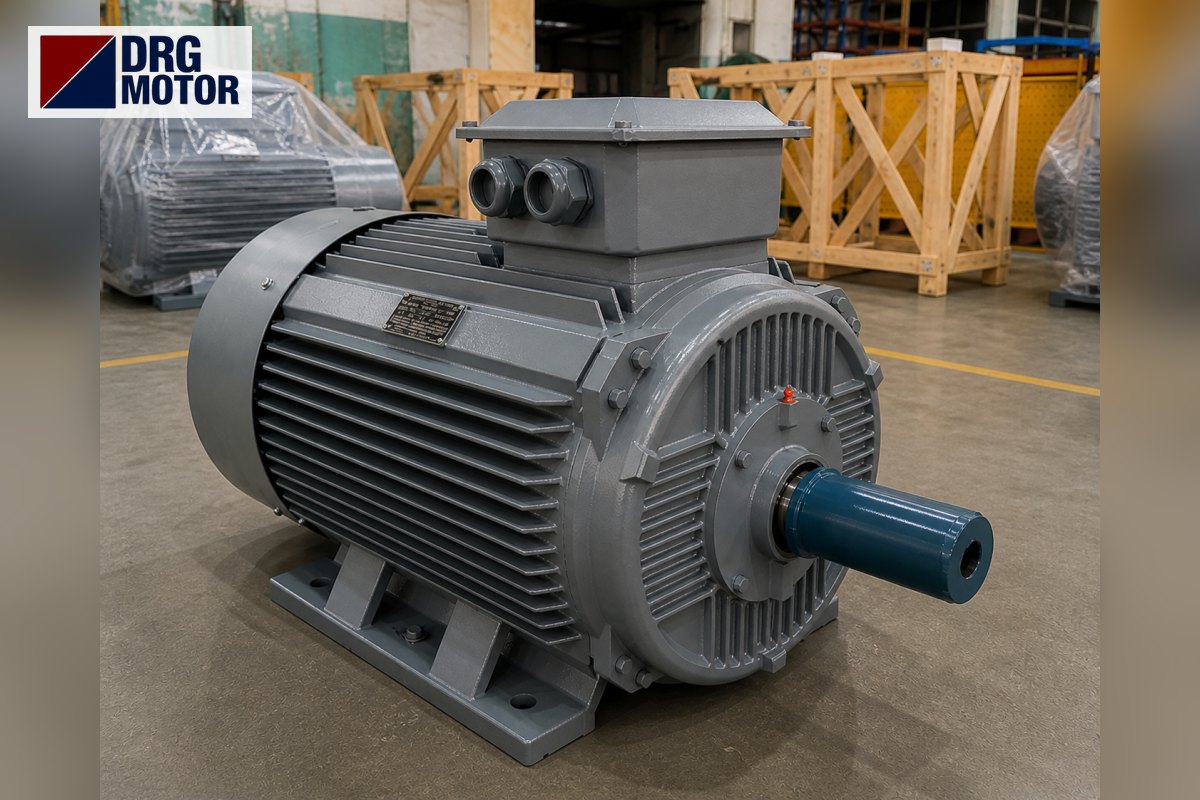

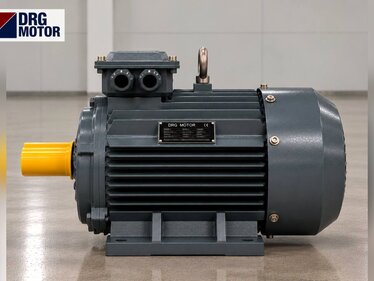
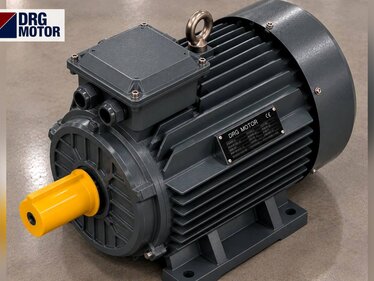
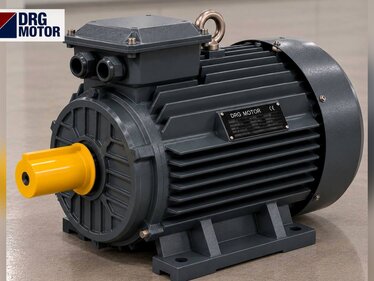
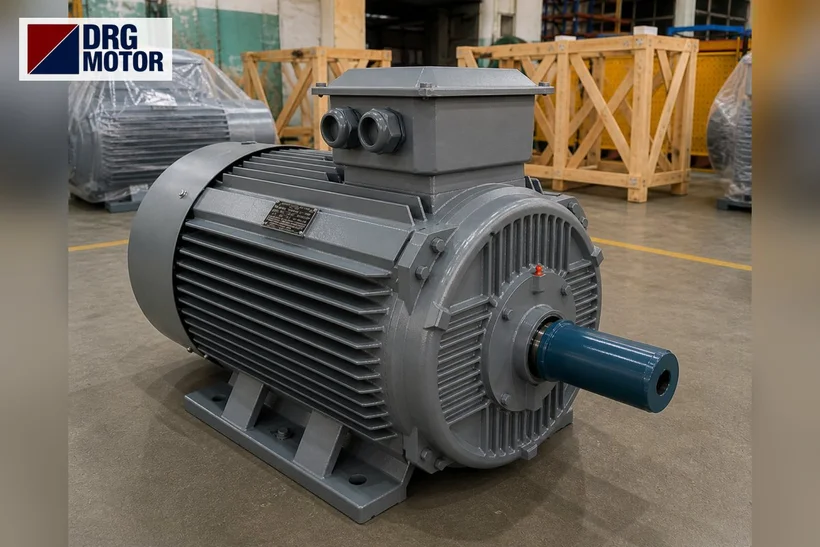
A ventilation duct lock forming machine (Pittsburgh or double seam machine) bends the edge of galvanised sheet into a locking profile by passing it through a row of roll pairs; a single electric motor turns these rolls through a belt and a gear train. The job is not heavy, but the motor must absorb the short torque peaks that occur each time the sheet enters a new roll pair without losing speed. Workshop lock formers typically use a 4-pole, foot-mounted (B3) three-phase motor of 0.75–2.2 kW; the exact power is on the machine plate.
You can choose the equivalent model by nameplate power and speed in the DRG online electric motor store. This article covers the drive layout specific to lock formers, the effect of sheet thickness on the motor and the values to measure when replacing.
How Power Is Distributed Inside a Lock Former
A lock former has the motor below the frame and 6 to 12 roll stations side by side on top. A small pulley on the motor shaft turns a large pulley through a belt. The large pulley's shaft drives a gear train; the gears turn all lower and upper roll shafts at the same speed, in opposite directions.
The sheet edge is turned slightly at the first station, folded further at each station, and ends as a Pittsburgh pocket or double seam profile. The same machine often has a second line (for example a right-angle lock or flange bend) driven by the same motor.
For the motor this means: it is slowed by pulley and gears instead of a gearbox. So pulley diameter, belt type and motor speed must be considered together when replacing.
Sheet Thickness, Galvanised Coating and Torque Peaks
Load on a lock former is not constant. Before the sheet enters, the motor only overcomes gear and roll friction. When the sheet enters the first roll, torque rises, and each new station adds another short peak as the edge advances. Load peaks when the sheet fills all stations.
The main factors that set the load:
- Sheet thickness: Exceeding the maximum thickness on the machine plate strains the roll bearings and the motor at the same time.
- Material: Galvanised steel bends harder than aluminium sheet, so it needs more torque at the same thickness. For stainless sheet, check the machine's own limit.
- Roll gap: A wrong setting crushes the sheet, torque rises and the lock profile is spoiled.
The motor's starting torque is about 2.3 times rated (Ts/Tn = 2.3 for 90S-4 and 90L-4). This margin is enough to restart with sheet in the machine; even so, frequent stops and starts with sheet inside wear the belt and gears.
Click to see current electric motor prices and order nowSEE PRICES →
Pulley Ratio, Motor Speed and Forming Speed
On a lock former the operator feeds the sheet by hand. If forming speed is too high the sheet escapes the guide; if too low output drops. Changing motor speed upsets this balance directly.
Example (assumption): Motor pulley 80 mm, machine pulley 200 mm, gear train ratio 1:10, roll diameter 70 mm. Speed after the pulleys is n2 = n1·d1/d2. Results for different pole numbers:
| Motor | Motor speed | Roll speed | Forming speed |
|---|---|---|---|
| DRG-802-2 (2-pole) | 2880 rpm | 115.2 rpm | about 25.3 m/min |
| DRG-90S-4 (4-pole) | 1445 rpm | 57.8 rpm | about 12.7 m/min |
| DRG-90L-6 (6-pole) | 945 rpm | 37.8 rpm | about 8.3 m/min |
All three motors are 1.1 kW, yet speed varies by nearly three times between the extremes. In duct fabrication the speed given by the 4-pole motor is normally kept. Before changing a pulley, you can see the result in the pulley and belt calculator.
Values to Measure When Replacing the Motor
On a lock former the motor is usually foot-mounted (B3) inside or below the frame on a belt-tensioning slide. When replacing, measure:
- Shaft height and foot holes: The 90S frame has a 90 mm shaft height and 140 × 100 mm foot hole spacing; the 90L frame has 140 × 125 mm. If the slide holes differ, new holes must be drilled.
- Shaft and key: Frame 80 is 19 × 40 mm, 90S/L 24 × 50 mm, 100L 28 × 60 mm. The pulley hub must fit this diameter.
- Voltage and connection: Motors in this power range are 230/400 V and are connected in star on a 400 V supply.
- Direction: If the rolls turn the wrong way, the sheet is pushed out instead of in. Swapping two phases corrects it.
Some lock formers in small workshops come with a single-phase (220 V) motor. The DRG range consists only of three-phase motors; if the workshop has no three-phase supply, this replacement cannot be done directly with a standard DRG motor and the supply side must be solved separately.
Zinc Dust, Oil and the Workshop Environment
In a duct workshop the motor is surrounded by galvanised flakes, roll oil and sheet burrs. DRG motors are IP55; they are protected against dust and splashing liquid. If the motor sits in a closed compartment of the frame, leave space for fan air to circulate and do not let compartment covers block the vents.
Watch belt tension. An over-tight belt loads the motor bearing; a slack belt slips when the sheet enters and the lock profile comes out uneven. If there is a mechanical noise, check the oil and backlash in the gear train before replacing the motor.
Common Motor Selection Mistakes on Lock Formers
Fitting a faster motor: A 2-pole motor does not speed up production; it makes the sheet escape the guide and spoils the profile.
Oversizing power: A larger frame may not fit on the slide, the shaft diameter changes and the pulley must be replaced. Machine capacity is limited by its rolls; more motor power does not let it bend thicker sheet.
Guessing the overload setting: A 1.1 kW 4-pole motor draws 2.48 A at 400 V. The overload must be set accordingly. On the other side of duct work, for the fan motor of the installed duct, our inline centrifugal fan motor page is a separate guide.
For general three-phase motor options see general purpose electric motors; in this class an aluminium housing reduces the weight on the slide.
DRG Motors Suitable for Lock Forming Machines
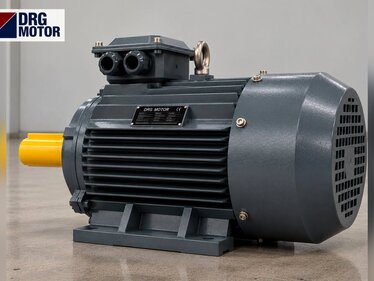
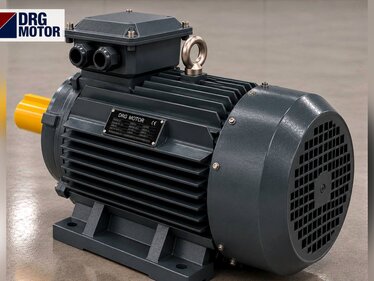
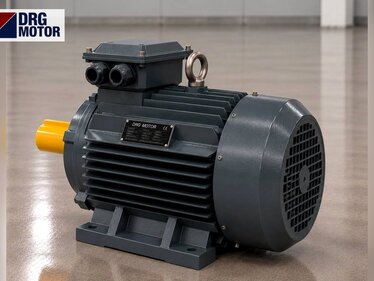
These models cover the 0.75–2.2 kW range common on lock formers at 4-pole speed and suit foot (B3) mounting; choose the frame closest to your slide and pulley dimensions.
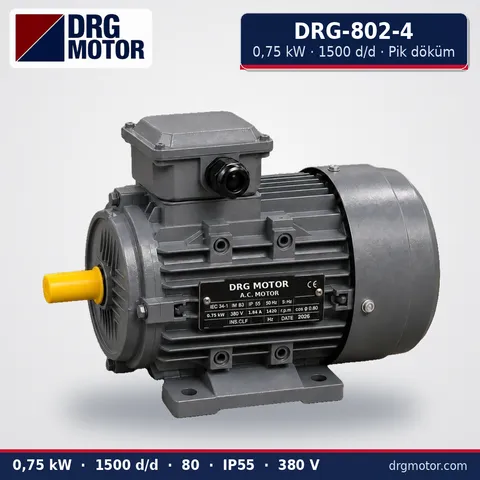
0.75 kW Three-Phase Motor 1500 rpm – DRG-802-4 Cast Iron
- 0.75 kW · 1500 rpm (4 poles)
- Cast iron frame · IEC 80
- Mounting: B3 · B5 · B14 · B35
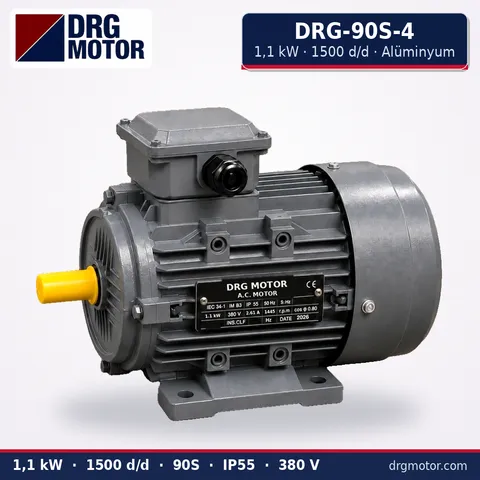
1.1 kW Three-Phase Motor 1500 rpm – DRG-90S-4 Aluminium
- 1.1 kW · 1500 rpm (4 poles)
- Aluminium frame · IEC 90S
- Mounting: B3 · B5 · B14 · B35
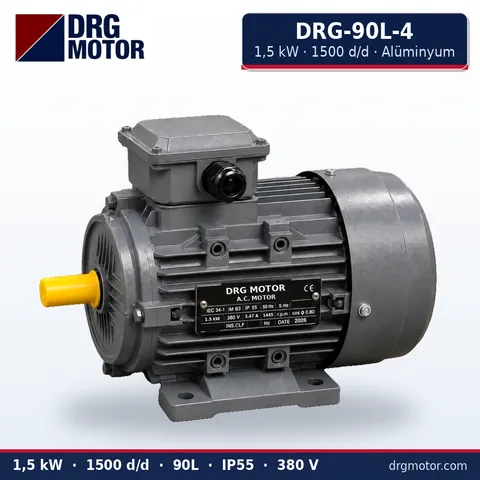
1.5 kW Three-Phase Motor 1500 rpm – DRG-90L-4 Aluminium
- 1.5 kW · 1500 rpm (4 poles)
- Aluminium frame · IEC 90L
- Mounting: B3 · B5 · B14 · B35
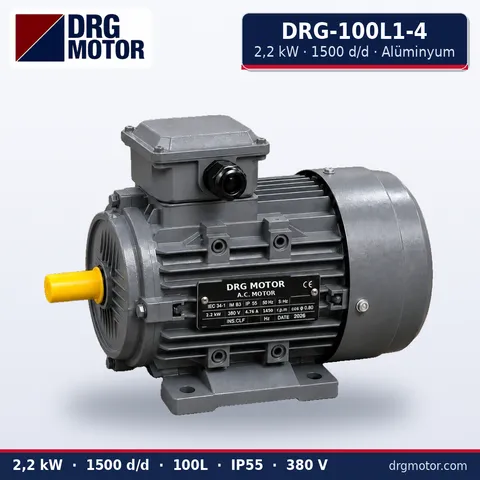
2.2 kW Three-Phase Motor 1500 rpm – DRG-100L1-4 Aluminium
- 2.2 kW · 1500 rpm (4 poles)
- Aluminium frame · IEC 100L
- Mounting: B3 · B5 · B14 · B35
Click to see current prices and order these motors nowSEE PRICES →
Lock Forming Machine Motor FAQ
What kW motor does a lock forming machine use?
Workshop Pittsburgh and double seam machines usually have a motor of 0.75–2.2 kW. Power grows with the sheet thickness the machine handles and the number of stations. For a replacement, use the old motor's nameplate value.
My lock former motor runs backwards, what should I do?
On a three-phase motor, swapping two phases in the supply cable reverses direction. This must be done with power off and by a qualified person.
Can a 2-pole motor be used on a lock former?
Not unless the pulley ratio is recalculated. With the same pulley, roll speed roughly doubles and hand feeding becomes difficult.
Why does the lock former strain and slow down when sheet enters?
The most common causes are belt slip or a roll gap set too tight for the sheet thickness. If the current on the motor plate is exceeded, also check that sheet thickness is within the machine limit.
For a motor replacement, share a picture of the old rating plate, its power, speed, mounting (foot or flange), shaft diameter and the thickest sheet the machine processes via WhatsApp, or add the suitable model to the quote list. Questions can go to +90 (542) 666 11 11 or info@drgmotor.com; more details are on the contact page. DRG Motor is a manufacturer, supplier and seller of electric motors; all models are in the online store.