English
 Le français
 Türkçe




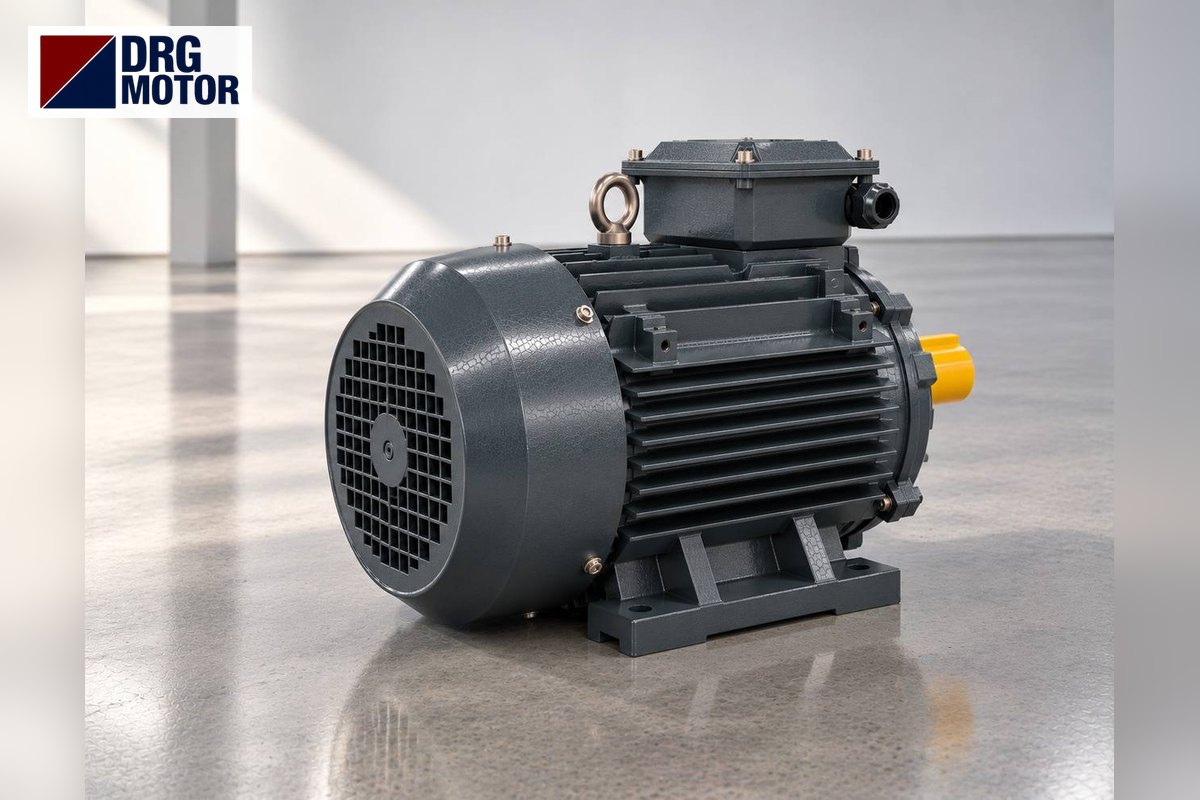

In a lentil dehulling machine, the motor drives, by belt and at high speed, the horizontal shaft carrying the abrasive stones; the hull is removed by the abrasive stone surface and by the grains rubbing against each other. Three things matter when choosing the motor: the pulley ratio that sets stone shaft speed, the load that changes with the outlet gate pressure, and bran dust. These machines usually carry a 2- or 4-pole three-phase motor, foot-mounted (B3) on a slide base.
Replacing a burnt-out motor with one of the same poles and power is usually enough; buying a motor with a different speed without understanding the pulley layout spoils dehulling quality. Suitable models are in our online electric motor store, and motors for the other post-harvest equipment are listed on our agricultural machine electric motors page.
How Does an Abrasive Stone Dehuller Work?
The heart of the machine is a horizontal shaft fitted with a series of abrasive stone discs. The shaft turns inside a screen jacket made of perforated sheet or wire mesh. Lentils enter at one end, travel through the narrow ring between stones and screen and leave through a weighted or spring-loaded gate at the other end.
A grain touching the stone loses its hull by abrasion; grains also rub against each other. The detached bran passes through the screen holes and, on most machines, is drawn off by a separate fan. Before dehulling, lentils are usually moistened and left to rest (tempering); the hull loosens and the grain breaks less.
A heavier gate keeps the grain longer in the machine: more hull comes off, but breakage also rises. The motor current is a direct indicator of this setting; operators often set the gate while watching the ammeter.
Stone Speed, Pulley Ratio and Stone Wear
The dehulling effect depends on the stone's peripheral speed: v = π · D · n / 60. Stone speed comes from the pulleys: n2 = n1 · d1 / d2. The table below is an example, assuming a stone diameter of 350 mm and a target stone speed around 1100 rpm. Motor speeds are from the DRG catalogue.
| Motor | Pulleys (motor / stone) | Stone speed | Stone surface speed |
|---|---|---|---|
| DRG-160M-4 (1465 rpm) | 150 / 200 mm | 1099 rpm | 20.1 m/s |
| DRG-160M1-2 (2945 rpm) | 100 / 265 mm | 1111 rpm | 20.4 m/s |
| DRG-132S2-2 (2930 rpm) | 100 / 265 mm | 1106 rpm | 20.3 m/s |
As the stone wears, its diameter shrinks and surface speed falls at the same rpm. In the example, if the stone goes from 350 mm to 320 mm, surface speed at 1099 rpm drops from 20.1 m/s to 18.4 m/s; dehulling weakens, the operator adds gate weight and current rises. If current creeps up over time, measure the stone diameter first. Speed can be recovered by changing pulleys; you can test new diameters with our pulley and belt calculator.
Click to see current electric motor prices and order nowSEE PRICES →
2-Pole or 4-Pole? Looking From the Belt Side
Torque reaching the stone shaft comes from power, not pole count. With catalogue values at 11 kW, the 2-pole DRG-160M1-2 gives 35.7 Nm and the 4-pole DRG-160M-4 71.7 Nm; but after the pulley ratios in the table (2.65 and 1.33), both come to roughly 95 Nm at the stone shaft. The difference is on the belt side.
- 2-pole: small motor pulley (100 mm in the example), belt speed about 15.4 m/s, peripheral belt force at 11 kW about 713 N. The stone pulley gets larger and needs room in the machine. On a small pulley the belt bends more and heats up sooner.
- 4-pole: larger motor pulley (150 mm in the example), belt speed about 11.5 m/s, peripheral force about 956 N. The stone pulley stays small; bearings and belt run more calmly.
Rule of thumb: stay with the pole count the machine was designed for. Swapping 4 poles for 2 while keeping the old pulleys roughly doubles stone speed; neither stone nor grain can take that.
Power Range and Reading the Current
Motor power grows with the number of stones, stone length and hourly capacity. Small workshop types manage with a few kW, while line machines may use 15 kW and more. What tells you the required power is the builder's plate or catalogue; do not attempt to derive kW from tonnes per hour.
Current shows how hard the motor is working. The DRG-160L-4 (15 kW) draws a rated 27.3 A at 400 V, the DRG-160M-4 (11 kW) 20.4 A. If an 11 kW motor is fitted to a machine plated at 15 kW and the operator keeps the gate at the same weight for the same degree of dehulling, the motor exceeds its 20.4 A limit and the overload opens; either the gate gets lighter or dehulling stays incomplete. Set the overload relay to the motor's nameplate current and keep the gate setting below that limit using the ammeter.
Bran Dust, Tempering Moisture and the Motor
Bran is a fine, slightly oily dust. It sticks to the fan cowl and cooling fins of the motor and blocks the airflow; the motor runs hotter at the same load. Clean the fan cowl and frame regularly with compressed air and keep the motor away from the discharge of the aspiration duct.
DRG motors are IP55; they are suited to dust and water splashes. Moisture from the tempering section can condense in the terminal box; tight cable glands and a downward-facing cable entry reduce that risk. Where bran dust has led to an explosive dust zone classification, standard motors are ruled out and an Ex-protected special motor is needed.
Measure Before the Swap: Slide Base, Shaft and Pulley
On dehullers, slide base holes cause the most trouble at motor replacement, because 160M and 160L carry the same shaft but have different foot lengths. Catalogue values for the 15 kW DRG-160L-4:
- Shaft end: Ø42 mm, 110 mm long, 12 mm key
- Shaft centre height: 160 mm (frame 160L)
- Foot holes: 254 mm × 254 mm pattern, Ø14.5 mm
- Plate values: 15 kW, 1465 rpm, 27.3 A at 400 V
- Connection: 400/690 V, delta on a 400 V supply
On the 11 kW DRG-160M-4 the shaft and centre height stay the same, while the lengthwise foot spacing is 210 mm. Moving from 11 kW to 15 kW may require new holes in the slide base. Before ordering, complete this list:
- Power, speed and current on the old motor's nameplate.
- Motor pulley diameter, number of grooves and belt profile.
- Shaft diameter and key width: the pulley hub must fit the new shaft.
- Foot hole spacing and slide base travel: the motor must be movable to tension the belt.
- Direction of the stone shaft: the machine may be direction-sensitive because of the feed screw and outlet.
- Starting method in the panel (direct or star-delta) and overload setting range.
- Whether the aspiration fan and feed screw have their own motors.
DRG Motor Options for Lentil Dehullers
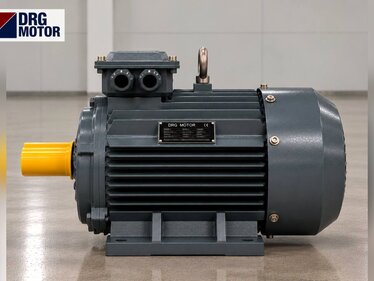
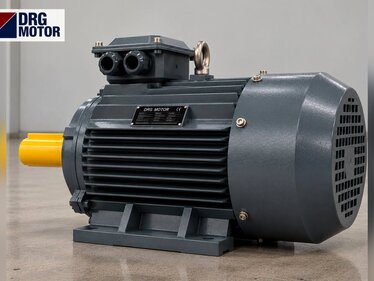
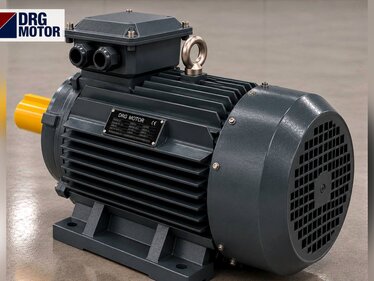
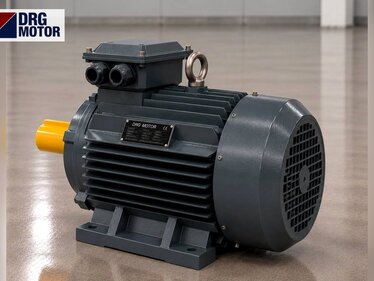
These models are cast iron 2- and 4-pole motors suited to foot mounting; they cover the 7.5–15 kW steps common on belt-driven dehullers. Choose by the pole count and power of the old motor.
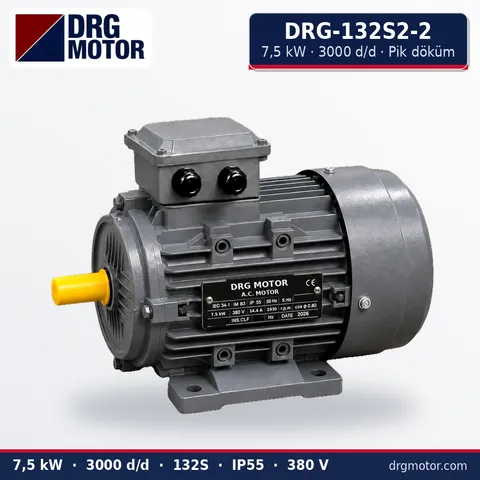
7.5 kW Three-Phase Motor 3000 rpm – DRG-132S2-2 Cast Iron
- 7.5 kW · 3000 rpm (2 poles)
- Cast iron frame · IEC 132S
- Mounting: B3 · B5 · B14 · B35
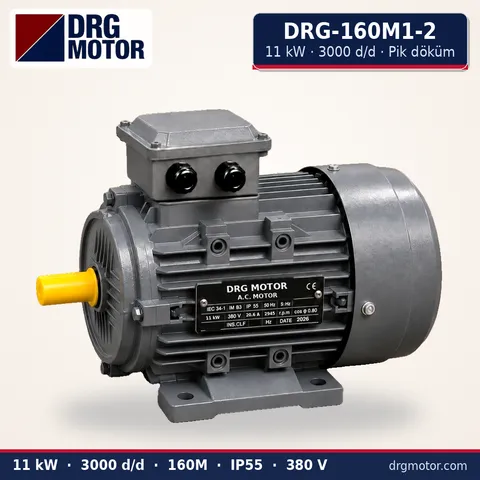
11 kW Three-Phase Motor 3000 rpm – DRG-160M1-2 Cast Iron
- 11 kW · 3000 rpm (2 poles)
- Cast iron frame · IEC 160M
- Mounting: B3 · B5 · B14 · B35
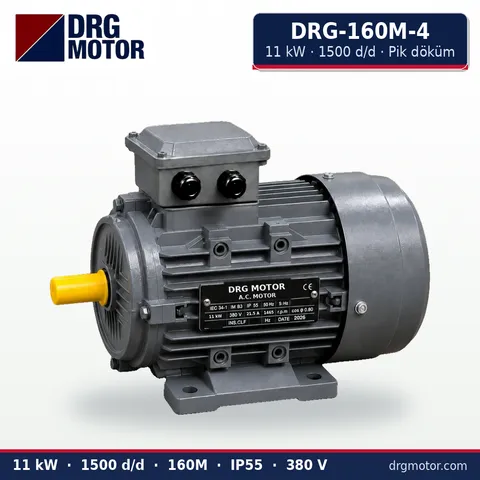
11 kW Three-Phase Motor 1500 rpm – DRG-160M-4 Cast Iron
- 11 kW · 1500 rpm (4 poles)
- Cast iron frame · IEC 160M
- Mounting: B3 · B5 · B14 · B35
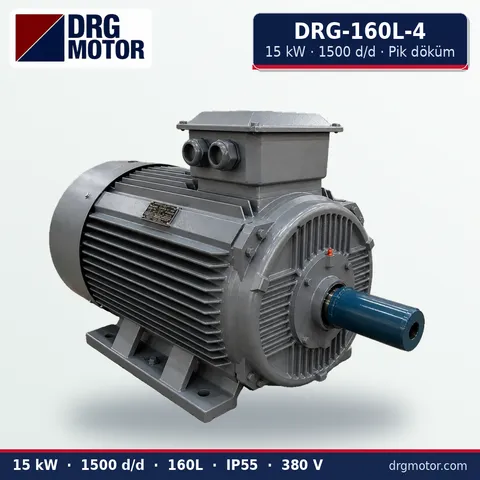
15 kW Three-Phase Motor 1500 rpm – DRG-160L-4 Cast Iron
- 15 kW · 1500 rpm (4 poles)
- Cast iron frame · IEC 160L
- Mounting: B3 · B5 · B14 · B35
Click to see current prices and order these motors nowSEE PRICES →
Lentil Dehuller Motor: Common Questions
What kW motor goes on a lentil dehulling machine?
It depends on the number of stones, stone length and capacity. The right value is the machine's nameplate; if the plate is unreadable, ask the machine builder with the model number. A smaller motor forces you to reduce gate pressure.
Why does the dehuller motor draw more amps over time?
The most common cause is stone wear: surface speed drops and the operator adds gate weight. A clogged screen jacket, a loose or worn belt and motor fins coated in bran also push current up.
Can I change dehuller speed with the pulleys?
Yes, using n2 = n1 · d1 / d2. However, the stone maker's maximum permitted surface speed must not be exceeded. When changing pulleys, check belt length and groove profile again as well.
Is the aspiration fan driven by the same motor?
On most machines, no; the fan drawing off the bran runs on a separate motor with a different power. Confirm from its nameplate which motor has failed.
DRG Motor is a manufacturer, supplier and seller of electric motors. When asking for a dehuller motor quotation, share a photo of the motor label, power and speed, the foot mounting, shaft diameter and motor pulley size; the machine's stone count also helps. You can write the details on WhatsApp or send your chosen motors through the quote list. Reach us on +90 (542) 666 11 11 and at info@drgmotor.com, with other options on the contact page. For current prices, visit the online store.