English
 Le français
 Türkçe




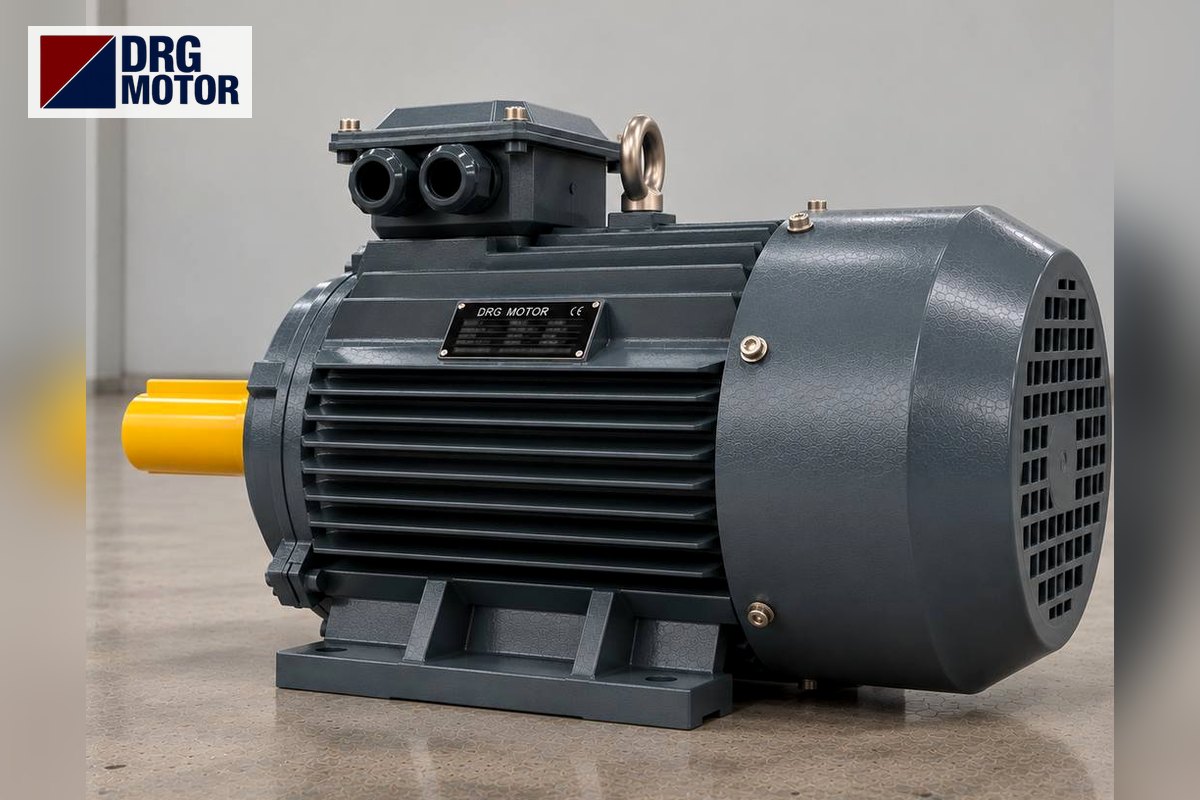

A well-chosen and regularly maintained electric motor can run trouble-free for many years. But there is no single exact answer to "how many years"; its life depends on load, temperature, working environment, starting frequency and, above all, maintenance. In the right conditions it turns reliably for years; when neglected it wears out far sooner.
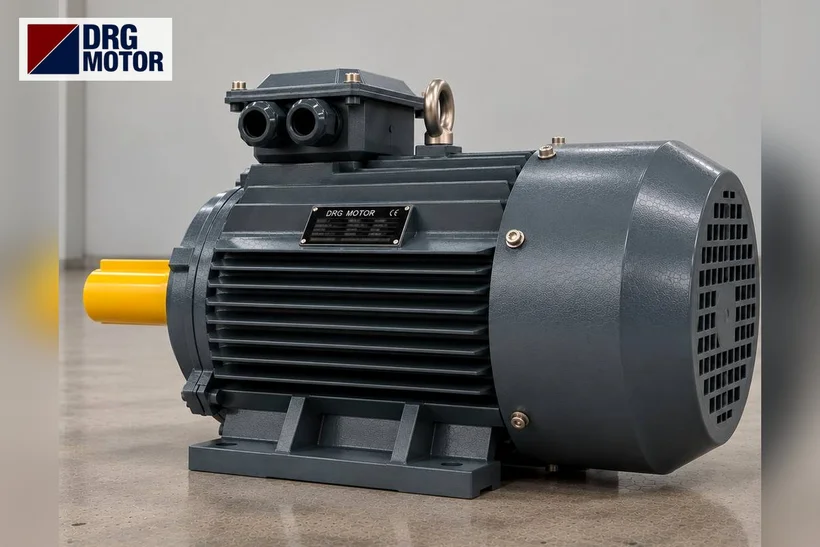
DRG Motor is a manufacturer, supplier and seller of electric motors. Below we explain in plain language what sets the life of an electric motor. For a sound start you can choose the model that best fits your need by power and speed in the online electric motor shop and see all options in the three-phase asynchronous electric motors category.
How long does an electric motor last? The honest answer: it depends
The honest answer is that no fixed number of years can be given. Of two identical electric motors, one may run for years in the right load, in a cool and clean place, with regular care; the other, under heavy load in a hot and dusty corner and left unmaintained, may fail much sooner. So the life is set as much by how the motor is used as by the motor itself. That is why, instead of "guaranteed for so many years", it is better to look at what lengthens and what shortens its life.
The main factors that set the life
How long an electric motor lasts is decided by a few basic factors together. None of them explains everything alone; together they lengthen or shorten the life.
| Factor | Effect on life |
|---|---|
| Load (right power choice) | A constantly strained electric motor heats and wears more; one running at the right power stays comfortable. |
| Temperature and cooling | High heat tires the winding insulation and the grease; a well-ventilated, cool place extends life. |
| Working environment | Dust, moisture and dirty air harm the bearing and insulation; a clean place is kind to the motor. |
| Starting frequency | Very frequent starts build up heat and mechanical stress; balanced use protects the life. |
| Bearing and grease care | The most critical item; a bearing serviced in time carries the motor for a very long period. |
Load and the right power choice
One of the biggest influences on an electric motor's life is choosing it at the right power from the start. An undersized electric motor is constantly strained to turn the load, which means extra current, extra heat and faster wear. A motor whose power matches the need runs comfortably, heats less and lasts for years. To find the right power you need to clarify your application, the load you will drive and the speed required; when in doubt our electric motor calculator helps.
Click to see current electric motor prices and order nowSEE PRICES →
Temperature and working environment
Heat is the quietest enemy of an electric motor. The winding insulation and the bearing grease lose their qualities over time at high temperature; the cooler the motor stays, the longer it lives. So the ventilation path must be clear, the fan cover must not be clogged with dust, and the ambient temperature should be kept reasonable. In dusty, damp or dirty places the IP protection class matters; DRG three-phase electric motors are offered with IP55 protection, yet a clean and well-ventilated position still extends life noticeably. You can read about the housing material's contribution to durability in our aluminium versus cast iron housing difference article.
Starting frequency
An electric motor draws higher-than-normal current at every start and sees a short rise in heat. For a motor that stops only now and then during the day this is negligible; but in an application that stops and starts very often, these small strains add up and gradually tire the bearing, the winding and the connections. If your application needs frequent starts, say so from the beginning; matching the power and mounting choice to that protects the motor's life.
The role of bearing and grease care
At the heart of an electric motor are the bearings; they are the parts that turn the shaft quietly and without friction. Perhaps the most decisive item of all is bearing and grease care. A bearing whose grease is renewed in time and whose sound and heat are watched carries the motor for many years. A bearing left unmaintained, dried out or contaminated first makes noise, then heats up, and finally makes the shaft hard to turn and leads the motor to failure. When an unusual noise, vibration or heating from the bearing is noticed, acting in time often saves a whole electric motor. For this reason a regular maintenance schedule is the cheapest and most effective way to extend life.
A well-cared-for electric motor lasts longer
The common conclusion of all these items is simple: a well-cared-for electric motor lasts far longer than the same model left unmaintained. Choosing the right power, keeping it cool and clean, leaving the ventilation open, listening to the bearing and renewing the grease in time — each of these adds years to the life. So the life is largely in your hands. That is why the truest answer to "how many years will it last" is: "as long as you look after it well".
A sound start for long life: example DRG electric motors
The first step to long life is choosing a sound and correct electric motor from the start. Below are a few 4-pole (about 1500 rpm) DRG electric motors with their power and rated current at 400 V. The model codes link straight to the product page, so you can see the power class that suits your need for yourself.
| Model | Power | Speed class | Current (400 V) |
|---|---|---|---|
| DRG-112M-4 | 4 kW | 1500 rpm | 7.95 A |
| DRG-132S-4 | 5.5 kW | 1500 rpm | 10.7 A |
| DRG-132M-4 | 7.5 kW | 1500 rpm | 14.3 A |
| DRG-160M-4 | 11 kW | 1500 rpm | 20.4 A |
You can review every power and speed option in the online electric motor shop.
Choose the long-lasting electric motor that best fits your need; click to see current prices and orderSEE PRICES
Frequently asked questions
On average, how many years does an electric motor last?
Giving an exact average would be misleading. An electric motor chosen at the right power, running in a cool and clean place, with bearing care not neglected, can serve for many years. The same motor wears out far sooner under heavy load, heat and lack of maintenance. So the span depends on the conditions of use more than on the motor.
What is the most important maintenance to extend motor life?
The most critical item is bearing and grease care. Watching the sound and heat from the bearing, renewing the grease in time and keeping the ventilation clear of dust add years to the life. Alongside this, choosing the electric motor at the right power and avoiding overload are the foundation of long life.
Should an old electric motor be replaced or kept with maintenance?
If the motor is still sound and runs well with maintenance, you can keep using it. But with repeated faults, constant heating or heavy damage, replacing it may make more sense. When in doubt, send a photo of your current motor's nameplate and we will assess the situation together.
Send a photo of your current motor nameplate and we will find the suitable DRG model together.Send on WhatsApp
Electric Motors Related to This Topic — Models and Current Prices
Suitability is not decided by power alone: compare the speed, voltage, mounting, shaft and fixing dimensions of your machine with the product data; if unsure, send us the nameplate of your current motor.

4 kW Three-Phase Motor 1500 rpm – DRG-112M-4 Aluminium
- 4 kW · 1500 rpm (4 poles)
- Aluminium frame · IEC 112M
- Shaft: 28 × 60 mm
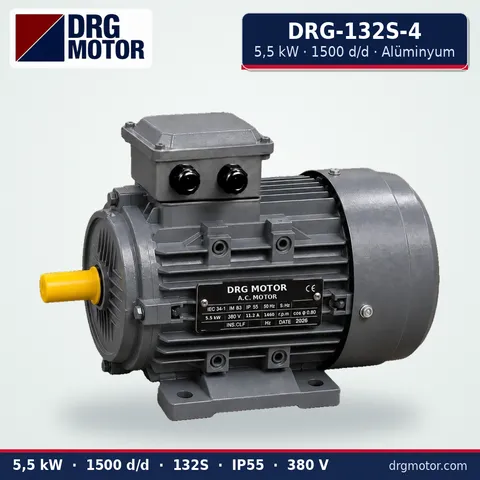
5.5 kW Three-Phase Motor 1500 rpm – DRG-132S-4 Aluminium
- 5.5 kW · 1500 rpm (4 poles)
- Aluminium frame · IEC 132S
- Shaft: 38 × 80 mm
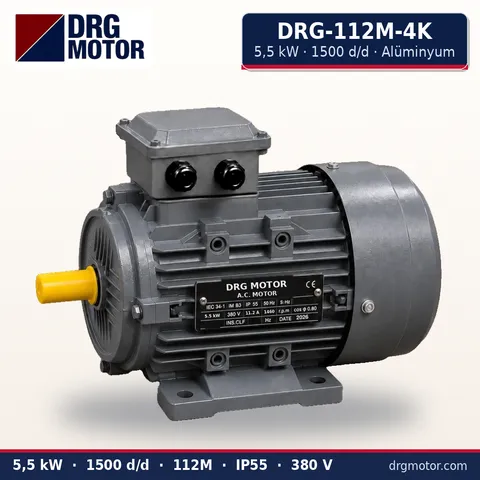
5.5 kW Compact Three-Phase Motor 1500 rpm – DRG-112M-4K Aluminium
- 5.5 kW · 1500 rpm (4 poles)
- Aluminium frame · IEC 112M
- Shaft: 28 × 60 mm
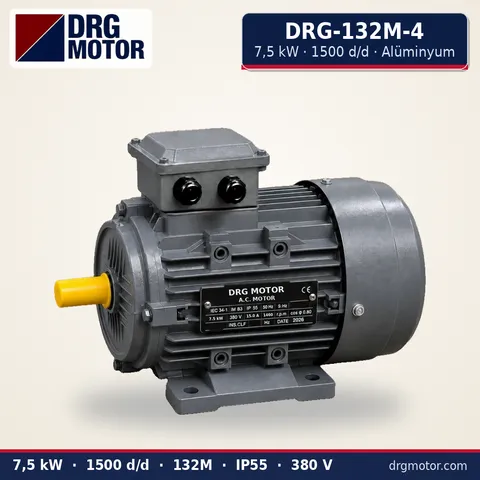
7.5 kW Three-Phase Motor 1500 rpm – DRG-132M-4 Aluminium
- 7.5 kW · 1500 rpm (4 poles)
- Aluminium frame · IEC 132M
- Shaft: 38 × 80 mm
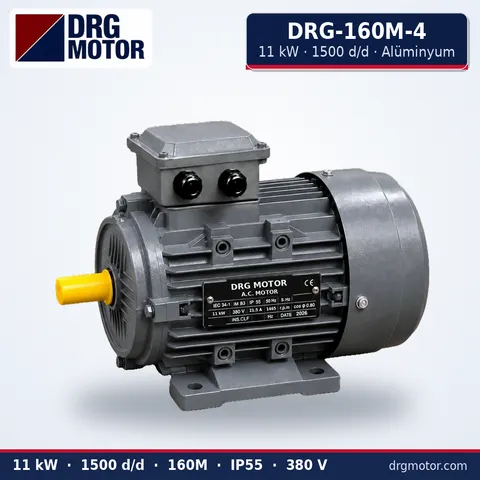
11 kW Three-Phase Motor 1500 rpm – DRG-160M-4 Aluminium
- 11 kW · 1500 rpm (4 poles)
- Aluminium frame · IEC 160M
- Shaft: 42 × 110 mm
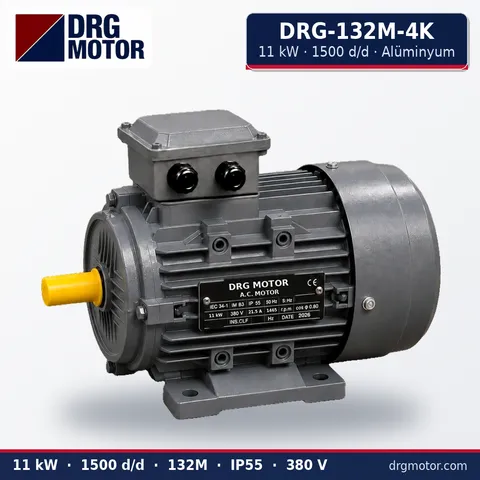
11 kW Compact Three-Phase Motor 1500 rpm – DRG-132M-4K Aluminium
- 11 kW · 1500 rpm (4 poles)
- Aluminium frame · IEC 132M
- Shaft: 38 × 80 mm