English
 Le français
 Türkçe




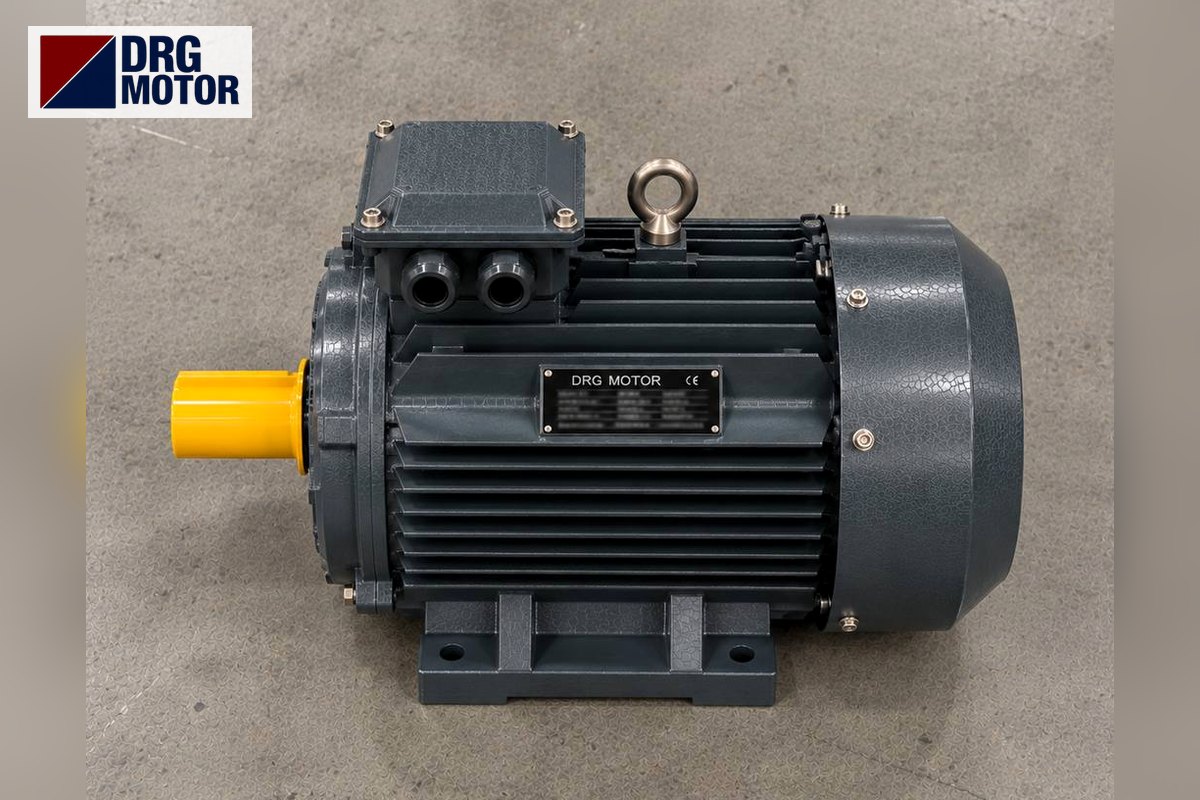

Every electric motor warms up while running; that is normal. Danger begins when the temperature rises too far for the insulation, not for your hand: the real measure is the "temperature rise" added on top of the ambient temperature, and most DRG electric motors are designed around Class F insulation (an upper limit of about 155 °C). So what matters is not a single number but the signs that tell normal heat from abnormal heat.
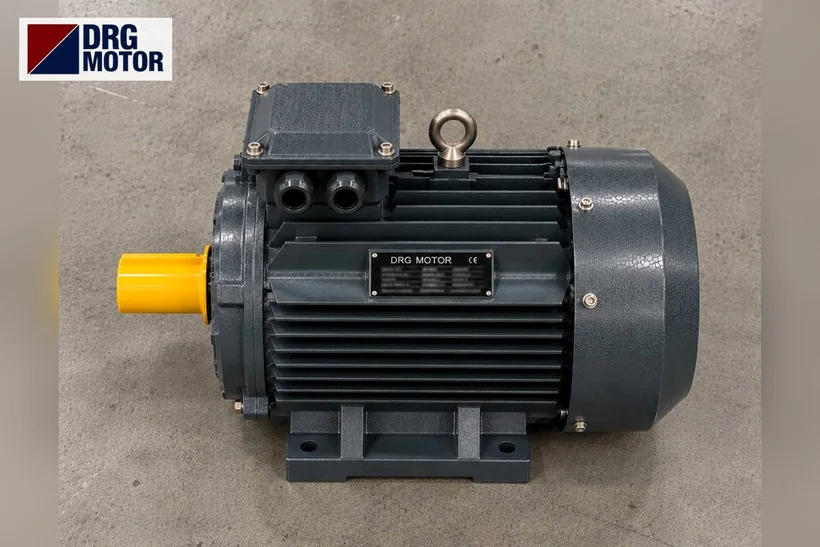
DRG Motor is a manufacturer, supplier and seller of electric motors. Below we explain, in plain language, when heat is normal and when it is a warning. You can find the electric motor that best fits your need by power and speed in the online electric motor shop, and see the models together in the three-phase asynchronous electric motors category.
Why does an electric motor get hot?
As an electric motor turns the energy it draws into motion, some of that energy inevitably becomes heat. Resistance in the windings, friction in the bearings and the cooling fan reach a balance: the motor heats up and the fan and housing shed that heat. A healthy electric motor settles at a steady temperature in this balance. So being "hot" is not a fault by itself; the real question is whether the temperature stays within a safe limit.
"How hot is normal?" — ambient plus temperature rise
An electric motor's housing temperature is the sum of two things: the temperature of its surroundings and the temperature rise the motor produces itself. A housing that feels warm in a cool 10 °C workshop feels clearly hotter in a 35-40 °C environment, even if the motor is carrying the same load in both cases. That is why "how many degrees is dangerous" has no single answer. What counts is that, with the surroundings unchanged, the housing settles at a similar temperature each day; a sudden, lasting rise is what calls for attention.
Class F insulation and the temperature limit
The temperature the insulation around the windings can withstand is marked with an "insulation class" letter. DRG three-phase electric motors are commonly designed with Class F insulation; the generally accepted upper limit for Class F is about 155 °C. This applies to the hottest inner point of the winding, not the outer housing surface; what you feel by hand from outside is always lower. The table below gives the general framework of insulation classes.
| Insulation class | Approx. upper limit | General note |
|---|---|---|
| B | 130 °C | Classic class |
| F | 155 °C | Common on DRG |
| H | 180 °C | Higher temperature |
These figures are not a rule imposed on you but a way to grasp the concept. A given electric motor's real limit is written on its nameplate and documents; when in doubt, send us a photo of the nameplate.
Click to see current electric motor prices and order nowSEE PRICES →
What does it mean when it feels hot to the touch?
A very common worry: "I can't keep my hand on the housing, it's burning, it must be faulty." But the human hand is a poor thermometer. A surface above about 50 °C feels too hot to hold for long, yet that can be entirely within the normal operating range of a Class F electric motor. So "I can't hold my hand on it" is not proof of danger by itself. A real assessment comes from measuring the surface temperature and looking at the full set of signs. Have electrical checks and measurements done by qualified electrical staff; first switch off the power and confirm it is de-energised.
Signs of abnormal heating
You tell that heat has turned dangerous less from a single degree than from the signs that come with it:
- The housing feels hotter day by day and no longer settles at a steady temperature.
- There is a burnt, sharp varnish or plastic smell.
- The current it draws has risen; the thermal protection trips often.
- Heating comes with vibration, a change in hum or a bearing noise.
- Darkening of the paint, soot or a colour change in the terminal box appears.
If one or several of these are present, do not shrug it off as "a bit hot"; stop the electric motor and find the cause.
Main causes of overheating
Abnormal heating usually comes from: an electric motor chosen too small for the job and constantly strained, mechanical binding or misalignment, a dirty or blocked cooling fan or fins, a very high ambient temperature, voltage imbalance or a lost phase, or a dusty, covered installation that blocks airflow. In most cases the root cause is the wrong choice or a load problem. You can compare the current it draws with the motor current chart and use our electric motor calculator for the right power class.
Example: power, current and heat
Much of the heating is tied to the current drawn; as current rises, so does the heat in the winding. Below are a few 4-pole (about 1500 rpm) DRG electric motors with their power and rated current at 400 V. When the right power class is chosen, the electric motor runs near its rated current and stays at a safe temperature.
| Model | Power | Speed class | Current (400 V) |
|---|---|---|---|
| DRG-112M-4 | 4 kW | 1500 rpm | 7.95 A |
| DRG-132S-4 | 5.5 kW | 1500 rpm | 10.7 A |
| DRG-132M-4 | 7.5 kW | 1500 rpm | 14.3 A |
| DRG-160M-4 | 11 kW | 1500 rpm | 20.4 A |
You can browse all power and speed options in the online electric motor shop.
Make sure you pick an electric motor of the right power for your job; click to see current prices and orderSEE PRICES
How to prevent overheating
A few simple habits prevent most heating trouble: choose an electric motor of the right power for the job, keep the fan and cooling fins clean, leave space around the motor for air to circulate, improve ventilation if the environment is very hot, and make sure connections are tight and balanced. When choosing a new electric motor, share your ambient temperature and operating conditions and we will settle on the model that best fits your need together.
Frequently asked questions
If the housing is very hot, will the electric motor fail soon?
No. Feeling too hot to hold can be within the normal range for a Class F electric motor. What matters is that the temperature stays steady and that there is no burnt smell, rising current or thermal tripping.
Is it right to pour water or blow air on a hot electric motor?
Cold water is definitely not suitable; sudden cooling and moisture cause damage. The lasting fix is to remove the cause of the heating: correct power, a clean fan, good ventilation. Have any electrical check done by qualified staff after switching off the power.
At what temperature should I stop it?
Imposing a single degree would be wrong; the limit depends on the electric motor's nameplate and insulation class. If the temperature climbs clearly each day, or there is a smell or an abnormal noise, stop the motor and have it checked.
Send a photo of your current motor nameplate and we will find the suitable DRG model together.Send on WhatsApp
Electric Motors Related to This Topic — Models and Current Prices
Suitability is not decided by power alone: compare the speed, voltage, mounting, shaft and fixing dimensions of your machine with the product data; if unsure, send us the nameplate of your current motor.
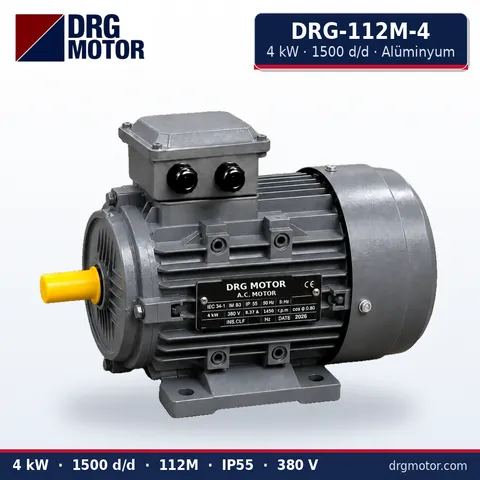
4 kW Three-Phase Motor 1500 rpm – DRG-112M-4 Aluminium
- 4 kW · 1500 rpm (4 poles)
- Aluminium frame · IEC 112M
- Shaft: 28 × 60 mm
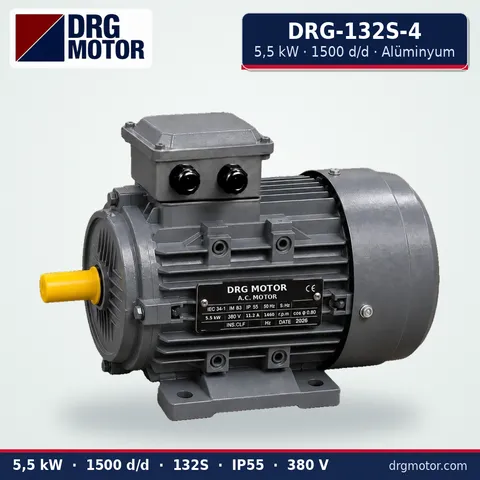
5.5 kW Three-Phase Motor 1500 rpm – DRG-132S-4 Aluminium
- 5.5 kW · 1500 rpm (4 poles)
- Aluminium frame · IEC 132S
- Shaft: 38 × 80 mm
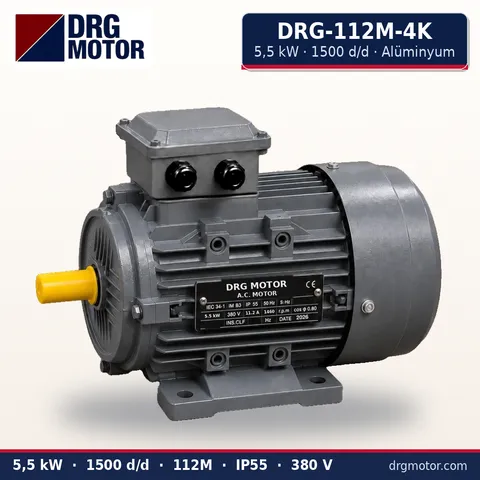
5.5 kW Compact Three-Phase Motor 1500 rpm – DRG-112M-4K Aluminium
- 5.5 kW · 1500 rpm (4 poles)
- Aluminium frame · IEC 112M
- Shaft: 28 × 60 mm
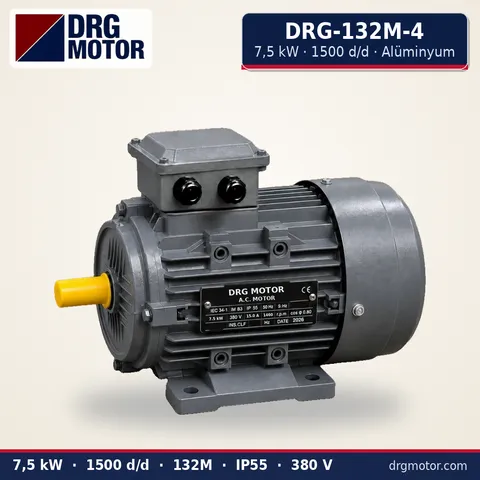
7.5 kW Three-Phase Motor 1500 rpm – DRG-132M-4 Aluminium
- 7.5 kW · 1500 rpm (4 poles)
- Aluminium frame · IEC 132M
- Shaft: 38 × 80 mm
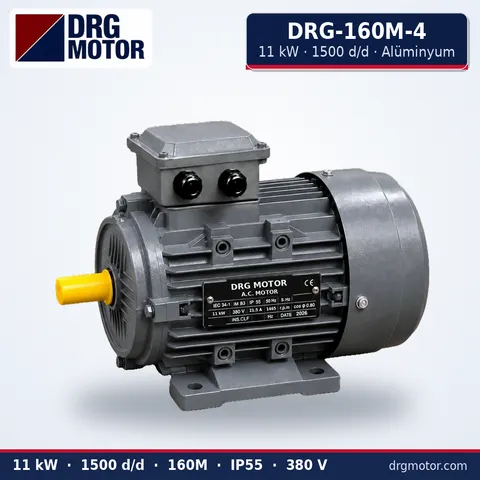
11 kW Three-Phase Motor 1500 rpm – DRG-160M-4 Aluminium
- 11 kW · 1500 rpm (4 poles)
- Aluminium frame · IEC 160M
- Shaft: 42 × 110 mm
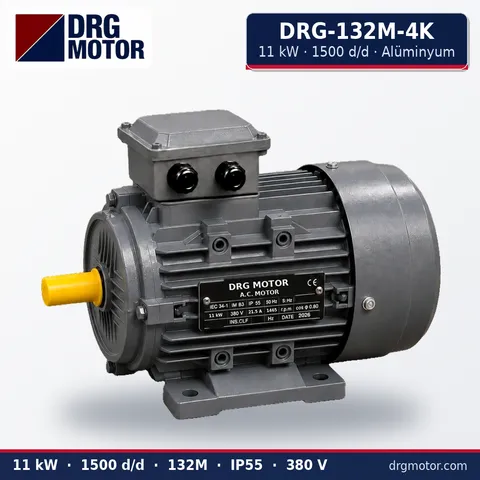
11 kW Compact Three-Phase Motor 1500 rpm – DRG-132M-4K Aluminium
- 11 kW · 1500 rpm (4 poles)
- Aluminium frame · IEC 132M
- Shaft: 38 × 80 mm