English
 Le français
 Türkçe




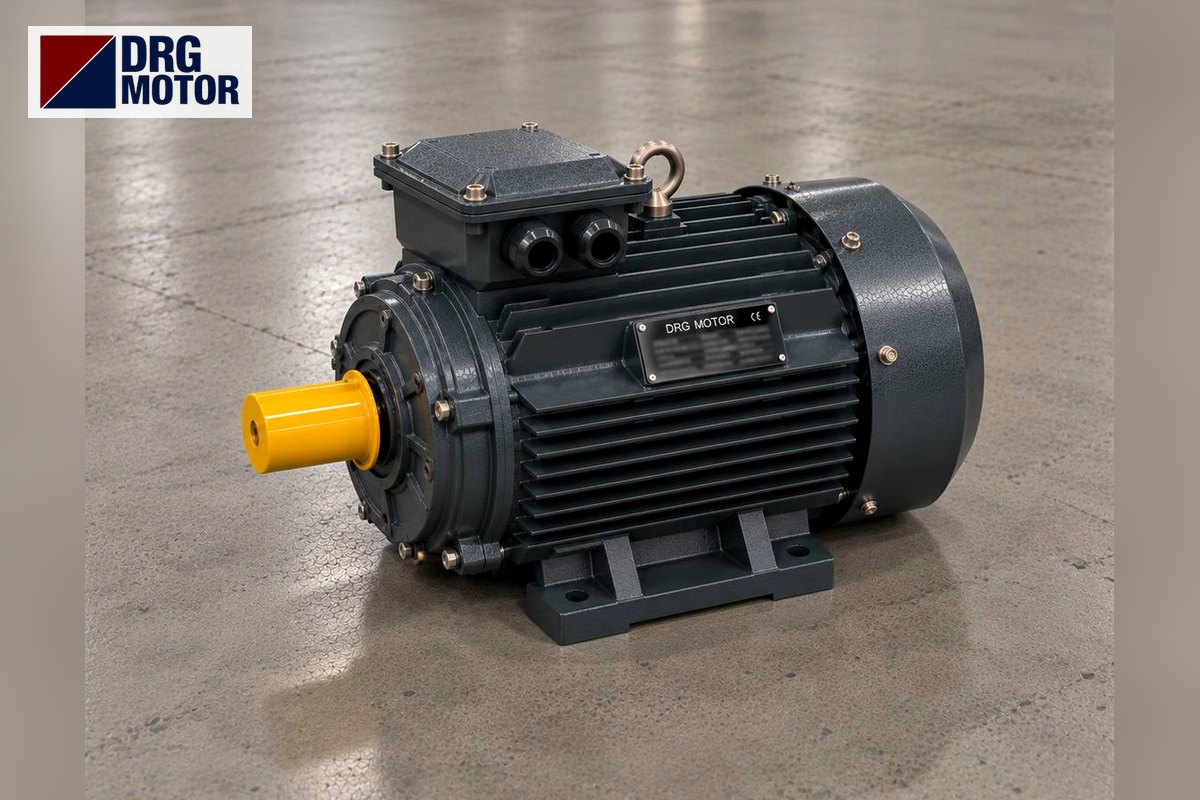

The core difference between Class F and Class H insulation is the maximum temperature the winding is built to withstand: Class F is designed up to 155 °C, while Class H reaches 180 °C. In other words, Class H leaves the winding 25 °C more thermal margin under the same conditions. DRG three-phase asynchronous motors are supplied as standard with Class F insulation.
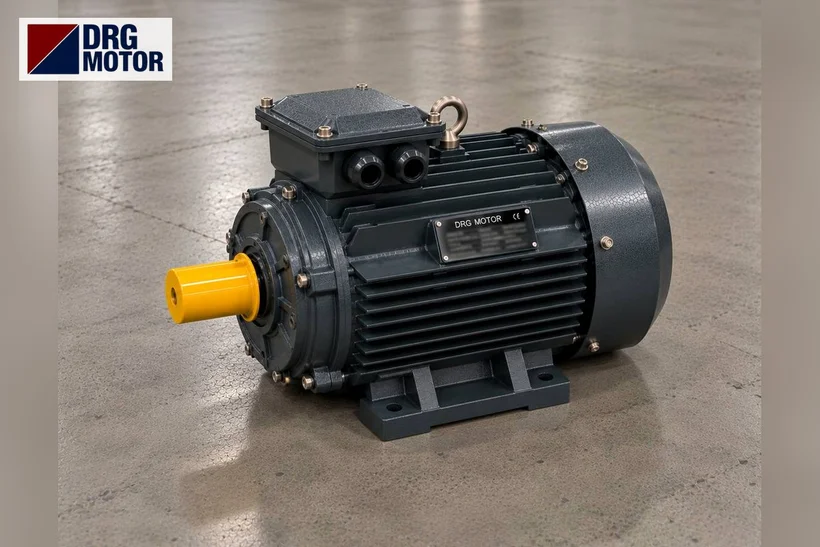
DRG Motor is a manufacturer, supplier and seller of electric motors. You can review the Class F insulated three-phase models by power and speed in the online motor shop; the same motors are also listed together in the three-phase asynchronous electric motors category.
What does an insulation class tell you?
The windings of an electric motor heat up as current flows through them. The material that carries this heat and electrically separates the wires from one another is called the insulation. The life of this material is very sensitive to temperature: if it stays above a certain temperature for a long time, it gradually becomes brittle and loses its protective role. The insulation class defines the highest continuous temperature the winding can safely withstand.
Classes are shown with letters, and each letter corresponds to a temperature ceiling. The three classes most often met in industrial motors are B, F and H. The higher the letter, the higher the permitted temperature, which means the motor can run in hotter surroundings or with more internal heating.
Temperature limits of Class F and Class H
The table below shows the maximum temperature of the three common classes and the permitted temperature-rise limit at a 40 °C ambient. The values are in line with international motor standards.
| Insulation class | Maximum permitted temperature | Temperature-rise limit (40 °C ambient) |
|---|---|---|
| B | 130 °C | 80 K |
| F | 155 °C | 105 K |
| H | 180 °C | 125 K |
As shown, the gap between F and H is 25 °C (155 °C versus 180 °C). On the temperature-rise side, Class F may reach 105 K and Class H 125 K. Here "K" (kelvin) expresses a temperature difference; a 105 K rise means the winding may run 105 °C above the ambient.
The temperature-rise concept: ambient + rise + margin
The temperature limit on the nameplate is not a single number but the sum of three parts. The standard assumed ambient temperature is 40 °C. To this is added the temperature rise the winding produces while running. Finally, a small safety margin covers the difference between the hottest spot and the average temperature of the winding.
For Class F the total is built as: 40 °C ambient + 105 K rise + 10 °C margin = 155 °C. For Class H it becomes 40 °C + 125 K + 15 °C = 180 °C. That is why, when comparing the two classes, you should look not only at the ceiling temperature but also at the permitted rise; what really stresses the motor is this rise between ambient and winding.
Click to see current electric motor prices and order nowSEE PRICES →
Insulation class in DRG motors
DRG three-phase asynchronous motors come in the standard range with Class F insulation and IP55 protection. The table below lists the power, housing and insulation/protection of a few 4-pole (1500 rpm) DRG models; the model codes link straight to the product page.
| Model | Power / Speed | Housing | Insulation / Protection |
|---|---|---|---|
| DRG-112M-4-AL (aluminium) | 4 kW / 1500 rpm | aluminium | Class F / IP55 |
| DRG-132M-4-AL (aluminium) | 7.5 kW / 1500 rpm | aluminium | Class F / IP55 |
| DRG-160M-4-AL (aluminium) | 11 kW / 1500 rpm | aluminium | Class F / IP55 |
| DRG-132M-4K-AL (aluminium) | 11 kW / 1500 rpm | aluminium | Class F / IP55 |
| DRG-112M-4-GG (cast iron) | 4 kW / 1500 rpm | cast iron | Class F / IP55 |
| DRG-132M-4-GG (cast iron) | 7.5 kW / 1500 rpm | cast iron | Class F / IP55 |
The insulation class is the same for aluminium and cast iron housings; the housing material affects heat dissipation and mechanical strength, not the insulation class. For a detailed comparison of the two housings, see the aluminium versus cast iron housing article.
Is Class F enough, and when is Class H considered?
For most general industrial applications Class F insulation provides a comfortable working margin. If the ambient is around the standard 40 °C and the motor is correctly sized, a Class F winding stays below its ceiling. Class H comes into play in cases such as:
- Hot areas where the ambient clearly exceeds 40 °C.
- Enclosed or dusty spaces with limited cooling, where the motor cannot easily shed its own heat.
- Frequent start-stop patterns that build up heat in a short time.
The key point: a higher class does not make up for a poor selection or overloading. Before stepping up the insulation class, the motor's power, speed and ambient conditions should be matched to the need. If you are replacing an existing motor, follow the insulation class on its nameplate (often written as "Ins.Cl. F").
Factors that stress the insulation class
How hot a motor actually runs depends on several factors: the ambient temperature, the mechanical load on the motor, the balance of the supply voltage and the cooling conditions. As the load rises, the current through the winding and therefore the heat loss rise too, bringing the winding temperature closer to the ceiling.
If measurement or wiring work is to be done on the motor, first switch off the supply, confirm it is de-energised and let only qualified electrical personnel carry out the work. Set values such as the thermal protection current from the rated current on the nameplate, not from memory. To check the required current and cable, you can use the motor current chart and the motor cable size calculator.
Send a photo of your current motor nameplate and we will find the suitable DRG model together.Send on WhatsApp
Tell us the ambient temperature and load of your application, and we can identify the most suitable Class F insulated DRG model together.
Browse the Class F insulated three-phase asynchronous DRG models and current prices in the shopSEE PRICES
Frequently asked questions
Is Class F or Class H better?
There is no absolute "better"; the right one is the one that fits the need. In a standard 40 °C ambient, Class F is a comfortable margin for general use. If the surroundings are very hot or cooling is limited, the extra 25 °C of margin from Class H becomes meaningful.
Which insulation class do DRG motors use?
DRG three-phase asynchronous motors are supplied as standard with Class F insulation and IP55 protection. For exact data always check the nameplate and product page of the relevant model.
Is temperature rise the same as maximum temperature?
No. The temperature rise is how far the winding climbs above the ambient (up to 105 K for Class F). The maximum temperature is the sum of ambient, rise and safety margin (155 °C for Class F).
Can a Class H motor replace a Class F one?
In terms of thermal withstand, Class H offers a wider margin; however, the mechanical and electrical values such as power, speed, frame size, shaft diameter and mounting type must suit the application. Compare all nameplate values before choosing.
Electric Motors Related to This Topic — Models and Current Prices
Suitability is not decided by power alone: compare the speed, voltage, mounting, shaft and fixing dimensions of your machine with the product data; if unsure, send us the nameplate of your current motor.
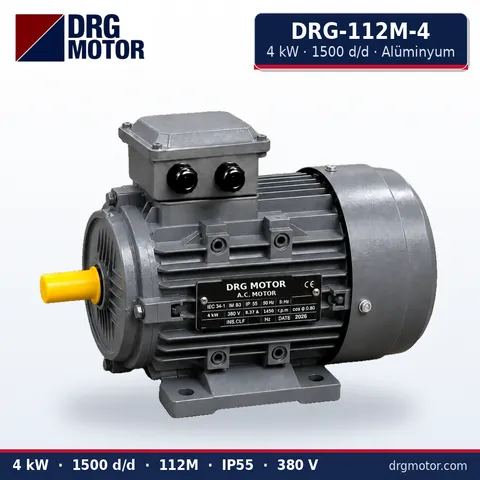
4 kW Three-Phase Motor 1500 rpm – DRG-112M-4 Aluminium
- 4 kW · 1500 rpm (4 poles)
- Aluminium frame · IEC 112M
- Shaft: 28 × 60 mm
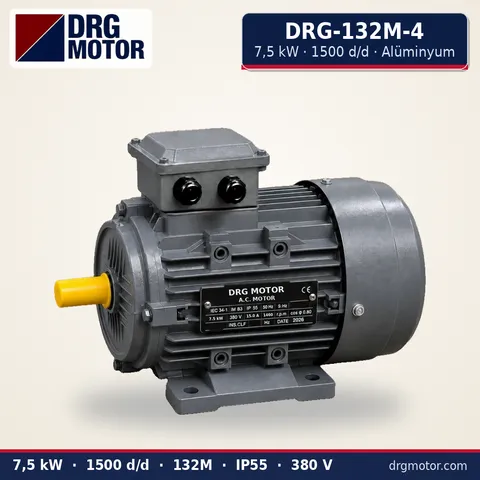
7.5 kW Three-Phase Motor 1500 rpm – DRG-132M-4 Aluminium
- 7.5 kW · 1500 rpm (4 poles)
- Aluminium frame · IEC 132M
- Shaft: 38 × 80 mm
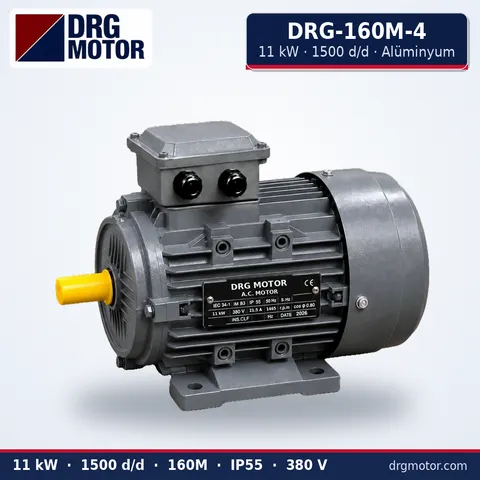
11 kW Three-Phase Motor 1500 rpm – DRG-160M-4 Aluminium
- 11 kW · 1500 rpm (4 poles)
- Aluminium frame · IEC 160M
- Shaft: 42 × 110 mm
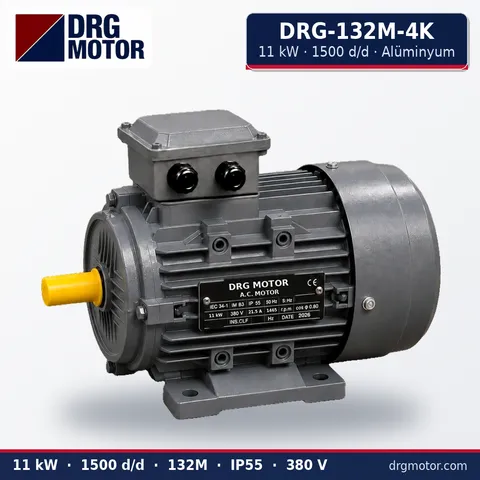
11 kW Compact Three-Phase Motor 1500 rpm – DRG-132M-4K Aluminium
- 11 kW · 1500 rpm (4 poles)
- Aluminium frame · IEC 132M
- Shaft: 38 × 80 mm
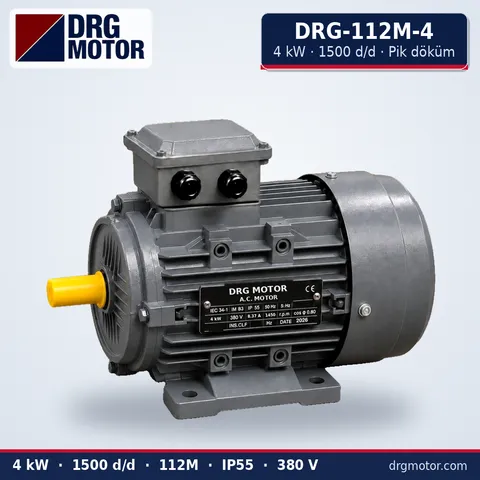
4 kW Three-Phase Motor 1500 rpm – DRG-112M-4 Cast Iron
- 4 kW · 1500 rpm (4 poles)
- Cast iron frame · IEC 112M
- Shaft: 28 × 60 mm
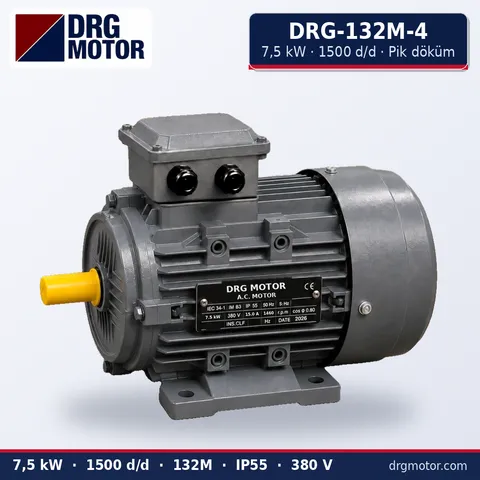
7.5 kW Three-Phase Motor 1500 rpm – DRG-132M-4 Cast Iron
- 7.5 kW · 1500 rpm (4 poles)
- Cast iron frame · IEC 132M
- Shaft: 38 × 80 mm