English
 Le français
 Türkçe


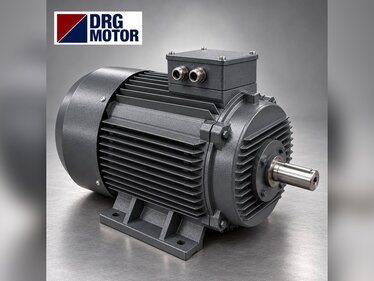
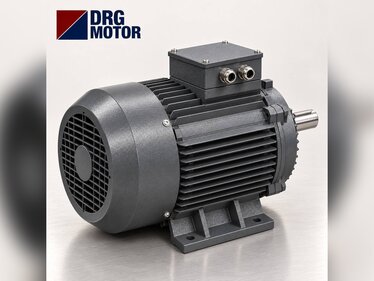
Many customers who come to buy a motor do not quote kW or speed; they say "the motor for my pump" or "a motor for the crusher". This article starts from that point. It looks at five common applications (pump, fan, conveyor, compressor and crusher) one by one; for each we give the typical speed, the common mounting type, what to check before ordering and the store price of three frequently used ratings in a small table. The aim is to get you from your machine type to the right price row in a few steps.
A Quick Map of the Five Applications
The table below shows general tendencies; the nameplate and documents of each machine always take priority. It is meant to help you find quickly which section to read.
| Application | Typical speed | Common mounting | Connection | Frame tendency |
|---|---|---|---|---|
| Centrifugal pump | 3000 rpm (1500 for large flow) | B3, B35/B5 on close-coupled units | Coupling or direct flange | Aluminium or cast iron |
| Fan / extractor | 1500 rpm (1000 for large diameter) | B3, B5/B14 on axial fans | Direct or belt | Aluminium at low power |
| Conveyor | 1500 rpm + gearbox | B5 or B14 (to gearbox) | Gearbox flange or coupling | Aluminium or cast iron |
| Compressor | 3000 or 1500 rpm | B3 | Belt or coupling | Mostly cast iron |
| Crusher | 1500 or 1000 rpm | B3, on slide rails | Belt and pulley | Cast iron |
Mounting codes in brief: B3 is foot-mounted, B5 has a large flange, B14 has a small (tapped) flange and B35 is both foot- and flange-mounted. Store list prices are for the standard foot-mounted model; if you need a flanged version, add a note to your order or ask us.
Pump Motors: Mostly 3000 rpm
In centrifugal pumps the head rises with impeller diameter and speed, so 3000 rpm motors are common on small and medium clean-water pumps. Pumps with large flow, low pressure or liquids carrying solids usually use 1500 rpm. Pumps coupled on a base frame use a foot-mounted motor (B3); close-coupled (monobloc) types, where motor and pump share one body, use a flanged connection.
Points to check: the speed on the pump nameplate and the motor speed must match; fitting a 1500 rpm motor to a pump designed for 3000 rpm noticeably reduces the head. In wet areas check the protection class and the orientation of the terminal box. On a monobloc pump, shaft diameter and flange size are chosen to suit the pump.
| Power (kW) | Speed (rpm) | Model | Frame | Price |
|---|---|---|---|---|
| 2.2 | 3000 | DRG-90L-2 | 90L Cast iron | See Prices |
| 5.5 | 3000 | DRG-132S1-2 | 132S Cast iron | See Prices |
| 15 | 3000 | DRG-160M2-2 | 160M Cast iron | See Prices |
Click to see current prices and order these motors nowSEE PRICES →
For current prices and ordering, click a model code to open its product page or browse all models on our Buy Electric Motors Online page.
Fan and Extractor Motors: Concentrated at 1500 rpm
In fans, motor power changes with the cube of speed; turning the same fan faster raises the power sharply. That is why 1500 rpm motors are the most common on ventilation units and extractors. On direct-driven axial fans the motor is usually bolted to the fan casing by its flange (B5 or B14); on belt-driven radial fans a foot-mounted motor sits on a slide rail.
Points to check: do not raise the motor speed without changing the impeller; a higher speed can overload the motor. On extractors carrying smoke or hot air, the motor must stay outside the air stream. Aluminium frames are a common choice for light loads; the examples below are aluminium.
| Power (kW) | Speed (rpm) | Model | Frame | Price |
|---|---|---|---|---|
| 1.1 | 1500 | DRG-90S-4 | 90S Aluminium | See Prices |
| 4 | 1500 | DRG-112M-4 | 112M Aluminium | See Prices |
| 11 | 1500 | DRG-160M-4 | 160M Aluminium | See Prices |
For current prices and ordering, click a model code to open its product page or browse all models on our Buy Electric Motors Online page.
Conveyor Motors: Think Together with the Gearbox
On belt conveyors the drum usually turns at a few tens of revolutions per minute; a gearbox is used to bring the motor speed down to that level. So when choosing a conveyor motor, consider its fit with the gearbox, not the motor alone. The most common arrangement is a 1500 rpm motor sitting on the gearbox input with a B5 or B14 flange.
Points to check: the gearbox input flange and shaft bore must match the motor's flange type and shaft diameter; if these two dimensions do not match, the motor cannot be fitted. Starting with a loaded belt is a heavy load; set the thermal relay and fuses taking the starting current into account. On inclined belts, rollback is prevented by a backstop or brake, not by the motor.
| Power (kW) | Speed (rpm) | Model | Frame | Price |
|---|---|---|---|---|
| 1.5 | 1500 | DRG-90L-4 | 90L Cast iron | See Prices |
| 3 | 1500 | DRG-100L2-4 | 100L Cast iron | See Prices |
| 7.5 | 1500 | DRG-132M-4 | 132M Cast iron | See Prices |
For current prices and ordering, click a model code to open its product page or browse all models on our Buy Electric Motors Online page.
Compressor Motors: Watch the Start and the Connection
On piston compressors the motor drives the pump head by belt; both 1500 and 3000 rpm motors are found here. On screw compressors the motor is connected to the screw block by coupling or belt, and 3000 rpm is common. Because compressors may restart against pressure, they demand high torque from the motor at start-up.
Points to check: the existing pulley diameter was calculated for the motor speed; if you change the speed, rework the pulley ratio. On small compressors that start and stop frequently, pay attention to contactor and thermal relay selection. Compressor rooms get hot; keep the area in front of the motor's cooling fan clear.
| Power (kW) | Speed (rpm) | Model | Frame | Price |
|---|---|---|---|---|
| 4 | 3000 | DRG-112M-2 | 112M Cast iron | See Prices |
| 11 | 3000 | DRG-160M1-2 | 160M Cast iron | See Prices |
| 22 | 1500 | DRG-180L-4 | 180L Cast iron | See Prices |
For current prices and ordering, click a model code to open its product page or browse all models on our Buy Electric Motors Online page.
Crusher Motors: Cast Iron and Belt Drive
On jaw, impact and cone crushers the motor is almost always belted to the flywheel shaft, and a foot-mounted (B3) motor sits on slide rails. Because of dust, vibration and heavy shock loads, cast iron frames are preferred in this application. Speed is mostly 1500 rpm; 1000 rpm is also used on crushers with large flywheels.
Points to check: a crusher is not started with a full chamber; even so, at high power star-delta or a soft starter is planned to avoid stressing the supply. Belt tension puts a direct load on the motor bearing; mount the pulley close to the shaft shoulder. Where dust is heavy, clean the motor surface and fan cover regularly.
| Power (kW) | Speed (rpm) | Model | Frame | Price |
|---|---|---|---|---|
| 30 | 1500 | DRG-200L-4 | 200L Cast iron | See Prices |
| 55 | 1500 | DRG-250M-4 | 250M Cast iron | See Prices |
| 75 | 1000 | DRG-315S-6 | 315S Cast iron | See Prices |
For current prices and ordering, click a model code to open its product page or browse all models on our Buy Electric Motors Online page.
What If Your Application Is Not Listed?
If you are looking for a motor for a mixer, mill, hoist, saw or a special machine, you can apply the same logic: first determine the shaft speed and connection type the machine needs, then calculate the power. For the power calculation, use the formulas on the calculators page. You can list all models at that power and speed in the online store and compare prices by frame type. For shipping terms, see the delivery and shipping page.
Frequently Asked Questions
How do I know which speed to choose for my pump?
Go by the speed written on the pump's own nameplate or catalogue. A motor with a different speed from the one stated by the pump maker changes the head and the flow.
How do I know which flange fits my conveyor gearbox?
Measure the outer diameter, bolt spacing and shaft bore of the gearbox input flange, or note the motor frame number on the gearbox nameplate. With this information you can specify the flanged version in your order.
Do the table prices also apply to flanged motors?
No. Store list prices are for the standard foot-mounted model. For a flange or foot-and-flange version, add an order note or ask us for a price.
Share your machine type and the old motor's nameplate details and we can pick the right model together: phone +90 (542) 666 11 11, email info@drgmotor.com, other channels on the contact page.