English
 Le français
 Türkçe




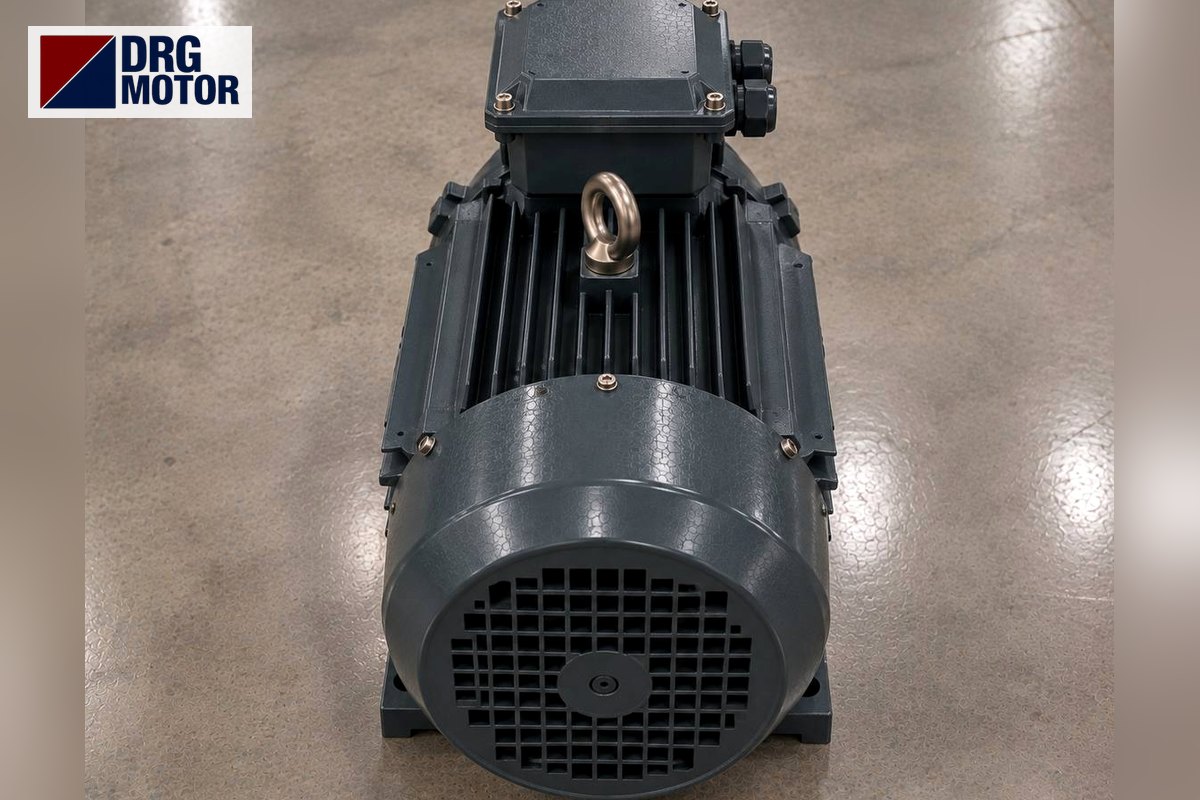

When an electric motor is fed with a voltage noticeably above the rated value on its nameplate, the first and most critical effect appears in the iron core: the magnetic flux rises and the core enters saturation. The result is a disproportionate increase in the magnetising current, extra heating and dielectric stress on the winding insulation. International standards design motors to run without trouble within a ±10% band of the rated voltage; sustained voltage beyond that band shortens motor life.
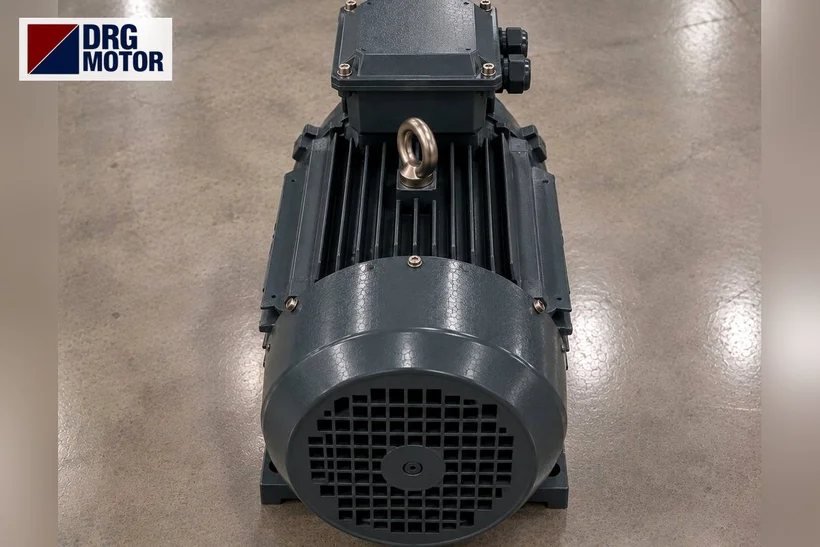
DRG Motor is a manufacturer, supplier and seller of electric motors. You can review three-phase models of the correct voltage class by power and speed in the online motor shop, and see the same motors grouped in the three-phase asynchronous electric motors category.
In short: what happens to a motor at high voltage?
The magnetic flux an induction motor produces is proportional to the applied voltage. As the voltage rises, so does the flux; but beyond a certain point the iron core can no longer carry that flux linearly and goes into saturation. In the saturation region even a small voltage increase makes the magnetising current rise much faster. In practice the motor runs hotter both at no load and under load, noise and vibration can increase, and the winding insulation is stressed by a higher peak voltage every cycle. The ±10% tolerance band exists to keep these effects within safe limits; for a 400 V rating the upper limit is taken as roughly 440 V.
High voltage drives the core into magnetic saturation
The key distinction is this: in a low-voltage problem the motor raises its current to keep torque; in a high-voltage problem the mechanism is entirely different and begins with magnetic saturation of the core. Once the peaks of the flux waveform saturate the core, the magnetising current loses its sinusoidal shape, becomes peaky and grows quickly in amplitude. This is not load current; it is current drawn purely to build the magnetic field, and it turns into heat as extra copper loss in the windings. At the same time the hysteresis and eddy-current losses in the core rise, because they depend on flux density. So at high voltage the heat source is not only the load but the core itself.
That is why it is wrong to treat high-voltage and low-voltage faults the same way. At low voltage the trouble is the increased line current needed to turn the load; at high voltage the trouble is the increased magnetising current and saturation losses even without load. Although the symptom (heating) is similar, the root cause and its appearance in measurement differ.
Heating, magnetising current and insulation stress
Sustained high voltage has three main effects on the motor:
- Overheating: Higher core losses and a growing magnetising current raise the winding temperature. Temperature is insulation's worst enemy; every few degrees of permanent rise noticeably shortens insulation life.
- Insulation stress: Winding insulation is designed for a certain dielectric strength. As voltage rises, the field strength between conductors and between conductor and frame grows, meaning the insulation is electrically worked harder. Combined with heat, ageing accelerates.
- Inefficient operation and noise: A saturated core can produce more noise and vibration; the distorted magnetising current adversely affects the power factor and the running characteristic.
For example, a 7.5 kW 4-pole motor normally draws about 14.3 A at 400 V. If the supply stays permanently above 440 V, the magnetising component drawn regardless of load grows and the total heat load rises; the motor runs hotter while doing the same job. To follow line current and winding behaviour, the motor current chart and electric motor calculator are helpful.
Click to see current electric motor prices and order nowSEE PRICES →
Why does the voltage rise above the rated value?
High voltage is usually a result of the supply side, not the motor. The most common causes:
- Transformer tap setting: If the distribution transformer's tap selector is left in a high position, the line voltage climbs above the rated value.
- Lightly loaded / long feeder: When a line is very lightly loaded, especially on long and capacitive feeders, the voltage at the end can be higher than expected.
- Over-compensation: If power-factor correction capacitors stay connected while the load is low, they pull the busbar voltage up.
- Grid fluctuation: During low-consumption hours (especially at night) the grid voltage can rise generally.
- Generator regulation: On generator supply, a high regulator setting keeps the output voltage above the rated value.
What these causes share is that the source of the problem is the supply system, not the motor. So when high voltage is suspected, the first job is to measure the actual voltage at the supply point, not the motor.
DRG models in the correct voltage class
DRG's 4-pole (1500 rpm class) three-phase models from 5.5 to 11 kW are wound for 400/690 V (Δ/Y); on a 400 V three-phase supply they are connected in delta (Δ). The table below shows the rated power, torque and rated current at 400 V for models in this class. The values follow the product nameplates; the model codes link straight to the product page.
| Model | Power | Torque | Rated current (400 V) |
|---|---|---|---|
| DRG-132S-4-AL (aluminium) | 5.5 kW | 36.0 Nm | 10.7 A |
| DRG-112M-4K-AL (aluminium) | 5.5 kW | 36.0 Nm | 10.7 A |
| DRG-132M-4-AL (aluminium) | 7.5 kW | 49.1 Nm | 14.3 A |
| DRG-160M-4-AL (aluminium) | 11 kW | 71.7 Nm | 20.4 A |
| DRG-132M-4K-AL (aluminium) | 11 kW | 71.7 Nm | 20.4 A |
| DRG-132S-4-GG (cast iron) | 5.5 kW | 36.0 Nm | 10.7 A |
These models are all in the 400/690 V class and therefore suit a 400 V supply; in an environment where your grid runs permanently high, the correct voltage class and the protection setting should be assessed together.
Compare all 5.5 to 11 kW three-phase asynchronous motor models and current prices in the shopSEE PRICES
What can be done to protect a motor from high voltage?
Any checking or measurement involving high voltage carries electrical danger. Before measuring or wiring, switch off the power, verify the absence of voltage, and have the work done only by authorised electrical personnel. Set thermal protection and voltage-monitoring relays not from memory but according to the rated values on the motor nameplate and the device documentation.
In general terms, sensible measures are: measuring and recording the voltage at the supply point, reviewing transformer tap and compensation settings, and, if the voltage is too high, protecting the motor with an overvoltage monitoring relay. For cable and protection selection, the motor cable size calculator can help. If you are not sure the motor is actually in the correct voltage class, verify the nameplate data before any replacement.
Send a photo of your current motor nameplate and we will find the suitable DRG model together.Send on WhatsApp
If your supply voltage is out of limits, or you want to choose a model in the correct voltage class, it is enough to share the nameplate values of your current motor.
Frequently asked questions
Will a motor burn out at high voltage?
A brief, limited over-voltage usually does not cause a sudden burn-out; the real risk is voltage above the ±10% band being sustained. Under sustained high voltage, the rising heat and insulation stress age the winding over time and lead to failure.
Which is more harmful, high voltage or low voltage?
Both are harmful, but by different paths. At low voltage the motor raises its current to keep torque and so heats up; at high voltage the core saturates and the magnetising current and core losses rise. In both cases the aim is to keep the voltage close to the rated value.
Up to how many volts can a 400 V motor withstand?
For a motor rated at 400 V the accepted upper limit is about 440 V (±10%). A supply permanently above this is not recommended; for the exact limit, see the motor nameplate and the device documentation.
How do I tell if the voltage is too high?
The surest way is to measure the actual voltage at the supply point. Unexplained heating, increased hum and a high current draw even at no load are symptoms that suggest high voltage; but the diagnosis must always be confirmed by measurement.
Electric Motors Related to This Topic — Models and Current Prices
Suitability is not decided by power alone: compare the speed, voltage, mounting, shaft and fixing dimensions of your machine with the product data; if unsure, send us the nameplate of your current motor.
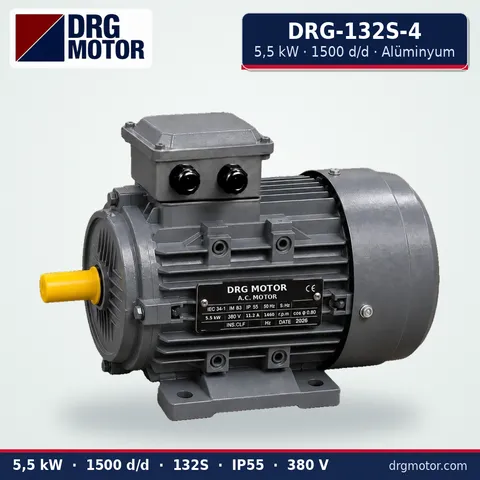
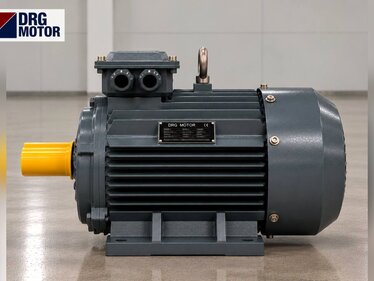
5.5 kW Three-Phase Motor 1500 rpm – DRG-132S-4 Aluminium
- 5.5 kW · 1500 rpm (4 poles)
- Aluminium frame · IEC 132S
- Shaft: 38 × 80 mm
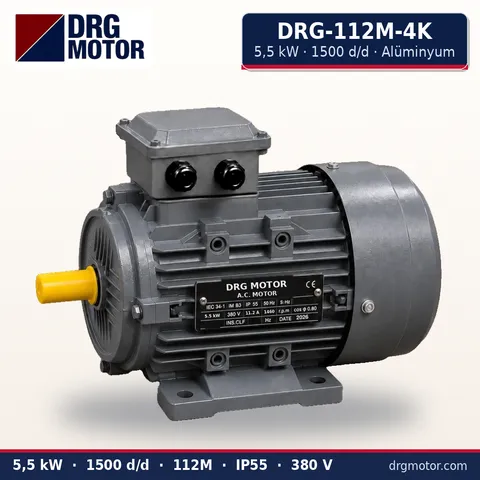
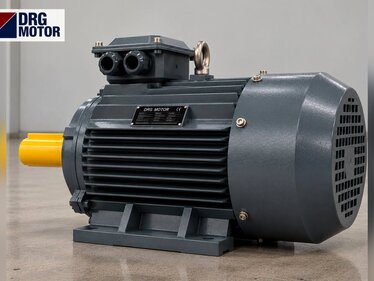
5.5 kW Compact Three-Phase Motor 1500 rpm – DRG-112M-4K Aluminium
- 5.5 kW · 1500 rpm (4 poles)
- Aluminium frame · IEC 112M
- Shaft: 28 × 60 mm
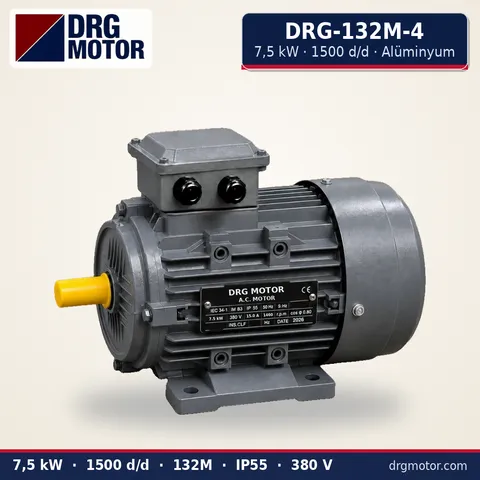
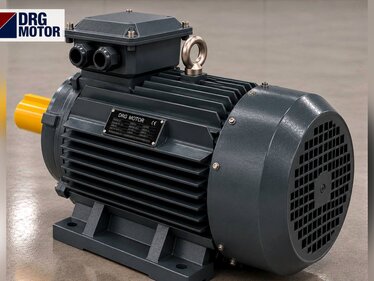
7.5 kW Three-Phase Motor 1500 rpm – DRG-132M-4 Aluminium
- 7.5 kW · 1500 rpm (4 poles)
- Aluminium frame · IEC 132M
- Shaft: 38 × 80 mm
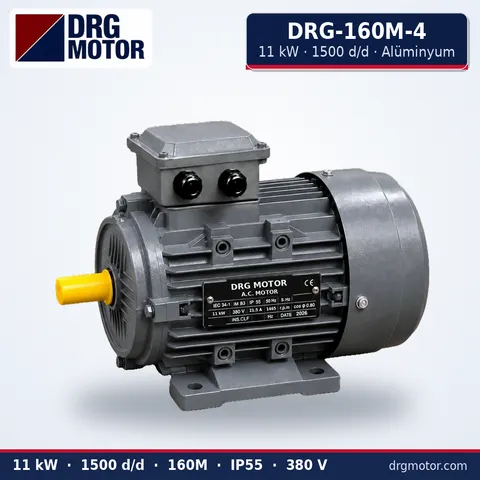
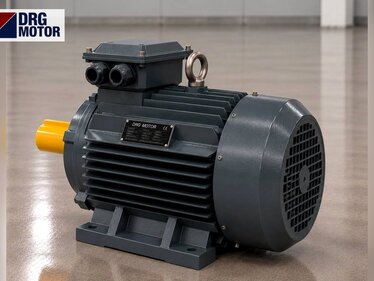
11 kW Three-Phase Motor 1500 rpm – DRG-160M-4 Aluminium
- 11 kW · 1500 rpm (4 poles)
- Aluminium frame · IEC 160M
- Shaft: 42 × 110 mm
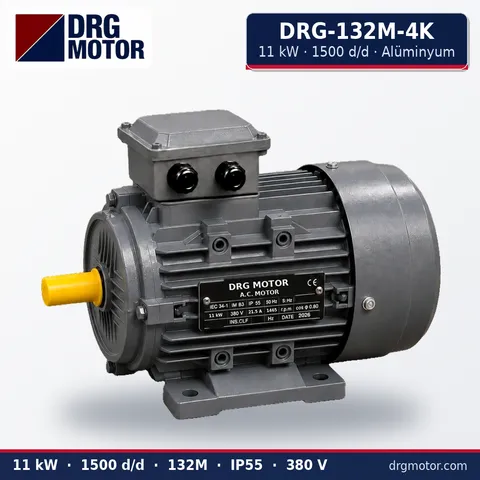
11 kW Compact Three-Phase Motor 1500 rpm – DRG-132M-4K Aluminium
- 11 kW · 1500 rpm (4 poles)
- Aluminium frame · IEC 132M
- Shaft: 38 × 80 mm
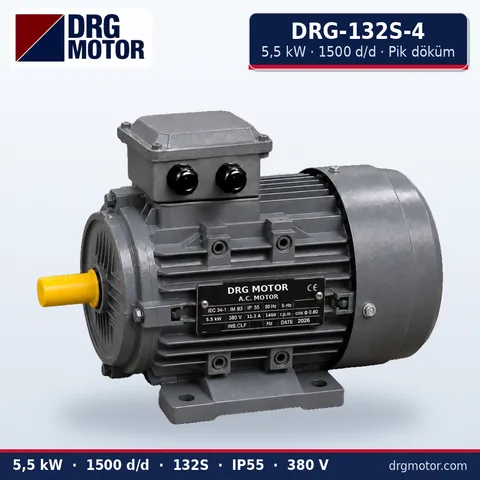
5.5 kW Three-Phase Motor 1500 rpm – DRG-132S-4 Cast Iron
- 5.5 kW · 1500 rpm (4 poles)
- Cast iron frame · IEC 132S
- Shaft: 38 × 80 mm