English
 Le français
 Türkçe




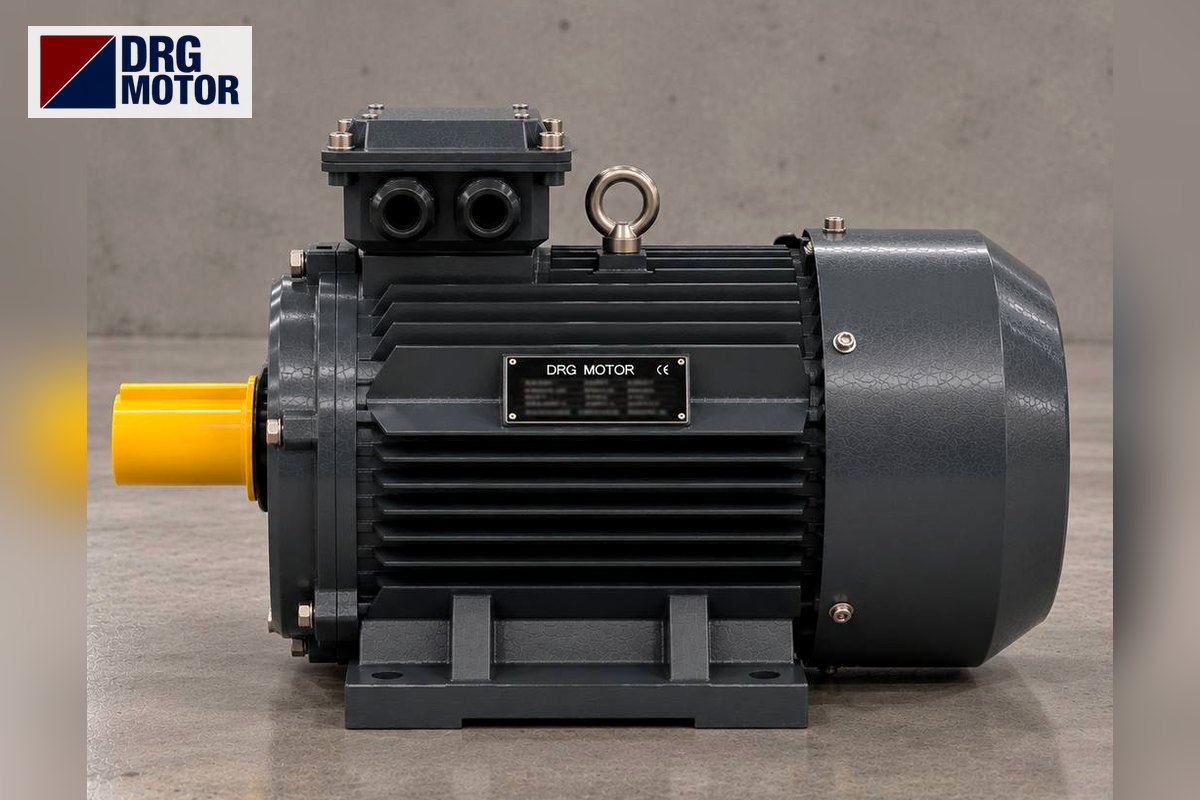

The life of an electric motor depends largely on the load it carries, its temperature, the humidity and dust of its environment, bearing maintenance, alignment, start frequency and the quality of the supply voltage. A well-chosen, properly maintained three-phase asynchronous motor runs for many years without trouble; what shortens its life is usually the operating conditions, not the motor itself.
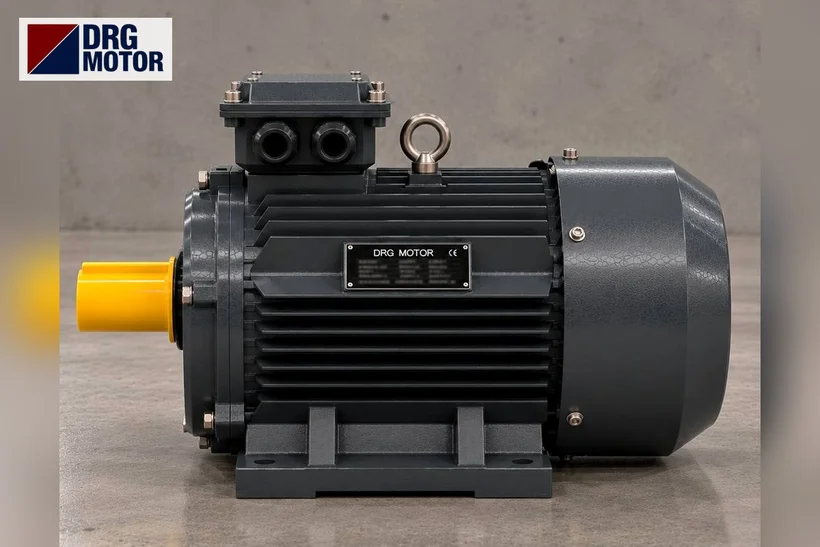
DRG Motor is a manufacturer, supplier and seller of electric motors. For a replacement or a spare motor you can find every power and speed option in the online motor shop and in the three-phase asynchronous electric motors category.
What determines electric motor life?
Motor life cannot be reduced to a single number; how many years a motor lasts depends clearly on how you load it and how you maintain it. Two main wear mechanisms drive its life: the slow thermal ageing of the winding insulation and the mechanical wear of the bearings. The table below gathers the main factors, how they act and what can be done in practice.
| Factor | Effect on life | Practical measure |
|---|---|---|
| Load | Constant overload fatigues winding and bearings | Size the motor to its rated power |
| Temperature | Each 10 °C rise shortens insulation life | Keep cooling fins and fan cover clean |
| Humidity and dust | Degrades insulation and bearing grease | Choose a suitable IP rating, keep the frame clean |
| Bearing / grease | Dried grease wears the bearing | Watch the regreasing interval and vibration |
| Alignment | Misalignment stresses shaft and bearings | Align coupling/pulley carefully |
| Start frequency | Frequent starts create heat and mechanical shock | Reduce unnecessary stop-starts |
| Voltage quality | Unbalanced/low voltage raises heating | Check supply and protection settings |
As you can see, most of these factors are in the user's hands. So the way to extend a motor's life is not elaborate solutions but a simple maintenance habit that watches these factors regularly.
Temperature and load: the critical pair
The winding insulation is the part most sensitive to heat. When a motor runs above its rated power, its current rises, the rising current heats the winding, and the hot insulation gradually becomes brittle. Roughly, every significant rise in winding temperature speeds up the ageing of the insulation. So the first step to a longer life is choosing a motor sized to the job and keeping its ventilation clear.
Dust on the fan cover, dirt on the frame and mounting the motor in a cramped spot all block cooling. Checking the current the motor draws from time to time is the easiest way to tell whether it is overloaded; to compare values you can use the motor current chart.
Click to see current electric motor prices and order nowSEE PRICES →
The role of bearings and greasing
Bearings are the part most often replaced on a motor when there is no electrical fault. The main thing that sets bearing life is lubrication: grease dries, gets contaminated or loses its properties at high temperature over time. Dried grease leads to metal-to-metal friction, which shows up as heat, noise and vibration.
On many small and medium motors the bearings are sealed (lubricated for life); on larger frames they may be regreasable. A growing hum, a crackle or a vibration you can feel by hand is the first sign that a bearing is tiring. Replacing the bearing in time once these signs appear keeps the fault from spreading to the shaft and winding.
Alignment, coupling and vibration
The motor is joined to a pump, gearbox or pulley through a coupling. If the shaft axis is not well aligned with the driven side, extra load falls on the bearing and shaft every revolution, bringing vibration and early bearing wear. In belt-and-pulley drives an over-tight belt does the same.
That is why the coupling choice and shaft-diameter match matter during installation; you can find the details in the motor shaft diameter, key and coupling standards article. Watching vibration regularly is the most practical way to catch both alignment and bearing problems early.
Voltage quality and start frequency
A three-phase motor expects its three phases to be balanced and close to the nameplate voltage. Imbalance between phases or low voltage makes the motor do the same work with higher current and heat up more than it should. Long cable, a loose terminal or a weak supply raise heating in the same way.
At start-up the motor draws several times its running current, and each start heats the winding and mechanically stresses the system. In applications that stop and start very often this load builds up. You can check whether the supply and cable cross-section are adequate with the motor cable size calculator. Before any electrical work, switch off the supply, confirm it is de-energised and let only qualified electrical personnel do the job; set protection values from the motor nameplate, not from memory.
Humidity, dust and ambient conditions
The environment a motor works in directly affects its life. High humidity lowers insulation resistance and spoils bearing grease; dust and fibrous dirt block cooling and clog the fan path. Outdoors, in a dusty plant or in wash-down areas, the motor's protection rating (IP) must suit the environment.
The housing material also plays a part: a cast iron frame offers a more robust structure in harsh settings with high vibration and mechanical stress, while an aluminium frame stands out for its light weight. You can compare the two in the aluminium versus cast iron housing article, and look at light models on the aluminium housing electric motors page.
Maintenance that extends life
Life-extending maintenance is not complex; it is a set of regular, simple checks:
- Keep the frame and fan cover free of dust and leave the ventilation clear.
- Listen to the noise and vibration while running; a growing hum points to the bearing.
- Measure the current the motor draws now and then and compare it with the nameplate value.
- Check that terminal connections are tight and cables and glands are sound.
- Review coupling/pulley alignment and belt tension.
When planning a spare or replacement motor, choosing the same power and speed class is the safest route. Below are a few 1500 rpm (4-pole) aluminium DRG models as examples; the model codes link to the product page.
| Model | Power | Speed class | Rated current (400 V) |
|---|---|---|---|
| DRG-112M-4-AL | 4.0 kW | 4-pole / 1500 rpm | 7.95 A |
| DRG-132S-4-AL | 5.5 kW | 4-pole / 1500 rpm | 10.7 A |
| DRG-132M-4-AL | 7.5 kW | 4-pole / 1500 rpm | 14.3 A |
| DRG-160M-4-AL | 11.0 kW | 4-pole / 1500 rpm | 20.4 A |
When does replacing the motor make sense?
Replacing a motor is not always necessary; often a bearing change or a winding repair solves the problem. Still, in some cases a new motor can make more sense: if faults recur, if the frame or shaft is damaged, if the application's power/speed has changed, or if the repair total approaches a new motor. This is not a rule but a case-by-case decision, best judged in the light of the existing motor's nameplate data.
Send a photo of your current motor nameplate and we will find the suitable DRG model together.Send on WhatsApp
To assess your current motor's life or to pick a like-for-like replacement, you can compare the shop options with the power, speed and housing details in hand.
If you decide to replace your motor, compare three-phase asynchronous models of the same power and speed in the shopSEE PRICES
Frequently asked questions
How many years does an electric motor last on average?
Giving an exact number would be misleading; life varies greatly with load, temperature, maintenance and environment. A well-chosen, maintained motor can run for very many years, while overload and neglect shorten its life noticeably.
What shortens motor life the most?
The two most powerful factors are overload and high temperature; misalignment, dried bearing grease and unbalanced voltage follow. Most of these can be prevented with regular checks.
Should I replace a motor that makes bearing noise right away?
In most cases it is enough to replace the tired bearing, not the whole motor. Noticing the noise early and renewing the bearing in time keeps the fault from spreading to the shaft and winding.
Do frequent stop-starts affect life?
Yes. At each start the motor draws a high current and the winding heats up; the system is also mechanically stressed. Reducing unnecessary stop-starts extends life.
Electric Motors Related to This Topic — Models and Current Prices
Suitability is not decided by power alone: compare the speed, voltage, mounting, shaft and fixing dimensions of your machine with the product data; if unsure, send us the nameplate of your current motor.
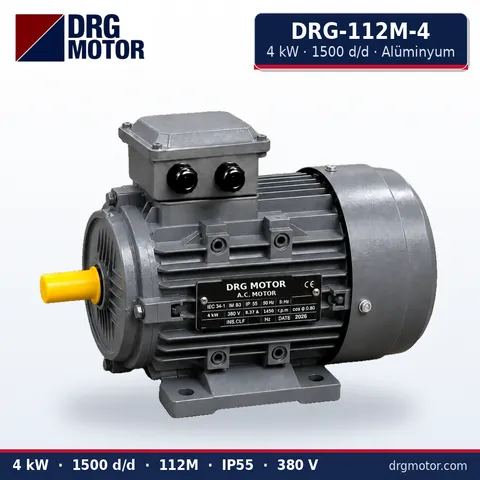
4 kW Three-Phase Motor 1500 rpm – DRG-112M-4 Aluminium
- 4 kW · 1500 rpm (4 poles)
- Aluminium frame · IEC 112M
- Shaft: 28 × 60 mm
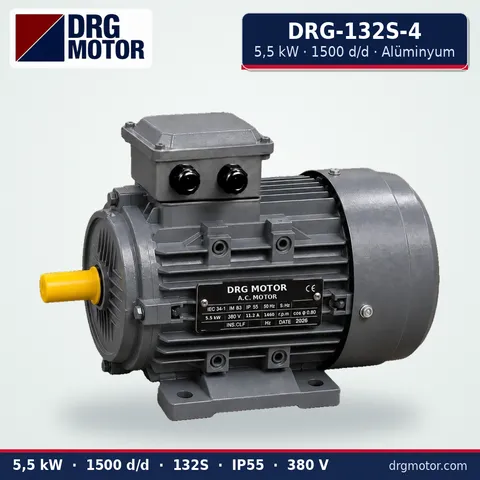
5.5 kW Three-Phase Motor 1500 rpm – DRG-132S-4 Aluminium
- 5.5 kW · 1500 rpm (4 poles)
- Aluminium frame · IEC 132S
- Shaft: 38 × 80 mm
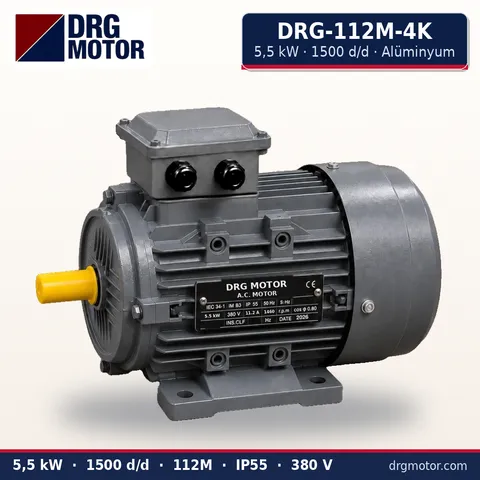
5.5 kW Compact Three-Phase Motor 1500 rpm – DRG-112M-4K Aluminium
- 5.5 kW · 1500 rpm (4 poles)
- Aluminium frame · IEC 112M
- Shaft: 28 × 60 mm
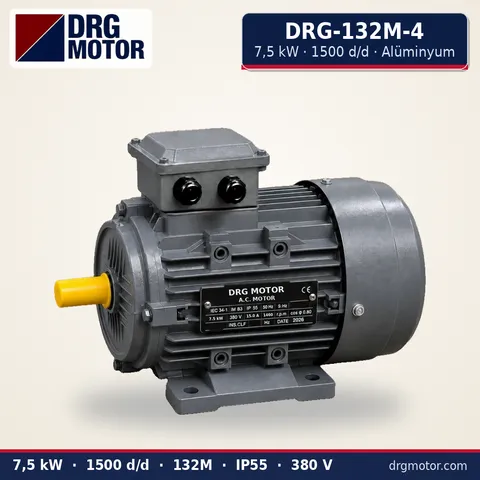
7.5 kW Three-Phase Motor 1500 rpm – DRG-132M-4 Aluminium
- 7.5 kW · 1500 rpm (4 poles)
- Aluminium frame · IEC 132M
- Shaft: 38 × 80 mm
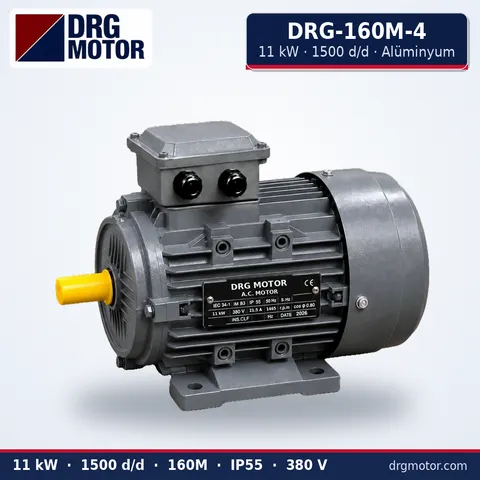
11 kW Three-Phase Motor 1500 rpm – DRG-160M-4 Aluminium
- 11 kW · 1500 rpm (4 poles)
- Aluminium frame · IEC 160M
- Shaft: 42 × 110 mm
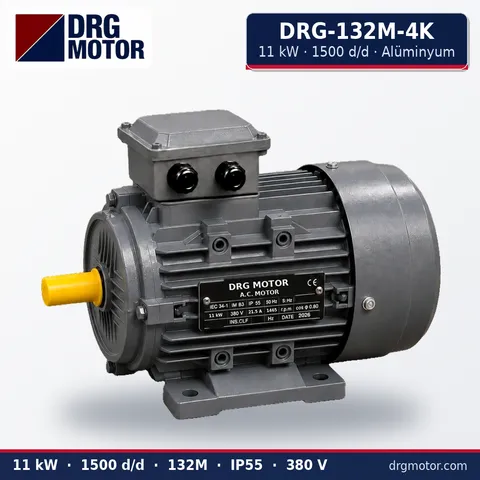
11 kW Compact Three-Phase Motor 1500 rpm – DRG-132M-4K Aluminium
- 11 kW · 1500 rpm (4 poles)
- Aluminium frame · IEC 132M
- Shaft: 38 × 80 mm