English
 Le français
 Türkçe




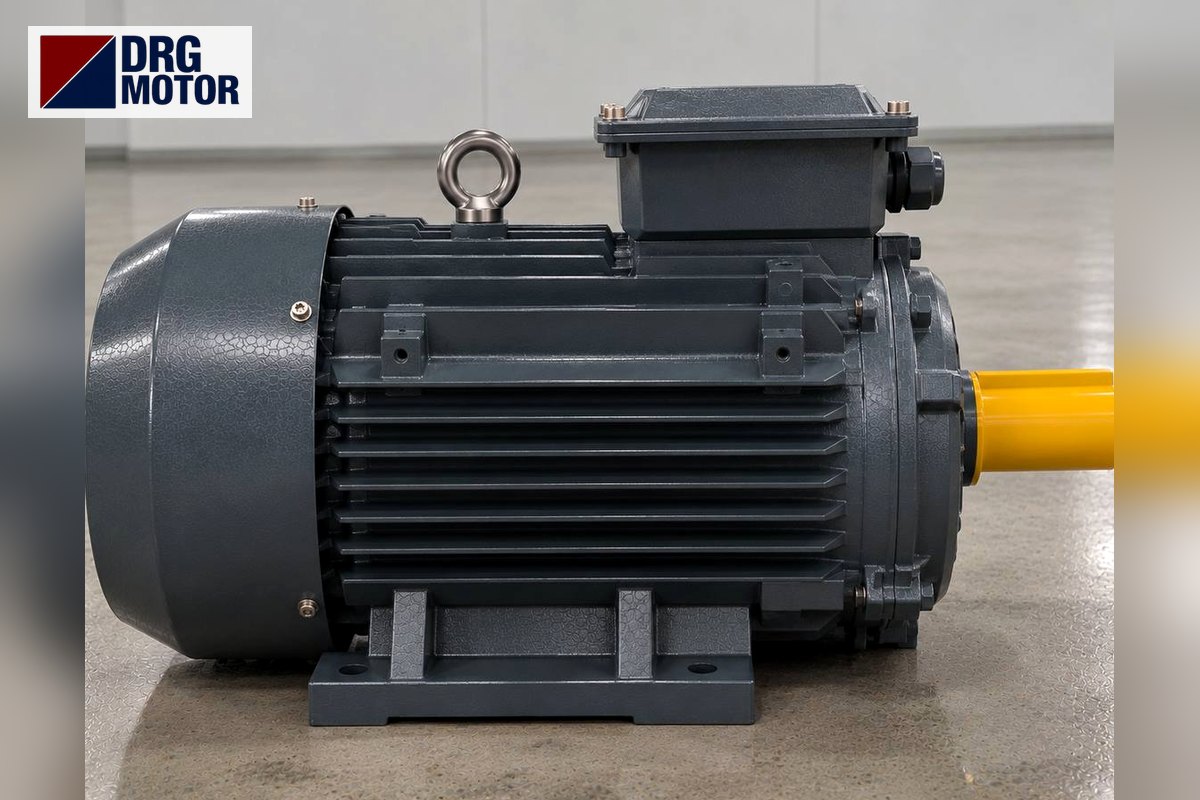

For most businesses, the answer to "domestic or imported electric motor" lies less in the motor's technical class than in supply conditions: delivery time, spare-part access, warranty and service support, together with exchange-rate uncertainty. When these are weighed together, local supply often turns out to be the more predictable choice. This article compares both options in a balanced way and explains what to watch for when buying.
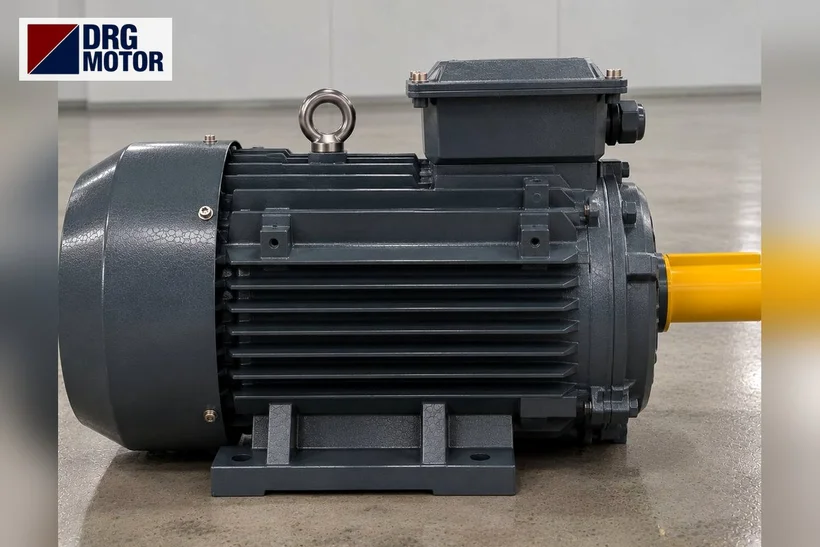
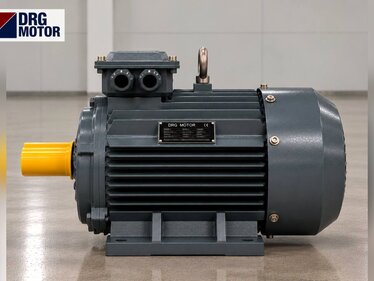
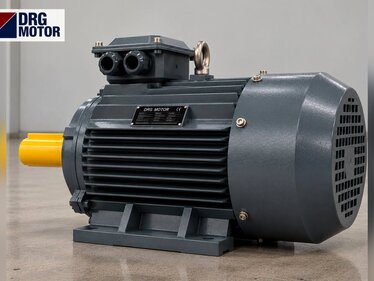
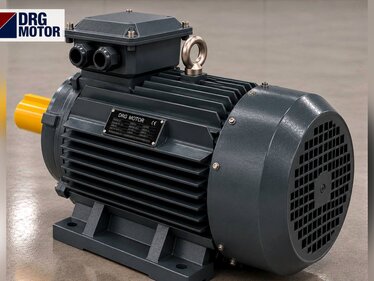
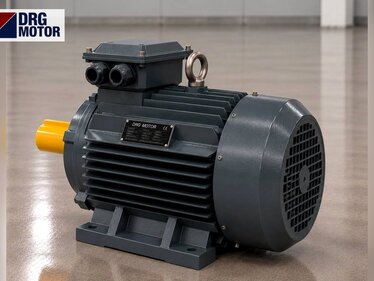
DRG Motor is a manufacturer, supplier and seller of electric motors. You can review the locally supplied three-phase asynchronous models by power and speed in the online motor shop, and see the same products grouped in the three-phase asynchronous electric motors category.
Domestic vs. imported: what to compare
The domestic/imported distinction is about supply and after-sales support rather than the motor's basic electrical features. Both groups contain three-phase asynchronous motors that follow IEC frame sizes and the same power steps. The decision is therefore usually driven not by "which is higher quality" but by "which better fits your need and supply conditions". The four headings below gather the points that decide most purchases.
Delivery time and supply chain
When a motor reaches you is, in most projects, as important as its specifications. With a locally supplied product there are no customs procedures or long international logistics steps involved, so the delivery window is usually narrower and more predictable. When you need an urgent replacement after a fault, or a planned renewal without stopping production, a nearby supply chain saves time. An imported product adds shipping, customs and intermediate warehousing steps that can introduce variability, which means planning with a wider time margin in advance.
Spare-part availability
An electric motor needs maintenance over its life: bearings, terminal-box covers, fans, fan covers or seals may be renewed in time. Fast, nearby access to these parts directly affects the motor's total service life and uptime. For locally supplied models with common IEC frame sizes, matching spare parts is usually more practical. With a product that has long supply lead times, waiting for a small part can extend the time a machine stays out of service.
Click to see current electric motor prices and order nowSEE PRICES →
Warranty and service support
When a warranty procedure is needed, being able to reach your contact easily speeds things up. Working with a local supplier and seller in the same language, the same time zone and short communication steps makes it easier to answer technical questions, identify the right model and, when needed, run the replacement process. Support is possible with an imported product too; however, a different time zone and intermediary steps can lengthen the response time. After-sales support therefore deserves as much weight as the technical figures when you choose.
Exchange rate and budget predictability
Exchange-rate movements can blur the planning horizon for imported products; conditions may change between order and delivery. With local supply, planning depends less on currency swings, so you can set budget and schedule more clearly. This does not mean "the imported option is wrong"; it simply notes that local supply offers a predictability that makes planning easier.
Locally supplied three-phase DRG models
Below are some 1500 rpm (4-pole) cast iron three-phase asynchronous DRG models. The values are at 400 V; the model codes link straight to the product page. As power rises, rated torque and rated current rise with it.
| Model | Power / Speed | Torque | Rated current (400 V) |
|---|---|---|---|
| DRG-132S-4 (5.5 kW) | 5.5 kW / 1500 rpm | 36 Nm | 10.7 A |
| DRG-132M-4 (7.5 kW) | 7.5 kW / 1500 rpm | 49.1 Nm | 14.3 A |
| DRG-160M-4 (11 kW) | 11 kW / 1500 rpm | 71.7 Nm | 20.4 A |
| DRG-160L-4 (15 kW) | 15 kW / 1500 rpm | 97.8 Nm | 27.3 A |
Torque can also be checked approximately with T = 9550 · P / n; at a fixed 1500 rpm, torque grows in proportion to power. For more power, speed and housing options, review the online motor shop, and verify power and current with the electric motor calculator and motor current chart tools.
What to check when replacing a motor
If you are replacing an existing motor, compare not only power but also the speed (pole) count, shaft diameter, foot/flange dimensions and the mounting type (B3 foot, B5/B14 flange). Because couplings, pulleys or transmission inputs are chosen by shaft diameter, these dimensions are critical. Before any electrical work, switch off the power, confirm it is de-energised, and have only qualified electrical personnel make the connection; set protection values such as thermal overload from the motor nameplate, not from memory.
Send a photo of your current motor nameplate and we will find the suitable DRG model together.Send on WhatsApp
Once we have identified the right model together, you can compare all power and speed options and current prices through the shop.
See the models and current prices of locally supplied three-phase asynchronous motors in the shopSEE PRICES
Frequently asked questions
Is a domestic motor technically different from an imported one?
In terms of the basic electrical and mechanical framework, both rest on the same IEC dimensions and power steps. The difference usually appears not in technical class but in supply conditions: delivery time, spare-part access, warranty and service.
Why do spare parts and service matter so much?
A motor's ability to run without interruption depends on fast access to parts and support during a fault or maintenance. A nearby supply chain helps shorten the time a machine stays out of service.
How does the exchange rate affect the choice?
Currency movements can make planning uncertain for imported products with long lead times. Local supply makes planning more independent of currency swings and improves budget predictability.
When is local supply more advantageous?
If short delivery time, easy spare-part access, nearby warranty/service and predictable planning are your priorities, local supply usually fits the need better. The final choice always follows your application's requirements.
Electric Motors Related to This Topic — Models and Current Prices
Suitability is not decided by power alone: compare the speed, voltage, mounting, shaft and fixing dimensions of your machine with the product data; if unsure, send us the nameplate of your current motor.
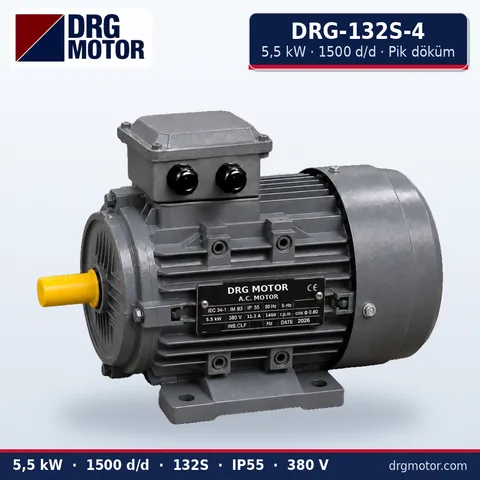
5.5 kW Three-Phase Motor 1500 rpm – DRG-132S-4 Cast Iron
- 5.5 kW · 1500 rpm (4 poles)
- Cast iron frame · IEC 132S
- Shaft: 38 × 80 mm
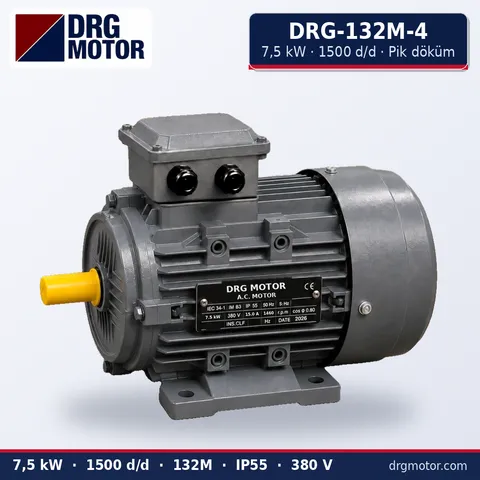
7.5 kW Three-Phase Motor 1500 rpm – DRG-132M-4 Cast Iron
- 7.5 kW · 1500 rpm (4 poles)
- Cast iron frame · IEC 132M
- Shaft: 38 × 80 mm
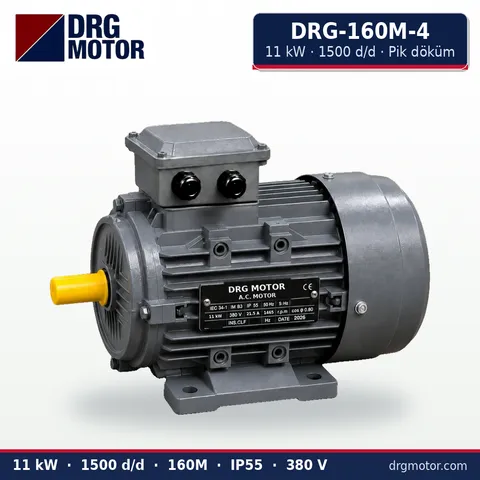
11 kW Three-Phase Motor 1500 rpm – DRG-160M-4 Cast Iron
- 11 kW · 1500 rpm (4 poles)
- Cast iron frame · IEC 160M
- Shaft: 42 × 110 mm
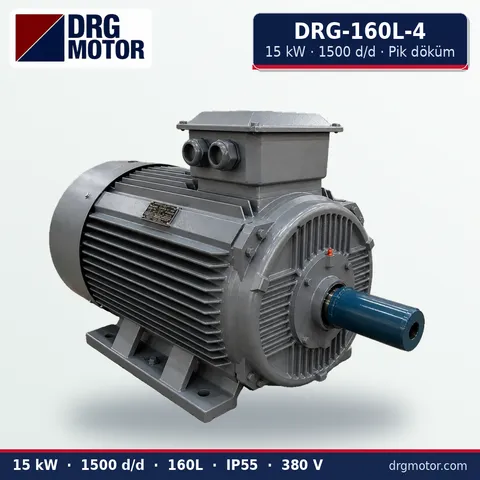
15 kW Three-Phase Motor 1500 rpm – DRG-160L-4 Cast Iron
- 15 kW · 1500 rpm (4 poles)
- Cast iron frame · IEC 160L
- Shaft: 42 × 110 mm