English
 Le français
 Türkçe




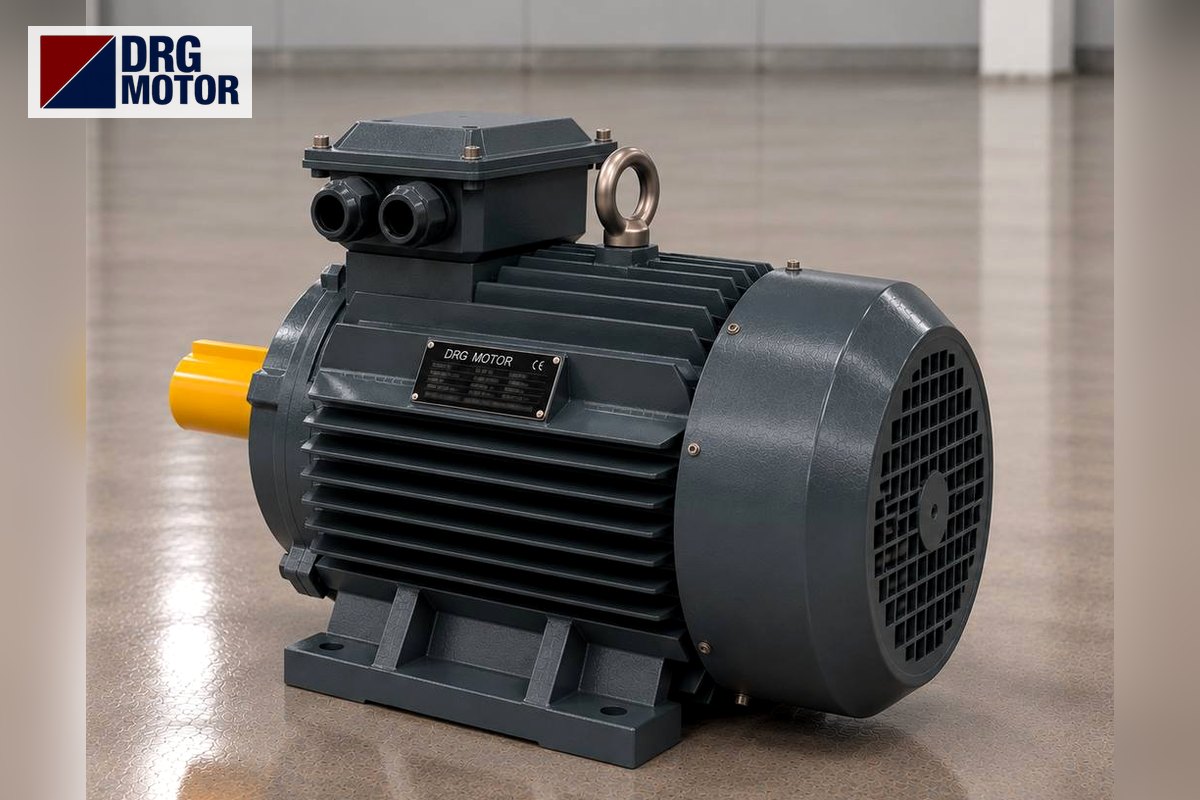

Short answer: yes, an idle (no-load) electric motor still uses electricity. Even when the shaft turns nothing, the motor draws current from the supply to magnetise its windings and cover its own internal losses. This draw is clearly lower than under load, but it is never zero. Below we explain why in plain language, and show why leaving an electric motor running idle is a waste and how to avoid it.
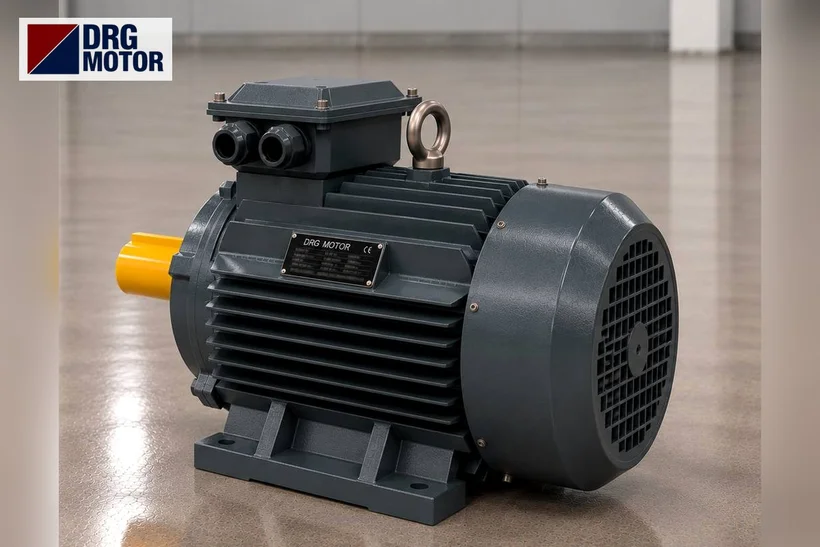
DRG Motor is a manufacturer, supplier and seller of electric motors. The sections below help you pick the power and speed that fit your need; you can browse models by power and speed in the online electric motor shop and see the same range together in the three-phase asynchronous electric motors category.
Why does an idling electric motor draw current?
In a three-phase asynchronous electric motor, rotation comes from the magnetic field created in the windings. To build that field, the motor keeps drawing a magnetising current from the supply even when nothing is attached to the shaft. In other words, if the motor is powered and spinning, something is always happening inside it, even at no load.
Most of this no-load current does no useful work; it holds the magnetic field up and feeds the internal losses. The main items are:
- Magnetising current: creates the magnetic field in the stator windings and keeps flowing with no load.
- Iron (core) losses: energy lost as heat because the field in the laminations keeps reversing.
- Friction and ventilation: the bearings and the cooling fan also take a small amount of power.
Add these up and an idling electric motor draws a small but steady amount of energy. When a load is connected the current climbs; when the load is removed it falls again, but it never drops to zero.
How much lower is the no-load current?
The no-load current sits clearly below the rated current on the nameplate, because the motor is turning no real work and the current goes almost entirely into magnetising. As the load grows, the current rises toward the rated value. The table below shows the rated (full-load) currents of some DRG models; the no-load figure stays well under these.
| Model | Power | Speed class | Rated current (400 V) |
|---|---|---|---|
| DRG-112M-4 | 4 kW | 1500 rpm | 7.95 A |
| DRG-132S-4 | 5.5 kW | 1500 rpm | 10.7 A |
| DRG-132M-4 | 7.5 kW | 1500 rpm | 14.3 A |
| DRG-160M-4 | 11 kW | 1500 rpm | 20.4 A |
The values in the table are full-load rated currents. At no load an ammeter reads well below them, so even in a "running but doing nothing" state the meter keeps ticking over slowly. You can get a rough idea of the current and cable size for your own case with our motor current chart and electric motor calculator.
Click to see current electric motor prices and order nowSEE PRICES →
Why is needless idling a waste?
One electric motor using a little at no load may seem trivial. But scale it up: several motors spinning unloaded for much of the day, machines not switched off during breaks and waiting times, fans and pumps left running after the job is done. Together these add up to energy spent with no work done. On top of that, as long as the motor turns, bearings keep wearing and the fan keeps pulling in dust, idle or not.
We are not giving a bill amount or a figure here, because it depends on the motor power, how many hours it idles and local electricity conditions. The principle matters: do not leave a motor spinning with no work to do. To get a feel for it, you can roughly assess the consumption for your own values with the electric motor calculator.
How to cut idle consumption
The goal is not to avoid running the motor, but to avoid spinning it unloaded for no reason. A few simple habits go a long way:
- Stop when the job is done: switch off a machine that is turning unloaded during breaks and waiting times.
- Pick the right power: an oversized electric motor draws more magnetising current both under load and at no load. Choosing a power class close to the real job cuts waste from the start.
- Let automation help: a timer, a sensor or a control panel can stop the motor by itself when there is no work.
- Balance frequent start-stop with idling: stopping and restarting over very short intervals is not ideal either, because of start-up current; find a sensible balance.
If you are unsure about the right power and speed, tell us about your application and we will settle on the electric motor that best fits your need together.
Which model to look at?
The way to keep idle consumption low from the outset is to choose a power that matches the job. Below are popular 1500 rpm (4-pole) aluminium-housing DRG models with their full-load rated currents; you can compare them all by power and speed in the online electric motor shop.
| Model | Power | Speed class | Rated current (400 V) |
|---|---|---|---|
| DRG-112M-4 | 4 kW | 1500 rpm | 7.95 A |
| DRG-132S-4 | 5.5 kW | 1500 rpm | 10.7 A |
| DRG-132M-4 | 7.5 kW | 1500 rpm | 14.3 A |
| DRG-160M-4 | 11 kW | 1500 rpm | 20.4 A |
Pick the electric motor that matches your job; click to see current prices and orderSEE PRICES
Send a photo of your current motor nameplate and we will find the suitable DRG model together.Send on WhatsApp
Frequently asked questions
If I leave the motor plugged in, does it use power when not running?
If it is not turning, there is practically no useful consumption; the draw happens only while the motor turns. No-load consumption is the case where the motor runs and spins the shaft but turns no load. Isolating an idle motor at the switch is always a good habit.
How do I measure the no-load current?
Current should be measured by a qualified electrician with a clamp meter. Before measuring, cut the power, confirm it is dead and leave the work to a competent person. Compare the readings with the motor nameplate; well below the rated value is normal.
Does a smaller electric motor use less at no load?
Generally yes, a smaller motor draws less magnetising current. But if the motor is too small to turn the job, it strains under load and that is the real problem. The right move is not the "smallest" but the power best suited to the job.
Does long idling harm the motor?
No major damage is expected directly, but as the motor turns the bearings, housing and fan keep wearing and energy is spent for nothing. If there is no work, stopping protects both your pocket and the motor.
Electric Motors Related to This Topic — Models and Current Prices
Suitability is not decided by power alone: compare the speed, voltage, mounting, shaft and fixing dimensions of your machine with the product data; if unsure, send us the nameplate of your current motor.

4 kW Three-Phase Motor 1500 rpm – DRG-112M-4 Aluminium
- 4 kW · 1500 rpm (4 poles)
- Aluminium frame · IEC 112M
- Shaft: 28 × 60 mm
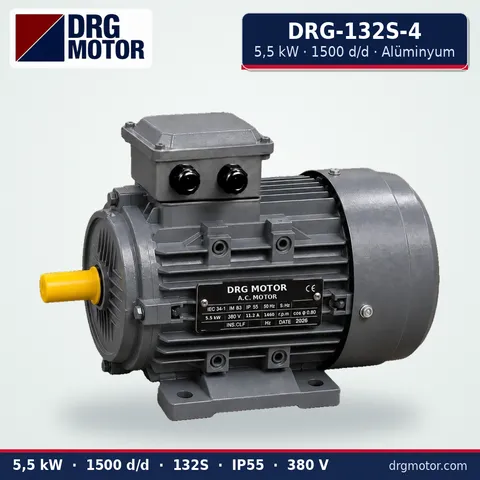
5.5 kW Three-Phase Motor 1500 rpm – DRG-132S-4 Aluminium
- 5.5 kW · 1500 rpm (4 poles)
- Aluminium frame · IEC 132S
- Shaft: 38 × 80 mm
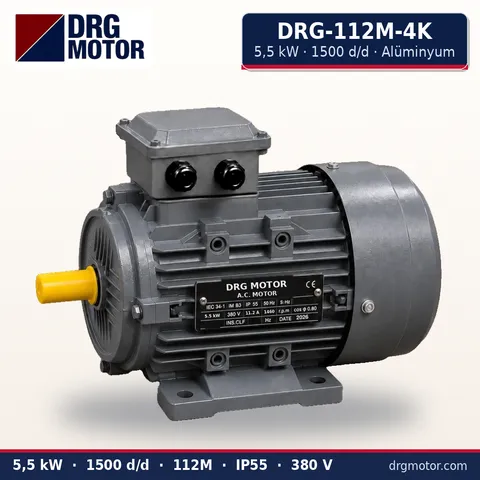
5.5 kW Compact Three-Phase Motor 1500 rpm – DRG-112M-4K Aluminium
- 5.5 kW · 1500 rpm (4 poles)
- Aluminium frame · IEC 112M
- Shaft: 28 × 60 mm
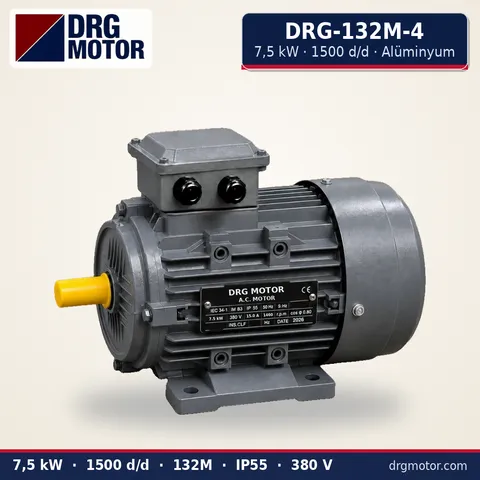
7.5 kW Three-Phase Motor 1500 rpm – DRG-132M-4 Aluminium
- 7.5 kW · 1500 rpm (4 poles)
- Aluminium frame · IEC 132M
- Shaft: 38 × 80 mm
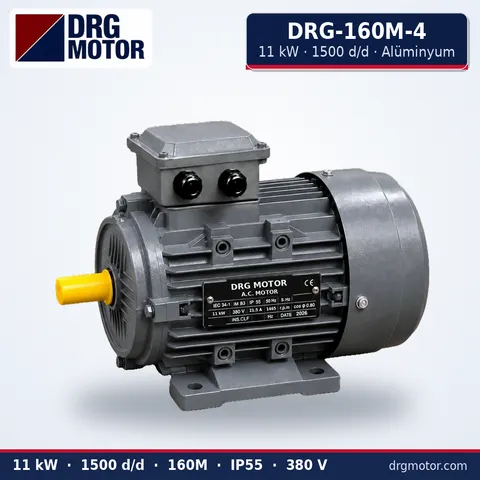
11 kW Three-Phase Motor 1500 rpm – DRG-160M-4 Aluminium
- 11 kW · 1500 rpm (4 poles)
- Aluminium frame · IEC 160M
- Shaft: 42 × 110 mm
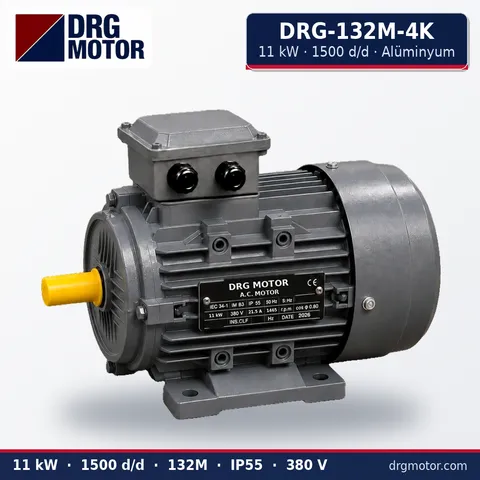
11 kW Compact Three-Phase Motor 1500 rpm – DRG-132M-4K Aluminium
- 11 kW · 1500 rpm (4 poles)
- Aluminium frame · IEC 132M
- Shaft: 38 × 80 mm