English
 Le français
 Türkçe




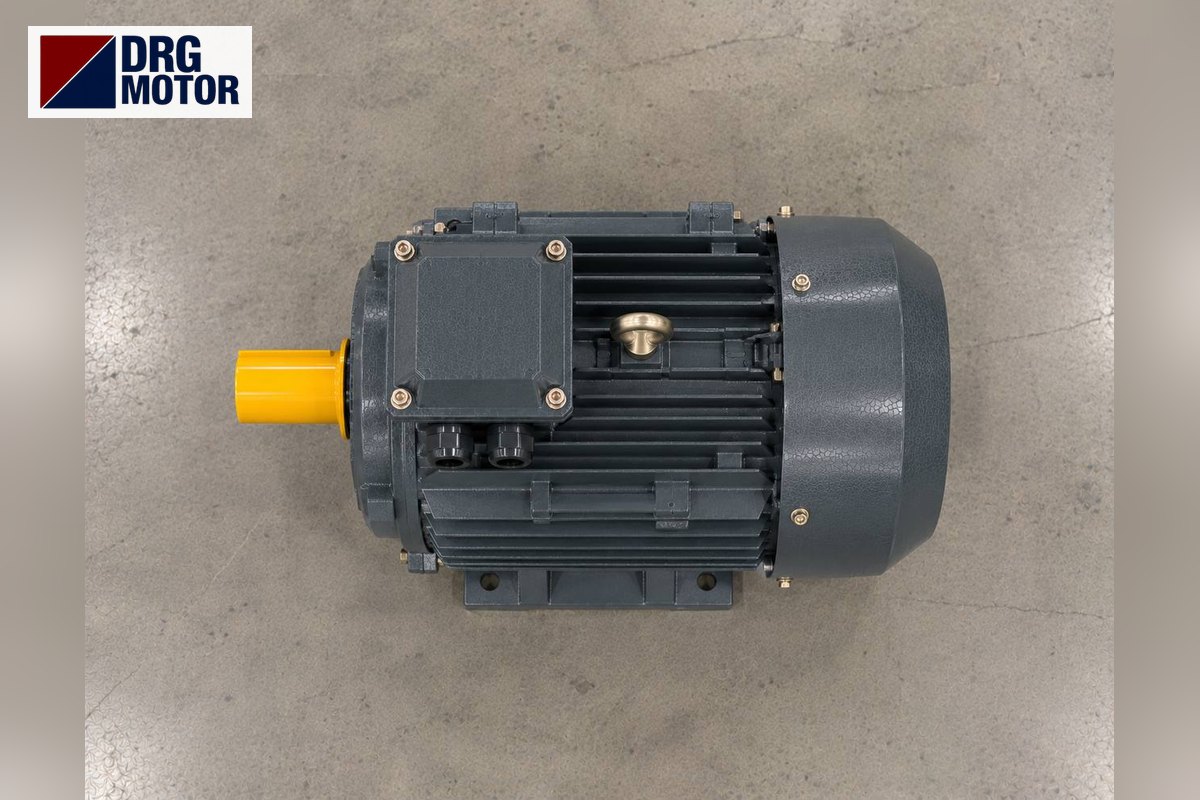

In a stationary electric corn sheller, the motor drives the pinned rotor by belt and, on most models, the fan that blows off husks from the same belt line. Two things decide the choice: the rotor must turn at the speed the machine builder intended (set jointly by motor speed and pulley ratio), and the motor must recover without stalling when too many cobs land in the hopper at once. What raises output is not a faster motor but a rotor turning at the right speed with enough torque for the feed.
Shellers driven from a tractor PTO have no electric motor; this article covers stationary machines wired to a panel. You can see suitable three-phase motors in our online motor store, and for the other drives used after harvest see our agricultural machine electric motors page.
From Cob to Kernel: What the Rotor, Cage and Fan Do
Cobs drop from the hopper into the rotor housing. Steel pins on the rotor, or bars set in a helix, drag the cobs towards a perforated cage; rubbing against the pins and against each other, the cobs release their kernels. Kernels flow down through the cage holes, and the stripped cob is thrown out of the outlet at the end of the rotor.
An air stream separates the husk, silk and broken cob pieces that fall with the kernels. Fan power rises with the cube of speed: any change that speeds up the rotor also speeds up a fan on the same belt line and increases motor load more than expected.
Rotor torque fluctuates with the feed. When cobs are thrown in by the armful the load approaches a momentary jam; when the hopper empties the rotor nearly idles. On a single-motor machine the motor carries this fluctuating load plus the steady fan load.
Where Rotor Speed Comes From: a Pulley Ratio Example
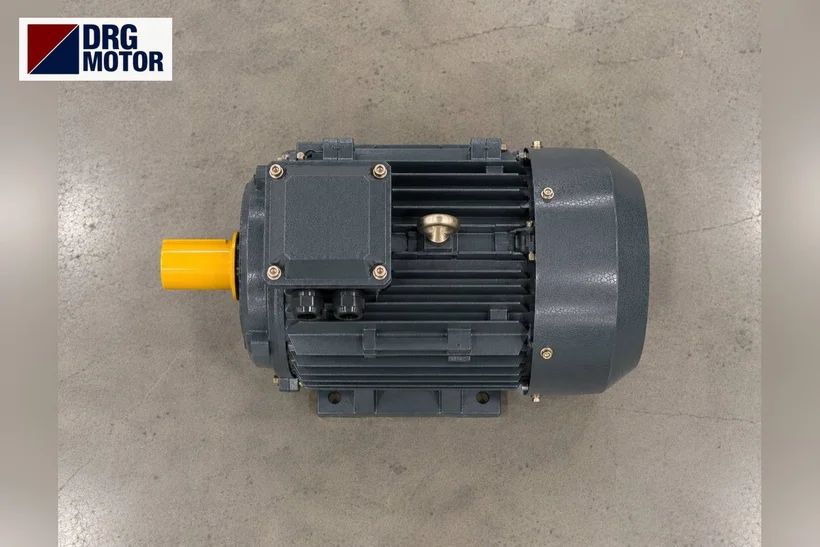
Rotor speed follows n2 = n1 · d1 / d2, so it depends on motor speed and the two pulley diameters. The table below is an example based on these assumptions: the rotor must run at 600 rpm, the motor pulley is 120 mm and the motor is 4 kW. The real rotor speed is in the machine catalogue or on its plate. The last column is the tangential force the belt must transmit at the motor pulley (F = P / v).
| Motor (4 kW) | Motor speed | Rotor pulley | Belt force |
|---|---|---|---|
| DRG-112M-2 (2-pole) | 2905 rpm | 581 mm | 219 N |
| DRG-112M-4 (4-pole) | 1450 rpm | 290 mm | 439 N |
| DRG-132M1-6 (6-pole) | 968 rpm | 193.6 mm | 658 N |
With a 2-pole motor, getting down to 600 rpm needs a rotor pulley of more than half a metre, and the belt wrap angle on the small motor pulley shrinks. A 6-pole motor manages with a small pulley, but because the belt runs slowly it transmits the same power with a larger force; if the number or profile of belts is insufficient, slip starts. That balance is why many shellers come with a 4-pole motor.
If the spare motor has a different pole count from the old one, rotor speed shifts in the same ratio. Fit a 2905 rpm motor in place of a 1450 rpm one with unchanged pulleys and the rotor runs about twice as fast, kernels crack and fan power multiplies. You can check the diameters with our pulley and belt calculator.
Click to see current electric motor prices and order nowSEE PRICES →
How Capacity Affects Motor Power
As the quantity of cobs processed per hour grows, so do the cob mass on the rotor and the friction, which is why motor power grows with capacity. Small farm types may use a few kW, while plant machines delivering tonnes of kernels per hour can exceed 10 kW. The exact value is the machine plate or the builder's catalogue; do not derive kW from capacity on your own.
If the motor has enough power but output is low, the cause is usually worn pins, cage holes clogged with cob cores, or a slipping belt. Moving up one power step may also mean a larger frame: the 4 kW 112M frame has a 28 mm shaft, while the 5.5 kW DRG-132S-4 in the 132S frame has a 38 mm shaft, so the pulley hub and motor slide rail must be renewed.
Grain moisture changes the load noticeably. Freshly picked, moist cobs stick to the pins, release their kernels reluctantly and load the motor harder; fully dried cobs shell quickly but breakage rises. Reading different currents on the same machine at the start and end of the season is therefore normal.
Restarting with a Full Hopper: Starting Torque
The heaviest moment for a sheller rotor is restarting while it is packed with cobs. If the power fails or the overload trips, the rotor stays full and the motor has to start against that load. This is where the catalogue starting torque ratio matters: Ts/Tn = 2.2 for the DRG-112M-4, i.e. 2.2 times its 26.3 Nm rated torque; for the 3 kW DRG-100L2-4 the ratio is 2.3.
Even so, clearing the rotor by hand protects the motor better than forcing it. Starting current is several times rated current (Is/In = 7.8 for the DRG-112M-4). In a barn at the end of a rural line the voltage sags, the motor accelerates sluggishly and protection operates; for long cable runs the cross-section must be chosen for the line length.
Set the overload relay to the nameplate current, which is 7.95 A at 400 V for the DRG-112M-4. Raising the setting so that the motor absorbs jams ages the winding insulation quickly. On machines with a feeder, keeping the hopper evenly filled protects both output and motor.
Barns, Threshing Yards and Damp
A sheller often works in a half-open barn or threshing yard. The air carries fine corn dust and husk; outside the season there is damp. IP55 protection seals the motor against dust and water splashes, but a motor exposed to rain still needs a canopy, and husk piling up on the fan cowl must be cleaned off.
If the machine runs a few weeks a year and stands idle for months, clean the motor before loading it at the start of the season, turn the shaft by hand and look for traces of moisture in the terminal box. On machines that are moved around, a tight cable gland keeps dust and water out of the terminals.
Supply needs separate thought. The DRG range consists of three-phase asynchronous motors; single-phase motors are not in our range, so a farm with only a single-phase supply needs a three-phase line. Motors up to 3 kW are wound for 230/400 V and those of 4 kW and above for 400/690 V: on a 400 V network a 3 kW motor is connected in star and a 4 kW motor in delta.
What to Measure Before Replacing the Motor
On shellers the motor is usually foot-mounted (B3), and belt tension is set by sliding the motor along its rail. Within the same IEC frame number, foot holes and shaft dimensions stay the same. Catalogue dimensions of the DRG-112M-4:
- Power: 4 kW – 1450 rpm
- IEC frame: 112M, shaft height H = 112 mm
- Foot holes (A × B): 190 × 140 mm, 4–Φ12
- Shaft (D × E): 28 × 60 mm, key width 8 mm
- Current (400 V): 7.95 A
- Voltage: 400/690 V (Δ/Y)
Gather this information before ordering:
- Old motor plate: kW, rpm, voltage and connection (a photo is enough).
- Diameters of the motor and rotor pulleys; if possible the rotor speed from the catalogue.
- Bore and keyway of the motor pulley: do they suit the new shaft end (D × E)?
- Bolt holes in the motor rail: same as the new motor's A × B foot size and height H?
- Is the fan driven by its own motor or on the same belt line as the rotor?
- Is there a three-phase supply where the machine stands, and how far is the panel?
- Direction of rotation: a reversed rotor will not push cobs to the outlet; check at first start.
DRG Motors Suited to Corn Shellers
The 4-pole models keep the rotor pulley at a sensible size; the 6-pole option is for machines with a low rotor speed. The plate of the old motor decides the right model.
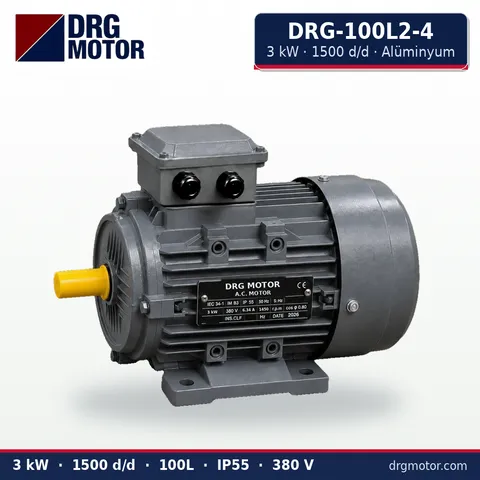
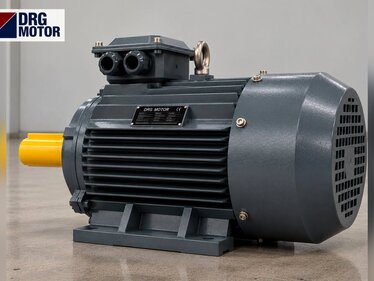
3 kW Three-Phase Motor 1500 rpm – DRG-100L2-4 Aluminium
- 3 kW · 1500 rpm (4 poles)
- Aluminium frame · IEC 100L
- Mounting: B3 · B5 · B14 · B35
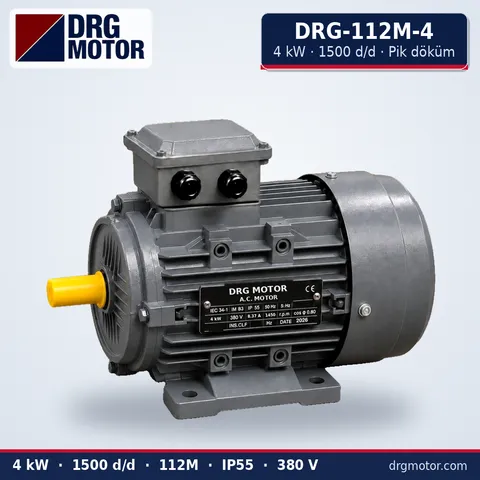
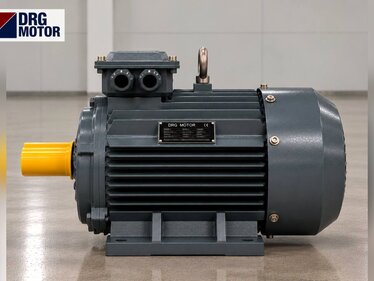
4 kW Three-Phase Motor 1500 rpm – DRG-112M-4 Cast Iron
- 4 kW · 1500 rpm (4 poles)
- Cast iron frame · IEC 112M
- Mounting: B3 · B5 · B14 · B35
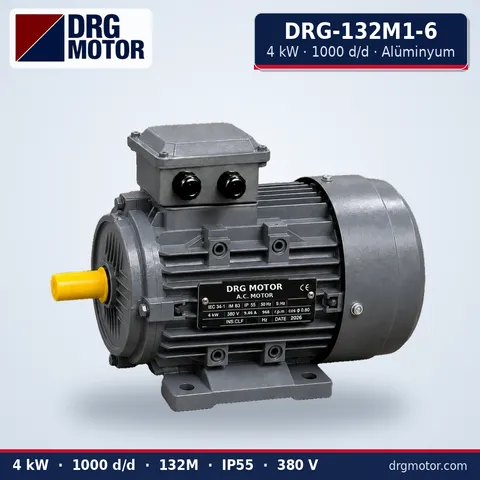
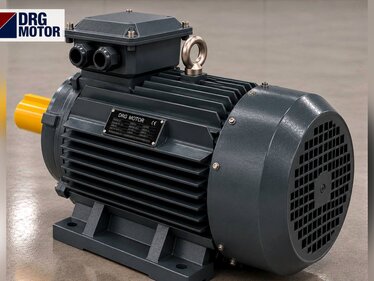
4 kW Three-Phase Motor 1000 rpm – DRG-132M1-6 Aluminium
- 4 kW · 1000 rpm (6 poles)
- Aluminium frame · IEC 132M
- Mounting: B3 · B5 · B14 · B35
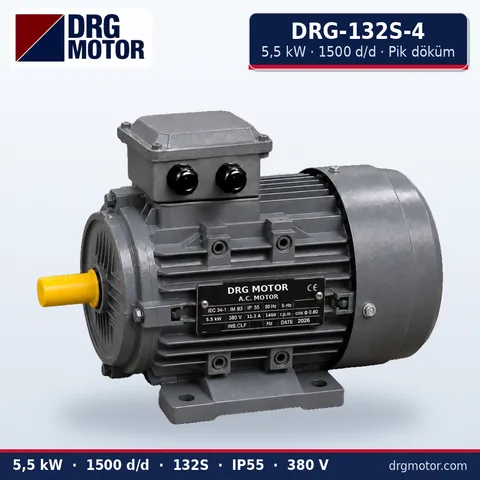
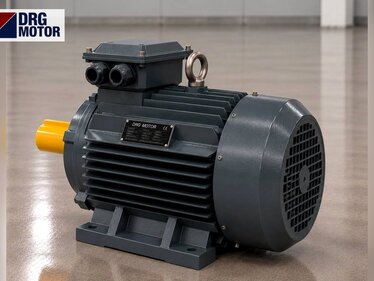
5.5 kW Three-Phase Motor 1500 rpm – DRG-132S-4 Cast Iron
- 5.5 kW · 1500 rpm (4 poles)
- Cast iron frame · IEC 132S
- Mounting: B3 · B5 · B14 · B35
Click to see current prices and order these motors nowSEE PRICES →
Corn Sheller Motor: Frequently Asked Questions
What kW motor does a corn sheller need?
It depends on rotor length and hourly capacity: a few kW on small farm types, more than 10 kW on plant machines. The correct value is the machine plate or the builder's catalogue; after a burnout, read the data from the plate of the removed motor.
Kernels are cracking; is the motor speed too high?
Possibly. If a motor with a different pole count was fitted or the pulleys were changed, the rotor is running too fast. If the motor and pulleys are the same as before, look for the cause in dry cobs, worn or bent pins or the cage clearance.
Is one motor or two better for the fan and rotor?
A single motor is simple and compact, but any setting that changes rotor speed also affects the fan. A separate fan motor allows the air stream to be set independently of the rotor. When replacing, keep the machine's existing layout and send the plates of both motors separately.
Is there a sheller motor that runs on single-phase power?
There is no single-phase motor in the DRG range; the motors we offer are three-phase. If the farm only has single-phase power, these motors cannot be used until a three-phase supply is provided.
DRG Motor is a manufacturer, supplier and seller of electric motors. To prepare a quotation for your sheller we only need: a photo of the plate of the removed motor, its power and speed, whether it is foot- or flange-mounted, the shaft diameter and the diameters of both pulleys. Send the details via WhatsApp or add the models you chose to the quote list. Phone: +90 (542) 666 11 11, e-mail: info@drgmotor.com; other channels are on the contact page. Current prices are listed in our electric motor store.