English
 Le français
 Türkçe




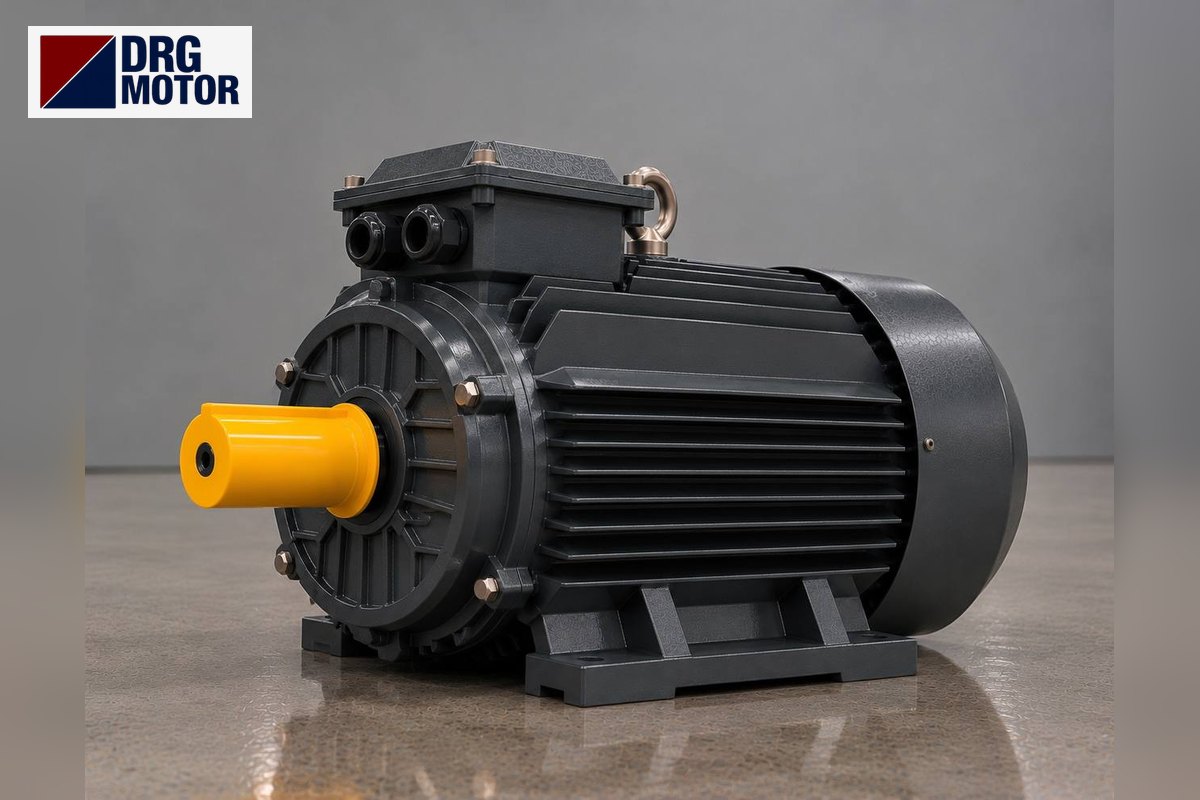

On a bucket wheel sand washer, the motor turns a large bucket wheel that rotates slowly in a water-filled tank, through a gearbox. The wheel makes only a few revolutions per minute, so what decides the choice is less the motor’s kW than the torque produced at the wheel shaft together with the gear ratio, and whether the wheel can restart in a tank full of sand. The connection dimensions between motor and gearbox are the first thing to check on replacement.
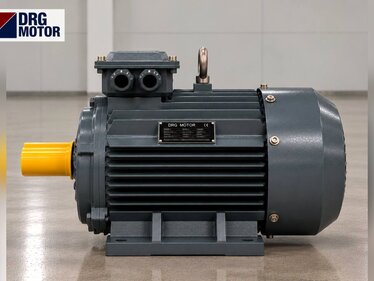
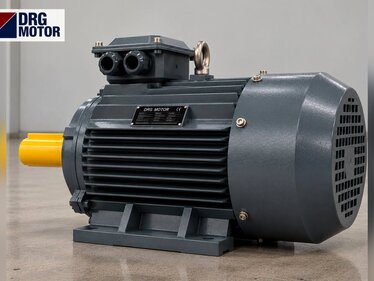
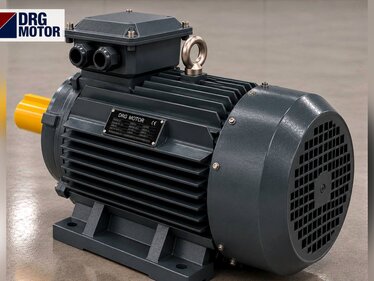
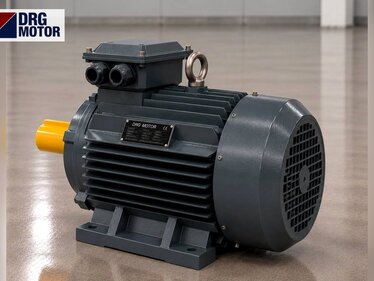
DRG Motor is a manufacturer, supplier and seller of electric motors. Gearboxes are not in its range; what DRG provides is the three-phase asynchronous IEC motor mounted on the gearbox that turns the bucket wheel. B3, B5 and B35 versions can be browsed in the buy electric motors online section.
How the Bucket Wheel Washes and Dewaters Sand
Raw sand enters one end of the tank with water. Turbulence and overflow water lift clay, silt and organic matter to the surface and carry them out over the weir. Perforated buckets around the wheel pick up the clean sand settled at the bottom and lift it as the wheel turns, while water drains back through the bucket holes into the tank. At the top the bucket tips the sand into a discharge chute.
The slow rotation is deliberate. When a bucket enters and leaves the water slowly, fine sand is not lost and water has time to drain from the sand in the bucket. This calls for a drive that reduces motor speed by a factor of several hundred.
The dewatering screen often found in the same plants works by vibration and is driven by vibrator motors; its selection logic is on the dewatering screen motor page. A bucket wheel has no vibration; its load is steady and slow.
Very Low Speed: Ratio Calculation and Wheel Torque
The bucket wheel drive train is usually motor → gearbox → pinion and a girth gear (or chain sprocket) on the wheel. Some machines add a belt stage between motor and gearbox. The overall ratio is the product of these stages; wheel speed is n2 = n1 / i.
The table compares four motor options for an example machine whose wheel should turn at about 2.4 rpm. Wheel torque is motor rated torque × overall ratio × an assumed 0.85 transmission efficiency. These values are examples; actual wheel speed and torque demand are in the machine maker’s data. Enter your machine’s real ratio in the gearbox output speed and torque calculator to confirm wheel speed.
| Motor | Overall ratio (example) | Wheel speed | Wheel torque (example) |
|---|---|---|---|
| DRG-132S-4 5.5 kW 4-pole | 600 | 2.43 rpm | ≈ 18,360 Nm |
| DRG-132M2-6 5.5 kW 6-pole | 400 | 2.42 rpm | ≈ 18,460 Nm |
| DRG-160M-6 7.5 kW 6-pole | 400 | 2.43 rpm | ≈ 25,090 Nm |
| DRG-160L-6 11 kW 6-pole | 400 | 2.43 rpm | ≈ 36,820 Nm |
The first two rows show two routes at the same power: a 4-pole motor needs a higher-ratio drive, a 6-pole motor reaches the same wheel speed with a lower ratio. Torque at the wheel shaft is almost identical in both cases. The existing gearbox’s input speed and ratio decide which one fits; if the gearbox stays, the motor’s pole count should stay too.
Click to see current electric motor prices and order nowSEE PRICES →
Starting Load: Buckets Buried in Sand
The hardest moment for this machine is starting. If the wheel stops loaded, sand settles in the tank and buries the lower buckets. Restarting means tearing those buckets loose and lifting them. That torque can be well above what the turning wheel needs.
The motor’s starting torque therefore enters the calculation. The DRG-132S-4 has 36.0 Nm rated torque, and its nameplate starting factor (Ts/Tn) of 2.0 means roughly 72 Nm in the first instant. For the DRG-160M-6 rated torque is 73.8 Nm, again with Ts/Tn 2.0. With the example ratios in the table, that is roughly twice the rated value at the wheel shaft.
In practice, starting load is reduced by operating routine, not by a bigger motor: cut the feed before stopping, let the wheel run empty for a few turns to clear the buckets, and drain the tank for long stops. Star-delta starting needs care on this machine; the star connection leaves only about a third of the torque, and a wheel with buried buckets may not start.
The panel needs a check too: the DRG-132S-4 runs at 10.7 A rated current at 400 V, and with a 7.9 starting current ratio it takes around 85 A in the first moment of a direct-on-line start.
Connecting the Motor to the Gearbox Input: Dimensions
These machines mostly have the motor bolted as B5 against the gearbox input, or standing on feet (B3) on a base and linked by coupling or belt. Keep the old motor’s mounting arrangement when replacing it.
On a B5 flange three dimensions must match the gearbox exactly: bolt circle (M), centring spigot (N) and shaft size D × E. The B5 table in the DRG catalogue gives 265 / 230 / 38 × 80 mm (flange outside 300 mm) for 132S/132M, and 300 / 250 / 42 × 110 mm (flange outside 350 mm) for 160M/160L.
Note: at the same power, 4-pole and 6-pole motors may use different frames. At 7.5 kW, for example, the 4-pole motor is a 132M while the 6-pole DRG-160M-6 is a 160M; flange and shaft dimensions change. Measure the gearbox input flange and shaft bore before ordering.
Wet, Sandy and Outdoor Conditions
Sand washing plants are mostly outdoors. The motor is exposed to rain, water splashing from the tank and sand dust. DRG motors are IP55 and withstand splashing water; even so, a simple canopy over the motor and turning the terminal box away from the splash side extend its life. A cast iron frame is more resistant to knocks here.
The intake side of the motor fan must not clog with sand and mud. Filled frame fins reduce cooling; on low-speed machines the motor runs for long hours at the same load, so this heating builds up unnoticed. Nameplate ratings apply to −15…+40 °C ambient.
Consequences of a wrong motor or ratio
- If the pole count changes and the gearbox stays, wheel speed changes: a faster wheel loses fine sand from the buckets and leaves the sand wet.
- If power is chosen below the nameplate, the wheel cannot start in a sand-filled tank; the motor draws locked-rotor current and overheats.
- If the overload relay is set too high, the motor is not protected during a jam; the girth gear and pinion get damaged.
- If gearbox and motor flanges do not match, intermediate flanges or adaptors bring misalignment and bearing failure.
Pre-Order Checklist
- Power, speed, voltage and connection on the motor nameplate
- Ratio and input speed on the gearbox nameplate
- Motor mounting: B5 flange, B3 foot or B35
- Bolt circle, spigot diameter and shaft bore of the gearbox input flange
- Tooth counts of pinion/girth gear or chain sprockets
- Whether starting happens with an empty or full tank
- Starting method and overload setting
DRG Motors Suited to Bucket Wheel Sand Washers
4- and 6-pole cast iron models for gearbox input, suited to wet and sandy sites; the existing gearbox ratio and nameplate power decide the choice.
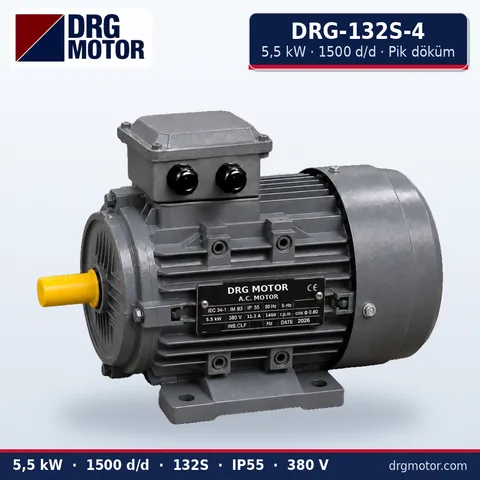
5.5 kW Three-Phase Motor 1500 rpm – DRG-132S-4 Cast Iron
- 5.5 kW · 1500 rpm (4 poles)
- Cast iron frame · IEC 132S
- Mounting: B3 · B5 · B14 · B35
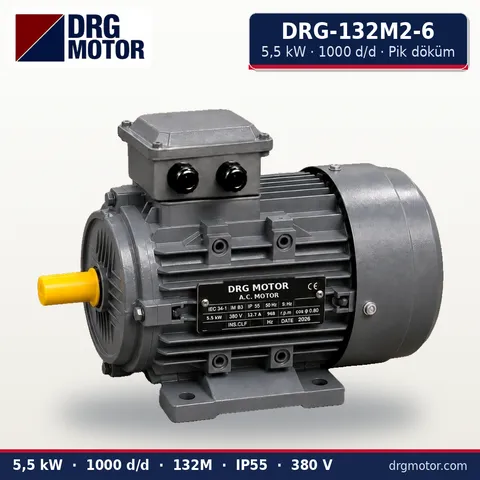
5.5 kW Three-Phase Motor 1000 rpm – DRG-132M2-6 Cast Iron
- 5.5 kW · 1000 rpm (6 poles)
- Cast iron frame · IEC 132M
- Mounting: B3 · B5 · B14 · B35
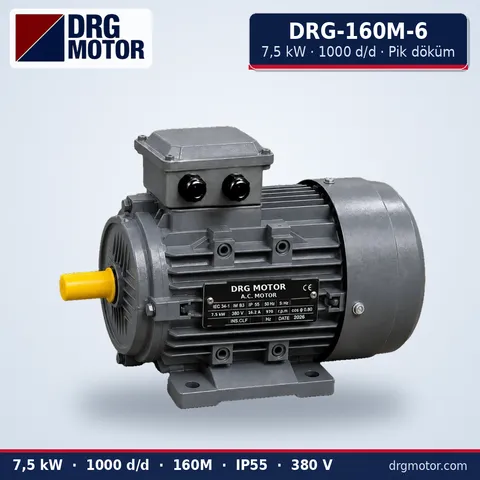
7.5 kW Three-Phase Motor 1000 rpm – DRG-160M-6 Cast Iron
- 7.5 kW · 1000 rpm (6 poles)
- Cast iron frame · IEC 160M
- Mounting: B3 · B5 · B14 · B35
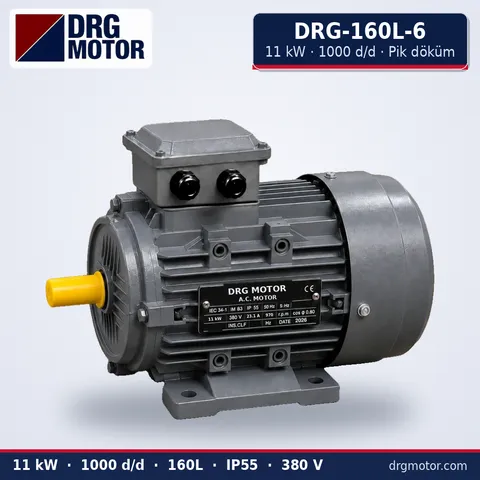
11 kW Three-Phase Motor 1000 rpm – DRG-160L-6 Cast Iron
- 11 kW · 1000 rpm (6 poles)
- Cast iron frame · IEC 160L
- Mounting: B3 · B5 · B14 · B35
Click to see current prices and order these motors nowSEE PRICES →
Bucket Wheel Sand Washer Motor: Frequently Asked Questions
What kW is a bucket wheel sand washer motor?
It varies with wheel diameter, bucket count and capacity; small machines use a few kW, larger twin-wheel machines more. Check the machine’s own plate for the correct figure.
Why won’t the bucket wheel start under load?
Usually because the buckets are buried in sand settled at the bottom. Partly drain the tank and loosen the sand with water. If the motor starts in star-delta, the low torque in star may not be enough.
Can an inverter be used on a sand washing wheel?
It can be used to adjust wheel speed to the type of sand. Bear in mind that the shaft-mounted cooling fan turns slower too, so check frame temperature during long low-frequency running. The frequency converter is not supplied by DRG; DRG’s part is the motor it feeds.
The old motor is 4-pole; can I fit a 6-pole motor?
If the gearbox stays, the wheel slows by about one third and capacity drops. If you want to change the pole count, recalculate the ratio at the same time.
Identifying the right motor needs photos of both plates (motor and gearbox), whether the motor is held by feet or flange, and the flange/shaft sizes. Pass these on through WhatsApp or forward your shortlisted models through the quote list. Phone +90 (542) 666 11 11, e-mail info@drgmotor.com, contact page. The range of motors for gearboxes is on the electric motors for gearboxes page, while every model can be found in the DRG online store.